Kirjojen hintavertailu. Mukana 11 627 220 kirjaa ja 12 kauppaa.

Kirjahaku

Etsi kirjoja tekijän nimen, kirjan nimen tai ISBN:n perusteella.

1000 tulosta hakusanalla Edward Cocker

Because I Was Flesh: The Autobiography of Edward Dahlberg

Because I Was Flesh: The Autobiography of Edward Dahlberg

Edward Dahlberg

NEW DIRECTIONS PUBLISHING CORPORATION
1967
nidottu
Because I Was Flesh is an authentic record from the inferno of modern city life, and a testament of American experience. Lizzie Dahlberg, separated from a worthless husband, works as a lady barber to keep herself and her son in shabby respectability amid the vice and brutality of Kansas City in the early 1900's. Her constant objective: to acquire a new husband who can give her security and help educate the child. She is attractive to men, but fate never brings her a good one. One suitor makes her put the boy in an orphanage--years of torment that are brilliantly described--and then betrays her. Another does marry her--and disappears with her savings. Lizzie is in despair, but soon begins to laugh at life again and arches her bosom for the next prospect. As he grows through a sensitive, painful adolescence, Edward is both fascinated and appalled by his mother. He adores her but is ashamed of her. He tries to escape, bumming his way to Los Angeles and later going to college in Berkeley, but is always drawn back. Even her death, with which the book ends, cannot release him. Seldom has there been so ruthless, and yes so tender a dissection of the mother-son relationship. And from it Lizzie Dahlberg emerges as one of the unforgettable characters of modern literature.
Edward P. Dozier

Edward P. Dozier

Marilyn Norcini

University of Arizona Press
2007
sidottu
Edward P. Dozier was the first American Indian to establish a career as an academic anthropologist. In doing so, he faced a double paradox, cademic and cultural. The notion of objectivity that governed academic anthropology at the time dictated that researchers be impartial outsiders. Scientific knowledge was considered unbiased, impersonal, and public. In contrast, Dozier's Pueblo Indian culture regarded knowledge as privileged, personal, and gendered. Ceremonial knowledge was protected by secrecy and was never intended to be made public, either within or outside of the community. As an indigenous ethnologist and linguist, Dozier negotiated a careful balance between the conflicting values of a social scientist and a Pueblo Indian. Based on archival research, ethnographic fieldwork at Santa Clara Pueblo, and extensive interviews, this intellectual biography traces Dozier's education from a Bureau of Indian Affairs day school through the University of New Mexico on federal reimbursable loans and graduate school on the GI Bill. Dozier was the first graduate of the new post World War II doctoral program in anthropology at the University of California at Los Angeles in 1952. Beginning with his multicultural and linguistic heritage, the book interprets pivotal moments in his career, including the impact of Pueblo kinship on his indigenous research at Tewa Village (Hano); his rising academic standing and Indian advocacy at Northwestern University; his achievement of full academic status after he conducted non-indigenous fieldwork with the Kalinga in the Philippines; and his leadership in establishing American Indian Studies at the University of Arizona. Norcini interprets Dozier's career within the contexts of the history of American anthropology and Pueblo Indian culture. In the final analysis, Dozier is positioned as a transitional figure who helped transform the historical paradox of an American Indian anthropologist into the contemporary paradigm of indigenous scholarship in the academy.
Edward Abbey

Edward Abbey

James M. Cahalan

University of Arizona Press
2003
nidottu
The best biography ever about Ed. Cahalan's meticulous research and thoughtful interviews have made this book the authoritative source for Abbey scholars and fans alike.? ?Doug Peacock, author, environmentalist activist and explorer, and the inspiration for Hayduke in The Monkey Wrench Gang He was a hero to environmentalists and the patron saint of monkeywrenchers, a man in love with desert solitude. A supposed misogynist, ornery and contentious, he nevertheless counted women among his closest friends and admirers. He attracted a cult following, but he was often uncomfortable with it. He was a writer who wandered far from Home without really starting out there. James Cahalan has written a definitive biography of a contemporary literary icon whose life was a web of contradictions. Edward Abbey: A Life sets the record straight on "Cactus Ed," giving readers a fuller, more human Abbey than most have ever known. It separates fact from fiction, showing that much of the myth surrounding Abbey such as his birth in Home, Pennsylvania, and later residence in Oracle, Arizona was self-created and self-perpetuated. It also shows that Abbey cultivated a persona both in his books and as a public speaker that contradicted his true nature: publicly racy and sardonic, he was privately reserved and somber. Cahalan studied all of Abbey's works and private papers and interviewed many people who knew him including the models for characters in The Brave Cowboy and The Monkey Wrench Gang to create the most complete picture to date of the writer's life. He examines Abbey's childhood roots in the East and his love affair with the West, his personal relationships and tempestuous marriages, and his myriad jobs in continually shifting locations including sixteen national parks and forests. He also explores Abbey's writing process, his broad intellectual interests, and the philosophical roots of his politics. For Abbey fans who assume that his "honest novel," The Fool's Progress, was factual or that his public statements were entirely off the cuff, Cahalan's evenhanded treatment will be an eye-opener. More than a biography, Edward Abbey: A Life is a corrective that shows that he was neither simply a countercultural cowboy hero nor an unprincipled troublemaker, but instead a complex and multifaceted person whose legacy has only begun to be appreciated. The book contains 30 photographs, capturing scenes ranging from Abbey's childhood to his burial site.
Edward Taylor - American Writers 52

Edward Taylor - American Writers 52

Stanford Donald E.

UNIVERSITY OF MINNESOTA PRESS
1965
nidottu
Edward Taylor - American Writers 52 was first published in 1965. Minnesota Archive Editions uses digital technology to make long-unavailable books once again accessible, and are published unaltered from the original University of Minnesota Press editions.
Edward Albee - American Writers 77

Edward Albee - American Writers 77

Cohn Ruby

UNIVERSITY OF MINNESOTA PRESS
1969
nidottu
Edward Albee - American Writers 77 was first published in 1969. Minnesota Archive Editions uses digital technology to make long-unavailable books once again accessible, and are published unaltered from the original University of Minnesota Press editions.
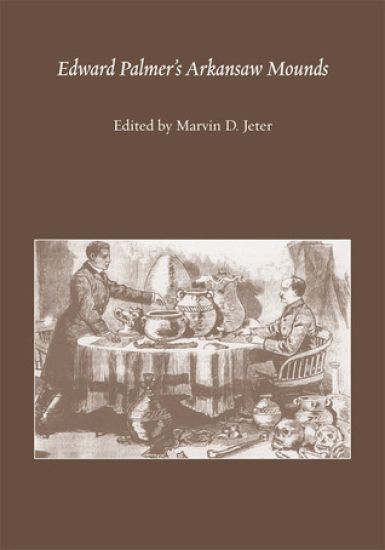
EDWARD PALMER'S ARKANSAW MOUNDS

EDWARD PALMER'S ARKANSAW MOUNDS

The University of Alabama Press
2010
nidottu
Normal0falsefalsefalseMicrosoftInternetExplorer4During the 1880s a massive scientific effort was launched by the Smithsonian Institution to discover who had built the prehistoric burial mounds found throughout the United States. Arkansaw Mounds tells the story of this exploration and of Edward Palmer, one of the nineteenth century's greatest natural historians and archaeologists, who was recruited to lead the research project. Arkansas was unusually rich in prehistoric remains, especially mounds, and became a major focus of the study. Palmer and his team of researchers discovered that the mounds had been built by the ancestors of the historic North American Indians, shattering the then-popular theory that a lost non-Indian race had built them.
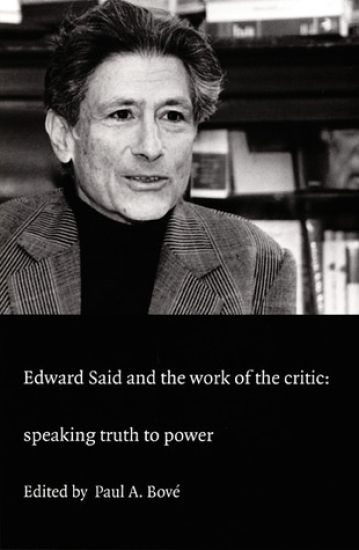
Edward Said and the Work of the Critic
For at least two decades the career of Edward Said has defined what it means to be a public intellectual today. Although attacked as a terrorist and derided as a fraud for his work on behalf of his fellow Palestinians, Said’s importance extends far beyond his political activism. In this volume a distinguished group of scholars assesses nearly every aspect of Said’s work-his contributions to postcolonial theory, his work on racism and ethnicity, his aesthetics and his resistance to the aestheticization of politics, his concepts of figuration, his assessment of the role of the exile in a metropolitan culture, and his work on music and the visual arts. In two separate interviews, Said himself comments on a variety of topics, among them the response of the American Jewish community to his political efforts in the Middle East. Yet even as the Palestinian struggle finds a central place in his work, it is essential-as the contributors demonstrate-to see that this struggle rests on and gives power to his general "critique of colonizers" and is not simply the outgrowth of a local nationalism. Perhaps more than any other person in the United States, Said has changed how the U.S. media and American intellectuals must think about and represent Palestinians, Islam, and the Middle East. Most importantly, this change arises not as a result of political action but out of a potent humanism-a breadth of knowledge and insight that has nourished many fields of inquiry. Originally a special issue of boundary 2, the book includes new articles on minority culture and on orientalism in music, as well as an interview with Said by Jacqueline Rose. Supporting the claim that the last third of the twentieth century can be called the "Age of Said," this collection will enlighten and engage students in virtually any field of humanistic study. Contributors. Jonathan Arac, Paul A. BovÉ, Terry Cochran, Barbara Harlow, Kojin Karatani, Rashid I. Khalidi, Sabu Kohsu, Ralph Locke, Mustapha Marrouchi, Jim Merod, W. J. T. Mitchell, Aamir R. Mufti, Jacqueline Rose, Edward W. Said, Gayatri Chakravorty Spivak, Lindsay Waters
Edward Said and the Work of the Critic
For at least two decades the career of Edward Said has defined what it means to be a public intellectual today. Although attacked as a terrorist and derided as a fraud for his work on behalf of his fellow Palestinians, Said’s importance extends far beyond his political activism. In this volume a distinguished group of scholars assesses nearly every aspect of Said’s work-his contributions to postcolonial theory, his work on racism and ethnicity, his aesthetics and his resistance to the aestheticization of politics, his concepts of figuration, his assessment of the role of the exile in a metropolitan culture, and his work on music and the visual arts. In two separate interviews, Said himself comments on a variety of topics, among them the response of the American Jewish community to his political efforts in the Middle East. Yet even as the Palestinian struggle finds a central place in his work, it is essential-as the contributors demonstrate-to see that this struggle rests on and gives power to his general "critique of colonizers" and is not simply the outgrowth of a local nationalism. Perhaps more than any other person in the United States, Said has changed how the U.S. media and American intellectuals must think about and represent Palestinians, Islam, and the Middle East. Most importantly, this change arises not as a result of political action but out of a potent humanism-a breadth of knowledge and insight that has nourished many fields of inquiry. Originally a special issue of boundary 2, the book includes new articles on minority culture and on orientalism in music, as well as an interview with Said by Jacqueline Rose. Supporting the claim that the last third of the twentieth century can be called the "Age of Said," this collection will enlighten and engage students in virtually any field of humanistic study. Contributors. Jonathan Arac, Paul A. BovÉ, Terry Cochran, Barbara Harlow, Kojin Karatani, Rashid I. Khalidi, Sabu Kohsu, Ralph Locke, Mustapha Marrouchi, Jim Merod, W. J. T. Mitchell, Aamir R. Mufti, Jacqueline Rose, Edward W. Said, Gayatri Chakravorty Spivak, Lindsay Waters
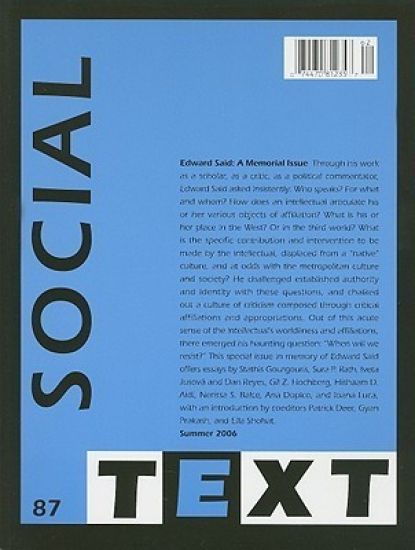
Edward Said

Edward Said

P Deer

Duke University Press
2006
nidottu
Through his work as a scholar, as a critic, and as a political commentator, Edward Said asked insistently: Who speaks? For what and whom? How does an intellectual articulate his or her place in the West? Or in the developing world? What is the specific contribution and intervention to be made by the intellectual? This Social Text special issue in memory of Said examines how he challenged established authority and identity with these questions and shaped a culture of criticism.
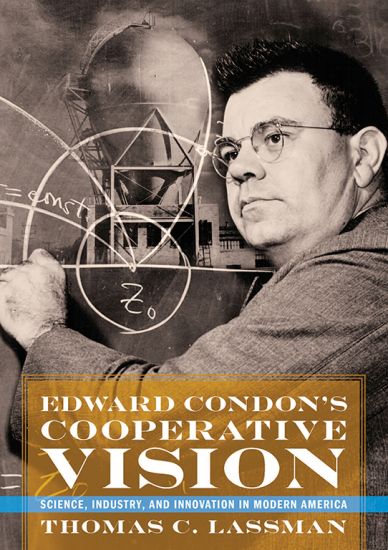
Edward Condon's Cooperative Vision

Edward Condon's Cooperative Vision

Thomas C. Lassman

University of Pittsburgh Press
2018
sidottu
Born in 1902, Edward Condon made significant contributions to quantum theoretical physics. Nearly ten years at Princeton University sealed his reputation as a leading figure in the field. Then, in 1937, he gave it all up to pursue an industrial career, first at the Westinghouse Electric and Manufacturing Company, and then, by way of the federal government, the National Bureau of Standards. In a radical departure from professional norms, Condon sought to redefine the relationship between academic science and technological innovation in industry. He envisioned intimate cooperation with the universities to serve the needs of his employers and also the broader business community. This book explores the birth, life, and death of that vision during the Great Depression, World War II, and the early Cold War. Condon’s cooperative model of R&D evolved over time, and by consequence, laid bare sharp disagreements among academic, corporate, and government stakeholders about the practical value of new knowledge, where and how it should be produced, and ultimately, on whose behalf it ought to be put to use.
Edward Said's Rhetoric of the Secular

Edward Said's Rhetoric of the Secular

Mathieu E. Courville

Continuum International Publishing Group Ltd.
2009
sidottu
" Edward Said's Rhetoric of the Secular provides an important new reading of Edward W. Said's work, emphasizing not only the distinction but also the fuzzy borders between representations of 'the religious' and 'the secular' found within and throughout his oeuvre and at the core of some of his most customary rhetorical strategies. Mathieu Courville begins by examining Said's own reflections on his life, before moving on to key debates about Said's work within Religious Studies and Middle Eastern Studies, and his relationship to French critical theorists. Through close attention to Said's use of the literal and the figurative when dealing with religious, national and cultural matters, Courville discerns a pattern that illuminates what Said means by secular. Said's work shows that the secular is not the utter opposite of religion in the modern globalized world, but may exist in a productive tension with it. "
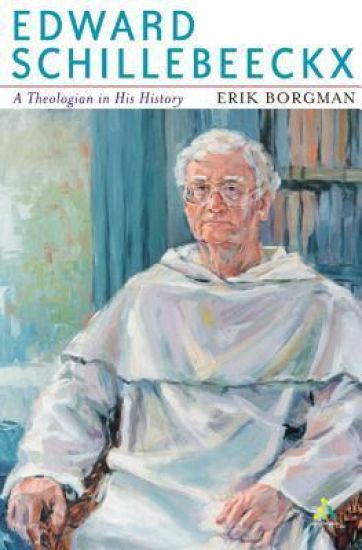
Edward Schillebeeckx

Edward Schillebeeckx

Erik Borgman

Continuum International Publishing Group Ltd.
2004
nidottu
This is the first full biography of one of the greatest Roman Catholic theologians of the last century. Schillebeeckx is alive and still writing important work. He is a Dutch Dominican and theological genius, whose influence on the Second Vatican Council was extraordinarily profound. He was regarded as the theological voice of progressive Catholicism. But in 1968 the Vatican Authorities started an investigation into his orthodoxy and a great many Catholics also felt that this was an attack on them. This is above all an intellectual biography - a work in which changes which are perceptible in his published work have been connected with the contemporary changes in the social, cultural, theological and ecclesiastical landscape. So this is a study of Schillebeeckx that puts him in his history - it is a new perspective of his ultimate significance for the church and for the development of theology. The aim of Erik Borgman in this book is to increase the knowledge of Schillebeeckx's theology by fully explaining its context.
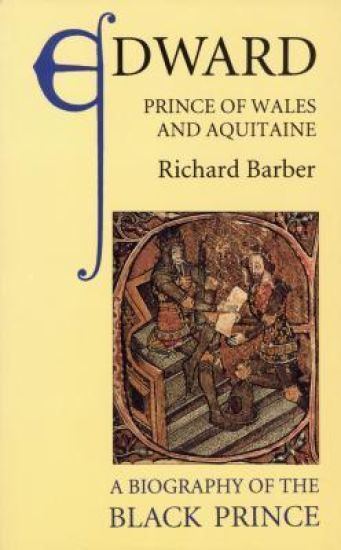
Edward, Prince of Wales and Aquitaine

Edward, Prince of Wales and Aquitaine

Richard Barber

The Boydell Press
1996
pokkari
`...excellent study of the prince's career. A first-class synthesis of the entire literature of this subject.' BRITISH BOOK NEWS Edward, prince of Wales and Aquitaine, known as the Black Prince, is one of the legendary figures of English history, victor of three great battles and a model of chivalry and courtesy. Behind this image, which many of his contemporaries accepted and eagerly believed in, it is difficult to get at the realities of his character and of the life that he led. Most of his biographers have based their work on the splendid vision of chivalry conjured up by Froissart, but the present book deliberately shuns this approach, to see what can be found in official records, particularly from the prince's household and those who campaigned with the prince. Special attention has been paid not onlyto the confusing and confused accounts of the great battles, but also to the prince's early years, his close companions who contributed so greatly to his successes, and to his government of Aquitaine, an obscure but very importantpart of his career. A number of minor but persistent errors in early histories, deriving from Froissart, are corrected. A concluding chapter examines how the legend of the Black Prince (and his curious nickname) came into being.By separating the image and the reality, a clearer picture of the prince emerges. Dr RICHARD BARBER is the author of The Arthurian Legends, King Arthur: Hero and Legend, Tournaments, a biography of Henry II, The Penguin Guide to Medieval Europe, and the recently revised seminal study of The Knight and Chivalry.
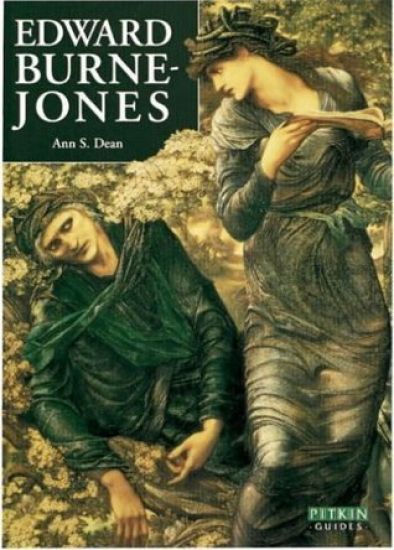
Edward Burne-Jones

Edward Burne-Jones

Ann S Dean

Pavilion Books
1998
pokkari
Edward Burne-Jones was one of the great Victorian artists in a golden age of art. This guide immerses the reader in his life, meetings with key Pre-Raphaelites and his own fame and critical acclaim for his art.