Kirjojen hintavertailu. Mukana 11 244 527 kirjaa ja 12 kauppaa.

Kirjahaku

Etsi kirjoja tekijän nimen, kirjan nimen tai ISBN:n perusteella.

1000 tulosta hakusanalla Edward M. Stack

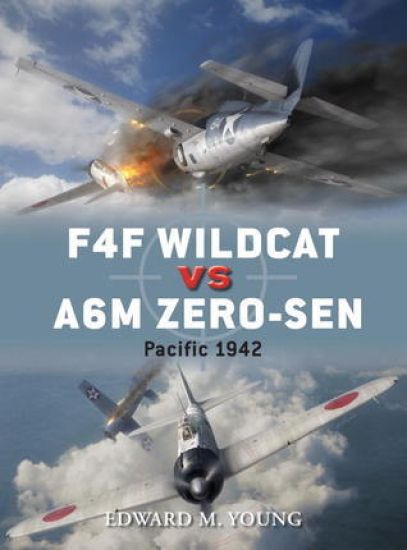
F4F Wildcat vs A6M Zero-sen

F4F Wildcat vs A6M Zero-sen

Edward M. Young

Osprey Publishing
2013
nidottu
The duel between Japan’s superb Mitsubishi A6M Zero and the USA’s rugged Grumman F4F Wildcat in 1942 represented the clash of two contrasting design philosophies and naval fighter doctrines. The Grumman F4F Wildcat and the Mitsubishi A6M Zero-sen were contemporaries, although designed to very different requirements. The Wildcat, ruggedly built to survive the rigors of carrier operations, was the best carrier fighter the US Navy had available when the USA entered World War II, and it remained the principal fighter for the US Navy and the US Marine Corps until 1942–43. With a speed greater than 300mph, exceptional manoeuvrability, long range, and an impressive armament the slick Zero-sen could out-perform any Allied fighter in 1941–42.This fully illustrated account of the battles between the Wildcat and the Zero-sen during 1942 represent a classic duel in which pilots flying a nominally inferior fighter successfully developed air-combat tactics that negated the strengths of their opponent.
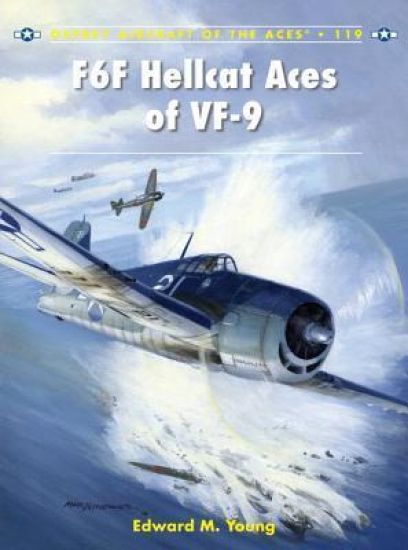
F6F Hellcat Aces of VF-9

F6F Hellcat Aces of VF-9

Edward M. Young

Osprey Publishing
2014
nidottu
In the course of two combat tours VF-9 pilots shot down 250 Japanese aeroplanes and produced 20 aces.VF-9 was activated in March 1942 as part of Carrier Air Group (CAG) 9, one of the many air groups the US Navy was hurriedly forming in the aftermath of the Japanese attack on Pearl Harbor. Equipped with Grumman F4F Wildcats, VF-9 first saw combat during the Allied invasion of North Africa in November 1942, where the squadron engaged Vichy French fighters over Morocco. Returning to the United States, VF-9 became one of the first squadrons to receive the Grumman F6F Hellcat and to deploy on the USS Essex, the first of its class of fleet carriers that would form the backbone of the US Navy’s Fast Carrier Task Force. VF-9, the Hellcat, and the Essex all entered combat in the fall of 1943.This book details how, In the hands of the squadron’s pilots, and with other Navy fighter squadrons, the Hellcat proved superior to the Imperial Japanese Navy’s A6M Zero, which had heretofore been the world’s premier carrier fighter plane.
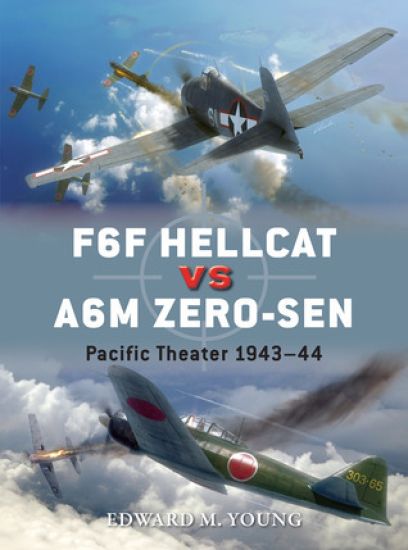
F6F Hellcat vs A6M Zero-sen

F6F Hellcat vs A6M Zero-sen

Edward M. Young

Osprey Publishing
2014
nidottu
A fully illustrated study pitting together the superb Mitsubishi A6M Zero-sen, the world’s finest carrier fighter in 1942, and the heavyweight F6F Hellcat.The Grumman F6F Hellcat and Mitsubishi A6M Zero-sen were the two principal opposing fighters in the brutal aerial clashes of the Pacific War from 1943 onwards. Reminiscent of the preceding F4F Wildcat, the F6F Hellcat was designed specifically to counter the earlier A6M2 Zero-sen, the strengths and weaknesses of which became fully understood by US designers after an undamaged example was recovered in the Aleutians.The powerful Hellcat had an impressive top speed, rate of climb and armament, and it retained its predecessor’s incredible ruggedness. The A6M5 Zero-sen was also born out of an earlier type, but was intended merely as a stop-gap until more modern Japanese fighters could be produced to restore performance parity with Allied aircraft. The chaotic conditions of the Japanese Aircraft industry and war economy prevented new types from being built.Featuring detailed artwork illustrating the technical specifications of these two types and the dramatic encounters between them, this volume focuses on how these iconic fighters came into being, and how they fared as they faced one another over the Pacific skies of World War II.
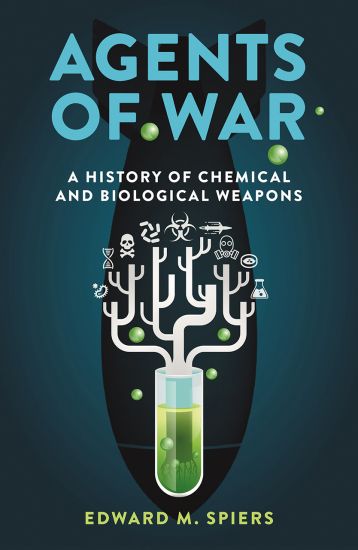
Agents of War

Agents of War

Edward M. Spiers

Reaktion Books
2021
nidottu
Often described as the misuse of science, chemical and biological weapons have incurred widespread opposition over the years. Despite condemnation from the United Nations, governments and the disarmament lobby, they remain very real options for rogue states and terrorists. This much-needed history is now available in paperback, and has been expanded and updated with two new chapters on political poisoning and chemical weapons in the Middle East. In Agents of War Edward M. Spiers breaks new ground by presenting his analysis in both historical and contemporary contexts, giving a comprehensive chronological account of why, where and when such weapons were used or suspected to be deployed.
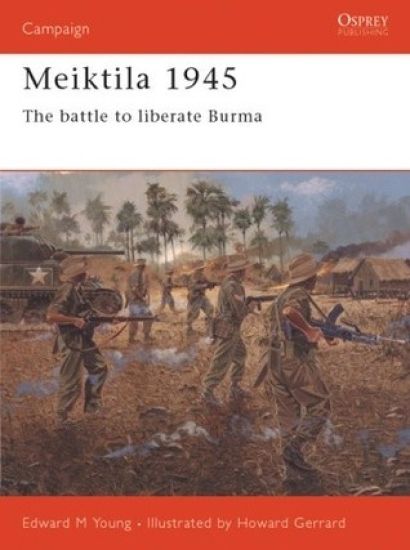
Meiktila 1945

Meiktila 1945

Edward M. Young

Osprey Publishing
2004
nidottu
A compact, illustrated account of the Japanese army's final stand in Burma.In the spring of 1944, Japanese 15th Army was shattered at Imphal and Kohima, allowing General William Slim, commander of 14th Army, to liberate Burma overland from India – a task considered impossible by the British chiefs of staff.Overcoming immense logistical problems, Slim coordinated a precisely timed attack along a 200-mile front, the longest opposed river crossing of the entire war, and an armored dash behind enemy lines that seized Meiktila, cutting Japanese supply lines. Mandalay fell and at the end of March 1945, with the battle lost, the Japanese withdrew south.Slim gave them no chance; Allied troops raced south and captured Rangoon. The Japanese army in Burma was finished.
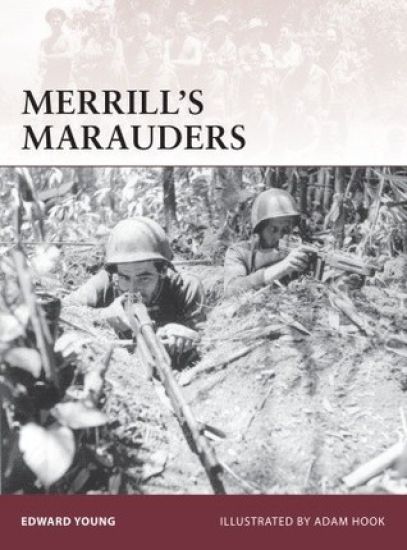
Merrill’s Marauders

Merrill’s Marauders

Edward M. Young

Osprey Publishing
2009
nidottu
Merrill's Marauders were the first American Army infantry unit to fight in the China-Burma-India theater, and one of the most renowned units to come out of World War II. The Marauders established a lasting reputation for hard fighting and tenacity in the face of adversity, combating a determined enemy, some of the most difficult and disease-ridden terrain in the world, and a seemingly indifferent higher command. Pushed beyond the limit of their endurance, at the end of nearly six months of operations behind Japanese lines, the remaining Marauders were withdrawn from combat after suffering over 90% casualties. Because of its courageous actions, the unit received the very rare honor of having every member presented with a Bronze Star for gallantry. This book explores the creation, training and combat experiences of the Marauders, one of the most famous units in the US Army's roll of honor.
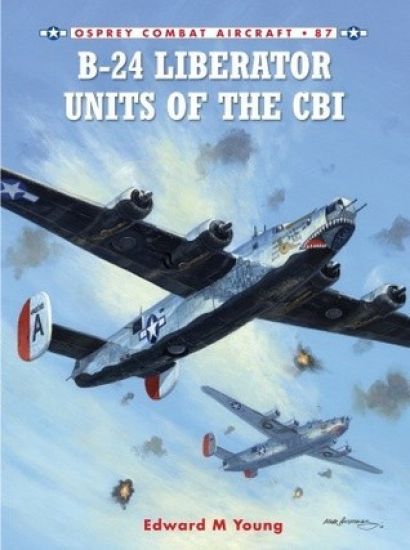
B-24 Liberator Units of the CBI

B-24 Liberator Units of the CBI

Edward M. Young

Osprey Publishing
2011
nidottu
An illustrated history of the B-24 Liberator, the mainstay of the US Army Air Force's strategic bombing effort in the China-Burma-India (CBI) Theatre from 1942 until the end of the war in 1945.With longer range and a greater load-carrying capacity than the B-17, the B-24 was well-suited to the demands of the CBI. The CBI's two air forces, the Tenth in India and the Fourteenth in China, each had one heavy bomb group equipped with Liberators. These two groups, the 7th and the 308th, carried the war to the Japanese across China and South East Asia, flying over some of the most difficult terrain in the world. The 308th had the added burden of having to carry its own fuel and bombs over the Himalayan 'Hump' from India to China in support of its missions.This book shows how, despite the hardships and extreme distances from sources of supply, both units compiled a notable record, each winning two Distinguished Unit Citations.
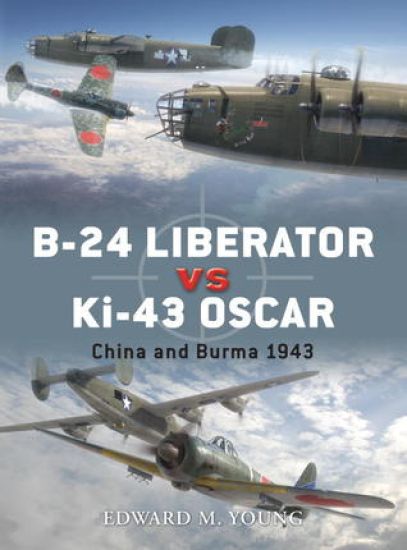
B-24 Liberator vs Ki-43 Oscar

B-24 Liberator vs Ki-43 Oscar

Edward M. Young

Osprey Publishing
2012
nidottu
A detailed account of the unique battles in which a fighter not designed for the intercept role managed to inflict heavy damage on opposing bombers, due to ideal conditions, good tactics and determined pilots.In reviewing reports of air combat from Spain, China and the early stages of the war in Europe, the US Army Air Corps called for heavier armor and armament for its bomber fleet, including the addition of a tail turret. While Japan tried to counter with their own heavy fighters, their inability to produce them in any number meant that they were forced to face the bomber threat with the nimble, but under–armed Ki-43 “Oscar”. While severely outgunned, the Japanese learned to use their greater maneuverability to exploit the small weakness in bomber defenses.This book tells the story of the clash in the skies over the Pacific, as the Japanese fought desperately against the coming tide of the American bomber offensive.
American Aces against the Kamikaze

American Aces against the Kamikaze

Edward M. Young

Osprey Publishing
2012
nidottu
This illustrated history describes the clashes between the US against the hastily created Kamikaze units of the Imperial Japanese Army and Navy Air Forces, some of the last large scale aerial engagements of the Pacific War. The Japanese High Command realised that the loss of Okinawa would give the Americans a base for the invasion of Japan. Its desperate response was to unleash the full force of the Special Attack Units, known in the west as the Kamikaze ('Divine Wind'). In a series of mass attacks in between April and June 1945, more than 900 Kamikaze aeroplanes were shot down.Conventional fighters and bombers accompanied the Special Attack Units as escorts, and to add their own weight to the attacks on the US fleet. In the air battles leading up to the invasion of Okinawa, as well as those that raged over the island in the three months that followed, the Japanese lost more than 7,000 aircraft both in the air and on the ground. In the course of the fighting, 67 Navy, 21 Marine, and three USAAF pilots became aces.As Edward M Young shows, in many ways it was an uneven combat and on numerous occasions following these uneven contests, American fighter pilots would return from combat having shot down up to six Japanese aeroplanes during a single mission.
Financing federal systems

Financing federal systems

Edward M. Gramlich

Edward Elgar Publishing Ltd
1997
sidottu
Financing Federal Systems provides a comprehensive selection of Edward M. Gramlich's essays, which have made a major contribution to public finance and macroeconomics over three decades.The structure of fiscal federalism is a major issue in most countries around the world. Developed economies are continually confronting the question of fiscal federalism as they consider harmonizing tax and trading arrangements. Emerging market economies are addressing these issues as they organize systems to promote growth and development.The book begins with a new introduction by the author which provides a clear and concise overview of the current issues in fiscal federalism. The book comprises some 23 papers and features empirical, theoretical and diagnostic work together with comprehensive evaluations of the fiscal federal systems in the United States, Australia, Sweden and Canada. It includes work on state and local government behaviour, grant policies, macroeconomic policies, state tax limitations, federal tax policy, sub-national fiscal policy, infrastructure investment and public welfare policies.Financing Federal Systems will complement graduate and undergraduate courses in public finance and fiscal federalism. It will also appeal to policymakers and local government practitioners.
A History of Chemical and Biological Weapons

A History of Chemical and Biological Weapons

Edward M. Spiers

Reaktion Books
2010
sidottu
Often described as the misuse of science, chemical and biological weapons have incurred widespread opposition over the years. Despite condemnation from the United Nations, governments and the disarmament lobby, they remain very real options for rogue states and terrorists. Capable of development and production in small, covert facilities, these versatile weapons kill and injure in horrific ways, and also cause immense psychological shock and panic. This much-needed history examines the similarities and differences between the two types of weapons, and how technological advancements have led to tactical innovations in their use. Global efforts to restrain their use, with deterrence and disarmament being the major issues, are also discussed. From the widespread gas warfare used in the First World War to Saddam Hussein's attacks on the Iraqi Kurds, this book gives a comprehensive chronological account of why, where and when such weapons were used or suspected to be deployed. Edward M. Spiers breaks new ground by presenting his analysis in both historical and contemporary contexts. He includes attempts by terrorists to employ these weapons, along with the challenges posed in the preparation of proportionate defences, military responses and law-enforcement. This book will be of interest to readers studying the proliferation and use of these weapons, and the reactions of the international community.
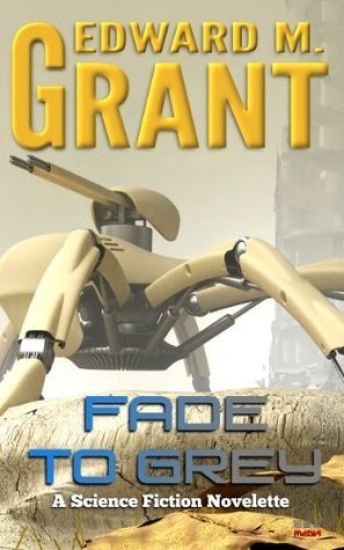
Fade To Grey

Fade To Grey

Edward M Grant

Banchixi Media
2013
pokkari
How do you repair a dead planet?Maintenance Bot M-3 was always proud of the smooth and reliable operation of the starships it maintained, as they travelled the galaxy searching for life on unexplored worlds. It lived for the desperate struggle against the forces of chaos and decay, fighting against time to complete repairs before disaster struck.But this job may be beyond even its capabilities.A 15,000 word science fiction novelette.
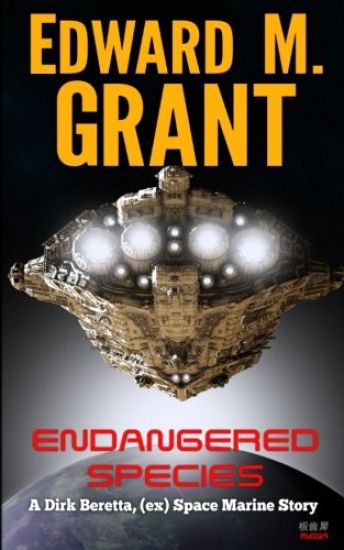
Endangered Species

Endangered Species

Edward M. Grant

Banchixi Media
2018
nidottu
A hundred light-year quarantine zone protects the primitive jungle tribes of the Platypus Planet from unauthorized interference. But not from BastadoCorp acquiring mining rights through bribery and fraud.When Dirk Beretta's girlfriend tells him to get off the couch and look for a job, he finds the perfect opportunity, thousands of light years from her, with free guns and beer, as security chief for the mines.But no-one told him what happened to the previous security chief, or that the Platypoids would rather die fighting than see their land defiled.Should he follow his new boss' orders, and nuke the jungle until it glows... or save the furry native girl with the leather bikini, and risk a messy death in Bastado's grinding machines?A 12,000 word science fiction novelette.
Pharaoh Adolf

Pharaoh Adolf

Edward M. Grant

Banchixi Media
2017
nidottu
Time is out of joint, and Dirk Beretta, ex-poster boy for the Space Marines, is the only man who can set it right. Fleeing his bunker in the ruins of Berlin, Adolf Hitler escapes to ancient Egypt, where he can build the Fourth Reich and take over the world before anyone can oppose him. The repercussions race up the timeline to the 69th century, changing everything they touch along the way. Now Dirk must venture back in time to restore history, and save the universe from Pharaoh Adolf and the Steampunk Nazi Horde. Because, if he fails, he may never get to eat a bagel again.
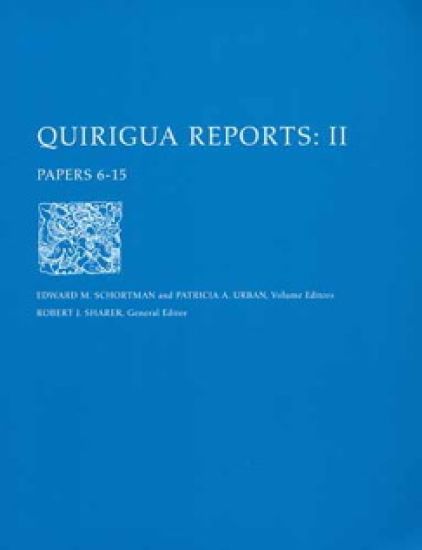
Quiriguá Reports, Volume II – Papers 6–15

Quiriguá Reports, Volume II – Papers 6–15

Edward M. Schortman; Patricia A. Urban

University of Pennsylvania Press
2002
nidottu
Although QuiriguA and its magnificent carved monuments have been recorded and studied by scholars over the past century, little archaeological data were available until recently. From 1973 through 1979, the University Museum sponsored investigations at this major lowland Maya site in eastern Guatemala. The aims of the work were to document a basic chronology, to determine the nature and pattern of structures, and to test hypotheses concerning the origins, location, and demise of QuiriguA.
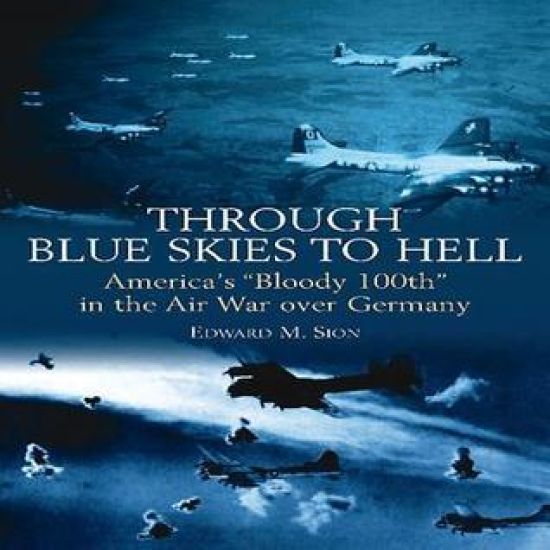
Through Blue Skies to Hell

Through Blue Skies to Hell

Edward M. Sion

Casemate Publishers
2011
nidottu
This book provides a comprehensive look at the air war over Europe during the climactic year of World War II, combining first-hand experience with expert analysis. The centrepiece of the work is a mission-by-mission diary of 1st Lieutenant Richard R. Ayesh, bombadier on a B-17 Flying Fortress, who flew with the 100th Bombardment Group, 13th Combat Wing of the 8th Air Force - the legendary “Bloody 100th”. He was a recipient of the Distinguished Flying Cross, Croix de Guerre, Air Medal with Four Oak Leaf Clusters, and numerous other medals. This book follows Ayeth’s progress from his youth during the Great Depression in Wichita, Kansas, a city which at the time was rapidly becoming the air capital of the nation, to his arrival in England as a Lieutenant in a bomber crew assigned to assault the Third Reich. Once in Europe, the author provides a comprehensive look at the principles of American daylight strategic bombing, while relaying to the reader the overall military situation on the ground and in the air over Europe just after D-Day. This work is uniquely self-contained and covers all aspects of the Air War in a clear, concise, yet non-technical manner. Topics include photo-reconnaisance, munitions and bomb types, combatant aircraft characteristics, fighter tactics, bomber tactics, bomber formations, strategic target selection, combatant and defensive radars, counter-measures (and counter-counter measures), logistics, ground crews, and air scouts. The author, interweaving his analysis with the urgent firsthand diary of a participant in the Bloody 100th, describes the air war in full fashion, in the process revealing a number of insights. Throughout 35 combat missions, the unaltered combat diary of Lt. Ayesh is presented mission-by-mission, punctuated by tragedy and unbelievable heroism, with explanations and commentary on the significance of the events and actions described en route. The result is one of the most frank and exciting works on the air war over Europe to date. EDWARD M. SION, Ph.D., a native of Kansas, is currently Professor of Astronomy and Astrophysics at Villanova University. He has held visiting positions at Arizona State, the University of Toulouse and the Hubble Space Telescope Science Institute. A recipient of numerous grants from the National Science Foundation and NASA, he has authored or co-authored 185 peer-reviewed publications, primarily on the end stages of stellar evolution. He currently resides with his wife and two children in Radnor, PA.