
Kirjahaku
Etsi kirjoja tekijän nimen, kirjan nimen tai ISBN:n perusteella.
1000 tulosta hakusanalla Edwin Hodder
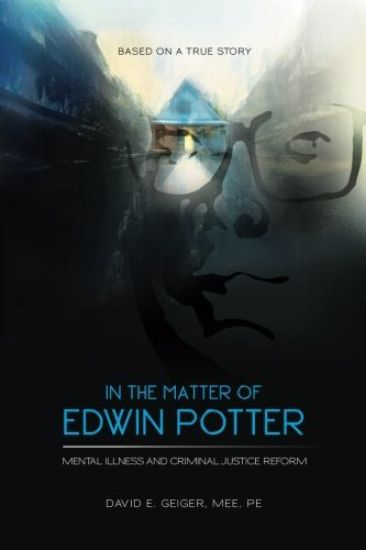
In the Matter of Edwin Potter: Mental Illness and Criminal Justice Reform
David E. Geiger
David E.\ Geiger
2016
nidottu
What is the book about?It is an autobiography about Edwin Potter (not his real name), a man with schizophrenia. He had no treatment, and, as a result, he killed somebody. This is the true story of his trial, his struggle, and his comeback. David Geiger initiated his journey into criminal justice reform in May 1998 and wrote many copyrighted articles on the topic. In 2018, he received the Albert Nelson Marquis Lifetime Achievement Award from Marquis Who's Who. In November 2022, he was a panel member for an FDA conference which initiated drug research into schizophrenia. In May 2024, he participated in a SOAR Forum with NJ Reentry Corporation and Rutgers University Newark Center for Applied Appreciative Inquiry "to offer your valuable public policy ideas to improve and transform the breadth of mental health and addiction treatment services for Justice-involved individuals." Winner of the London Book Reviews seal Honoring Excellence.Winner of the Toronto Book Review Literary Award. Web site: www.davidegeiger.com

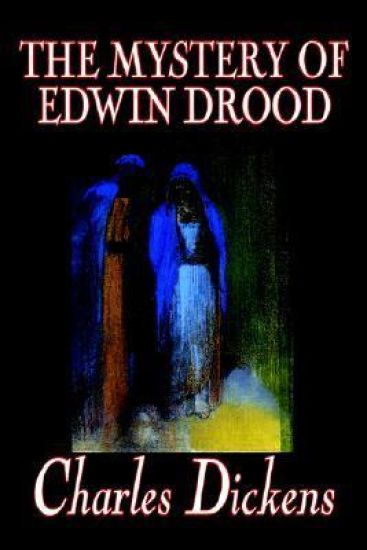
Through the ragged window-curtain, the light of early day steals in from a miserable court. He lies, dressed, across a large unseemly bed, upon a bedstead that has indeed given way under the weight upon it. Lying, also dressed and also across the bed, not longwise, are a Chinaman, a Lascar, and a haggard woman. The two first are in a sleep or stupor; the last is blowing at a kind of pipe, to kindle it. And as she blows, and shading it with her lean hand, concentrates its red spark of light, it serves in the dim morning as a lamp to show him what he sees of her. "Another?" says this woman, in a querulous, rattling whisper. "Have another?"
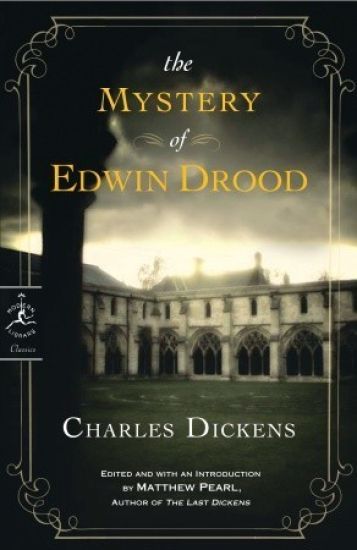
The Mystery of Edwin Drood is a novel that is itself the subject of one of literature's most enduring mysteries. The story recounts the troubled romance of Rosa Bud and the book's eponymous character, who later vanishes. Was Drood murdered, and if so by whom? All clues point to John Jasper, Drood's lugubrious uncle, who coveted Rosa. Or did Drood orchestrate his own disappearance? As Charles Dickens died before finishing the book, the ending is intriguingly ambiguous. In his Introduction, Matthew Pearl illuminates the 150-year-long quest to unravel The Mystery of Edwin Drood and lends new insight into the novel, the literary milieu of 1870s England, and the private life of Charles Dickens. This Modern Library edition includes new endnotes and a full transcript of "The Trial of John Jasper for the Murder of Edwin Drood," the 1914 mock court case presided over and argued by the likes of G. K. Chesterton and George Bernard Shaw. Now diehard fans, new readers, and armchair detectives have another opportunity to solve the mystery Dickens took to his grave.
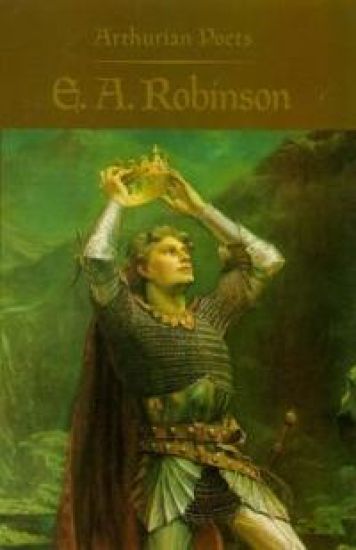
Arthurian Poets: Edwin Arlington Robinson
The Boydell Press
1990
pokkari
`Traditional yet original, realistic but not in the reductive sense, he is too good to be forgotten.' ROBERTSON DAVIES Robinson's Arthurian poems, published between 1917 and 1927, won him a Pulitzer prize and yet are almost unknown today. With his introspective New England style and quiet tone, he brilliantly catches the tension between reason and passion that drives the characters of the Arthurian stories: these are modern lovers, with the philosophical and psychological concerns of the early 20th century. The sense of vision, and the feeling that the world of Arthur mirrors the fate of all mankind, binds the diverse characters together, and makes Robinson's poems essential reading for everyone interested in the Arthurian legend in the twentieth century.

Recent Excavations at the Edwin Harness Mound, Liberty Works, Ross County, Ohio
N'Omi Greber
Kent State Univ Pr
1984
pokkari

Seventeen poems of Edwin Morgan, the contemporary Poet for Scotland, are presented here on this audio CD. Edwin Morgan reads his own poems, with commentary by Professor Roderick Watson of Stirling University.
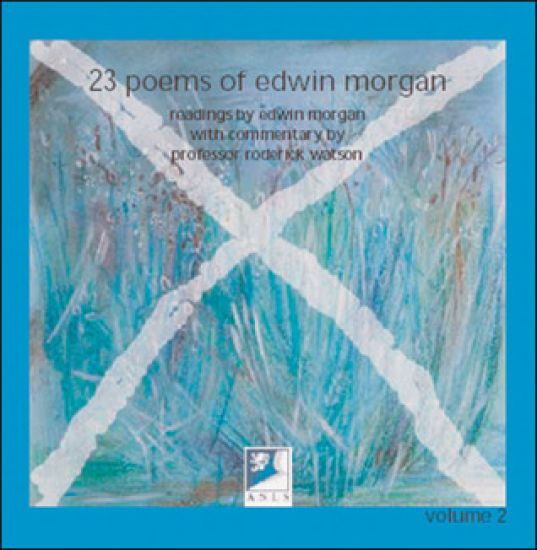
Each poem in this CD is read by Edwin Morgan, followed by commentary by Professor Roderick Watson of the University of Stirling. This CD serves as a tool for classroom study.

The Mystery of Edwin Drood (Completed by David Madden)
Charles Dickens; David Madden
Unthank Books
2011
pokkari
With a gorgeous new jacket for this edition including original artwork by Gracie Carver, based on the famous Luke Fildes illustration, THE MYSTERY OF EDWIN DROOD completed by David Madden is sure to continue to offer the true Dickensian vision of this classic."David Madden's continuation must be regarded as one of the very best conclusions of the mystery to date. He magically recreates the tone and atmosphere of the original novel as he weaves together the threads Dickens left behind - producing a first-rate ending that remains faithful to both the existing fragment and its author."Professor Don Richard Cox, doyen of Droodian studies, and author of the Annotated Bibliography
This work has been selected by scholars as being culturally important and is part of the knowledge base of civilization as we know it.This work is in the public domain in the United States of America, and possibly other nations. Within the United States, you may freely copy and distribute this work, as no entity (individual or corporate) has a copyright on the body of the work.Scholars believe, and we concur, that this work is important enough to be preserved, reproduced, and made generally available to the public. To ensure a quality reading experience, this work has been proofread and republished using a format that seamlessly blends the original graphical elements with text in an easy-to-read typeface.We appreciate your support of the preservation process, and thank you for being an important part of keeping this knowledge alive and relevant.
This work has been selected by scholars as being culturally important and is part of the knowledge base of civilization as we know it.This work is in the public domain in the United States of America, and possibly other nations. Within the United States, you may freely copy and distribute this work, as no entity (individual or corporate) has a copyright on the body of the work.Scholars believe, and we concur, that this work is important enough to be preserved, reproduced, and made generally available to the public. To ensure a quality reading experience, this work has been proofread and republished using a format that seamlessly blends the original graphical elements with text in an easy-to-read typeface.We appreciate your support of the preservation process, and thank you for being an important part of keeping this knowledge alive and relevant.
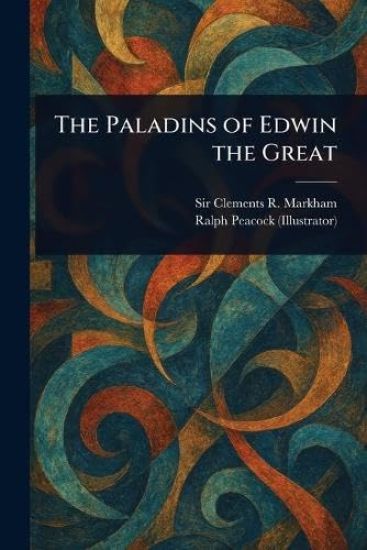
The Paladins of Edwin the Great
Clements R (Clements Robert) Markham; Ralph Peacock
Anson Street Press
2025
pokkari
The Paladins of Edwin the Great
Clements R (Clements Robert) Markham; Ralph Peacock
Anson Street Press
2025
sidottu
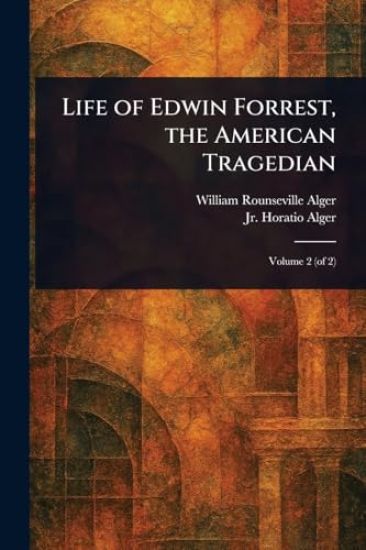
Life of Edwin Forrest, the American Tragedian
William Rounseville Alger; Horatio Alger
Anson Street Press
2025
pokkari
Life of Edwin Forrest, the American Tragedian
William Rounseville Alger; Horatio Alger
Anson Street Press
2025
sidottu