Kirjojen hintavertailu. Mukana 12 555 856 kirjaa ja 12 kauppaa.

Kirjahaku

Etsi kirjoja tekijän nimen, kirjan nimen tai ISBN:n perusteella.

1000 tulosta hakusanalla Erika Singer

CCCC Bibliography of Composition and Rhetoric 1990

CCCC Bibliography of Composition and Rhetoric 1990

Erika Lindemann

SOUTHERN ILLINOIS UNIVERSITY PRESS
1992
nidottu
Published for the Conference on College Composition and Communication, this 1990 volume lists and annotates 1,849 articles, books, dissertations, and papers. A group of 136 contributing bibliographers prepared the citations and annotations for all entries. The volume includes an index of authors and editors and cross-references entries according to subject matter.Entries appear under five major categories: bibliographies and checklists; theory and research; teacher education, administration, and social roles; curriculum; and testing, measurement, and evaluation.
Looking for Lincoln in Illinois

Looking for Lincoln in Illinois

Erika Holst

Southern Illinois University Press
2018
nidottu
The Illinois Abraham Lincoln lived in—a place of unbroken prairie, steamboats, railroads, log cabins, and rural county seats—long ago gave way to the modern world of interstate highways, commercial farmland, and cities. Yet houses and inns from Lincoln’s time survive, providing a physical connection to the past.This richly illustrated compendium of twenty-two historic buildings in the Abraham Lincoln National Heritage Area includes houses, a hotel, and an art center, all of which are open to the public. Each site links today’s visitors with a place Lincoln lived, a home of a Lincoln friend or a colleague, or a spot that illuminates Lincoln’s era and legacy in central Illinois. Along with dozens of modern full-color photographs and historical photographs, entries contain explorations of historical connections to Lincoln and detailed information about exceptional features and artifacts. Complete with maps, the book is a handy guide for day trips, extended tours, or armchair adventures.The four homes in which Lincoln or members of his extended family lived include Thomas Lincoln’s log cabin and the Vachel Lindsay house, where Mary Lincoln’s sister, Ann Todd Smith, resided in Springfield. Eight homes of Lincoln’s friends and acquaintances, including John Greene Shastid and David Davis, give the impression that Lincoln easily moved between humble halls and lavish parlors. Ten other sites, —including the homes of an abolitionist, a farmer, and Illinois governors as well as Joseph Smith’s homestead and mansion and Carl Sandburg’s birthplace, —reveal how nineteenth-century Illinoisans lived and show that Lincoln’s cultural legacy was still very much alive long after he left the state. An appendix features related sites and the Pittsfield talking house tour.A showcase of Illinois heritage, this enlightening guide promotes a new understanding of Lincoln’s relationships with family, friends, colleagues, and political allies and inspires readers to visit these historic treasures in person.
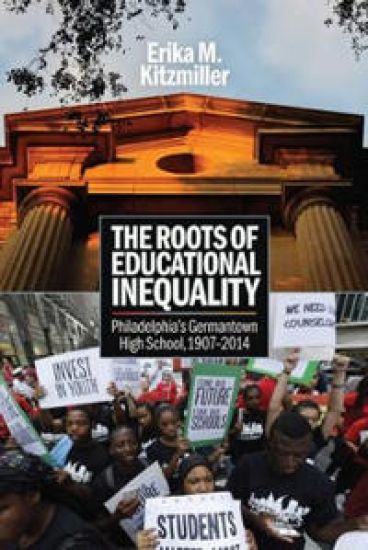
The Roots of Educational Inequality

The Roots of Educational Inequality

Erika M. Kitzmiller

University of Pennsylvania Press
2021
sidottu
The Roots of Educational Inequality chronicles the transformation of one American high school over the course of the twentieth century to explore the larger political, economic, and social factors that have contributed to the escalation of educational inequality in modern America. In 1914, when Germantown High School officially opened, Martin G. Brumbaugh, the superintendent of the School District of Philadelphia, told residents that they had one of the finest high schools in the nation. Located in a suburban neighborhood in Philadelphia's northwest corner, the school provided Germantown youth with a first-rate education and the necessary credentials to secure a prosperous future. In 2013, almost a century later, William Hite, the city's superintendent, announced that Germantown High was one of thirty-seven schools slated for closure due to low academic achievement. How is it that the school, like so many others that serve low-income students of color, transformed in this way? Erika M. Kitzmiller links the saga of a single high school to the history of its local community, its city, and the nation. Through a fresh, longitudinal examination that combines deep archival research and spatial analysis, Kitzmiller challenges conventional declension narratives that suggest American high schools have moved steadily from pillars of success to institutions of failures. Instead, this work demonstrates that educational inequality has been embedded in our nation's urban high schools since their founding. The book argues that urban schools were never funded adequately. Since the beginning of the twentieth century, urban school districts lacked the tax revenues needed to operate their schools. Rather than raising taxes, these school districts relied on private philanthropy from families and communities to subsidize a lack of government aid. Over time, this philanthropy disappeared leaving urban schools with inadequate funds and exacerbating the level of educational inequality.
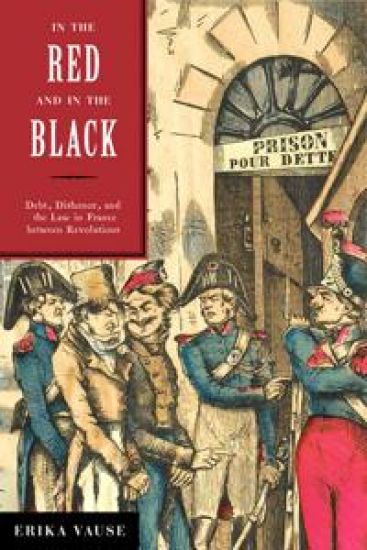
In the Red and in the Black

In the Red and in the Black

Erika Vause

University of Virginia Press
2018
sidottu
The most dishonorable act that can dishonor a man."" Such is Félix Grandet’s unsparing view of bankruptcy, adding that even a highway robber—who at least ""risks his own life in attacking you""—is worthier of respect. Indeed, the France of Balzac’s day was an unforgiving place for borrowers. Each year, thousands of debtors found themselves arrested for commercial debts. Those who wished to escape debt imprisonment through bankruptcy sacrificed their honor—losing, among other rights and privileges, the ability to vote, to serve on a jury, or even to enter the stock market.Arguing that French Revolutionary and Napoleonic legislation created a conception of commercial identity that tied together the debtor’s social, moral, and physical person, In the Red and in the Black examines the history of debt imprisonment and bankruptcy as a means of understanding the changing logic of commercial debt. Following the practical application of these laws throughout the early nineteenth century, Erika Vause traces how financial failure and fraud became legally disentangled. The idea of personhood established in the Revolution’s aftermath unraveled over the course of the century owing to a growing penal ideology that stressed the state’s virtual monopoly over incarceration and to investors’ desire to insure their financial risks. This meticulously researched study offers a novel conceptualization of how central ""the economic"" was to new understandings of self, state, and the market. Telling a story deeply resonant in our own age of ambivalence about the innocence of failures by financial institutions and large-scale speculators, Vause reveals how legal personalization and depersonalization of debt was essential for unleashing the latent forces of capitalism itself.
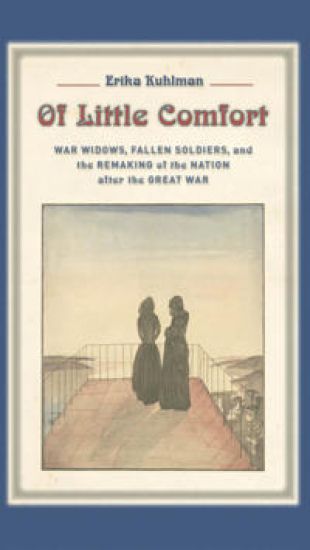
Of Little Comfort

Of Little Comfort

Erika Kuhlman

New York University Press
2012
sidottu
During and especially after World War I, the millions of black-clad widows on the streets of Europe's cities were a constant reminder that war caused carnage on a vast scale. But widows were far more than just a reminder of the war's fallen soldiers; they were literal and figurative actresses in how nations crafted their identities in the interwar era. In this extremely original study, Erika Kuhlman compares the ways in which German and American widows experienced their postwar status, and how that played into the cultures of mourning in their two nations: one defeated, the other victorious. Each nation used widows and war dead as symbols to either uphold their victory or disengage from their defeat, but Kuhlman, parsing both German and U.S. primary sources, compares widows' lived experiences to public memory. For some widows, government compensation in the form of military-style awards sufficed. For others, their own deprivations, combined with those suffered by widows living in other nations, became the touchstone of a transnational awareness of the absurdity of war and the need to prevent it.
Hans Holbein the Younger

Hans Holbein the Younger

Erika Michael

CRC Press Inc
1997
sidottu
In this quincentennial year of Holbein's birth, this is the first comprehensive annotated bibliography of texts relating to this important Northern European Renaissance artist, with an accompanying historiographic essay on various aspects of Holbein's reception.The first part of the book, "Some Notes on Reception," contains overviews of texts about specific works such as "The Dead Christ, The Solothurn Madonna, " and "The Meyer Madonna." Other themes addressed include the perception of Holbein's character and his place among other Renaissance masters, his work as a portraitist, his use of illusion, authenticity controversies, and a brief chronicle of Holbein collectors. Previously unaddressed topics include Holbein's influence on later artists, and his impact on fiction, including his influence seen in the works of writers such as Dostoevsky, Henry James and Edith Wharton. This part of the book also contains synopses of the most significant and recent Holbein scholarship. These vignettes constitute a multi-dimensional approach to Holbein reception, sharpened by selected quotations from his critics.The second part of the book is a comprehensive listing of over 2,500 bibliographic citations for works dealing with Holbein and his oeuvre, each accompanied by an annotation outlining the authors' principal contributions. The range of material covered includes not only books and scholarly journals but also newspapers and other popular publications. Individual sections include texts dealing with primary sources, monographs, compendia, and exhibition catalogues. Others are devoted to texts about Holbein's paintings, drawings and prints, as well as to iconography, technical studies, patronage, collections, influences on Holbein, and Holbein reception. General Index. Author Index.
Children of Deh Koh

Children of Deh Koh

Erika Loeffler Friedl

Syracuse University Press
1997
sidottu
A study of the children living in the often harsh society of an Iranian village. This text presents the children as unsentimental realists who manipulate their meagre resources while learning ambiguous truths about how the world operates from their elders
Space, Site, Intervention

Space, Site, Intervention

Erika Suderburg

University of Minnesota Press
2000
nidottu
Originally published in 1970, The Urban Revolution marked Henri Lefebvre's first sustained critique of urban society, a work in which he pioneered the use of semiotic, structuralist, and poststructuralist methodologies in analyzing the development of the urban environment. Although it is widely considered a foundational book in contemporary thinking about the city, The Urban Revolution has never been translated into English—until now. This first English edition, deftly translated by Robert Bononno, makes available to a broad audience Lefebvre's sophisticated insights into the urban dimensions of modern life.Lefebvre begins with the premise that the total urbanization of society is an inevitable process that demands of its critics new interpretive and perceptual approaches that recognize the urban as a complex field of inquiry. Dismissive of cold, modernist visions of the city, particularly those embodied by rationalist architects and urban planners like Le Corbusier, Lefebvre instead articulates the lived experiences of individual inhabitants of the city. In contrast to the ideology of urbanism and its reliance on commodification and bureaucratization—the capitalist logic of market and state—Lefebvre conceives of an urban utopia characterized by self-determination, individual creativity, and authentic social relationships.A brilliantly conceived and theoretically rigorous investigation into the realities and possibilities of urban space, The Urban Revolution remains an essential analysis of and guide to the nature of the city.Henri Lefebvre (d. 1991) was one of the most significant European thinkers of the twentieth century. His many books include The Production of Space (1991), Everyday Life in the Modern World (1994), Introduction to Modernity (1995), and Writings on Cities (1995).Robert Bononno is a full-time translator who lives in New York. His recent translations include The Singular Objects of Architecture by Jean Baudrillard and Jean Nouvel (Minnesota, 2002) and Cyberculture by Pierre Lévy (Minnesota, 2001).
Lake Effect

Lake Effect

Erika Alin

University of Minnesota Press
2003
nidottu
Personal reflections on the natural splendors and human history of the Lake Superior shorelineThe 2,900-mile shoreline of Lake Superior offers some of the most beautiful scenery in the world: stunning juxtapositions of shape, color, and texture, from the birch and evergreen forests of Minnesota’s north shore and the maple-clad slopes of Wisconsin to Ontario’s granite outcrops and Michigan's sandstone shelves. Inhabited by hundreds of species of mammals, birds, and insects, the diverse ecosystems around Superior have also experienced human habitation for millennia.In Lake Effect, writer Erika Alin explores both the natural and the human landscapes of Lake Superior, meditating on the rich geological, historical, and cultural events that have shaped the region. She begins her journey around Superior at the St. Louis River near Duluth and continues along the shores of the lake to Temperance River State Park, Grand Marais’s Artist’s Point, and Lake Superior Provincial Park. Following the Michigan and Wisconsin coasts, Alin visits the Keweenaw Peninsula, the Porcupine Mountains, and Chequamegon Bay before concluding at the south shore’s Brule River. Inspired by these and other places on the lake, Alin’s engaging essays delve into such diverse topics as the origins of river names, early Native American settlement, the exploits of seventeenth-century French-Canadian voyageurs, the breeding habits of ring-billed gulls, the contributions of women botanists, Canada’s Group of Seven painters, and aboriginal rock art. A holistic and deeply personal reflection on Superior’s shoreline, Lake Effect reveals a profound sensitivity to the natural world and a penetrating historical imagination.
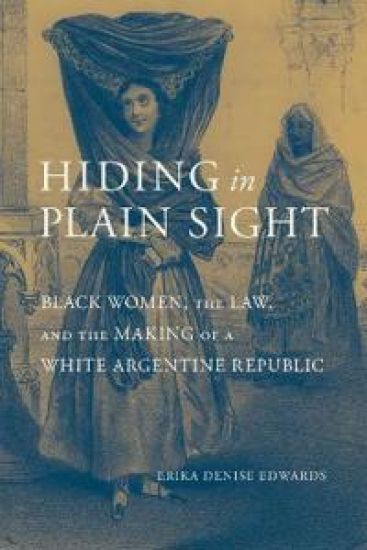
Hiding in Plain Sight

Hiding in Plain Sight

Erika Denise Edwards

The University of Alabama Press
2020
sidottu
Details how African-descended women's societal, marital, and sexual decisions forever reshaped the racial makeup of Argentina. Argentina values the perception that it is only a country of European immigrants, making it an exception to other Latin American countries, which can embrace a more mixed-African, Indian, European-heritage. Hiding in Plain Sight: Black Women, the Law, and the Making of a White Argentine Republic traces the origins of what some white Argentines mischaracterize as a 'black disappearance' by delving into the intimate lives of black women and explaining how they contributed to the making of a 'white' Argentina. Erika Denise Edwards has produced the first comprehensive study in English of the history of African descendants outside of Buenos Aires in the late colonial and early republican periods, with a focus on how these women sought whiteness to better their lives and those of their children. Edwards argues that attempts by black women to escape the stigma of blackness by recategorizing themselves and their descendants as white began as early as the late eighteenth century, challenging scholars who assert that the black population drastically declined at the end of the nineteenth century because of the whitening or modernization process. She further contends that in Córdoba, Argentina, women of African descent (such as wives, mothers, daughters, and concubines) were instrumental in shaping their own racial reclassifications and destinies. This volume makes use of a wealth of sources to relate these women's choices. The sources consulted include city censuses and notarial and probate records that deal with free and enslaved African descendants; criminal, ecclesiastical, and civil court cases; marriages and baptisms records and newsletters. These varied sources provide information about the day-to-day activities of cordobés society and how women of African descent lived, formed relationships, thrived, and partook in the transformation of racial identities in Argentina.
National Socialism and Gypsies in Austria

National Socialism and Gypsies in Austria

Erika Thurner

The University of Alabama Press
2006
nidottu
In this first English translation of Erika Thurner's National Socialism and Gypsies in Austria, Gilya Gerda Schmidt makes available Thurner's investigation of Camps Salzburg and Lackenbach, the two central areas of Gypsy persecution in Austria. Two factors made Thurner's research especially difficult: the Roma and Sinti have more an oral tradition than a written one, and scholarship on the plight of the Gypsies is sparse. Through painstaking research, Thurner has been able to piece together fragments from Nazi documents, recollections of victims, accounts of bystanders and other eyewitnesses, and formal records to present her account. The result is a volume that truly enhances our understanding of the Gypsies' experiences during this period. The volume also focuses on broader aspects of the Gypsies' ordeals: the ideological foundations and legal ordinances regarding Gypsies, the discrimination and persecution in Burgenland as a whole, the transports from Austria to Lodz and Chelmo, and the medical experimentation. The book has also been expanded, with a new study of Camp Salzburg, an updated bibliography, and numerous photographs, which were not included in the German edition. The recent upsurge of anti-Gypsy violence in Austria illustrates both the horror of the treatment of Gypsy tribes and the timeliness of the subject of this volume.
Hiding in Plain Sight

Hiding in Plain Sight

Erika Denise Edwards

The University of Alabama Press
2021
nidottu
One of the African American Intellectual History Society's Best Black History Books of 2020 Details how African-descended women’s societal, marital, and sexual decisions forever reshaped the racial makeup of Argentina Argentina promotes itself as a country of European immigrants. This makes it an exception to other Latin American countries, which embrace a more mixed—African, Indian, European—heritage. Hiding in Plain Sight: Black Women, the Law, and the Making of a White Argentine Republic traces the origins of what some white Argentines mischaracterize as a “black disappearance” by delving into the intimate lives of black women and explaining how they contributed to the making of a “white” Argentina. Erika Denise Edwards has produced the first comprehensive study in English of the history of African descendants outside of Buenos Aires in the late colonial and early republican periods, with a focus on how these women sought whiteness to better their lives and that of their children. Edwards argues that attempts by black women to escape the stigma of blackness by recategorizing themselves and their descendants as white began as early as the late eighteenth century, challenging scholars who assert that the black population drastically declined at the end of the nineteenth century because of the whitening or modernization process. She further contends that in CÓrdoba, Argentina, women of African descent (such as wives, mothers, daughters, and concubines) were instrumental in shaping their own racial reclassifications and destinies. This volume makes use of a wealth of sources to relate these women’s choices. The sources consulted include city censuses and notarial and probate records that deal with free and enslaved African descendants; criminal, ecclesiastical, and civil court cases; marriages and baptisms records and newsletters. These varied sources provide information about the day-to-day activities of cordobÉs society and how women of African descent lived, formed relationships, thrived, and partook in the transformation of racial identities in Argentina.
The United States and the 1958 Lebanon Crisis

The United States and the 1958 Lebanon Crisis

Erika G. Alin

University Press of America
1994
sidottu
The 1958 Lebanon crisis was perceived in the Cold War as a threat to the US, and the Eisenhower government therefore intervened militarily in July 1958. This book focuses on the perceptions, assumptions and considerations that prompted the US to intervene, drawing on White House meetings' data.
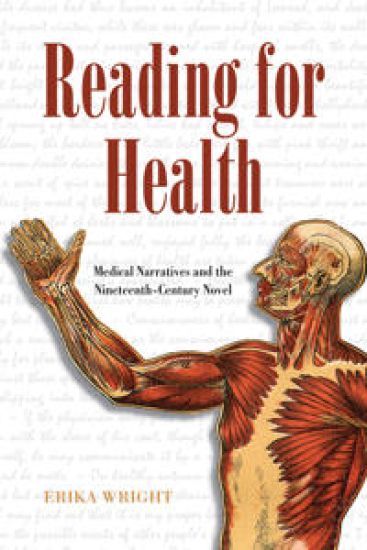
Reading for Health

Reading for Health

Erika Wright

Ohio University Press
2016
sidottu
In Reading for Health: Medical Narratives and the Nineteenth-Century Novel, Erika Wright argues that the emphasis in Victorian Studies on disease as the primary source of narrative conflict that must be resolved has obscured the complex reading practices that emerge around the concept of health. By shifting attention to the ways that prevention of illness and the preservation of well-being operate in fiction, both thematically and structurally, Wright offers a new approach to reading character and voice, order and temporality, setting and metaphor. As Wright reveals, while canonical works by Austen, Brontë, Dickens, Martineau, and Gaskell register the pervasiveness of a conventional "therapeutic" form of action and mode of reading, they demonstrate as well an equally powerful investment in the achievement and maintenance of "health"—what Wright refers to as a "hygienic" narrative—both in personal and domestic conduct and in social interaction of the individual within the community.
New American Theater

New American Theater

Erika Munk

Duke University Press
2001
pokkari
This issue of Theater brings together a collection of new theater that, while dealing with a wide range of topics, is united by a commitment to inventiveness and intellectual integrity. One piece included here addresses the challenges faced by Chilean artists working under the shadow of Pinochet; another explores a model Truth and Reconciliation Commission put together by the Arab-Hebrew Theater of Java. From there the issue moves to New York’s experimental theater and includes a dialogue held at the Brooklyn Academy of Music on the future of the genre. A scholar’s forum considers the meaning of activist and experimental theater, and the issue is rounded out with a series of reviews of current productions.
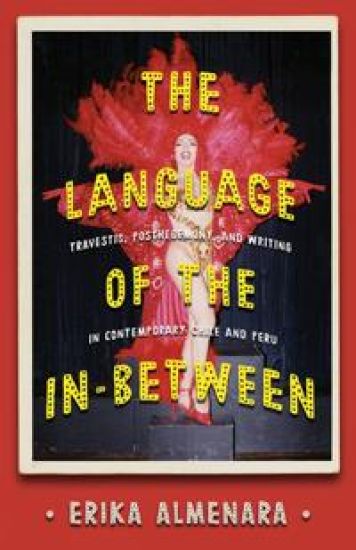
The Language of the In-Between

The Language of the In-Between

Erika Almenara

UNIVERSITY OF PITTSBURGH PRESS
2022
sidottu
Often, the process of modern state formation is founded on the marginalisation of certain groups, and Latin America is no exception. In The Language of the In-Between, Erika Almenara contends that literary production replicates this same process. Looking at marginalised communities in Chile and Peru, particularly writers who are travesti, trans, cuir/queer, and Indigenous, the author shows how these writers stake a claim for the liminal space that is neither one thing nor the other. This allows a freedom to expose oppression and to critique a national identity based on erasure. By employing a language of non-normative gender and sexuality to dispute the state projects of modernity and modernisation, the voice of the poor and racialised travesti evolves from powerlessness to become an agent of social transformation.
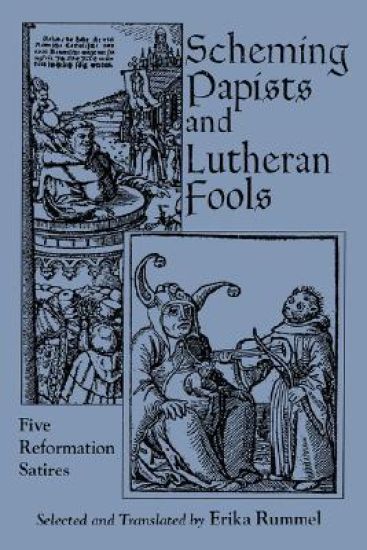
Scheming Papists and Lutheran Fools

Scheming Papists and Lutheran Fools

Erika Rummel

Fordham University Press
1993
sidottu
This volume is a collection of five satires from the Reformation period, written between 1517 and 1526. In her Introduction to the work, Rummel explains that the battle between reformers and champions of the old faith was waged on many fronts, "not only by preachers thundering from the pulpits, theologians facing each other in acrimonious disputations, and church authorities issuing censures and condemnations." This collection focuses on the impact and importance of a supporting cast of satirists whose ad hoc productions reached a wider audience, in a more visceral manner, than the rational approach which typified scholarly theological arguments. Rummel explains: "Satire, a genre that requires finely honed language skills, was the preferred weapon of the humanists, who by and large sympathizes with the reformers." The humanists and reformers were often so closely associated in the reading public's mind that the earliest phase of the Reformation was sometimes interpreted as a quarrel between philogists and theologians, a manifestation of professional jealousies. Thus Erasmus claimed that the debates of his time were the result of antagonism between the faculties of Arts and Theology. Three of the selections contained in the volume represent the Reformers, and two support the Catholics, the "Papists" of the title. These satirical essays, circulated widely among educated laypersons, use wit and biting humor to ridicule and discredit their adversaries and belong to a genre which was part of a larger body of sixteenth-century satire. The proliferation of satires became a concern of authorities who moved to suppress what they called "hate-mongering." Officials banned the publication of anonymously authored writings, effectively ending the publication of the satires, which were largely published either anonymously or carried only the name of the publisher. As a result, many of the pieces did not survive to the present day, many more are only known to us through obscure references in other literature. This volume brings to light five of these satiric pieces, written in the pivotal period when the Reformation ceased to be a protest and organized itself as a full-fledged movement. The topical issues featured in each satire are brought into historical context by a headnote explaining the circumstances surrounding its publication and giving bibliographical information about the satire's author. The witty style makes this collection entertaining reading and the impact of these writings sheds new light on the history of the Reformation.
Scheming Papists and Lutheran Fools

Scheming Papists and Lutheran Fools

Erika Rummel

Fordham University Press
1993
pokkari
This volume is a collection of five satires from the Reformation period, written between 1517 and 1526. In her Introduction to the work, Rummel explains that the battle between reformers and champions of the old faith was waged on many fronts, "not only by preachers thundering from the pulpits, theologians facing each other in acrimonious disputations, and church authorities issuing censures and condemnations." This collection focuses on the impact and importance of a supporting cast of satirists whose ad hoc productions reached a wider audience, in a more visceral manner, than the rational approach which typified scholarly theological arguments. Rummel explains: "Satire, a genre that requires finely honed language skills, was the preferred weapon of the humanists, who by and large sympathizes with the reformers." The humanists and reformers were often so closely associated in the reading public's mind that the earliest phase of the Reformation was sometimes interpreted as a quarrel between philogists and theologians, a manifestation of professional jealousies. Thus Erasmus claimed that the debates of his time were the result of antagonism between the faculties of Arts and Theology. Three of the selections contained in the volume represent the Reformers, and two support the Catholics, the "Papists" of the title. These satirical essays, circulated widely among educated laypersons, use wit and biting humor to ridicule and discredit their adversaries and belong to a genre which was part of a larger body of sixteenth-century satire. The proliferation of satires became a concern of authorities who moved to suppress what they called "hate-mongering." Officials banned the publication of anonymously authored writings, effectively ending the publication of the satires, which were largely published either anonymously or carried only the name of the publisher. As a result, many of the pieces did not survive to the present day, many more are only known to us through obscure references in other literature. This volume brings to light five of these satiric pieces, written in the pivotal period when the Reformation ceased to be a protest and organized itself as a full-fledged movement. The topical issues featured in each satire are brought into historical context by a headnote explaining the circumstances surrounding its publication and giving bibliographical information about the satire's author. The witty style makes this collection entertaining reading and the impact of these writings sheds new light on the history of the Reformation.
Erasmus

Erasmus

Erika Rummel

Continuum International Publishing Group Ltd.
2006
nidottu
Desiderius Erasmus was one of the most influential writers of his time and widely acclaimed as the principal Northern humanist. He was, however, not only a man of letters but also a shrewd observer of society, a sharp critic of the institutional church, and a scholar on the cutting edge of biblical studies. Although not a systematic philosopher or theologian, he left his stamp on the intellectual milieu of his time and was regarded by Catholic apologists as the inspirational source of the Lutheran reformation. In this book, Erika Rummel introduces readers to Erasmus' ideas on education, piety, social order, and the epistemology underpinning his thought. The educational programme proposed by Erasmus aims at creating a Christian humanist, speaking with Ciceronian eloquence and breathing the spirit of the gospel. The perfect piety envisaged by Erasmus involves a progression from the observance of rites to inner devotion and a love of Christ that guides every action. The ideal social order, according to Erasmus, is hierarchical. He depicts the three estates arranged in concentric circles around Christ, with the clergy closest to him, followed by the nobility and the common people. The Christian prince reflects the qualities of God, whose steward he is. A father-figure to his people, the ruler dispenses justice and provides spiritual leadership. Erasmus' magnum opus, his pioneering edition of the Greek New