

Kirjahaku
Etsi kirjoja tekijän nimen, kirjan nimen tai ISBN:n perusteella.
1000 tulosta hakusanalla FREEDOM DIVIDEND
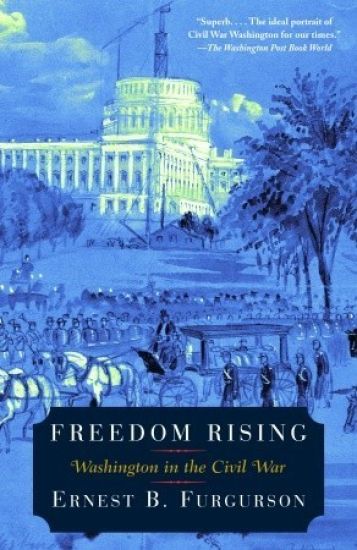
In this luminous portrait of wartime Washington, Ernest B. Furgurson author of the widely acclaimed Chancellorsville 1863, Ashes of Glory, and Not War but Murder--brings to vivid life the personalities and events that animated the Capital during its most tumultuous time. Here among the sharpsters and prostitutes, slaves and statesmen are detective Allan Pinkerton, tracking down Southern sympathizers; poet Walt Whitman, nursing the wounded; and accused Confederate spy Antonia Ford, romancing her captor, Union Major Joseph Willard. Here are generals George McClellan and Ulysses S. Grant, railroad crew boss Andrew Carnegie, and architect Thomas Walter, striving to finish the Capitol dome. And here is Abraham Lincoln, wrangling with officers, pardoning deserters, and inspiring the nation. Freedom Rising is a gripping account of the era that transformed Washington into the world s most influential city."
Freedom Round the Globe: A World History of the American Revolution
Sarah M. S. Pearsall
Doubleday Books
2026
sidottu
A groundbreaking global exploration of the ideas that drove the American Revolution, showing how widespread revolutionary impulses were in the eighteenth century, shining a light on the defiance of marginalized peoples all over the world While the American Revolution is often celebrated as the birth of American "exceptionalism," award-winning historian Sarah M. S. Pearsall argues against the idea that the Founding Fathers had a unique claim on the revolutionary spirit. The thirteen colonies that became the United States, she reminds us, were not even half of the British colonies that existed in the eighteenth century. In this powerful history, Pearsall uncovers the insurgents, freedom lovers, and dreamers in India, West Africa, North America, Europe, China, and West Indian islands who shaped the nature of American rebellion and nationhood. Each chapter plucks a keyword from the Declaration of Independence, finding its spark in a far-flung place. In a club in Edinburgh where women were first invited into philosophical conversations, she explores what the pursuit of happiness meant to women and men of all sorts. She traces how new forms of slavery provoked a novel emphasis on liberty-- which showed up in the New England poetry of Phillis Wheatley as well as in cries of "liberty or death." On a Kolkata street where Indians protested ruthless taxes, Pearsall finds a critique of oppressive imperial government thatgalvanized Americans in their protests against the tea of the English East India Company. In rural Germany, boy soldiers sent abroad to die for Britain complicate who can lay claim to being "civilized" in a brutal war. And in a Six Nations cornfield, we learn that security for one rising nation can mean grave threats to another. In this fresh and stirring history, Pearsall tells tales of friends of Liberty from around the world, restoring these individuals to their rightful place in the story of the American Revolution and the nation it created.
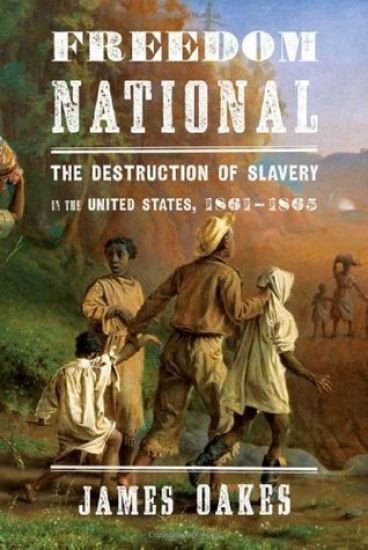
Freedom National is a groundbreaking history of emancipation that joins the political initiatives of Lincoln and the Republicans in Congress with the courageous actions of Union soldiers and runaway slaves in the South. It shatters the widespread conviction that the Civil War was first and foremost a war to restore the Union and only gradually, when it became a military necessity, a war to end slavery. These two aims—"Liberty and Union, one and inseparable"—were intertwined in Republican policy from the very start of the war. By summer 1861 the federal government invoked military authority to begin freeing slaves, immediately and without slaveholder compensation, as they fled to Union lines in the disloyal South. In the loyal Border States the Republicans tried coaxing officials into gradual abolition with promises of compensation and the colonization abroad of freed blacks. James Oakes shows that Lincoln’s landmark 1863 proclamation marked neither the beginning nor the end of emancipation: it triggered a more aggressive phase of military emancipation, sending Union soldiers onto plantations to entice slaves away and enlist the men in the army. But slavery proved deeply entrenched, with slaveholders determined to re-enslave freedmen left behind the shifting Union lines. Lincoln feared that the war could end in Union victory with slavery still intact. The Thirteenth Amendment that so succinctly abolished slavery was no formality: it was the final act in a saga of immense war, social upheaval, and determined political leadership. Fresh and compelling, this magisterial history offers a new understanding of the death of slavery and the rebirth of a nation.
"May is an existential analyst who deservedly enjoys a reputation among both general and critical readers as an accessible and insightful social and psychological theorist. . . . Freedom's characteristics, fruits, and problems; destiny's reality; death; and therapy's place in the confrontation between freedom and destiny are examined. . . . Poets, social critics, artists, and other thinkers are invoked appropriately to support May's theory of freedom and destiny's interdependence."—Library Journal "Especially instructive, even stunning, is Dr. May's willingness to respect mystery. . . .There is, too, at work throughout the book a disciplined yet relaxed clinical mind, inclined to celebrate . . . what Flannery O'Connor called 'mystery and manners,' and to do so in a tactful, meditative manner."—Robert Coles, America
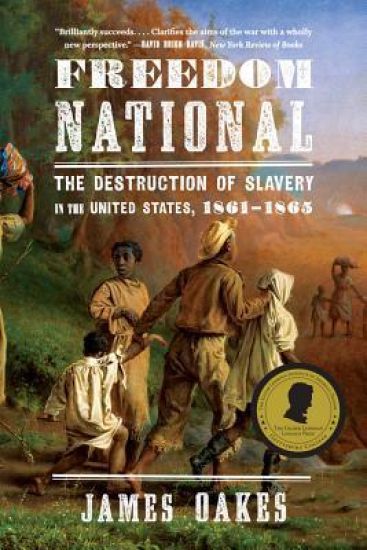
Freedom National is a groundbreaking history of emancipation that joins the political initiatives of Lincoln and the Republicans in Congress with the courageous actions of Union soldiers and runaway slaves in the South. It shatters the widespread conviction that the Civil War was first and foremost a war to restore the Union and only gradually, when it became a military necessity, a war to end slavery. These two aims—"Liberty and Union, one and inseparable"—were intertwined in Republican policy from the very start of the war. By summer 1861 the federal government invoked military authority to begin freeing slaves, immediately and without slaveholder compensation, as they fled to Union lines in the disloyal South. In the loyal Border States the Republicans tried coaxing officials into gradual abolition with promises of compensation and the colonization abroad of freed blacks. James Oakes shows that Lincoln’s landmark 1863 proclamation marked neither the beginning nor the end of emancipation: it triggered a more aggressive phase of military emancipation, sending Union soldiers onto plantations to entice slaves away and enlist the men in the army. But slavery proved deeply entrenched, with slaveholders determined to re-enslave freedmen left behind the shifting Union lines. Lincoln feared that the war could end in Union victory with slavery still intact. The Thirteenth Amendment that so succinctly abolished slavery was no formality: it was the final act in a saga of immense war, social upheaval, and determined political leadership. Fresh and compelling, this magisterial history offers a new understanding of the death of slavery and the rebirth of a nation.
Freedom from Toxic Relationships: Freedom from Toxic Relationships: Moving On from the Family, Work, and Relationship Issues That Bring You Down
Avril Carruthers
Tarcher
2013
nidottu
A guide to leaving painful, destructive relationships behind--both at home and at workToxic relationships often come disguised as seemingly normal ones. These subtly destructive relationships are characterized by the slow erosion of self-esteem, a loss of personal identity, or a growing desire to please friends, partners, and family members who are impossible to please. In this uplifting and informative book, transpersonal psychotherapist Avril Carruthers will take a close look at adult relationships to show why we get involved in toxic relationships in the first place, and instruct the reader on how to recognize if they're involved in one. Once the toxic relationship is identified, the author shows the reader how to begin their journey toward healing and how to meet the world with a new kind of confidence, so that the cycle of toxic relationships can be broken once and for all. What Carruthers teaches is just how possible it can be to learn how to recognize the manipulative or sweetly corrosive partner, the family dynamics that make Christmas and other get-togethers seem like hell, or the nightmare boss who causes daily torment--and that we can learn to leave these painful, destructive patterns behind forever.
Critically examining conceptions of freedom of some of the leading contemporary philosophers from Isaiah Berlin to Charles Taylor, Hans Blokland explores the value and significance that freedom has acquired on our political consciousness. He looks specifically at: * positive and negative freedom * freedom of the individual * freedom and society * emancipation and paternalism * freedom and cultural politics.

Freedom Power & Democ Plan V 4
Routledge
1951
sidottu
First Published in 1951. In common with great sociologists of the past, such as Comte and Spencer, Marx and Max Weber, Mannheim engaged in sociological study as a response to the challenging present. This is volume IV of Freedom, Power and Democratic Planning is the collected works of Karl Mannheim.
In discussions on European pre-modern economic growth, the role of individual freedom and of the state has loomed large. This book examines whether different kinds of 'freedoms' (absolutist, parliamentary and republican) caused different economic outcomes, and shows the effect of different political regimes on long term development. It thus offers new answers to debates on the transition from feudalism to capitalism and on the causes of pre-industrial growth and divergence.
Freedom in Economics
Routledge
1997
sidottu
This book presents a range of papers by philosophers and economists who consider the definition and value of liberty; freedom in rights and equality of opportunity. Until recently freedom has played no explicit role in the conceptual framework of economists, however freedom seems to be at the heart of economics. The book provides a substantial contribution to the fruitful dialogue between the philosophy and economics in this area. Each chapter is integrated being followed by comments which explore the underlying debates. Contributors are French economists, philosophers and political scientists, as well as authors from Belgium and the Netherlands.
Freedom of Religion and Belief: A World Report
Routledge
1997
sidottu
This report, the first of its kind yet to be published, provides a detailed and impartial account of how the individual's right to hold beliefs is understood, protected or denied throughout the world. Consisting of accessible, short edited entries based on drafts commissioned from experts living in the countries surveyed, it exposes persecution and discrimination in virtually all world regions. The book: * provides an analysis of United Nations standards of freedom of religion and belief * covers over fifty countries, divided into regions and introduced by a regional overview * covers themes including: the relationships between belief groups and the state; freedom to manifest belief in law and practice; religion and schools; religious minorities; new religious movements; the impact of beliefs on the status of women; and the extent to which conscientious objection to military service is recognised by governments * draws on examples of accommodation and co-operation between different religions and beliefs and identifies the main challenges to be overcome if the diversity of human conviction is to be established.
Freedom of Religion and Belief: A World Report
Routledge
1997
nidottu
This report, the first of its kind yet to be published, provides a detailed and impartial account of how the individual's right to hold beliefs is understood, protected or denied throughout the world. Consisting of accessible, short edited entries based on drafts commissioned from experts living in the countries surveyed, it exposes persecution and discrimination in virtually all world regions. The book: * provides an analysis of United Nations standards of freedom of religion and belief * covers over fifty countries, divided into regions and introduced by a regional overview * covers themes including: the relationships between belief groups and the state; freedom to manifest belief in law and practice; religion and schools; religious minorities; new religious movements; the impact of beliefs on the status of women; and the extent to which conscientious objection to military service is recognised by governments * draws on examples of accommodation and co-operation between different religions and beliefs and identifies the main challenges to be overcome if the diversity of human conviction is to be established.
'The purpose of this book is to trace the opposition and interaction of two main causes of change in the Nineteenth century: the belief in freedom which was common to Liberals and Radicals, and the necessity for organization which arose through industrial and scientific technique.' - Bertrand Russell A revealing account by one of the twentieth century's greatest minds, charting the struggle between two determining forces in nineteenth century history: freedom and control. Russell's text sweeps from the defeat of Napoleon and the Congress of Vienna to the lead up to the First World War. It is full of lively portraits, including Malthus, Mill, Bentham and Marx. Russell examines the founding of democracy in America and the struggle with slavery, and brings to life the ideas of Jefferson, Jackson and Lincoln.
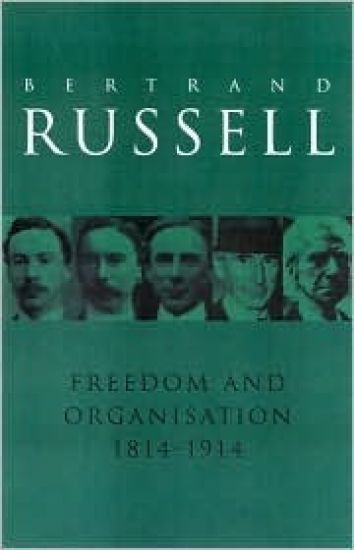
'The purpose of this book is to trace the opposition and interaction of two main causes of change in the Nineteenth century: the belief in freedom which was common to Liberals and Radicals, and the necessity for organization which arose through industrial and scientific technique.' - Bertrand Russell A revealing account by one of the twentieth century's greatest minds, charting the struggle between two determining forces in nineteenth century history: freedom and control. Russell's text sweeps from the defeat of Napoleon and the Congress of Vienna to the lead up to the First World War. It is full of lively portraits, including Malthus, Mill, Bentham and Marx. Russell examines the founding of democracy in America and the struggle with slavery, and brings to life the ideas of Jefferson, Jackson and Lincoln.
Freedom and Justice within Walls
Routledge
2001
sidottu
Tavistock Press was established as a co-operative venture between the Tavistock Institute and Routledge & Kegan Paul (RKP) in the 1950s to produce a series of major contributions across the social sciences. This volume is part of a 2001 reissue of a selection of those important works which have since gone out of print, or are difficult to locate. Published by Routledge, 112 volumes in total are being brought together under the name The International Behavioural and Social Sciences Library: Classics from the Tavistock Press. Reproduced here in facsimile, this volume was originally published in 1970 and is available individually. The collection is also available in a number of themed mini-sets of between 5 and 13 volumes, or as a complete collection.

Freedom Power & Democ Plan V 4
Routledge
2006
nidottu
First Published in 1951. In common with great sociologists of the past, such as Comte and Spencer, Marx and Max Weber, Mannheim engaged in sociological study as a response to the challenging present. This is volume IV of Freedom, Power and Democratic Planning is the collected works of Karl Mannheim.
By the time of his death in 2006, Sir Peter Strawson was regarded as one of the world's most distinguished philosophers. First published thirty years ago but long since unavailable, Freedom and Resentment collects some of Strawson's most important work and is an ideal introduction to his thinking on such topics as the philosophy of language, metaphysics, epistemology and aesthetics. Beginning with the title essay Freedom and Resentment, this invaluable collection is testament to the astonishing range of Strawson's thought as he discusses free will, ethics and morality, logic, the mind-body problem and aesthetics. The book is perhaps best-known for its three interrelated chapters on perception and the imagination, subjects now at the very forefront of philosophical research.This reissue includes a substantial new foreword by Paul Snowdon and a fascinating intellectual autobiography by Strawson.
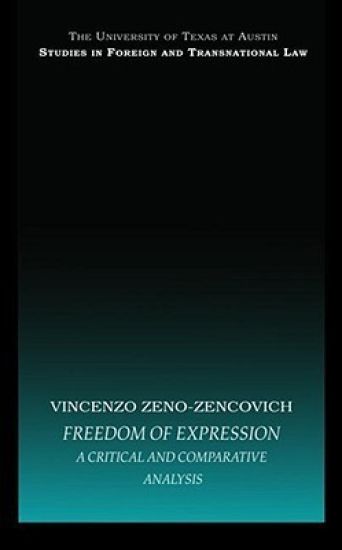
This book takes a multidisciplinary approach to the issues surrounding freedom of expression, looking at the current legal position in a number of European countries as well as engaging with the wider debates on the topic amongst sociologists, political scientists and economists. In the book Vincenzo Zeno-Zencovich addresses recent developments which have had a bearing on the debate including the changes in communication brought about by the internet, and the growing role of the European Union and the Council of Europe.