Kirjojen hintavertailu. Mukana 11 699 587 kirjaa ja 12 kauppaa.

Kirjahaku

Etsi kirjoja tekijän nimen, kirjan nimen tai ISBN:n perusteella.

1000 tulosta hakusanalla Florian Rotkowski

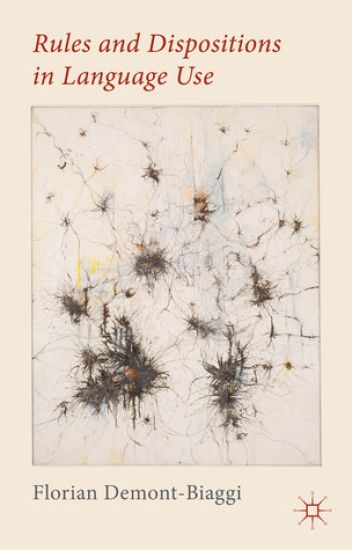
Rules and Dispositions in Language Use

Rules and Dispositions in Language Use

Florian Demont-Biaggi

Palgrave Macmillan
2014
sidottu
Rules and Dispositions in Language Use explains how correct language use is governed by both rules and general human dispositions. It does so by bringing together themes from Ludwig Wittgenstein and Noam Chomsky, which for many years have been thought to be incompatible.
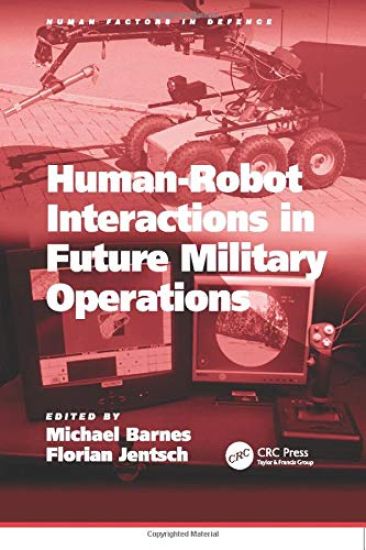
Human-Robot Interactions in Future Military Operations
Soldier-robot teams will be an important component of future battle spaces, creating a complex but potentially more survivable and effective combat force. The complexity of the battlefield of the future presents its own problems. The variety of robotic systems and the almost infinite number of possible military missions create a dilemma for researchers who wish to predict human-robot interactions (HRI) performance in future environments. Human-Robot Interactions in Future Military Operations provides an opportunity for scientists investigating military issues related to HRI to present their results cohesively within a single volume. The issues range from operators interacting with small ground robots and aerial vehicles to supervising large, near-autonomous vehicles capable of intelligent battlefield behaviors. The ability of the human to 'team' with intelligent unmanned systems in such environments is the focus of the volume. As such, chapters are written by recognized leaders within their disciplines and they discuss their research in the context of a broad-based approach. Therefore the book allows researchers from differing disciplines to be brought up to date on both theoretical and methodological issues surrounding human-robot interaction in military environments. The overall objective of this volume is to illuminate the challenges and potential solutions for military HRI through discussion of the many approaches that have been utilized in order to converge on a better understanding of this relatively complex concept. It should be noted that many of these issues will generalize to civilian applications as robotic technology matures. An important outcome is the focus on developing general human-robot teaming principles and guidelines to help both the human factors design and training community develop a better understanding of this nascent but revolutionary technology. Much of the research within the book is based on the Human Research and Engineering Directorate (HRED), U.S. Army Research Laboratory (ARL) 5-year Army Technology Objective (ATO) research program. The program addressed HRI and teaming for both aerial and ground robotic assets in conjunction with the U.S. Army Tank and Automotive Research and Development Center (TARDEC) and the Aviation and Missile Development Center (AMRDEC) The purpose of the program was to understand HRI issues in order to develop and evaluate technologies to improve HRI battlefield performance for Future Combat Systems (FCS). The work within this volume goes beyond the research results to encapsulate the ATO's findings and discuss them in a broader context in order to understand both their military and civilian implications. For this reason, scientists conducting related research have contributed additional chapters to widen the scope of the original research boundaries.
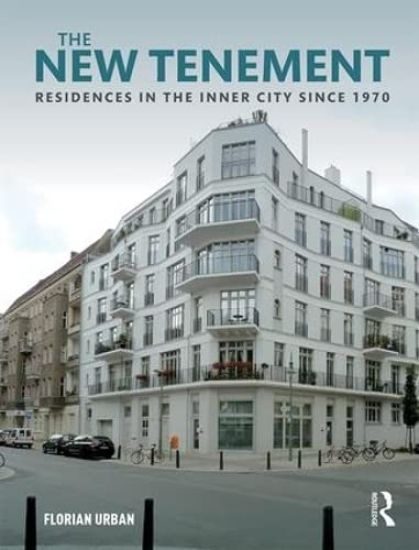
The New Tenement

The New Tenement

Florian Urban

Routledge
2017
sidottu
This book examines "new tenements"—dense, medium-rise, multi-storey residences that have been the backbone of European inner-city regeneration since the 1970s and came with a new positive view on urban living. Focusing principally on Berlin, Copenhagen, Glasgow, Rotterdam, and Vienna, it relates architectural design to an evolving intellectual framework that mixed anti-modernist criticism with nostalgic images and strategic goals, and absorbed ideas about the city as a generator of creativity, locale of democratic debate, and object of personal identification.This book analyses new tenements in the context of the post-functionalist city and its mixed-use neighbourhoods, redeveloped industrial sites and regenerated waterfronts. It demonstrates that these buildings are both generators and outcome of an urban environment characterised by information exchange rather than industrial production, individual expression rather than mass culture, visible history rather than comprehensive renewal, and conspicuous difference rather than egalitarianism. It also shows that new tenements evolved under a welfare state that all over Europe has come under pressure, but still to a certain degree balances and controls heterogeneity and economic disparities.
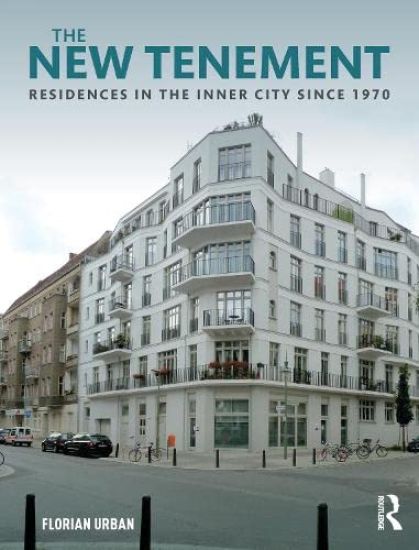
The New Tenement

The New Tenement

Florian Urban

Routledge
2017
nidottu
This book examines "new tenements"—dense, medium-rise, multi-storey residences that have been the backbone of European inner-city regeneration since the 1970s and came with a new positive view on urban living. Focusing principally on Berlin, Copenhagen, Glasgow, Rotterdam, and Vienna, it relates architectural design to an evolving intellectual framework that mixed anti-modernist criticism with nostalgic images and strategic goals, and absorbed ideas about the city as a generator of creativity, locale of democratic debate, and object of personal identification.This book analyses new tenements in the context of the post-functionalist city and its mixed-use neighbourhoods, redeveloped industrial sites and regenerated waterfronts. It demonstrates that these buildings are both generators and outcome of an urban environment characterised by information exchange rather than industrial production, individual expression rather than mass culture, visible history rather than comprehensive renewal, and conspicuous difference rather than egalitarianism. It also shows that new tenements evolved under a welfare state that all over Europe has come under pressure, but still to a certain degree balances and controls heterogeneity and economic disparities.
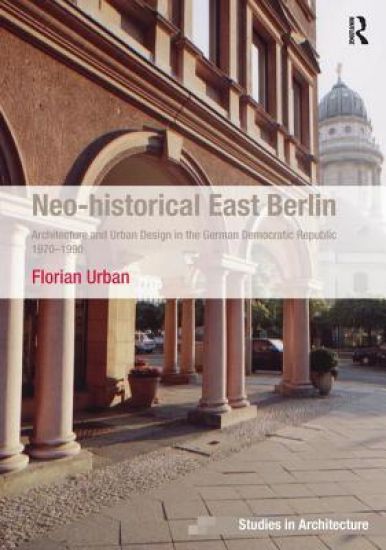
Neo-historical East Berlin

Neo-historical East Berlin

Florian Urban

Routledge
2016
nidottu
In the years prior to the fall of the Berlin Wall, the leaders of the German Democratic Republic planned to construct a city center that was simultaneously modern and historical, consisting of both redesign of old buildings and new architectural developments. Drawing from recently released archival sources and interviews with former key government officials, decision-makers and architects, this book sheds light not only on this unique programme in postmodern design, but also on the debates which were taking place with the Socialist government.
The Global Governance of Genetic Resources
Multi-institutional governance architectures are increasingly common in world politics, yet how do they evolve over time? This book develops a fresh conceptual approach by distinguishing two main types of institutional change and by proposing the strategic context within which governments make decisions regarding international cooperation as the main driving factor. Applying this theoretical framework to the case of genetic resources, it shows how the scope for change has persistently been circumscribed by asymmetries in the global biotechnology sector. Taking a broad view of the underlying technological, legal and economic factors, the book analyzes the formation of international regimes linking access to genetic resources to the fair and equitable sharing of the benefits arising out of their utilization. Covering negotiations in the areas of seeds, intellectual property rights, pandemic influenza viruses and marine genetic resources, the author shows how governments have persistently faced the problem of ensuring cooperation among actors with widely differing interests. This led them to opt for a strategy of institutional layering, whereby new international instruments are gradually built upon pre-existing ones. In addition to giving a comprehensive overview of the international governance of Access and Benefit-sharing within the wider context of modern biotechnology, the argument developed here enables a new perspective for studying institutional change in multi-institutional governance architectures.
The Social Role of the Man of Knowledge

The Social Role of the Man of Knowledge

Florian Znaniecki

Routledge
2020
sidottu
In this seminal contribution to the sociology of knowledge, first published in 1940, Florian Znaniecki develops a typology of the variety of specific social roles that scholars have played, and investigates the normative patterns that govern their behavior. A central tool for the investigation of these problems is the notion of “social circle”, the audience to which intellectuals address themselves. Znaniecki shows that thinkers do not speak to the total society but address selected segments and markets. Specific social circles bestow recognition, provide material or psychic support, and help shape the self-image of the thinker.
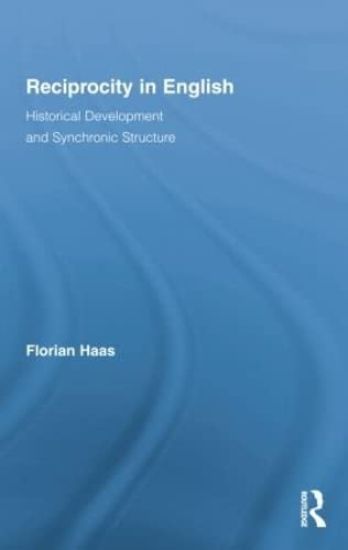
Reciprocity in English

Reciprocity in English

Florian Haas

Routledge
2015
nidottu
Although the grammatical expression of reciprocal (or ‘mutual’) situations in the languages of the world has received a surprising amount of attention in recent years, so far no comprehensive study specifically dealing with the historical development and synchronic structure of English reciprocal constructions has been published. This book takes into consideration insights from the three major research projects on reciprocity in the languages of the world as well as the rich literature on more specific aspects of reciprocity. Assuming a usage-based model of grammar, the development of the reciprocal strategies used in present-day English is described, with special attention paid to the periods following Middle English, where today’s system began to take shape. The means of expressing reciprocity in today’s English (e.g. the expressions each other and one another) are then analyzed as a system of competing constructions, the make-up and distribution of which can be related both to their history and subtle distinctions in meaning and use associated with the different constructions. Quantitative data from corpora of natural language provides evidence for the analyses put forward. Wherever possible, claims on the expression of reciprocity in present-day English are checked against what is known about the grammar of reciprocity in other languages.
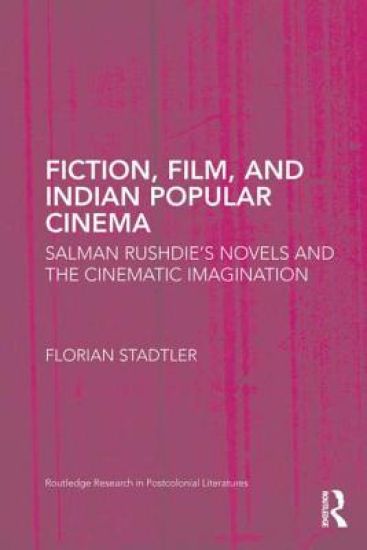
Fiction, Film, and Indian Popular Cinema
This book analyses the novels of Salman Rushdie and their stylistic conventions in the context of Indian popular cinema and its role in the elaboration of the author’s arguments about post-independence postcolonial India. Focusing on different genres of Indian popular cinema, such as the ‘Social’, ‘Mythological’ and ‘Historical’, Stadtler examines how Rushdie’s writing foregrounds the epic, the mythic, the tragic and the comic, linking them in storylines narrated in cinematic parameters. The book shows that Indian popular cinema’s syncretism becomes an aesthetic marker in Rushdie’s fiction that allows him to elaborate on the multiplicity of Indian identity, both on the subcontinent and abroad, and illustrates how Rushdie uses Indian popular cinema in his narratives to express an aesthetics of hybridity and a particular conceptualization of culture with which ‘India’ has become identified in a global context. Also highlighted are Rushdie’s uses of cinema to inflect his reading of India as a pluralist nation and of the hybrid space occupied by the Indian diaspora across the world. The book connects Rushdie’s storylines with modes of cinematic representation to explore questions about the role, place and space of the individual in relation to a fast-changing social, economic and political space in India and the wider world.