Kirjojen hintavertailu. Mukana 12 477 202 kirjaa ja 12 kauppaa.

Kirjahaku

Etsi kirjoja tekijän nimen, kirjan nimen tai ISBN:n perusteella.

1000 tulosta hakusanalla Forest

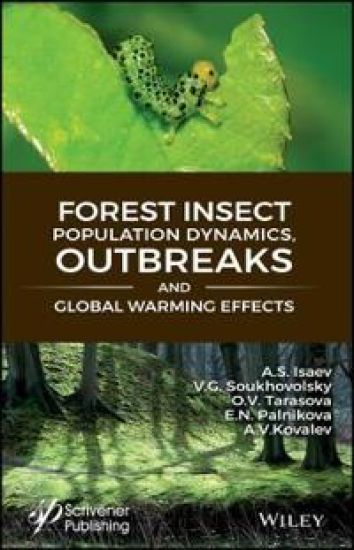
Forest Insect Population Dynamics, Outbreaks, And Global Warming Effects

Forest Insect Population Dynamics, Outbreaks, And Global Warming Effects

A. S. Isaev; Vladislav G. Soukhovolsky; O. V. Tarasova; E. N. Palnikova; A. V. Kovalev

John Wiley Sons Inc
2017
sidottu
This new approach to insect modeling discusses population dynamics' regularities, control theory, theory of transitions, and describes methods of population dynamics and outbreaks modeling for forest phyllophagous insects and their effects on global climate change. Research in insect population dynamics is important for more reasons than just protecting forest communities. Insect populations are among the main ecological units included in the analysis of stability of ecological systems. Moreover, it is convenient to test new methods of analyzing population and community stability on the insect-related data, as by now ecologists and entomologists have accumulated large amounts of such data. In this book, the authors analyze population dynamics of quite a narrow group of insects – forest defoliators. It is hoped that the methods proposed herein for the analysis of population dynamics of these species may be useful and effective for analyzing population dynamics of other animal species and their effects and role in global warming. What can insects tell us about our environment and our ever-changing climate? It is through studies like this one that these important answers can be obtained, along with data on the insects and their behaviors themselves. The authors present new theories on modeling and data accumulation, using cutting-edge processes never before published for such a wide audience. This volume presents the state-of-the-art in the science, and it is an essential piece of any entomologist's and forest engineer's library.
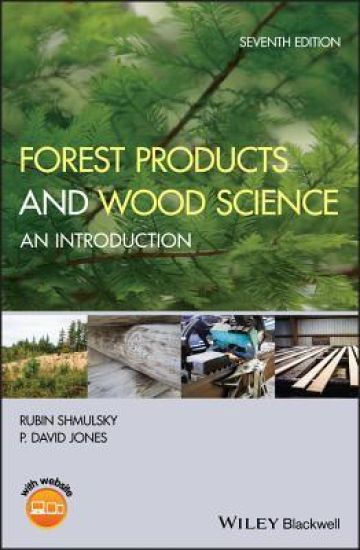
Forest Products and Wood Science

Forest Products and Wood Science

Rubin Shmulsky; P. David Jones

Wiley-Blackwell
2019
sidottu
The updated seventh edition of the classic text on wood science and forestry The seventh edition of Forest Products and Wood Science: An Introduction offers a fully revised and updated review of the forest products industry. This classic text contains a comprehensive review of the subject and presents a thorough understanding of the anatomical and physical nature of wood. The authors emphasize its use as an industrial raw material. Forest Products and Wood Science provides thorough coverage of all aspects of wood science and industry, ranging from tree growth and wood anatomy to a variety of economically important wood products, along with their applications and performance. The text explores global raw materials, the increasing use of wood as a source of energy and chemicals and environmental implications of the use of wood. This edition features new material on structural composites, non-structural composites, durability and protection, pulp and paper, energy and chemicals, and global raw materials. This seventh edition of the classic work: Contains new information on a variety of topics including: structural composites, non-structural composites, durability and protection, pulp and paper, energy and chemicals and global raw materialsIncludes a fully revised text that meets the changing needs of the forestry, engineering, and wood science academics and professionalsPresents material written by authors with broad experience in both the private and academic sectors Written for undergraduate students in forestry, natural resources, engineering, and wood science, as well as forest industry personnel, engineers, wood-based manufacturing and using professionals, the seventh edition of Forest Products and Wood Science updates the classic text that has become an indispensable resource.
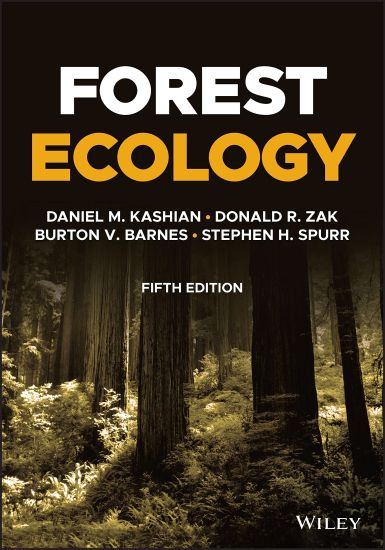
Forest Ecology

Forest Ecology

Daniel M. Kashian; Donald R. Zak; Burton V. Barnes; Stephen H. Spurr

John Wiley Sons Inc
2023
nidottu
FOREST ECOLOGY Authoritative resource covering traditional plant ecology topics and contemporary components such as climate change, invasive species, ecosystem services, and more Forest Ecology provides comprehensive coverage of the field, focusing on traditional plant ecology topics of tree structure and growth, regeneration, effects of light and temperature on tree physiology, forest communities, succession, and diversity. The work also reviews abiotic factors of light, temperature, physiography (landforms and topography), soil, and disturbance (especially fire), and provides coverage of ecosystem-level topics including carbon storage and balance, nutrient cycling, and forest ecosystem productivity. The 5th edition of Forest Ecology retains the readability and accessibility of the previous editions and includes important additional topical material that has surfaced in the field. All topics are approached with a landscape ecosystem or geo-ecological view, which places biota (organisms and communities) in context as integral parts of whole ecosystems that also include air (atmosphere and climate), topography, soil, and water. As such, the book fills a niche utilized by no other forest ecology text on the market, helping students and researchers consider whole ecosystems at multiple scales. Sample topics covered in Forest Ecology include: Contemporary components of forest ecology, including climate change, invasive species, diversity, ecological forestry, landscape ecology, and ecosystem services.Characteristics of physiography important for forest ecosystems, including its effects on microclimate, disturbance, soil, and vegetation.Genetic diversity of woody plants and genecological differentiation of tree species, including the importance of hybridization, polyploidy, and epigenetics.Site quality estimation using tree height and ground flora, and multiple-factor approaches to forest site and ecosystem classification and mapping. Forest Ecology is a highly accessible text for students, but it also serves as an excellent reference for academics. In addition, practitioners of forest ecology can also harness the information within to gain better insight into the field for practical application of concepts.
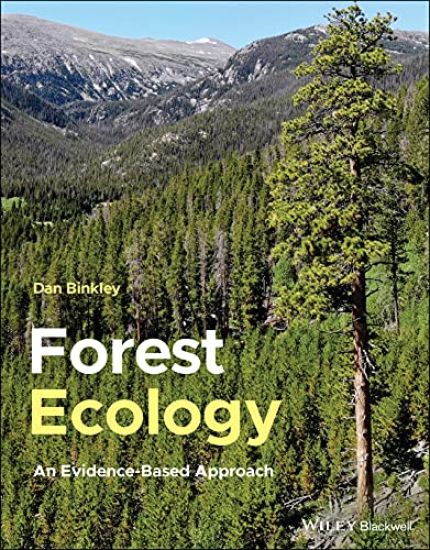
Forest Ecology

Forest Ecology

Dan Binkley

Wiley-Blackwell
2021
nidottu
Forest Ecology Forest Ecology An Evidence-Based Approach Forest ecology is the science that deals with everything in forests, including plants and animals (and their interactions), the features of the environment that affect plants and animals, and the interactions of humans and forests. All of these components of forests interact across scales of space and time. Some interactions are constrained, deterministic, and predictable; but most are indeterminant, contingent, and only broadly predictable. Forest Ecology: An Evidence-Based Approach examines the features common to all forests, and those unique cases that illustrate the importance of site-specific factors in determining the structure, function, and future of a forest. The author emphasizes the role of evidence in forest ecology, because appealing, simple stories often lead to misunderstandings about how forests work. A reliance on evidence is central to distinguishing between appealing stories and stories that actually fit real forests. The evidence-based approach emphasizes the importance of real-world, observable science in forests. Classical approaches to ecology in the twentieth century often over-emphasized appealing concepts that were not sufficiently based on real forests. The vast amount of information now available on forests allows a more complete coverage of forest ecology that relies on a strong, empirical foundation. Forest Ecology: An Evidence-Based Approach is the ideal companion text for the teaching of upper-level undergraduate and graduate courses in forest ecology.
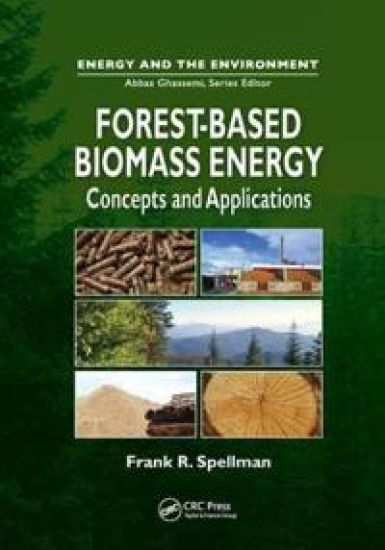
Forest-Based Biomass Energy

Forest-Based Biomass Energy

Frank Spellman

CRC Press
2017
nidottu
What is forest-based biomass energy and why should we care? Written by environmental expert Frank Spellman, Forest-Based Biomass Energy: Concepts and Applications details how forest biomass can be converted to energy and energy products, including direct combustion, pellets, gasification, and co-firing. It explores the possibilities of forest-based biomass energy for producing a reliable energy renewable energy source that will not destroy or pollute our fragile environment.Carefully avoiding the influence of media hype and political ideology, Spellman points out that every problem has a solution, we simply need to find sources and develop them. He delineates common-sense approaches and practical, sometimes poetic, examples. And he does all this while adhering to scientific principles, models, and observations. However, you need not be a scientist to understand the principles and concepts. Spellman goes easy on the hard math and science and presents the material in a user-friendly manner, weaving real-life situations throughout the fabric of the text.Features: Offers complete coverage of forest biomass, rather than simply touching on one sourceIncludes several basic and practical mathematical operations illustrated with example problems and explained solutionsExamines numerous types of tree stocksContains information on silvicultureAddresses growing transportation energy needs and limited petroleum resourcesOffers information on the benefits of AgroforestryThis is not merely an answer book; it is designed to stimulate thought and new ideas. Although the author answers specific renewable energy and forest-derived feedstock questions, he also points out the disadvantages that need to be overcome to make forest-based renewable energy a viable alternative to fossil fuels. He provides a framework of principles you can use to understand the complexity of the situation of substituting a renewable energy source, such as forest-based biomass, for fossil fuels.
Forest Landscape Restoration
Forest landscape restoration (FLR) is a planned process that aims to regain ecological integrity and enhance human wellbeing in deforested or degraded landscapes. The aim of this book is to explore options to better integrate the diverse dimensions - spatial, disciplinary, sectoral, and scientific - of implementing FLR. It demonstrates the value of an integrated and interdisciplinary approach to help implement FLR focusing specifically on four issues: understanding the drivers of forest loss and degradation in the context of interdisciplinary responses for FLR; learning from related integrated approaches; governance issues related to FLR as an integrated process; and the management, creation and use of different sources of knowledge in FLR implementation. The emphasis is on recognising the need to take human and institutional factors into consideration, as well as the more obvious biophysical factors. A key aim is to advance and accelerate the practice of FLR, given its importance, particularly in a world facing increasing environmental challenges, notably from climate change. The first section of the book presents the issue from an analytical and problem-orientated viewpoint, while later sections focus on solutions. It will interest researchers and professionals in forestry, ecology, geography, environmental governance and landscape studies.
Forest Certification in Sustainable Development
From recycled products to organic food, the movement to be "environmentally friendly" is now expanding into the forestry field. Recognizing this impact, Home Depot has committed to giving preference to selling "certified wood," proven to come from forests that meet certain biological and social sustainablility standards. Retailers and vendors can offer certified wood through the international Forest Stewardship Council (FSC) and FSC accredited organizations like SmartWood, recently featured in People magazine.
Forest Dwellers, Forest Protectors
The Guarani of Paraguay have survived over four centuries of contact with the commercial system, while keeping in tact their traditions of leadership, religion and kinship. This concise ethnography examines how the Guarani have adapted over time, in concert with Paraguay‘s subtropical forest system. New To This Edition: Expanded historical background and updated demographic information on the Guarani brings the research to the present day (Chapter 1). Expands and strengthens the discussion of ‘sustainability to include more recent advances in the concept (Chapter 1), and introduces the idea of ‘subsidy from nature into the discussion of conventional tropical development (Chapter 3). Develops the discussion of women‘s labor in horticulture (Chapter 3). Analyzes the effects of indigenous mixed agro-forestry in stemming the high rates of Paraguayan deforestation of the 1990s (Chapter 4). Discusses the recent globalization of the yerba mate market, and the economy's effecton Paraguay‘s protected areas (Chapter 4). Describes Guarani ethnic federations as a means to engage the national and international political institutions (Chapter 4). Explores the rapid growth in Guarani population in native communities, which results from lower infant mortality, more land pressure and more reliable census data (Chapter 4). This brief introductory text makes the ideal supplementary text for students of anthropology.
Forest Ecosystem Management and Timber Production
Timber sourcing is shifting from extraction from natural forests to forms of cultivation that are increasingly agricultural in nature. This book takes a multidisciplinary approach to examine the socio-political, biophysical and discursive dimensions of this divergence of wood production from forests. This analysis challenges the historical integration of wood production and forest ecosystem management exemplified by the institutions of forestry with their inherent wood/forest connection. This has significant implications for how wood and forest socio-ecological systems confront change and challenge ideas about how to achieve sustainability. Historically, the institutions of stewardship forestry were founded on ideals of sustainable systems in long-term equilibrium. However, these occur within rapidly evolving social and technological contexts that constantly challenge the maintenance of any equilibrium. This creates considerable tension within wood and forest socio-ecological systems and their institutions and governance. Moving beyond adaptation to transformation, however, requires a willingness to consider post-forestry conditions, such as integration of emerging wood cultivation systems into agricultural and landscape approaches, and increasing management of extensive forest ecosystems for non-wood values in the absence of wood production. This book includes four case studies: a global modelling of shifts in wood production and three national case studies (Australia, Indonesia and New Zealand), each analysing shifts in resilience in wood and forest socio-ecological systems using a different disciplinary approach.This book will be of interest to advanced students, researchers and professionals in forestry, land use, conservation, rural studies and geography.
Forest Management Auditing
Forest management auditing is expanding from its traditional focus on forest management, stewardship and Chain of Custody certification to more innovative topics such as ecosystem services, forest carbon credits, Non-Wood Forest Products, wood energy and Fair Trade certification. Forest managers, auditors and project developers require a new range of skills, capacities and expertise to monitor these issues. This book outlines the market-based tools that are required by such professionals to ensure corporate social responsibility in the forestry sector. It shows how a mutual learning process between established forest certification processes and innovative markets is needed. It addresses key topics such as High Conservation Value (HCV) approaches, the role of independent certification versus due diligence process and the engagement of smallholders and SMEs. Beginning with a market and policy analysis, the book fosters a deeper understanding of standards, methodologies and auditing techniques. Numerous case studies are included from a wide range of contexts, including both temperate and tropical forests in developed and developing countries. Overall, the book analyses all the steps towards forest management and forest products and services certification.
Forest Tenure Reform in Asia and Africa
Forest tenure reforms are occurring in many developing countries around the world. These reforms typically include devolution of forest lands to local people and communities, which has attracted a great deal of attention and interest. While the nature and level of devolution vary by country, all have potentially important implications for resource allocation, local ecosystem services, livelihoods and climate change. This book helps students, researchers and professionals to understand the importance and implications of these reforms for local environmental quality, climate change, and the livelihoods of villagers, who are often poor. It is shown that local forest management can often be more successful than top-down management of common pool forest resources. The relationship of local forest tenure reform to the important climate change initiative REDD+ is also considered. The work includes a number of generic chapters and also detailed case studies from China, Ethiopia, Kenya, Nepal, Tanzania and Uganda. Using specific examples and a wide variety of disciplinary perspectives, including quantitative and qualitative analytical methods, the book provides an authoritative and critical picture of local forest reforms in light of the key challenges humanity faces today.
Forest Governance and Management Across Time

Forest Governance and Management Across Time

Erland Mårald; Camilla Sandstrom; Annika Nordin; and Others

Routledge
2017
sidottu
The influence of the past, and of the future on current-time tradeoffs in the forest arena are particularly relevant given the long-term successions in forest landscapes and the hundred years’ rotations in forestry. Historically established path dependencies and conflicts determine our present situation and delimit what is possible to achieve. Similarly, future trends and desires have a large influence on decision making. Nevertheless, decisions about forest governance and management are always made in the present – in the present-time appraisal of the developed situation, future alternatives and in negotiation between different perspectives, interests, and actors.This book explores historic and future outlooks as well as current tradeoffs and methods in forest governance and management. It emphasizes the generality and complexity with empirical data from Sweden and internationally. It first investigates, from a historical perspective, how previous forest policies and discourses have influenced current forest governance and management. Second, it considers methods to explore alternative forest futures and how the results from such investigations may influence the present. Third, it examines current methods of balancing tradeoffs in decision-making among ecosystem services. Based on the findings the authors develop an integrated approach – Reflexive Forestry – to support exchange of knowledge and understandings to enable capacity building and the establishment of common ground. Such societal agreements, or what the authors elaborate as forest social contracts, are sets of relational commitment between involved actors that may generate mutual action and a common directionality to meet contemporary challenges.