Kirjojen hintavertailu. Mukana 12 390 323 kirjaa ja 12 kauppaa.

Kirjahaku

Etsi kirjoja tekijän nimen, kirjan nimen tai ISBN:n perusteella.

1000 tulosta hakusanalla Franchesca Collins

Serial Killers

Serial Killers

Francesca Biagi-Chai

Routledge Cavendish
2011
sidottu
Francesca Biagi-Chai’s book - a translation from the French of Le Cas Landru - tackles the issue of criminal responsibility in the case of serial killers, and other 'mad' people who are nonetheless deemed to be answerable before the law. The author, a Lacanian psychoanalyst and senior psychiatrist in France, with extensive experience working in institutional settings, analyses the logic informing the crimes of famous serial killers. Addressing the Landru case (which was the inspiration for Chaplin's Monsieur Verdoux), as well as those of Pierre Rivière and Donato Bilancia, Biagi-Chai casts light on the confusion that pervades forensic psychiatry and criminal law as to the distinction between mental illness and ‘madness’. She then elaborates the consequences of her argument in a sustained critique of the insanity defence. The book includes a Foreword by the renowned psychoanalyst, Jacques-Alain Miller, and an introduction by the translators on the question of insanity before the law in the US and in the UK, which considers the pertinence of Biagi-Chai’s argument for forensic psychiatry, for criminal law, and for the increasing contemporary focus on the assessment of dangerousness and risk-management strategies in crime control practices.
The Cultural Practices of Modern Chinese Buddhism
Buddhism in China during the late Qing and Republican period remained a powerful cultural and religious force. Francesca Tarocco is a rising star in this field and offers an innovative high-quality piece of work that presents a new perspective on the influence of Buddhism on Chinese culture. Drawing on scarcely analyzed historical and archive sources, including photographs and musical scores, Tarocco adeptly argues that Chinese Buddhism played a more vital role in shaping Chinese culture than previously assumed.This enlightening study fills a significant gap in the field of Chinese Buddhist history. Focusing on the cultural side of Buddhism, it adds breadth and balance to studies in Buddhism as a whole, appealing to professionals and academics with an interest in Buddhism and Chinese Buddhist history.
Technology, Gender and History in Imperial China
What can the history of technology contribute to our understanding of late imperial China? Most stories about technology in pre-modern China follow a well-worn plot: in about 1400 after an early ferment of creativity that made it the most technologically sophisticated civilisation in the world, China entered an era of technical lethargy and decline. But how are we to reconcile this tale, which portrays China in the Ming and Qing dynasties as a dying giant that had outgrown its own strength, with the wealth of counterevidence affirming that the country remained rich, vigorous and powerful at least until the end of the eighteenth century? Does this seeming contradiction mean that the stagnation story is simply wrong, or perhaps that technology was irrelevant to how imperial society worked? Or does it imply that historians of technology should ask better questions about what technology was, what it did and what it meant in pre-modern societies like late imperial China?In this book, Francesca Bray explores subjects such as technology and ethics, technology and gendered subjectivities (both female and male), and technology and statecraft to illuminate how material settings and practices shaped topographies of everyday experience and ideologies of government, techniques of the self and technologies of the subject. Examining technologies ranging from ploughing and weaving to drawing pictures, building a house, prescribing medicine or composing a text, this book offers a rich insight into the interplay between the micro- and macro-politics of everyday life and the workings of governmentality in late imperial China, showing that gender principles were woven into the very fabric of empire, from cosmology and ideologies of rule to the material foundations of the state and the everyday practices of the domestic sphere.This authoritative text will be welcomed by students and scholars of Chinese history, as well as those working on global history and the histories of gender, technology and agriculture. Furthermore, it will be of great use to those interested in social and cultural anthropology and material culture.
Technology, Gender and History in Imperial China
What can the history of technology contribute to our understanding of late imperial China? Most stories about technology in pre-modern China follow a well-worn plot: in about 1400 after an early ferment of creativity that made it the most technologically sophisticated civilisation in the world, China entered an era of technical lethargy and decline. But how are we to reconcile this tale, which portrays China in the Ming and Qing dynasties as a dying giant that had outgrown its own strength, with the wealth of counterevidence affirming that the country remained rich, vigorous and powerful at least until the end of the eighteenth century? Does this seeming contradiction mean that the stagnation story is simply wrong, or perhaps that technology was irrelevant to how imperial society worked? Or does it imply that historians of technology should ask better questions about what technology was, what it did and what it meant in pre-modern societies like late imperial China?In this book, Francesca Bray explores subjects such as technology and ethics, technology and gendered subjectivities (both female and male), and technology and statecraft to illuminate how material settings and practices shaped topographies of everyday experience and ideologies of government, techniques of the self and technologies of the subject. Examining technologies ranging from ploughing and weaving to drawing pictures, building a house, prescribing medicine or composing a text, this book offers a rich insight into the interplay between the micro- and macro-politics of everyday life and the workings of governmentality in late imperial China, showing that gender principles were woven into the very fabric of empire, from cosmology and ideologies of rule to the material foundations of the state and the everyday practices of the domestic sphere.This authoritative text will be welcomed by students and scholars of Chinese history, as well as those working on global history and the histories of gender, technology and agriculture. Furthermore, it will be of great use to those interested in social and cultural anthropology and material culture.
Coming of Age

Coming of Age

Francesca Purcell

Routledge
2013
nidottu
In view of the increasing number of Third World countries considering the establishment of women's colleges to meet the demand for the higher education of women, presenting a case study of two key women's colleges in the Philippines. Within the context of global, national and local changes since the fall of Ferdinand Marcos in 1986, academic and administrative leaders at two prestigious women's colleges candidly discuss how their respective institutions adapted to their environments and how the colleges will fare in the future. Preferences for large, coeducational institutions; the emergence of less expensive tertiary institutions; and the downward spiral of a weak national economy combined to destabilized the enrollment base of these colleges. Factors unique to the Philippines including an increasing number of female overseas contract workers; struggles with national language preferences; and the growth of feminism also affected the colleges. In response, the colleges expanded their curricula, chose high-profile presidents, focused on faculty development, and acquired technology. Decision-markers at these colleges will have to continue in their efforts at solidifying their positions in the Philippine higher education system. The book that women's colleges worldwide must articulate their unique purposes and collaborate with other institutions to strengthen their organizations.
Serial Killers

Serial Killers

Francesca Biagi-Chai

Routledge Cavendish
2012
nidottu
Francesca Biagi-Chai’s book - a translation from the French of Le Cas Landru - tackles the issue of criminal responsibility in the case of serial killers, and other 'mad' people who are nonetheless deemed to be answerable before the law. The author, a Lacanian psychoanalyst and senior psychiatrist in France, with extensive experience working in institutional settings, analyses the logic informing the crimes of famous serial killers. Addressing the Landru case (which was the inspiration for Chaplin's Monsieur Verdoux), as well as those of Pierre Rivière and Donato Bilancia, Biagi-Chai casts light on the confusion that pervades forensic psychiatry and criminal law as to the distinction between mental illness and ‘madness’. She then elaborates the consequences of her argument in a sustained critique of the insanity defence. The book includes a Foreword by the renowned psychoanalyst, Jacques-Alain Miller, and an introduction by the translators on the question of insanity before the law in the US and in the UK, which considers the pertinence of Biagi-Chai’s argument for forensic psychiatry, for criminal law, and for the increasing contemporary focus on the assessment of dangerousness and risk-management strategies in crime control practices.
Iconophilia

Iconophilia

Francesca Dell'Acqua

Routledge
2020
sidottu
Awarded the Accademia Nazionale dei Lincei’s Mario Di Nola Prize 2023Between the late seventh and the mid-ninth centuries, a debate about sacred images – conventionally addressed as ‘Byzantine iconoclasm’ – engaged monks, emperors, and popes in the Mediterranean area and on the European continent. The importance of this debate cannot be overstated; it challenged the relation between image, text, and belief. A series of popes staunchly in favour of sacred images acted consistently during this period in displaying a remarkable iconophilia or ‘love for images’. Their multifaceted reaction involved not only council resolutions and diplomatic exchanges, but also public religious festivals, liturgy, preaching, and visual arts – the mass-media of the time. Embracing these tools, the popes especially promoted themes related to the Incarnation of God – which justified the production and veneration of sacred images – and extolled the role and the figure of the Virgin Mary.Despite their profound influence over Byzantine and western cultures of later centuries, the political, theological, and artistic interactions between the East and the West during this period have not yet been investigated in studies combining textual and material evidence. By drawing evidence from texts and material culture – some of which have yet to be discussed against the background of the iconoclastic controversy – and by considering the role of oral exchange, Iconophilia assesses the impact of the debate on sacred images and of coeval theological controversies in Rome and central Italy.By looking at intersecting textual, liturgical, and pictorial images which had at their core the Incarnate God and his human mother Mary, the book demonstrates that between c.680–880, by unremittingly maintaining the importance of the visual for nurturing beliefs and mediating personal and communal salvation, the popes ensured that the status of sacred images would remain unchallenged, at least until the Protestant Reformation in the sixteenth century.
Coming of Age

Coming of Age

Francesca Purcell

Routledge
2005
sidottu
In view of the increasing number of Third World countries considering the establishment of women's colleges to meet the demand for the higher education of women, presenting a case study of two key women's colleges in the Philippines. Within the context of global, national and local changes since the fall of Ferdinand Marcos in 1986, academic and administrative leaders at two prestigious women's colleges candidly discuss how their respective institutions adapted to their environments and how the colleges will fare in the future. Preferences for large, coeducational institutions; the emergence of less expensive tertiary institutions; and the downward spiral of a weak national economy combined to destabilized the enrollment base of these colleges. Factors unique to the Philippines including an increasing number of female overseas contract workers; struggles with national language preferences; and the growth of feminism also affected the colleges. In response, the colleges expanded their curricula, chose high-profile presidents, focused on faculty development, and acquired technology. Decision-markers at these colleges will have to continue in their efforts at solidifying their positions in the Philippine higher education system. The book that women's colleges worldwide must articulate their unique purposes and collaborate with other institutions to strengthen their organizations.
Models and Applications of Tourists’ Travel Behavior

Models and Applications of Tourists’ Travel Behavior

Francesca Pagliara; Massimo Aria; Filomena Mauriello

Elsevier - Health Sciences Division
2025
nidottu
Models and Applications of Tourists’ Travel Behavior offers an exhaustive overview of various approaches to modeling tourists’ travel behavior, aiding readers in selecting the most suitable theoretical approach based on the available data. The book bridges traditional travel behavior theories and tourist studies, introducing specific tourist contexts in travel demand modeling. It transcends theoretical understanding, providing practical insights for choosing the right model and data source. It covers theoretical, descriptive, and statistical approaches to modeling, discussing choice models based on both Stated Preference Data and Revealed Preference Data. The book starts by exploring the role of transport in tourist travel behavior and employs a comprehensive literature review to establish a foundational understanding. The concluding chapters delve into machine learning methods, emphasizing the modeling of transport in tourism, including mode choice, waiting time, and delay modeling. This resource is beneficial for educators, students, and researchers alike, providing a solid foundation for future model development.
Pope Francis: Conversations with Jorge Bergoglio

Pope Francis: Conversations with Jorge Bergoglio

Francesca Ambrogetti; Sergio Rubin

Penguin Publishing Group
2014
nidottu
An intimate and personal glimpse inside the mind of the former leader of the Catholic Church, Pope Francis, through his own words... "I believe in the kindness of others, and that I must love them without fear."--Jorge Bergoglio, Pope Francis Jorge Bergoglio was the first Latin American pope, the first Jesuit pope, and the first to take the name Francis, after Saint Francis of Assisi, the thirteenth-century friar known for his charity and kindness. Here, in a series of extensive interviews conducted over two years, he reveals the very image of a humble priest and inspired teacher. This is a portrait of a man more interested in substance than style. In spontaneous, intimate terms, he talks about his childhood and family life, his first job, the discovery of his calling, and his early days in the seminary. He was a teacher of psychology and literature who befriended writers such as Jorge Luis Borges. He cites Homer and Cervantes with ease, and names Babette's Feast as a favorite film and Marc Chagall as a favorite painter. He also takes on uncomfortable subjects: the declining number of priests and nuns; celibacy; the scandals that have rocked the Church; and his experience with the military dictatorship of Argentina. Through his own words, this book reveals a man who was thoughtful and witty, learned and introspective--one whose actions and words reflected his deeply rooted humility. Also included in this volume are Pope Francis's own writings and reflections--full of wisdom and inspiration.
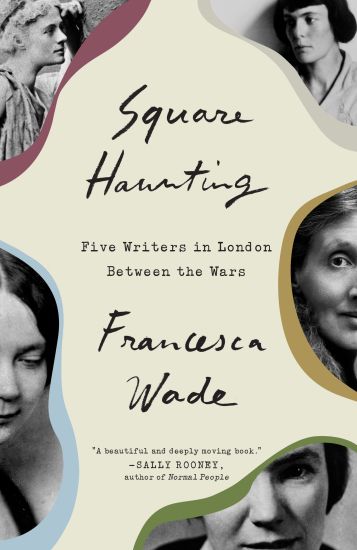
Square Haunting: Five Writers in London Between the Wars

Square Haunting: Five Writers in London Between the Wars

Francesca Wade

Crown Publishing Group (NY)
2021
nidottu
A NEW YORK TIMES EDITORS' CHOICE - LONGLISTED FOR THE BAILLIE GIFFORD PRIZE - "A beautiful and deeply moving book."--Sally Rooney, author of Normal PeopleAn engrossing group portrait of five women writers, including Virginia Woolf, who moved to London's Mecklenburgh Square in search of new freedom in their lives and work. NAMED ONE OF THE BEST BOOKS OF THE YEAR BY POPMATTERS "I like this London life . . . the street-sauntering and square-haunting."--Virginia Woolf, diary, 1925 In the early twentieth century, Mecklenburgh Square--a hidden architectural gem in the heart of London--was a radical address. On the outskirts of Bloomsbury known for the eponymous group who "lived in squares, painted in circles, and loved in triangles," the square was home to students, struggling artists, and revolutionaries. In the pivotal era between the two world wars, the lives of five remarkable women intertwined at this one address: modernist poet H. D., detective novelist Dorothy L. Sayers, classicist Jane Harrison, economic historian Eileen Power, and author and publisher Virginia Woolf. In an era when women's freedoms were fast expanding, they each sought a space where they could live, love, and--above all--work independently. With sparkling insight and a novelistic style, Francesca Wade sheds new light on a group of artists and thinkers whose pioneering work would enrich the possibilities of women's lives for generations to come. Praise for Square Haunting "A fascinating voyage through the lives of five remarkable women . . . moving and immersive."--Edmund Gordon, author of The Invention of Angela Carter: A Biography "Elegant, erudite, and absorbing, Square Haunting is a startlingly original debut, and Francesca Wade is an author to watch."--Frances Wilson, author of Guilty Thing: A Life of Thomas De Quincey"Outstanding . . . I'll be recommending this all year."--Sarah Bakewell, author of At the Existentialist Caf "I much enjoyed Francesca Wade's book. It almost made me wish I belonged to the pioneering generation of women spoiling eggs on the gas ring and breaking taboos."--Sue Prideaux, author of I Am Dynamite A Life of Friedrich Nietzsche
Vidding

Vidding

Francesca Coppa

The University of Michigan Press
2022
nidottu
Vidding is a well-established remix practice where fans edit an existing film, music video, TV show, or other performance and set it to music of their choosing. Vids emerged forty years ago as a complicated technological feat involving capturing footage from TV with a VCR and syncing with music—and their makers and consumers were almost exclusively women, many of them queer women. The technological challenges of doing this kind of work in the 1970s and 1980s when vidding began gave rise to a rich culture of collective work, as well as conventions of creators who gathered to share new work and new techniques. While the rise of personal digital technology eventually democratized the tools vidders use, the collective aspect of the culture grew even stronger with the advent of YouTube, Vimeo, and other channels for sharing work.Vidding: A History emphasizes vidding as a critical, feminist form of fan practice. Working outward from interviews, VHS liner notes, convention programs, and mailing list archives, Coppa offers a rich history of vidding communities as they evolved from the 1970s through to the present. Built with the classroom in mind, the open-access electronic version of this book includes over one-hundred vids and an appendix that includes additional close readings of vids.
Sounding Like a No-No

Sounding Like a No-No

Francesca T. Royster

The University of Michigan Press
2012
nidottu
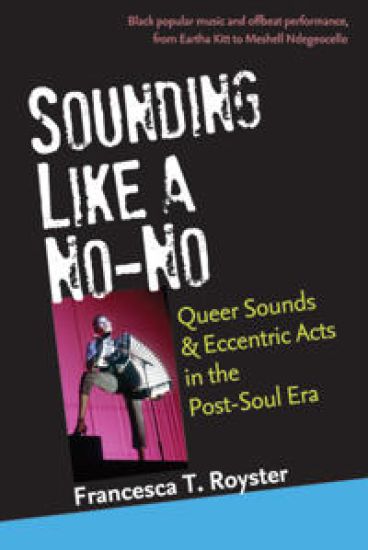
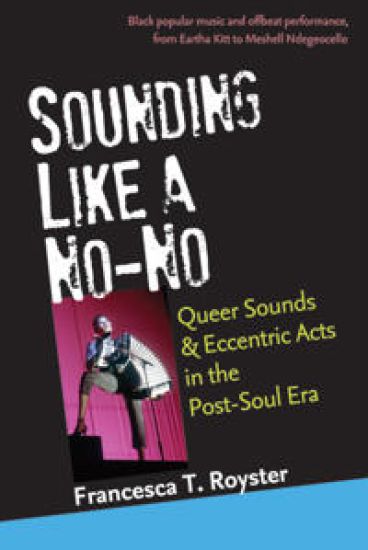
Sounding Like a No-No traces a rebellious spirit in post–civil rights black music by focusing on a range of offbeat, eccentric, queer, or slippery performances by leading musicians influenced by the cultural changes brought about by the civil rights, black nationalist, feminist, and LGBTQ movements, who through reinvention created a repertoire of performances that have left a lasting mark on popular music. The book's innovative readings of performers including Michael Jackson, Grace Jones, Stevie Wonder, Eartha Kitt, and Meshell Ndegeocello demonstrate how embodied sound and performance became a means for creativity, transgression, and social critique, a way to reclaim imaginative and corporeal freedom from the social death of slavery and its legacy of racism, to engender new sexualities and desires, to escape the sometimes constrictive codes of respectability and uplift from within the black community, and to make space for new futures for their listeners. The book's perspective on music as a form of black corporeality and identity, creativity, and political engagement will appeal to those in African American studies, popular music studies, queer theory, and black performance studies; general readers will welcome its engaging, accessible, and sometimes playful writing style, including elements of memoir.
The Fanfiction Reader

The Fanfiction Reader

Francesca Coppa

The University of Michigan Press
2017
nidottu
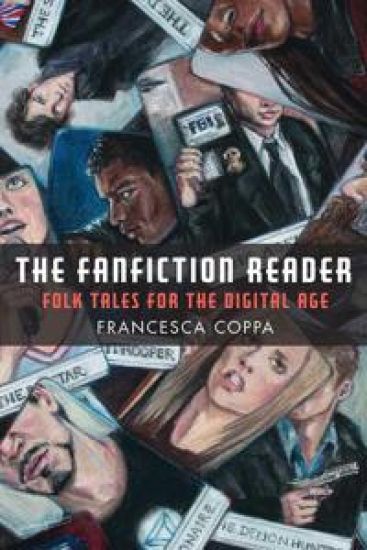
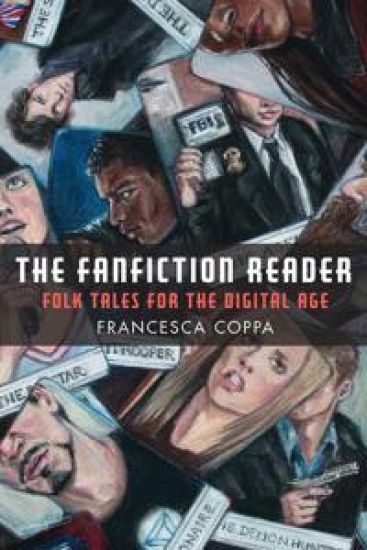
Written originally as a fanfiction for the series Twilight, the popularity of Fifty Shades of Grey has made obvious what was always clear to fans and literary scholars alike: that it is an essential human activity to read and retell epic stories of famous heroic characters. The Fanfiction Reader showcases the extent to which the archetypal storytelling exemplified by fanfiction has continuities with older forms: the communal tale-telling cultures of the past and the remix cultures of the present have much in common. Short stories that draw on franchises such as Star Trek, Star Wars, Doctor Who, James Bond, and others are accompanied by short contextual and analytical essays wherein Coppa treats fanfiction—a genre primarily written by women and minorities—as a rich literary tradition in which non-mainstream themes and values can thrive.
Sounding Like a No-No

Sounding Like a No-No

Francesca T. Royster

The University of Michigan Press
2012
sidottu
Sounding Like a No-No traces a rebellious spirit in post–civil rights black music by focusing on a range of offbeat, eccentric, queer, or slippery performances by leading musicians influenced by the cultural changes brought about by the civil rights, black nationalist, feminist, and LGBTQ movements, who through reinvention created a repertoire of performances that have left a lasting mark on popular music. The book's innovative readings of performers including Michael Jackson, Grace Jones, Stevie Wonder, Eartha Kitt, and Meshell Ndegeocello demonstrate how embodied sound and performance became a means for creativity, transgression, and social critique, a way to reclaim imaginative and corporeal freedom from the social death of slavery and its legacy of racism, to engender new sexualities and desires, to escape the sometimes constrictive codes of respectability and uplift from within the black community, and to make space for new futures for their listeners. The book's perspective on music as a form of black corporeality and identity, creativity, and political engagement will appeal to those in African American studies, popular music studies, queer theory, and black performance studies; general readers will welcome its engaging, accessible, and sometimes playful writing style, including elements of memoir.
The Fanfiction Reader

The Fanfiction Reader

Francesca Coppa

The University of Michigan Press
2017
sidottu
Written originally as a fanfiction for the series Twilight, the popularity of Fifty Shades of Grey has made obvious what was always clear to fans and literary scholars alike: that it is an essential human activity to read and retell epic stories of famous heroic characters. The Fanfiction Reader showcases the extent to which the archetypal storytelling exemplified by fanfiction has continuities with older forms: the communal tale-telling cultures of the past and the remix cultures of the present have much in common. Short stories that draw on franchises such as Star Trek, Star Wars, Doctor Who, James Bond, and others are accompanied by short contextual and analytical essays wherein Coppa treats fanfiction—a genre primarily written by women and minorities—as a rich literary tradition in which non-mainstream themes and values can thrive.
Tragedy, Rhetoric, and the Historiography of Tacitus' Annales

Tragedy, Rhetoric, and the Historiography of Tacitus' Annales

Francesca Santoro L'hoir

The University of Michigan Press
2006
sidottu
This manuscript examines how the Roman historian Tacitus employs thematic vocabulary, imagery and intricate word patterns that evoke the complex schemes of verbal repetition found in Greek tragedy. Because so many scholars have remarked upon the "dramatic technique" in Tacitus, and because little attention has been given to the recurrent vocabulary and allusive imagery with which he achieves his dramatic effect, this work concentrates upon that aspect of his historiography. Tacitean scholars have thus far only danced piecemeal around the question of poetic influences on Tacitus and the significance of such influences. L'hoir has taken the question head on, and, in the process, done a great service for Tacitean scholars and students of Roman historiography in general. Through a close reading of the text, the author has excavated a hitherto unappreciated side of Tacitus' text. In particular, the book looks at how Tacitus references the themes and language of tragedy and what the implications are for his historiography. The employment of clusters of recurrent words drawn from tragedy intensifies Tacitus' dramatic technique, imbuing the entire historical narrative of the Annales with a tragic texture and depth of field. Ever present, but hardly noticed, due to Tacitus' artistry and the compelling nature of his subjects, Tacitus' tragic vocabulary deserves thorough consideration.
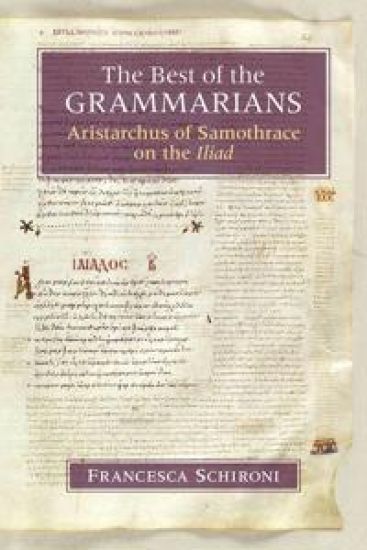
The Best of the Grammarians

The Best of the Grammarians

Francesca Schironi

The University of Michigan Press
2018
sidottu
A founding father of the “art of philology,” Aristarchus of Samothrace (216–144 BCE) made a profound contribution to ancient scholarship. In his study of Homer’s Iliad, his methods and principles inevitably informed, even reshaped, his edition of the epic. This systematic study places Aristarchus and his fragments preserved in the Iliadic scholia, or marginal annotations, in the context and cultural environment of his own time. Francesca Schironi presents a more robust picture of Aristarchus as a scholar than anyone has offered previously. Based on her analysis of over 4,300 fragments from his commentary on the Iliad, she reconstructs Aristarchus’ methodology and its relationship to earlier scholarship, especially Aristotelian poetics. Schironi departs from the standard commentary on individual fragments, and instead organizes them by topic to produce a rigorous scholarly examination of how Aristarchus worked. ? Combining the accuracy and detail of traditional philology with a big-picture study of recurrent patterns and methodological trends across Aristarchus’ work, this volume offers a new approach to scholarship in Alexandrian and classical philology. It will be the go-to reference book on this topic for many years to come, and will usher in a new way of addressing the highly technical work of ancient scholars without losing philological accuracy. This book will be valuable to classicists and philologists interested in Homer and Homeric criticism in antiquity, Hellenistic scholarship, and ancient literary criticism.
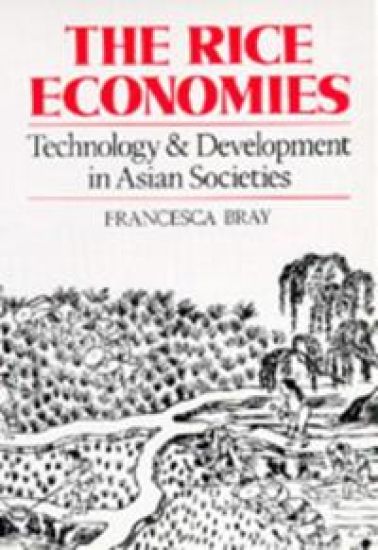
The Rice Economies

The Rice Economies

Francesca Bray

University of California Press
1994
pokkari
The contrast in the rate of growth between Western and Eastern societies since 1800 has caused Asian societies to be characterized as backward and resistant to change, though until 1600 or so certain Asian states were technologically far in advance of Europe. The Rice Economies, drawing on original source materials, examines patterns of technological and social evolution specific to East-Asian wet-rice economies in order to clarfiy some general historical trends in economic development.
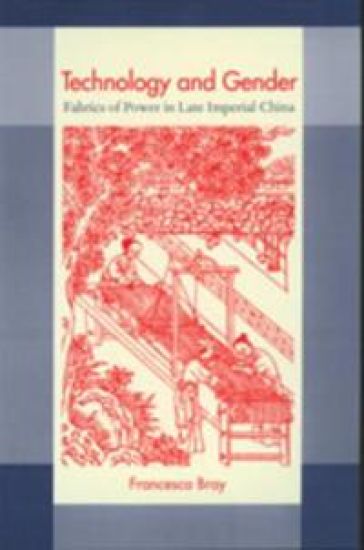
Technology and Gender

Technology and Gender

Francesca Bray

University of California Press
1997
pokkari
In this feminist history of eight centuries of private life in China, Francesca Bray inserts women into the history of technology and adds technology to the history of women. Bray takes issue with the Orientalist image that traditional Chinese women were imprisoned in the inner quarters, deprived of freedom and dignity, and so physically and morally deformed by footbinding and the tyrannies of patriarchy that they were incapable of productive work. She proposes a concept of gynotechnics, a set of everyday technologies that define women's roles, as a creative new way to explore how societies translate moral and social principles into a web of material forms and bodily practices. Bray examines three different aspects of domestic life in China, tracing their developments from 1000 to 1800 A.D. She begins with the shell of domesticity, the house, focusing on how domestic space embodied hierarchies of gender. She follows the shift in the textile industry from domestic production to commercial production. Despite increasing emphasis on women's reproductive roles, she argues, this cannot be reduced to childbearing. Female hierarchies within the family reinforced the power of wives, whose responsibilities included ritual activities and financial management as well as the education of children.