

Kirjahaku
Etsi kirjoja tekijän nimen, kirjan nimen tai ISBN:n perusteella.
1000 tulosta hakusanalla Frederick Locker
Fort Sheridan to Montfaucon: The War Letters of Frederick Trevenen Edwards
Frederick Trevenen Edwards; Frederick Edwards
Literary Licensing, LLC
2011
sidottu
Fort Sheridan to Montfaucon: The War Letters of Frederick Trevenen Edwards is a collection of letters written by Frederick Trevenen Edwards during his service in the United States Army during World War I. The letters cover his experiences as a soldier, including his training at Fort Sheridan in Illinois, his journey to France, and his time in the trenches. Edwards writes about the daily life of a soldier, the hardships of war, and the camaraderie among his fellow soldiers. He also provides insights into the political and social climate of the time. The book provides a firsthand account of the experiences of an American soldier during World War I and offers a glimpse into the realities of war.The War Letters Of Frederick Trevenen Edwards, 1st Lieutenant And Adjutant Of Personnel, 18th Field Artillery, U. S. A., 1917-1918.This scarce antiquarian book is a facsimile reprint of the old original and may contain some imperfections such as library marks and notations. Because we believe this work is culturally important, we have made it available as part of our commitment for protecting, preserving, and promoting the world's literature in affordable, high quality, modern editions, that are true to their original work.
The Early Writings of Frederick Jackson Turner
Frederick Jackson Turner; Everett E. Edwards; Fulmer Mood
Literary Licensing, LLC
2011
sidottu
A British Fusilier in Revolutionary Boston: Being the Diary of Frederick MacKenzie, Adjutant of the Royal Welch Fusiliers
Frederick MacKenzie; Allen French
Literary Licensing, LLC
2011
sidottu
""A British Fusilier in Revolutionary Boston"" is a historical diary written by Frederick Mackenzie, who served as the Adjutant of the Royal Welch Fusiliers during the American Revolutionary War. The book provides a first-hand account of Mackenzie's experiences during his time in Boston, where he witnessed and participated in several important events that shaped the course of the war. Mackenzie's diary offers a unique perspective on the conflict, as it is written from the point of view of a British soldier who was on the ground during some of the most significant moments of the war. The book covers a wide range of topics, including the Boston Tea Party, the Siege of Boston, and the Battle of Bunker Hill. It also includes personal anecdotes and observations about life in Boston during this turbulent period. Overall, ""A British Fusilier in Revolutionary Boston"" is a fascinating and informative read that provides valuable insight into one of the most important periods in American history.January 5 To April 30, 1775.This scarce antiquarian book is a facsimile reprint of the old original and may contain some imperfections such as library marks and notations. Because we believe this work is culturally important, we have made it available as part of our commitment for protecting, preserving, and promoting the world's literature in affordable, high quality, modern editions, that are true to their original work.

Frederick Morgan Harris: A Little of His Life and Some of His Letters
Frederick Morgan Harris; Helen Harris Harbison
Literary Licensing, LLC
2011
nidottu

The Early Writings of Frederick Jackson Turner
Frederick Jackson Turner; Everett E. Edwards; Fulmer Mood
Literary Licensing, LLC
2011
nidottu
A British Fusilier in Revolutionary Boston: Being the Diary of Frederick MacKenzie, Adjutant of the Royal Welch Fusiliers
Frederick MacKenzie; Allen French
Literary Licensing, LLC
2011
nidottu

Fort Sheridan to Montfaucon: The War Letters of Frederick Trevenen Edwards
Frederick Trevenen Edwards; Frederick Edwards
Literary Licensing, LLC
2011
nidottu
Frederick Henry Koch, Pioneer Playmaker: A Brief Biography
Samuel Selden
Literary Licensing, LLC
2011
nidottu
The book titled ""Frederick Harris Goff"" is a biography of the American philanthropist and banker, Frederick Harris Goff. The book is written by Goff himself, and provides a detailed account of his life, career, and contributions to society. The book begins with Goff's early life, including his upbringing in Ohio and his education at Western Reserve University. It then goes on to detail his career as a banker, including his work at the Cleveland Trust Company and the establishment of the Cleveland Foundation, one of the first community foundations in the United States. Throughout the book, Goff discusses his philosophy of philanthropy, emphasizing the importance of community involvement and the need to address social issues through collaborative efforts. He also reflects on his personal life, including his marriage and family, and his passion for the arts and education. Overall, ""Frederick Harris Goff"" provides a comprehensive and insightful look into the life of one of America's most influential philanthropists. It is a must-read for anyone interested in the history of philanthropy, community development, or the life of Frederick Harris Goff.A Brief Sketch Of His Life And An Account Of The Memorial Meeting Held By The Directors Of The Cleveland Trust Company, In March, 1923.This scarce antiquarian book is a facsimile reprint of the old original and may contain some imperfections such as library marks and notations. Because we believe this work is culturally important, we have made it available as part of our commitment for protecting, preserving, and promoting the world's literature in affordable, high quality, modern editions, that are true to their original work.


Leaven for Loaves: Poems by Frederick Herbert Adler
Frederick Herbert Adler
Literary Licensing, LLC
2013
nidottu

Frederick Harris Goff, 1858-1923: Lawyer, Banker, Civic Leader
I. F. Freiberger
Literary Licensing, LLC
2013
nidottu
The Autobiography of Frederick W. Rohrs: With Adventures, Reminiscences, and Memoirs
Frederick W. Rohrs
Literary Licensing, LLC
2013
nidottu
Frederick Snare Corporation V. Vigo Steamship Corp. U.S. Supreme Court Transcript of Record with Supporting Pleadings
Christ Stratakis; Joseph Cardillo
Gale, U.S. Supreme Court Records
2011
pokkari
Eaton (Frederick) V. California U.S. Supreme Court Transcript of Record with Supporting Pleadings
Frederick H Eaton
Gale, U.S. Supreme Court Records
2011
pokkari
Frederick J. Bonamo and Gerald A. Pini, Petitioners, V. United States. U.S. Supreme Court Transcript of Record with Supporting Pleadings
Joseph C Delcore
Gale, U.S. Supreme Court Records
2011
pokkari
Frederick Dolle, Respondent, vs. Clark D. Rhinehart et al., Appellants
Hobbs & Gifford
Gale Ecco, Making of Modern Law
2012
pokkari
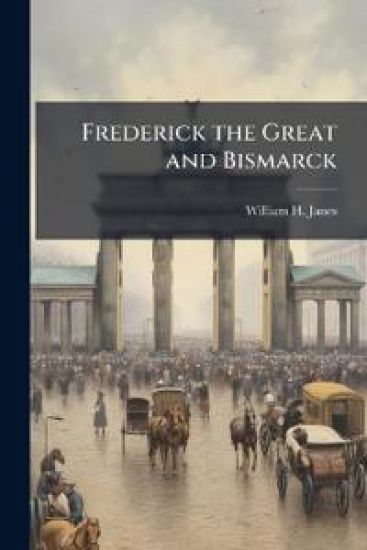
Frederick the Great and Bismarck: Standards for Modern Strategists
William H. Janes
BiblioScholar
2012
nidottu
Makers of modern strategy have an unprecedented challenge in our complex world. American strategists have been criticized for strategic failures since World War II. Congressional investigations have been initiated to examine the strategic education of senior military officers. The news media is replete with criticism of our strategy. The lingering question is how can a nation with our sophisticated educational system and highly intelligent leaders fail to develop a coherent, consistent, and productive strategy? This study examines two historical strategists, Frederick the Great and Otto von Bismarck, to determine if history provides any solutions for modern strategists. The study uses Michael Howard's elements of grand strategy. Five elements of grand strategy are discussed: operational, logistical, social, technological, and political. Frederick's and Bismarck's use of these elements is examined during the times they dominated policy making in Prussia. Their methods provide valuable insights about strategy development. This paper does not provide a solution to our modern problems with strategy. Rather, it focuses on two models. One model contains the elements of grand strategy. The second model provides criteria to evaluate the development and execution of strategy: determination, consistency of purpose, realism, creativity, vision, flexibility, and decisiveness. The conclusions verify Frederick's and Bismarck's strategic effectiveness. Frederick as King and Bismarck as Prime Minister provide numerous examples of successful implementation of grand strategy. Although our world is more complicated, there are definite applications for the modern strategist. The final section of the paper is a discussion of some modern strategic issues. We are not executing strategy effectively. However, if our leaders recognize the problem and develop a strategy which addresses the two models presented, our strategy will improve. If we do not, the lessons of Frederick and Bismarck wi This work has been selected by scholars as being culturally important, and is part of the knowledge base of civilization as we know it. This work was reproduced from the original artifact, and remains as true to the original work as possible. Therefore, you will see the original copyright references, library stamps (as most of these works have been housed in our most important libraries around the world), and other notations in the work. This work is in the public domain in the United States of America, and possibly other nations. Within the United States, you may freely copy and distribute this work, as no entity (individual or corporate) has a copyright on the body of the work. As a reproduction of a historical artifact, this work may contain missing or blurred pages, poor pictures, errant marks, etc. Scholars believe, and we concur, that this work is important enough to be preserved, reproduced, and made generally available to the public. We appreciate your support of the preservation process, and thank you for being an important part of keeping this knowledge alive and relevant.