
Kirjahaku
Etsi kirjoja tekijän nimen, kirjan nimen tai ISBN:n perusteella.
1000 tulosta hakusanalla Geoffrey Block
Poetical Works Of Geoffrey Chaucer V3-V4
KESSINGER PUBLISHING, LLC
2008
sidottu

Annotations to Geoffrey Hill's Speech! Speech!
Ann Hassan
Createspace Independent Publishing Platform
2012
pokkari
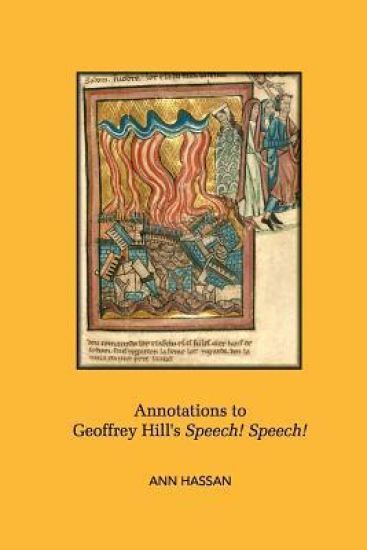
Geoffrey Hill's Speech Speech (2000) encapsulates two thousand years' worth of utterances in a symbolic act of remembrance and expression of despair for the current age, in which we find "our minds and ears fouled by degraded public speech-by media hype, insipid sermons, hollow political rhetoric, and the ritual misuse of words." Through 120 densely allusive stanzas-"As many as the days that were of SODOM"-the poem wrestles this condition from within, fighting fire with fire in an alchemical symbolic labour that transmutes the dross of corrupt and clich d idiom into a dynamic logopoeia which proves true Hill's persistent claim: "genuinely difficult art is truly democratic." Such is the weird, ambivalently hostile position of poetry in the present world and thus the space of our real connection to it: "Whatever strange relationship we have with the poem, it is not one of enjoyment. It is more like being brushed past, or aside, by an alien being" (Hill).Befriending this estrangement, embracing it as a more amicable brushing-up-against, Hassan's Annotations is a thorough and patient explication of Speech Speech that both clarifies and deepens the poem's difficulties, illuminating its polyphonic language and careening discursive movement. The author's method is at once commentarial, descriptive, and narratorial, staying faithfully with the poem and following its complex verbal and logical turns. The book generously provides, rather than direct interpretative incursion, a more durable and productive document of "the true nature / of this achievement" (stanza 92), a capacious, open understanding of the text that will prove invaluable to its present and future readers.Ann Hassan works at the National Centre for Peace and Conflict Studies at the University of Otago (New Zealand) and recently completed a PhD in English at Otago.
The General Prologue by Geoffrey Chaucer: A Critical Introduction
Ray Moore M. a.
Createspace Independent Publishing Platform
2013
nidottu
The Works of Geoffrey Chaucer
Literary Licensing, LLC
2014
nidottu
In this collection of thirty-four essays and short stories, Washington Irving explores the personality of his pseudonym, Geoffrey Crayon, while providing a study on human behavior. Rip Van Winkle introduces the famed literacy title character, an unmotivated, care-free man who drinks and parties with strangers in the mountains, falls asleep, and wakes up twenty years later in post-revolution America. Also among this collection are tales of sentiment, such as The Broken Heart, which follows a young woman who grieves the death of her lover. Often described as a tear-jerking narrative, The Widow and Her Son depicts an old Englishwoman as she cares for her dying son after his return from his military service at sea. Switching moods, A Sunday in London provides a vivid portrait of a day in London, focusing on the ways the Church influenced the day’s events. In a similar observant lens, The Sketch Book of Geoffrey Crayon includes a five-part narrative on Christmas celebrations, starting with a refection on the holiday and concluding with a description of Christmas dinner. Finally, the collection ends with the famous and beloved tale of Ichabod Crane and the Headless Horsemen in The Legend of Sleepy Hollow. Featuring ghost stories, anthropological essays, and emotional narratives, The Sketch Book of Geoffrey Crayon includes the best works of Washington Irving. Originally published as a serial publication starting 1819, The Sketch Book of Geoffrey Crayon was released in seven highly anticipated installments. With sentiment, elegance, and beautiful prose that excites the imagination, Irving sought to eliminate the animosity between English and American literature with this collection of work. The Sketch Book of Geoffrey Crayon impressed both Americans and the British, capturing the attention of many other influential writers such as Sir Walter Scott and Lord Byron. With classic stories, characters, and a privileged look into historical events and traditions, Washington Irving’s The Sketch Book of Geoffrey Crayon continues to excite and satiate readers, even two-hundred years later. This edition of Washington Irving’s The Sketch Book of Geoffrey Crayon features an eye-catching cover design and is printed in a stylish font, creating an approachable reading experience for a modern audience.
In this collection of thirty-four essays and short stories, Washington Irving explores the personality of his pseudonym, Geoffrey Crayon, while providing a study on human behavior. Rip Van Winkle introduces the famed literacy title character, an unmotivated, care-free man who drinks and parties with strangers in the mountains, falls asleep, and wakes up twenty years later in post-revolution America. Also among this collection are tales of sentiment, such as The Broken Heart, which follows a young woman who grieves the death of her lover. Often described as a tear-jerking narrative, The Widow and Her Son depicts an old Englishwoman as she cares for her dying son after his return from his military service at sea. Switching moods, A Sunday in London provides a vivid portrait of a day in London, focusing on the ways the Church influenced the day’s events. In a similar observant lens, The Sketch Book of Geoffrey Crayon includes a five-part narrative on Christmas celebrations, starting with a refection on the holiday and concluding with a description of Christmas dinner. Finally, the collection ends with the famous and beloved tale of Ichabod Crane and the Headless Horsemen in The Legend of Sleepy Hollow. Featuring ghost stories, anthropological essays, and emotional narratives, The Sketch Book of Geoffrey Crayon includes the best works of Washington Irving. Originally published as a serial publication starting 1819, The Sketch Book of Geoffrey Crayon was released in seven highly anticipated installments. With sentiment, elegance, and beautiful prose that excites the imagination, Irving sought to eliminate the animosity between English and American literature with this collection of work. The Sketch Book of Geoffrey Crayon impressed both Americans and the British, capturing the attention of many other influential writers such as Sir Walter Scott and Lord Byron. With classic stories, characters, and a privileged look into historical events and traditions, Washington Irving’s The Sketch Book of Geoffrey Crayon continues to excite and satiate readers, even two-hundred years later. This edition of Washington Irving’s The Sketch Book of Geoffrey Crayon features an eye-catching cover design and is printed in a stylish font, creating an approachable reading experience for a modern audience.
This important new critical biography traces in carefully considered detail what is known of Geoffrey Chaucer's personal life while exploring the fascinating relationship between the man of affairs, who made so many 'improvisations and accommodations' to ensure his own survival, and the poet. A major reexamination of England's greatest narrative poet, it is supplemented with reproductions of Chaucer portraits and other illustrations, including maps of medieval England.
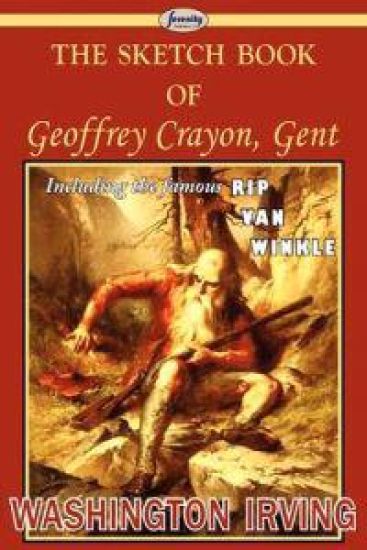
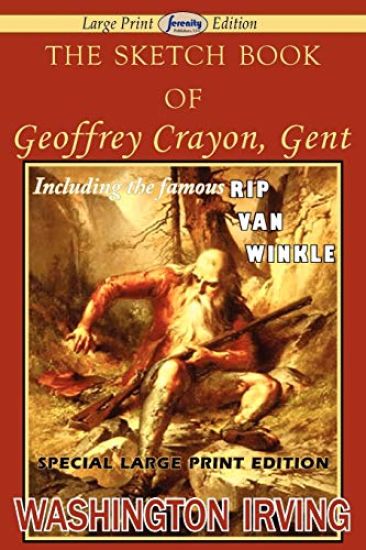
The Sketch Book of Geoffrey Crayon, Gent (Large Print Edition)
Washington Irving
Serenity Publishers, LLC
2012
pokkari
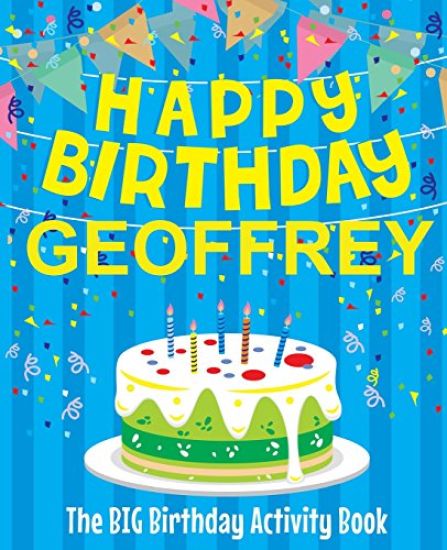
Happy Birthday Geoffrey - The Big Birthday Activity Book: Personalized Children's Activity Book
Birthdaydr
Createspace Independent Publishing Platform
2018
nidottu
Happy Birthday Geoffrey is a personalized kids activity book, it includes personalized crosswords, word searches, number puzzles, jokes, drawing and coloring >It is suitable for children between 6-11 years old It is the perfect birthday present for Geoffrey, and is a great keepsake for parents to remember their child's early years and birthdays This personalized book is available for other names also This is a great gift for children and an amazing keepsake for parents Happy Birthday Geoffrey
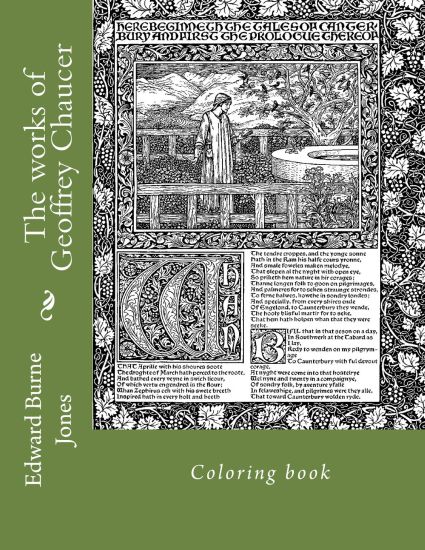
The works of Geoffrey Chaucer: Coloring book
Edward Burne Jones
Createspace Independent Publishing Platform
2018
nidottu
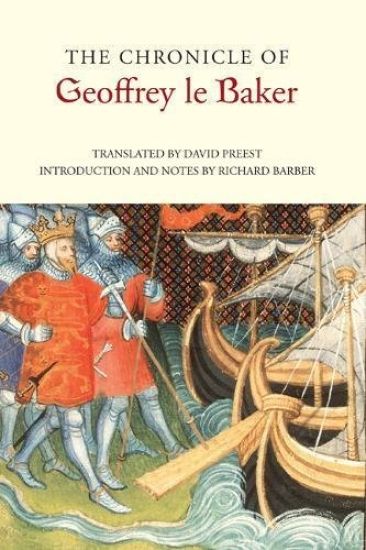
The Chronicle of Geoffrey le Baker of Swinbrook
The Boydell Press
2018
pokkari
Geoffrey le Baker's chronicle covers the reigns of Edward II and Edward III up to the English victory at Poitiers. David Preest's new translation includes extensive notes and an introduction by Richard Barber. Geoffrey le Baker's chronicle covers the reigns of Edward II and Edward III up to the English victory at Poitiers. It starts in a low key, copying an earlier chronicle, but by the end of Edward II's reign he offers a much more vivid account. Baker's description of Edward II's last days is partly based on the eyewitness account of his patron, Sir Thomas de la More, who was present at one critical interview. This story of Edward's death, like many other details from his chronicle, was picked up by Tudor historians, particularly by Holinshed, who was the source for Shakespeare's history plays. The reign of Edward III is dominated, not by Edward III himself, but by Baker's real hero, Edward prince of Wales. His bravery aged sixteen at Crécy is presented as a prelude to his victory at Poitiers, a battle which Baker is able to describe in great detail, apparently from what he was told by the prince's commanders. It is a rarity among medieval battles, because - in sharp contrast to the total anarchy at Crécy - the prince and his staff were able to see the enemy's manoeuvres. Throughout the chronicle there are sharply defined vignettes which stay in the mind - the killing of the Scottish champion on Halidon Hill, the drowning of Sir Edward Bohun, the earls of Salisbury and Suffolk as prisoners carried in a cart, the death of Sir Walter Selby and his two sons, the bravery of Sir Thomas Dagworth against a cobbler's son, the duel between Otho and the duke of Lancaster, John Dancaster and the lewd washerwoman. Baker writes in a complex Latin which even scholars find problematic,and David Preest's new translation will be widely welcomed by anyone interested in the fourteenth century. There are extensive notes and an introduction by Richard Barber. DAVID PREEST has also translated The Chronica Maiora of Thomas Walsingham, a Choice Outstanding Academic Title; RICHARD BARBER's recent book Edward III and the Triumph of England draws heavily on Geoffrey le Baker's work for the first twenty years of Edward'sreign.

The Chronicle of Geoffrey le Baker of Swinbrook
The Boydell Press
2012
sidottu
Geoffrey le Baker's chronicle covers the reigns of Edward II and Edward III up to the English victory at Poitiers. David Preest's new translation includes extensive notes and an introduction by Richard Barber. Geoffrey le Baker's chronicle covers the reigns of Edward II and Edward III up to the English victory at Poitiers. It starts in a low key, copying an earlier chronicle, but by the end of Edward II's reign he offers a much more vivid account. His description of Edward II's last days is partly based on the eyewitness account of his patron, Sir Thomas de la More, who was present at one critical interview. Baker's story of Edward's death, like many other details from his chronicle, was picked up by Tudor historians, particularly by Holinshed, who was the source for Shakespeare's history plays. The reign of Edward III is dominated, not by Edward III himself, but by Baker's real hero, Edward prince of Wales. His bravery aged 16 at Crécy is presented as a prelude to his victory at Poitiers, a battle which Baker is able to describe in great detail, apparently from what he was told by the prince's commanders. It is a rarity among medieval battles, because - in sharp contrast to the total anarchy at Crécy - the prince and his staff were able to see the enemy's manoeuvres. Throughout the chronicle there are sharply defined vignetteswhich stay in the mind - the killing of the Scottish champion on Halidon Hill, the drowning of Sir Edward Bohun, the earls of Salisbury and Suffolk as prisoners carried in a cart, the death of Sir Walter Selby and his two sons, the bravery of Sir Thomas Dagworth against a cobbler's son, the duel between Otho and the duke of Lancaster, John Dancaster and the lewd washerwoman. Baker writes in a complex Latin which even scholars find problematic, and David Preest's new translation will be widely welcomed by anyone interested in the fourteenth century. There are extensive notes and an introduction by Richard Barber.
Homage to Geoffrey Hill (Agenda Magazine)
Agenda Poetry
2016
nidottu
Few historians can claim to have undertaken historical analysis on as grand a scale as Geoffrey Parker in his 2013 work Global Crisis: War, Climate Change and Catastrophe in the Seventeenth Century. It is a doorstop of a book that surveys the ‘general crisis of the 17th century,’ shows that it was experienced practically throughout the world, and was not merely a European phenomenon, and links it to the impact of climate change in the form of the advent of a cold period known as the ‘Little Ice Age.’ Parker’s triumph is made possible by the deployment of formidable critical thinking skills – reasoning, to construct an engaging overall argument from very disparate material, and analysis, to re-examine and understand the plethora of complex secondary sources on which his book is built. In critical thinking, analysis is all about understanding the features and structures of argument: how given reasons lead to conclusions, and what kinds of implicit reasons and assumptions are being used. Historical analysis applies the same skills to the fabric of history, asking how given chains of events occur, how different reasons and factors interact, and so on.Parker, though, takes things further than most in his quest to understand the meaning of a century’s-worth of turbulence spread across the whole globe. Beginning by breaking down the evidence for significant climatic cooling in the 17th-century (due to decreased solar activity), he moves on to detailed study of the effects the cooling had on societies and regimes across the world. From this detailed spadework, he constructs a persuasive argument that accounts for the different ways in which the effects of climate change played out across the century – an argument with profound implications for a future likely to see serious climate change of its own.