Kirjojen hintavertailu. Mukana 11 717 486 kirjaa ja 12 kauppaa.

Kirjahaku

Etsi kirjoja tekijän nimen, kirjan nimen tai ISBN:n perusteella.

1000 tulosta hakusanalla Greg Woolf

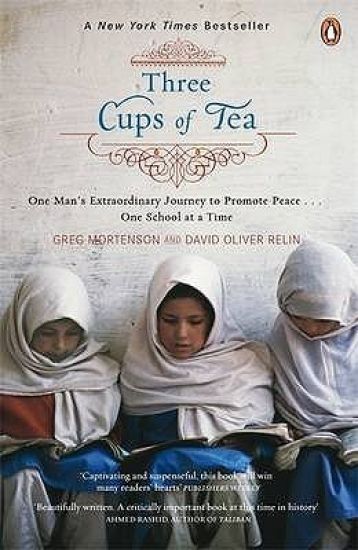
Three Cups Of Tea

Three Cups Of Tea

Greg Mortenson

Penguin Books Ltd
2008
pokkari
‘Here we drink three cups of tea to do business; the first you are a stranger, the second you become a friend, and the third, you join our family, and for our family we are prepared to do anything – even die.’Haji Ali, Korphe Village Chief, Karakoram mountains, Pakistan In 1993, after a terrifying and disastrous attempt to climb K2, a mountaineer called Greg Mortenson drifted, cold and dehydrated, into an impoverished Pakistan village in the Karakoram Mountains. Moved by the inhabitants’ kindness, he promised to return and build a school. Three Cups of Tea is the story of that promise and its extraordinary outcome. Over the next decade Mortenson built not just one but fifty-five schools – especially for girls – in remote villages across the forbidding and breathtaking landscape of Pakistan and Afghanistan, just as the Taliban rose to power. His story is at once a riveting adventure and a testament to the power of the humanitarian spirit.
A Preparation for Death

A Preparation for Death

Greg Baxter

Penguin Books Ltd
2011
pokkari
'Traditional autobiography is composed after the experience has passed. I wrote this book in the very panic of the experiences that inspired it ... 'In his early thirties, Greg Baxter found himself in a strange place. He hated his job, he was drinking excessively, he was sabotaging his most important relationships, and he was no longer doing the thing he cared about most: writing. Strangest of all, at this time he started teaching evening classes in creative writing - and his life changed utterly.A Preparation for Death is a document of the chaos and discovery of that time and of the experiences that led Greg Baxter to that strange place - an extraordinarily intimate account of literary failure (and its consequences), personal decay, and redemption through reading, writing, and truth-telling. Studded with vivid, loving portraits of the people closest to him - his Austrian grandmother, who narrowly survived the Second World War; his mother and father, both described with heartbreakingly close attention; and his cousin Walter, whose own demons provide a striking counterpoint to the author's - it is above all a stunningly vivid and searching self-portrait: possibly the most honest book you'll ever read.
Three Cups of Tea: One Man's Mission to Promote Peace . . . One School at a Time
Traces how the author, having been rescued and resuscitated by Himalayan villagers after a failed attempt to climb K2, worked to build schools that would particularly benefit the young girls who were forbidden an education by Taliban restrictions, an endeavor for which his life has been repeatedly threatened. Reader's Guide available. Reprint. 100,000 first printing.
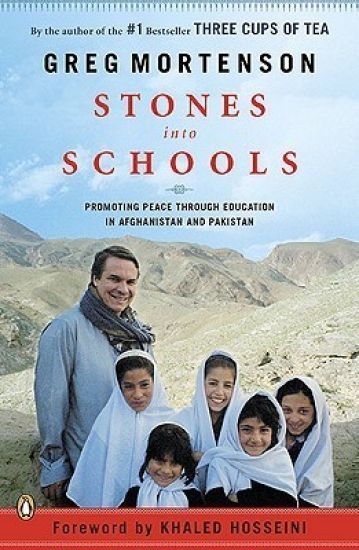
Stones into Schools: Promoting Peace with Education in Afghanistan and Pakistan
From the author of the #1 bestseller Three Cups of Tea, the continuing story of this determined humanitarian's efforts to promote peace through education In this dramatic first-person narrative, Greg Mortenson picks up where Three Cups of Tea left off in 2003, recounting his relentless, ongoing efforts to establish schools for girls in Afghanistan; his extensive work in Azad Kashmir and Pakistan after a massive earthquake hit the region in 2005; and the unique ways he has built relationships with Islamic clerics, militia commanders, and tribal leaders. He shares for the first time his broader vision to promote peace through education and literacy, as well as touching on military matters, Islam, and women--all woven together with the many rich personal stories of the people who have been involved in this remarkable two-decade humanitarian effort. Since the 2006 publication of Three Cups of Tea, Mortenson has traveled across the U.S. and the world to share his vision with hundreds of thousands of people. He has met with heads of state, top military officials, and leading politicians who all seek his advice and insight. The continued phenomenal success of Three Cups of Tea proves that there is an eager and committed audience for Mortenson's work and message.
Why Africa is Poor

Why Africa is Poor

Greg Mills

Vintage
2011
nidottu
Why Africa is Poor looks at the fragile economic and political situation in Africa and makes the quite controversial argument that the main reason Africa s people are poor is due to the choices made by their leaders. Dr Greg Mills draws extensively from his experiences running various presidential-level advisory teams across the continent and examines the policy choices that have stunted African development. In providing some answers to the conundrum of development, the book focuses on the way the global economy works, Africa s record and the choices made by its leaders, the role of the outside world and the global aid regime. It assesses whether the odds are in Africa s favour and identifies the areas where African leadership could make better choices."
Strategy in 3D

Strategy in 3D

Greg Fisher; John E. Wisneski; Rene M. Bakker

Oxford University Press Inc
2020
sidottu
Strategy decision making and action used to be off limits to all but the select few at the very top of an organization. It was a largely cerebral activity focused on grand long-terms plans made at annual off-site retreats away from the daily challenges of the business. That is no longer the case. The current business environment does not wait for companies to slowly adjust in an annual meeting. The relentless pace of change renders today's long-term future tomorrow's history. Rapid innovations and ever-increasing complexities limit executives' ability to make decisions with perfect information. Does this mean strategy is no longer useful, or even feasible? No. Good strategists are needed now more than ever. But today's high-performing organizations think of strategy differently than in the past. These companies make strategy part of every manager's role; they strategize continuously and tackle strategic problems through individuals from all parts of the organization. Strategy in this new, fast-paced world is about diagnosing the diverse array of complex challenges confronting organizations, deciding on novel solutions to address those challenges, and delivering by taking action on those solutions. Including a novel organizational framework and never-before-published application examples, Strategy in 3D helps build these foundational skills and prepares the reader for success as a strategist in the 21st century.
Strategy in 3D

Strategy in 3D

Greg Fisher; John E. Wisneski; Rene M. Bakker

Oxford University Press Inc
2020
nidottu
Strategy decision making and action used to be off limits to all but the select few at the very top of an organization. It was a largely cerebral activity focused on grand long-terms plans made at annual off-site retreats away from the daily challenges of the business. That is no longer the case. The current business environment does not wait for companies to slowly adjust in an annual meeting. The relentless pace of change renders today's long-term future tomorrow's history. Rapid innovations and ever-increasing complexities limit executives' ability to make decisions with perfect information. Does this mean strategy is no longer useful, or even feasible? No. Good strategists are needed now more than ever. But today's high-performing organizations think of strategy differently than in the past. These companies make strategy part of every manager's role; they strategize continuously and tackle strategic problems through individuals from all parts of the organization. Strategy in this new, fast-paced world is about diagnosing the diverse array of complex challenges confronting organizations, deciding on novel solutions to address those challenges, and delivering by taking action on those solutions. Including a novel organizational framework and never-before-published application examples, Strategy in 3D helps build these foundational skills and prepares the reader for success as a strategist in the 21st century.
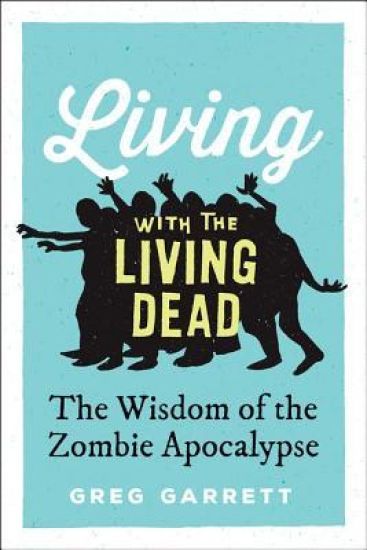
Living with the Living Dead

Living with the Living Dead

Greg Garrett

Oxford University Press Inc
2017
sidottu
When humankind faces what it perceives as a threat to its very existence, a macabre thing happens in art, literature, and culture: corpses begin to stand up and walk around. The dead walked in the fourteenth century, when the Black Death and other catastrophes roiled Europe. They walked in images from World War I, when a generation died horribly in the trenches. They walked in art inspired by the Holocaust and by the atomic attacks on Japan. Now, in the early twenty-first century, the dead walk in stories of the zombie apocalypse, some of the most ubiquitous narratives of post-9/11 Western culture. Zombies appear in popular movies and television shows, comics and graphic novels, fiction, games, art, and in material culture including pinball machines, zombie runs, and lottery tickets. The zombie apocalypse, Greg Garrett shows us, has become an archetypal narrative for the contemporary world, in part because zombies can stand in for any of a variety of global threats, from terrorism to Ebola, from economic uncertainty to ecological destruction. But this zombie narrative also brings us emotional and spiritual comfort. These apocalyptic stories, in which the world has been turned upside down and protagonists face the prospect of an imminent and grisly death, can also offer us wisdom about living in a community, present us with real-world ethical solutions, and invite us into conversation about the value and costs of survival. We may indeed be living with the living dead these days, but through the stories we consume and the games we play, we are paradoxically learning what it means to be fully alive.
After the Flying Saucers Came

After the Flying Saucers Came

Greg Eghigian

OXFORD UNIVERSITY PRESS INC
2024
sidottu
Roswell, 1947. Washington, DC, 1952. Quarouble, 1954. New Hampshire, 1961. Pascagoula, 1973. Petrozavodsk, 1977. Copley Woods, 1983. Explore how sightings of UFOs and aliens seized the world's attention and discover what the fascination with flying saucers and extraterrestrial visitors says about our changing views on science, technology, and the paranormal. In the summer of 1947, a private pilot flying over the state of Washington saw what he described as several pie pan-shaped aircraft traveling in formation at remarkably high speed. Within days, journalists began referring to the objects as "flying saucers." Over the course of that summer, Americans reported seeing them in the skies overhead. News quickly spread, and within a few years, flying saucers were being spotted across the world. The question on everyone's mind was, what were they? Some new super weapon in the Cold War? Strange weather patterns? Optical illusions? Or perhaps it was all a case of mass hysteria? Some, however, concluded they could only be one thing: spacecrafts built and piloted by extraterrestrials. The age of the unidentified flying object, the UFO, had arrived. Greg Eghigian tells the story of the world's fascination with UFOs and the prospect that they were the work of visitors from outer space. While accounts of great wonders in the sky date back to antiquity, reports of UFOs took place against the unique backdrop of the Cold War and space age, giving rise to disputed government inquiries, breathtaking news stories, and single-minded sleuths. After the Flying Saucers Came traces how a seemingly isolated incident sparked an international drama involving shady figures, questionable evidence, suspicions of conspiracy, hoaxes, new religions, scandals, unsettling alien encounters, debunkers, and celebrities. It examines how descriptions, theories, and debates about unidentified flying objects and alien abduction changed over time and how they appeared in the United States, Europe, Latin America, Asia, and Russia. And it explores the impact UFOs have had on our understanding of space, science, technology, and ourselves up through the present day. Replete with stories of the people who have made up the ufology community, the military and defense units that investigate them, the scientists and psychologists who have researched these unexplained encounters, and the many novels, movies, TV shows, and websites that have explored these phenomena, After the Flying Saucers Came speaks to believers and skeptics alike.
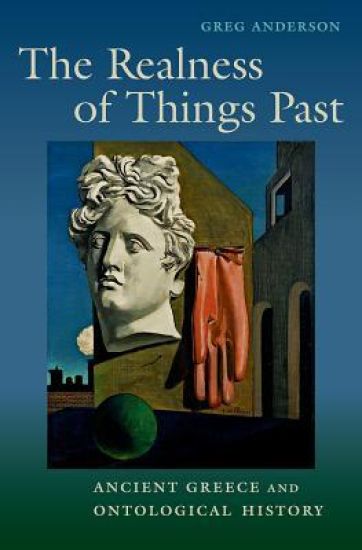
The Realness of Things Past

The Realness of Things Past

Greg Anderson

Oxford University Press Inc
2018
sidottu
The Realness of Things Past proposes a new paradigm of historical practice. It questions the way we conventionally historicize the experiences of non-modern peoples, western and non-western, and makes the case for an alternative. It shows how our standard analytical devices impose modern, dualist metaphysical conditions upon all non-modern realities, thereby authorizing us to align those realities with our own modern ontological commitments, fundamentally altering their contents in the process. The net result is a practice that homogenizes the past's many different ways of being human. To produce histories that are more ethically defensible, more philosophically robust, and more historically meaningful, we need to take an ontological turn in our practice. The book works to formulate a non-dualist historicism that will allow readers to analyse each past reality on its own ontological terms, as a more or less autonomous world unto itself. To make the case for this alternative paradigm, the book engages with currents of thought in many different intellectual provinces, from anthropology and postcolonial studies to the sociology of science and quantum physics. And to demonstrate how the new paradigm might work in practice, it uses classical Athens as its primary case study. The Realness of Things Past is divided into three parts. To highlight the limitations of conventional historicist analysis and the need for an alternative, Part I critically scrutinizes our standard modern accounts of "democratic Athens." Part II draws on a wide range of historical, ethnographic, and theoretical literatures to frame ethical and philosophical mandates for the proposed ontological turn. To illustrate the historical benefits of this alternative paradigm, Part III then shows how it allows us to produce an entirely new and more meaningful account of the Athenian politeia or "way of life." The book is expressly written to be accessible to a non-specialist, cross-disciplinary readership.
A Long, Long Way

A Long, Long Way

Greg Garrett

Oxford University Press Inc
2020
sidottu
From the beginning, American cinema has been both a powerful mythmaker and a social critic. D.W. Griffith's Birth of a Nation, arguably the first feature film, shows us just how early in its history cinema had established its influence. In 1915 it was the first movie to be screened at the White House. After the screening, President Woodrow Wilson is rumored to have said, "It's like history writ with lightning. And my only regret is that it is all terribly true." Birth of a Nation famously portrayed the Klu Klux Klan in a favorable light, a portrayal that contributed to the modern resurgence of the group and brought racist depictions of African Americans imported from the minstrel show to the silver screen. Such white fantasies of black American life have played out on our movie screens for the last century. In response, filmmakers of color have created nuanced and indelible portraits of race, as in Ava DuVernay's Selma or Barry Jenkin's Moonlight. Spike Lee's BlacKkKlansman shows us just how far into our culture Birth of a Nation has reached. In this powerful new book, Greg Garrett brings his signature brand of theologically motivated cultural criticism to bear on this history. After more than a century of cinema, he argues, movies have altered our cultural perspectives in the same way that religious narratives have. And in fact, religious traditions offer powerful correctives to our cultural narratives. A Long, Long Way incorporates both cinematic and religious truth-telling to the subject of race and reconciliation. In acknowledging the racist history of America's national art form, Garrett offers the possibility of hope for the future.
Thermodynamics in Geochemistry

Thermodynamics in Geochemistry

Greg M. Anderson; David A. Crerar

Oxford University Press Inc
1993
sidottu
This textbook outlines the fundamentals required to understand the science of thermodynamics and describes the application of thermodynamics in geochemistry. The work is distinguished by its comprehensive, balanced coverage and its rigorous presentation of geological thermodynamics and geochemistry. The authors bring years of teaching experience to the work, and have attempted to particularly address those areas where other texts on the subject have provided inadequate coverage. A thorough review of the necessary mathematics is presented early on, both as a refresher for those with a background in university calculus, and for the benefit of those coming to the subject for the first time. The text is written for students in advanced undergraduate or graduate level geochemistry as well as for all researchers in this field.
Understanding Somatization in the Practice of Clinical Neuropsychology
Understanding Somatization in the Practice of Clinical Neuropsychology is written for neuropsychologists wishing to improve their ability to diagnose and treat, or recommend treatment for, patients with somatoform disorders. The author, a seasoned clinician, blends evidence-based information with sound practical advice within a conceptual framework helpful in understanding this group of difficult patients. A Continuing Education (CE) component administered by the American Academy of Clinical Neuropsychology is included.
Specialty Competencies in Clinical Neuropsychology

Specialty Competencies in Clinical Neuropsychology

Greg J. Lamberty; Nathaniel W. Nelson

Oxford University Press Inc
2012
nidottu
Whereas the roots of the clinical neuropsychology specialty can be found in fields over a century old, it has grown very rapidly during the past thirty years. Doctoral programs in clinical psychology and predoctoral internship programs have developed concentrations in this area, as the need for postdoctoral training in this specialty has become increasingly acknowledged. Typically thought of as the clinical and empirical study of brain-behavior relationships, clinical neuropsychology is firmly grounded in psychology, behavioral neurology, psychiatry, psychometrics, and statistics. In this volume, Drs. Lamberty and Nelson provide a comprehensive overview of the foundational and functional competencies related to the broad field of clinical neuropsychology. The authors distill not only the most important dimensions of the current science and practice, but also delineate important future directions and challenges. Anyone interested in obtaining an extensive survey of the extant literature related to this specialty, as well as insider knowledge on important professional issues, will find this volume to be an invaluable resource. Series in Specialty Competencies in Professional Psychology Series Editors Arthur M. Nezu and Christine Maguth Nezu As the field of psychology continues to grow and new specialty areas emerge and achieve recognition, it has become increasingly important to define the standards of professional specialty practice. Developed and conceived in response to this need for practical guidelines, this series presents methods, strategies, and techniques for conducting day-to-day practice in any given psychology specialty. The topical volumes address best practices across the functional and foundational competencies that characterize the various psychology specialties, including clinical psychology, cognitive and behavioral psychology, school psychology, geropsychology, forensic psychology, clinical neuropsychology, couples and family psychology, and more. Functional competencies include common practice activities like assessment and intervention, while foundational competencies represent core knowledge areas such as ethical and legal issues, cultural diversity, and professional identification. In addition to describing these competencies, each volume provides a definition, description, and development timeline of a particular specialty, including its essential and characteristic pattern of activities, as well as its distinctive and unique features. Written by recognized experts in their respective fields, volumes are comprehensive, up-to-date, and accessible. These volumes offer invaluable guidance to not only practicing mental health professionals, but those training for specialty practice as well.
Calvinist Conformity in Post-Reformation England

Calvinist Conformity in Post-Reformation England

Greg A. Salazar

OXFORD UNIVERSITY PRESS INC
2022
sidottu
Calvinist Conformity in Post-Reformation England is the first modern full-scale examination of the theology and life of the distinguished English Calvinist clergyman Daniel Featley (1582-1645). It explores Featley's career and thought through a comprehensive treatment of his two dozen published works and manuscripts and situates these works within their original historical context. A fascinating figure, Featley was the youngest of the translators behind the Authorized Version, a protégé of John Rainolds, a domestic chaplain for Archbishop George Abbot, and a minister of two churches. As a result of his sympathies with royalism and episcopacy, he endured two separate attacks on his life. Despite this, Featley was the only royalist Episcopalian figure who accepted his invitation to the Westminster Assembly. Three months into the Assembly, however, Featley was charged with being a royalist spy, was imprisoned by Parliament, and died shortly thereafter. While Featley is a central focus of the work, this study is more than a biography. It uses Featley's career to trace the fortunes of Calvinist conformists--those English Calvinists who were committed to the established Church and represented the Church's majority position between 1560 and the mid-1620s, before being marginalized by Laudians in the 1630s and puritans in the 1640s. It demonstrates how Featley's convictions were representative of the ideals and career of conformist Calvinism, explores the broader priorities and political maneuvers of English Calvinist conformists, and offers a more nuanced perspective on the priorities and political maneuvers of these figures and the politics of religion in post-Reformation England.
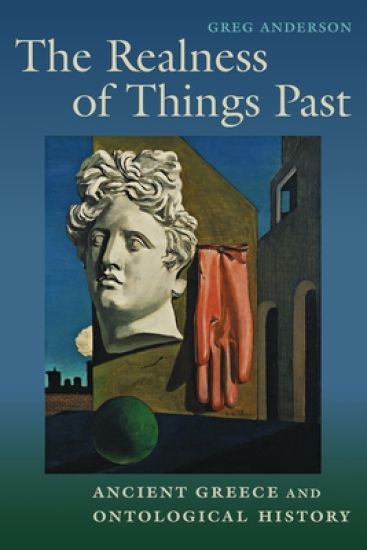
The Realness of Things Past

The Realness of Things Past

Greg Anderson

Oxford University Press Inc
2021
nidottu
The Realness of Things Past proposes a new paradigm of historical practice. It questions the way we conventionally historicize the experiences of non-modern peoples, western and non-western, and makes the case for an alternative. It shows how our standard analytical devices impose modern, dualist metaphysical conditions upon all non-modern realities, thereby authorizing us to align those realities with our own modern ontological commitments, fundamentally altering their contents in the process. The net result is a practice that homogenizes the past's many different ways of being human. To produce histories that are more ethically defensible, more philosophically robust, and more historically meaningful, we need to take an ontological turn in our practice. The book works to formulate a non-dualist historicism that will allow readers to analyse each past reality on its own ontological terms, as a more or less autonomous world unto itself. To make the case for this alternative paradigm, the book engages with currents of thought in many different intellectual provinces, from anthropology and postcolonial studies to the sociology of science and quantum physics. And to demonstrate how the new paradigm might work in practice, it uses classical Athens as its primary case study. The Realness of Things Past is divided into three parts. To highlight the limitations of conventional historicist analysis and the need for an alternative, Part I critically scrutinizes our standard modern accounts of "democratic Athens." Part II draws on a wide range of historical, ethnographic, and theoretical literatures to frame ethical and philosophical mandates for the proposed ontological turn. To illustrate the historical benefits of this alternative paradigm, Part III then shows how it allows us to produce an entirely new and more meaningful account of the Athenian politeia or "way of life." The book is expressly written to be accessible to a non-specialist, cross-disciplinary readership.
Gradual

Gradual

Greg Berman; Aubrey Fox

OXFORD UNIVERSITY PRESS INC
2023
sidottu
A call to tone down our political rhetoric and embrace a common-sense approach to change. Many experts believe that we are at a fulcrum moment in history, a time that demands radical shifts in thinking and policymaking. Calls for bold change are everywhere these days, particularly on social media, but is this actually the best way to make the world a better place? In Gradual, Greg Berman and Aubrey Fox argue that, contrary to the aspirations of activists on both the right and the left, incremental reform is the best path forward. They begin by emphasizing that the very structure of American government explicitly and implicitly favors incrementalism. Particularly in a time of intense polarization, any effort to advance radical change will inevitably engender significant backlash. As Berman and Fox make clear, polling shows little public support for bold change. The public is, however, willing to endorse a broad range of incremental reforms that, if implemented, would reduce suffering and improve fairness. To illustrate how incremental changes can add up to significant change over time, Berman and Fox provide portraits of "heroic incrementalists" who have produced meaningful reforms in a variety of areas, from the expansion of Social Security to more recent efforts to reduce crime and incarceration. Gradual is a bracing call for a "radical realism" that prioritizes honesty, humility, nuance, and respect in an effort to transcend political polarization and reduce the conflict produced by social media.
The Principles of Entrepreneurial Progress

The Principles of Entrepreneurial Progress

Greg Fisher

OXFORD UNIVERSITY PRESS INC
2025
sidottu
Entrepreneurship is messy, uncertain, complex, and risky. It's virtually impossible to devise a recipe for success when developing a new venture. But it need not be. In The Principles of Entrepreneurial Progress, business school professor and entrepreneur Greg Fisher breaks entrepreneurship down into twelve concrete, actionable, easy to understand principles. These principles can be applied across a diverse range of entrepreneurial endeavors, ranging from high-growth, venture capital funded, technology ventures to self-funded, slower growth, more lifestyle oriented new business enterprises. For each of the principles, Fisher shares intriguing stories and examples that illustrate the principle, distills research that validates the principle in easy-to-understand terms, and describes how the principle can be implemented in practice. Conveying decades of expertise and practical wisdom, this engaging book provides entrepreneurs with a practical, evidence-based guide for making meaningful progress on their entrepreneurial journey.
The Principles of Entrepreneurial Progress

The Principles of Entrepreneurial Progress

Greg Fisher

OXFORD UNIVERSITY PRESS INC
2025
nidottu
Entrepreneurship is messy, uncertain, complex, and risky. It's virtually impossible to devise a recipe for success when developing a new venture. But it need not be. In The Principles of Entrepreneurial Progress, business school professor and entrepreneur Greg Fisher breaks entrepreneurship down into twelve concrete, actionable, easy to understand principles. These principles can be applied across a diverse range of entrepreneurial endeavors, ranging from high-growth, venture capital funded, technology ventures to self-funded, slower growth, more lifestyle oriented new business enterprises. For each of the principles, Fisher shares intriguing stories and examples that illustrate the principle, distills research that validates the principle in easy-to-understand terms, and describes how the principle can be implemented in practice. Conveying decades of expertise and practical wisdom, this engaging book provides entrepreneurs with a practical, evidence-based guide for making meaningful progress on their entrepreneurial journey.
Inside the Political Mind: The Human Side of Politics and How It Shapes Development
Drawing on his experience of working with hundreds of politicians in more than sixty countries, Greg Power explores how social norms, public expectations and the personal interests of MPs influence the path of political development. Where states are weak, politicians solve problems by going around the state. From Tanzania and Nepal to Iraq and Ukraine, voters actually want MPs who can find informal fixes, and a reciprocal logic holds the system in place. But this also means that weak institutions tend to stay weak. Combining insights from behavioral economics, change management and comparative politics, this fascinating book argues for a different approach to political reform, one concerned less with institutional design and more with the existing logic of human behavior. One that starts inside the political mind, and works outwards from there.