Kirjojen hintavertailu. Mukana 11 627 373 kirjaa ja 12 kauppaa.

Kirjahaku

Etsi kirjoja tekijän nimen, kirjan nimen tai ISBN:n perusteella.

481 tulosta hakusanalla Gregerman Alan

Queers Teach This!

Queers Teach This!

Adam J. Greteman

BLOOMSBURY PUBLISHING PLC
2024
sidottu
In this open access book, philosopher of education Adam Greteman offers commentary on five lessons queers teach: transparency, inconvenience, others, hatred, and coming into. Intentionally idiosyncratic, each of these lessons takes seriously the work of teaching, the work of teachers, and the complex realities that unfold around LGBTQ+ issues and lives as they enter educational conversations. These conversations are conditioned by contexts and communities that make bold proclamations difficult, but also point toward possibilities rooted in specifics. Combined, these five lessons provide commentary on an educational project that forefronts queers and their practices amid complex and changing realities. Recognizing the mutual importance of theory and practices, each chapter tacks between practical concerns that are part of education as it exists day to day and theoretical insights that intertwine and intervene in those everyday practical realities. Yet, Greteman offers no prescriptions for teaching, nor an overarching theory. Rather, Greteman takes up each “this” that queers teach so to offer commentary that may provide opportunities for further engagement with ongoing needs that schools, teachers, students, and communities have in their impossible work. Queers teach. These lessons are never ending yet vital to not only queer’s surviving in schools, but encountering an education that aids in their thriving alongside others. The ebook editions of this book are available open access under a CC BY-NC-ND 4.0 licence on bloomsburycollections.com.

Queers Teach This!: Queer and Trans Pleasures, Politics, and Pedagogues
In this open access book, philosopher of education Adam Greteman offers commentary on five lessons queers teach: transparency, inconvenience, others, hatred, and coming into. Intentionally idiosyncratic, each of these lessons takes seriously the work of teaching, the work of teachers, and the complex realities that unfold around LGBTQ+ issues and lives as they enter educational conversations. These conversations are conditioned by contexts and communities that make bold proclamations difficult, but also point toward possibilities rooted in specifics. Combined, these five lessons provide commentary on an educational project that forefronts queers and their practices amid complex and changing realities. Recognizing the mutual importance of theory and practices, each chapter tacks between practical concerns that are part of education as it exists day to day and theoretical insights that intertwine and intervene in those everyday practical realities. Yet, Greteman offers no prescriptions for teaching, nor an overarching theory. Rather, Greteman takes up each "this" that queers teach so to offer commentary that may provide opportunities for further engagement with ongoing needs that schools, teachers, students, and communities have in their impossible work. Queers teach. These lessons are never ending yet vital to not only queer's surviving in schools, but encountering an education that aids in their thriving alongside others. The ebook editions of this book are available open access under a CC BY-NC-ND 4.0 licence on bloomsburycollections.com.
Hip-Hop Is History

Hip-Hop Is History

Questlove; Ben Greenman

Orion Publishing Group
2024
nidottu
When hip-hop first emerged in the 1970s, it wasn't expected to become the cultural force it is today. But for a young Black kid growing up in a musical family in Philadelphia, it was everything. He stayed up late to hear the newest songs on the radio. He saved his money to buy vinyl as soon as it landed. He even started to try to make his own songs. That kid was Questlove, and decades later, he is a six-time Grammy Award-winning musician, an Academy Award-winning filmmaker, a New York Times bestselling author, a producer, an entrepreneur, a cofounder of one of hip-hop's defining acts (the Roots), and the genre's unofficial in-house historian. In this landmark book, Hip-Hop Is History, Questlove skilfully traces the creative and cultural forces that made and shaped hip-hop, highlighting both the forgotten but influential gems and the undeniable chart-topping hits-and weaves it all together with the stories no one else knows. It is at once an intimate, sharply observed story of a cultural revolution and a sweeping, grand theory of the evolution of the great artistic movement of our time. And Questlove, of course, approaches it with not only the encyclopaedic fluency and passion of an obsessive fan but also the expertise and originality of an innovative participant. Hip-hop is history, and also his history.
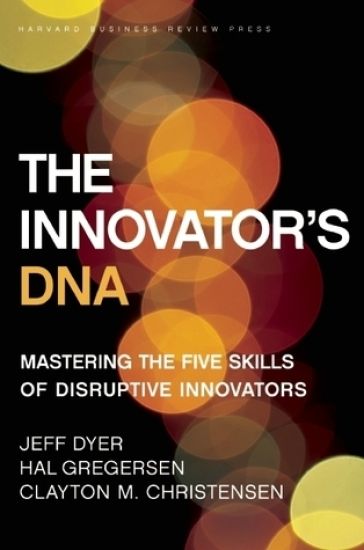
The Innovator's DNA

The Innovator's DNA

Jeff Dyer; Hal Gregersen; Clayton M. Christensen

Harvard Business Review Press
2011
sidottu
A new classic, cited by leaders and media around the globe as a highly recommended read for anyone interested in innovation. In The Innovator's DNA, authors Jeffrey Dyer, Hal Gregersen, and bestselling author Clayton Christensen (The Innovator's Dilemma, The Innovator's Solution, How Will You Measure Your Life?) build on what we know about disruptive innovation to show how individuals can develop the skills necessary to move progressively from idea to impact. By identifying behaviors of the world's best innovators--from leaders at Amazon and Apple to those at Google, Skype, and Virgin Group--the authors outline five discovery skills that distinguish innovative entrepreneurs and executives from ordinary managers: Associating, Questioning, Observing, Networking, and Experimenting. Once you master these competencies (the authors provide a self-assessment for rating your own innovator's DNA), the authors explain how to generate ideas, collaborate to implement them, and build innovation skills throughout the organization to result in a competitive edge. This innovation advantage will translate into a premium in your company's stock price--an innovation premium--which is possible only by building the code for innovation right into your organization's people, processes, and guiding philosophies. Practical and provocative, The Innovator's DNA is an essential resource for individuals and teams who want to strengthen their innovative prowess.
Introduction to Travel Journalism

Introduction to Travel Journalism

John F. Greenman

Peter Lang Publishing Inc
2012
nidottu
Travel writers and travel journalists are not the same. They differ in identity, purpose and method. The travel writer looks in a mirror; the travel journalist looks out a window. The travel writer serves the travel industry; the travel journalist serves the public. The travel writer is subsidized; the travel journalist pays his own way. Introduction to Travel Journalism highlights these distinctions and offers independent, ethical, substantive journalists the skills and knowledge they need to cover the travel and tourism industry, to provide travelers with credible news and information, and to report significant trends and developments at home and across the world.
Introduction to Travel Journalism

Introduction to Travel Journalism

John F. Greenman

Peter Lang Publishing Inc
2012
sidottu
Travel writers and travel journalists are not the same. They differ in identity, purpose and method. The travel writer looks in a mirror; the travel journalist looks out a window. The travel writer serves the travel industry; the travel journalist serves the public. The travel writer is subsidized; the travel journalist pays his own way. Introduction to Travel Journalism highlights these distinctions and offers independent, ethical, substantive journalists the skills and knowledge they need to cover the travel and tourism industry, to provide travelers with credible news and information, and to report significant trends and developments at home and across the world.
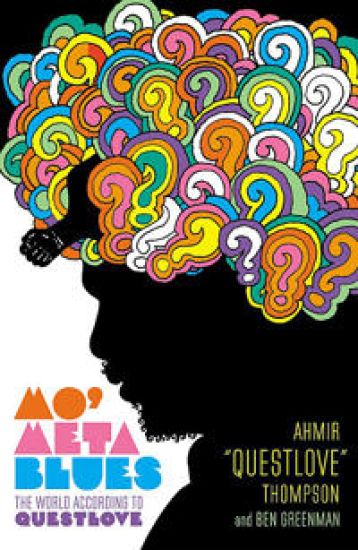
Mo' Meta Blues

Mo' Meta Blues

Ahmir Thompson; Ben Greenman

Grand Central Publishing
2015
pokkari
The World According to Questlove Mo' Meta Blues is a punch-drunk memoir in which Everyone's Favorite Questlove tells his own story while tackling some of the lates, the greats, the fakes, the philosophers, the heavyweights, and the true originals of the music world. He digs deep into the album cuts of his life and unearths some pivotal moments in black art, hip hop, and pop culture. Ahmir 'Questlove' Thompson is many things: virtuoso drummer, producer, arranger, Late Night with Jimmy Fallon bandleader, DJ, composer, and tireless Tweeter. He is one of our most ubiquitous cultural tastemakers, and in this, his first book, he reveals his own formative experiences--from growing up in 1970s West Philly as the son of a 1950s doo-wop singer, to finding his own way through the music world and ultimately co-founding and rising up with the Roots, a.k.a., the last hip hop band on Earth. Mo' Meta Blues also has some (many) random (or not) musings about the state of hip hop, the state of music criticism, the state of statements, as well as a plethora of run-ins with celebrities, idols, and fellow artists, from Stevie Wonder to KISS to D'Angelo to Jay-Z to Dave Chappelle to...you ever seen Prince roller-skate? !? But Mo' Meta Blues isn't just a memoir. It's a dialogue about the nature of memory and the idea of a post-modern black man saddled with some post-modern blues. It's a book that questions what a book like Mo' Meta Blues really is. It's the side wind of a one-of-a-kind mind. It's a rare gift that gives as well as takes. It's a record that keeps going around and around.
Mössbauer Effect Methodology Volume 7

Mössbauer Effect Methodology Volume 7

Irwin J. Gruverman

Springer-Verlag New York Inc.
2012
nidottu
This is the seventh volume of a series that provides a continuing forum for publication of developments in Wdssbauer effect methodology and in spectroscopy and its applications. Wdssbauer Effect Methodology, Volume 7, records the proceedings of the Seventh Symposium on Wdssbauer Effect Methodology. The symposium was sponsored by the New England Nuclear Corporation and interest was concentrated on spec­ troscopy, with some attention to methodology and applica­ tions. The Symposium was held in the Mercury Ballroom of the New York Hilton on January 31, 1971. Dr. N. Benczer­ Koller presided over the afternoon and evening sessions. About two hundred participants attended, demonstrating the continued high level of effort in the field and of interest in this series. Austin Science Associates, Elron, and Nuclear Science Instruments demonstrated their Wdssbauer equipment products. These were well received, and evidently are continuing to improve in utility and quality. Applications papers reported on local magnetic moment measurement and radiation damage studies. A large number of spectroscopy papers was presented and subject matter included work on Mossbauer parameters in iron, tin, and europium and on conversion electron spectroscopy. Method­ ology work reported included a source for Snl19-Sb12l, a "blackness" distortion removal technique, and use of radio frequency fields. A paper is included on calculational techniques although it was not ready for presentation at the symposium.
Mössbauer Effect Methodology

Mössbauer Effect Methodology

Irwin J. Gruverman

Springer-Verlag New York Inc.
2013
nidottu
This is the fifth volume of a series which provides acontinuing forum for publication of developments in Mossbauer effect methodology and of spectroscopy and its applications. Mossbauer Effect Methodology, Volume 5, records the proceedings of the Fifth Symposium on Mossbauer Effect Methodology. The sym­ posium was sponsored by the New England Nuclear Corporation and was centered on the themes of spectroscopy, new applications, and methodology. The symposium was held in the Mercury Ballroom of the New York Hilton hotel on February 2, 1969. Dr. P. A. Flinn of Carnegie­ Mellon Institute was chairman of the afternoon and evening sessions. About three hundred participants attended, and this degree of interest leads us to anticipate a sixth symposium early in 1970. Elron Electronic Industries and Reuter-Stokes Electronic Components Company demonstrated lines of equipment for Mossbauer investigators. The evident high quality of the commercial instrumenta­ tion available is a tribute to the growth of Mossbauer technology and to the manufacturers.
Mössbauer Effect Methodology

Mössbauer Effect Methodology

Irwin J. Gruverman

Springer-Verlag New York Inc.
2013
nidottu
This is the sixth volume of a series that provides a continuing forum for publication of developments in M6ssbauer effect method­ ology and of spectroscopy and its applications. M ossbauer Effect Methodology, Volume 6, records the proceedings of the Sixth Symposium on M6ssbauer Effect Methodology. The symposium was sponsored by the New England Nuclear Corporation and concentrated on methodology, applications, and spectroscopy, with special sections on lunar sample work and on standardization and nomenclature. The symposium was held at the Palmer House in Chicago on January 25, 1970. Dr. J. C. Walker presided over the after­ noon and evening sessions. About two hundred participants attended, reflecting the continued importance of and interest in this series. Austin Science Associates, Elron Electronic Industries, High Voltage Engineering Corporation, and Reuter-Stokes Electronic Components Company demonstrated lines of equipment for M6ssbauer work. The usual high degree of interest in the well-designed commercial instrumentation was evident. The highlight of the symposium was the session on lunar samples. Fortuitously, the timing of the symposium permitted it to provide one ofthe earliest exposures ofthe lunar results to the scientific community. Many papers on other applications were presented, including work on frozen aqueous solutions. Four papers on methodology development made up one session, including reports on a polarized source, on a coincidence technique, and on the use of radio frequency to perturb hyperfine levels. As usual, many of the papers report work in fields remote from basic physics.
Mössbauer Effect Methodology

Mössbauer Effect Methodology

Irwin J. Gruverman; Carl W. Seidel

Springer-Verlag New York Inc.
2012
nidottu
This is the eighth volume of a continuing series intended to provide a forum for publication of develop­ ments in Mossbauer effect methodology and in spectroscopy and its applications. Mossbauer Effect Methodology, Volume 8, records the proceedings of the Eighth Symposium on Mossbauer Effect Methodology. The symposium was sponsored by the New England Nuclear Corporation, with emphasis on application and some attention to spectroscopy and methodology. The Symposium was held in the Mercury Ballroom of the New York Hilton on January 28, 1973. Dr. J. J. Zuckerman presided over the afternoon and evening sessions. Almost two hundred participants attended, despite the pressures of travel budget limitations, indicating a continuing high level of interest in the field. Contri­ buting Sponsors were Austin Science Associates, Elron, Nuclear Science Instruments and Ranger Electronics. The MOssbauer equipment demonstrated by these organizations continued to evolve and improve year by year, and was well received by symposium participants. A one-year break in the symposium series resulted in submission of a very large number of papers. A Selection Committee was formed and selected 16 papers for inclusion in the symposium. Regrettably, many worthwhile papers could not be included. Applications were stressed.
Mössbauer Effect Methodology

Mössbauer Effect Methodology

Irwin J. Gruverman

Springer-Verlag New York Inc.
2013
nidottu
Mossbauer Effect Methodology, Volume 1, records the proceedings of the First Symposium on Mossbauer Effect Methodology. This Symposium was sponsored by the New England Nuclear Corporation and the Technical Measurement Corporation, and was devoted to principles, techniques, and applications of the Mossbauer effect. The Symposium was held at the Sheraton-Atlantic Hotel in New York City on january 26, 1965. Dr. Stanley Ruby, of Argonne National Laboratory, was Chairman of the aU-day session. About 250 people attended the Symposium, and interest appeared sufficient to warrant continuation of this Symposium series. It is hoped that future Symposia can be organized which will serve as a forum for presentation of advances in methodology. The papers presented in this volume review the current status of applications, describe instrument systems used, elu­ cidate measurement techniques applied, and formulate means of creating required environments for use in Mossbauer effect studies. With the proliferation of applications of the Mos sbauer effect in physics, as well as in chemistry and biology, the need for complete description of transducer systems, detection and data­ handling methods, and environment modification techniques be­ came apparent. The body of such experience, developed and possessed by a relatively small group of physicists, primarily, has not been readily accessible to those in other fields. The editor organized this Symposium in response to many expres­ sions of a need for such information.
Mössbauer Effect Methodology

Mössbauer Effect Methodology

Irwin J. Gruverman

Springer-Verlag New York Inc.
2013
nidottu
The continued growth of Mössbauer effect methodology, and its virtuosity in encompassing new elements and new applications, are amply illustrated by the contents of this volume. The degree of maturity of Mössbauer spectroscopy is attested to by the increasing reliance of chemists upon Mössbauer investigation as a primary tool to be conjirmed by more "conventional" measurements. An exciting development has been the use of neutron and Cou­ lomb excitation techniques to produce Mössbauer Ievels. This promises to Iead Mössbauer spectroscopy toward the very desirable "universal spectroscopy" category. The prospect of extending the technique to many elements which do not possess useful precursor radionuclides is exciting indeed. While attention is being focused primarily on spectroscopy and applications, methodology is not being neglected. Another generation of drive designs is being reported, and commercial spectrometers are becoming more reliable, more competitive, and offer a reasonable selection of features at a wide range in prices. Several of the equipment companies who participated in the Third Mössbauer Methodology Symposium demonstrated approaches to Mössbauer spectrometer design (e.g., Austin Science Associates and Linear Alpha Corpora­ tion-Elron). A unique, new, very high countrate acceptance system demonstrated by Austin Science Associates was developed entirely in response to the need of Mössbauer spectroscopists for data acquisition rates beyond existing proportional counting capabilities. The range of proportional detectors available and a simple, inexpen­ sive demonstration spectrometer were exhibited by Reuter-Stokes Electronic Components, Inc.
The Innovator's DNA: Mastering the Five Skills of Disruptive Innovators

The Innovator's DNA: Mastering the Five Skills of Disruptive Innovators

Jeff Dyer; Hal Gregersen; Clayton M. Christensen

Brilliance Audio
2014
muu
A new classic, cited by leaders and media around the globe as a highly recommended read for anyone interested in innovation.In The Innovator's DNA, authors Jeffrey Dyer, Hal Gregersen, and bestselling author Clayton Christensen (The Innovator's Dilemma, The Innovator's Solution, How Will You Measure Your Life?) build on what we know about disruptive innovation to show how individuals can develop the skills necessary to move progressively from idea to impact.By identifying behaviors of the world's best innovators--from leaders at Amazon and Apple to those at Google, Skype, and Virgin Group--the authors outline five discovery skills that distinguish innovative entrepreneurs and executives from ordinary managers: Associating, Questioning, Observing, Networking, and Experimenting.Once you master these competencies (the authors provide a self-assessment for rating your own innovator's DNA), the authors explain how to generate ideas, collaborate to implement them, and build innovation skills throughout the organization to result in a competitive edge. This innovation advantage will translate into a premium in your company's stock price--an innovation premium--which is possible only by building the code for innovation right into your organization's people, processes, and guiding philosophies.Practical and provocative, The Innovator's DNA is an essential resource for individuals and teams who want to strengthen their innovative prowess.