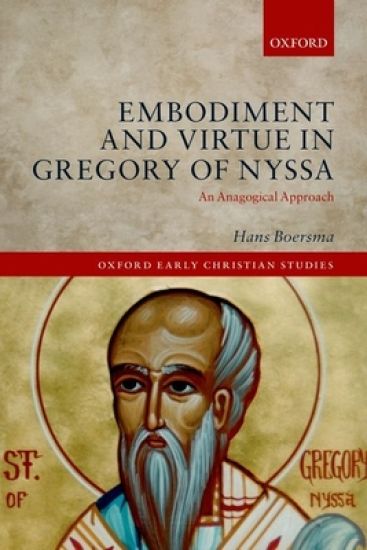
Embodiment in the theology of Gregory of Nyssa is a much-debated topic. Hans Boersma argues that this-worldly realities of time and space, which include embodiment, are not the focus of Gregory's theology. Instead, embodiment plays a distinctly subordinate role. The key to his theology, Boersma suggests, is anagogy, going upward in order to participate in the life of God. This book looks at a variety of topics connected to embodiment in Gregory's thought: time and space; allegory; gender, sexuality, and virginity; death and mourning; slavery, homelessness, and poverty; and the church as the body of Christ. In each instance, Boersma maintains, Gregory values embodiment only inasmuch as it enables us to go upward in the intellectual realm of the heavenly future. Boersma suggests that for Gregory embodiment and virtue serve the anagogical pursuit of otherworldly realities. Countering recent trends in scholarship that highlight Gregory's appreciation of the goodness of creation, this book argues that Gregory looks at embodiment as a means for human beings to grow in virtue and so to participate in the divine life. It is true that, as a Christian thinker, Gregory regards the creator-creature distinction as basic. But he also works with the distinction between spirit and matter. And Nyssen is convinced that in the hereafter the categories of time and space will disappear-while the human body will undergo an inconceivable transformation. This book, then, serves as a reminder of the profoundly otherworldly cast of Gregory's theology.
This book presents a complete translation of the Register of Pope Gregory VII (1073-1085), one of the very greatest and most vigorous of all the popes and makers of European and world history. The Register survives as Registrum Vaticanum 2 in the Vatican Archives; its some 390 items are divided into nine books. It is generally accepted as being an `original' Register - a working record of the papal entourage into which, for the most part, outgoing letters and other documents were copied in small batches soon after they were drafted. Many of the letters were of Gregory's own dictation and therefore offer insight into his powerful personality and distinctive ideas. They are a prime source for assessing his reforming aims and methods which prepared the way for the papal monarchy of the later Middle Ages. They illustrate his dealings with the European rulers of his time, such as Henry IV of Germany, with whom he had a famous meeting at Canossa, and William the Conqueror, whom he viewed with critical regard. His part in preparing the way for the Crusade excites the greatest interest.This is the first complete translation of Gregory VII's Register into a modern language.
Embodiment in the theology of Gregory of Nyssa is a much-debated topic. Hans Boersma argues that this-worldly realities of time and space, which include embodiment, are not the focus of Gregory's theology. Instead, embodiment plays a distinctly subordinate role. The key to his theology, Boersma suggests, is anagogy, going upward in order to participate in the life of God. This book looks at a variety of topics connected to embodiment in Gregory's thought: time and space; allegory; gender, sexuality, and virginity; death and mourning; slavery, homelessness, and poverty; and the church as the body of Christ. In each instance, Boersma maintains, Gregory values embodiment only inasmuch as it enables us to go upward in the intellectual realm of the heavenly future. Boersma suggests that for Gregory embodiment and virtue serve the anagogical pursuit of otherworldly realities. Countering recent trends in scholarship that highlight Gregory's appreciation of the goodness of creation, this book argues that Gregory looks at embodiment as a means for human beings to grow in virtue and so to participate in the divine life. It is true that, as a Christian thinker, Gregory regards the creator-creature distinction as basic. But he also works with the distinction between spirit and matter. And Nyssen is convinced that in the hereafter the categories of time and space will disappear-while the human body will undergo an inconceivable transformation. This book, then, serves as a reminder of the profoundly otherworldly cast of Gregory's theology.
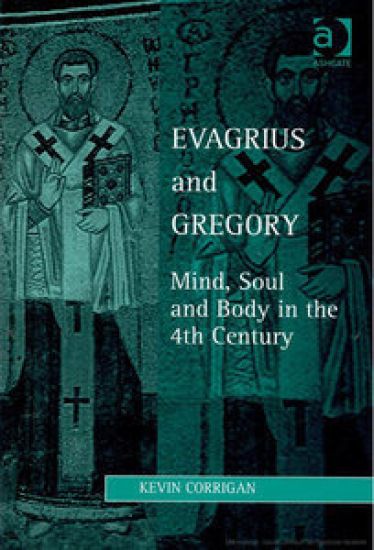
Evagrius of Pontus and Gregory of Nyssa have either been overlooked by philosophers and theologians in modern times, or overshadowed by their prominent friend and brother (respectively), Gregory Nazianzus and Basil the Great. Yet they are major figures in the development of Christian thought in late antiquity and their works express a unique combination of desert and urban spiritualities in the lived and somewhat turbulent experience of an entire age. They also provide a significant link between the great ancient thinkers of the past - Plato, Aristotle, the Stoics, Clement and others - and the birth and transmission of the early Medieval period - associated with Boethius, Cassian and Augustine. This book makes accessible, to a wide audience, the thought of Evagrius and Gregory on the mind, soul and body, in the context of ancient philosophy/theology and the Cappadocians generally. Corrigan argues that in these two figures we witness the birth of new forms of thought and science. Evagrius and Gregory are no mere receivers of a monolithic pagan and Christian tradition, but innovative, critical interpreters of the range and limits of cognitive psychology, the soul-body relation, reflexive self-knowledge, personal and human identity and the soul’s practical relation to goodness in the context of human experience and divine self-disclosure. This book provides a critical evaluation of their thought on these major issues and argues that in Evagrius and Gregory we see the important integration of many different concerns that later Christian thought was not always able to balance including: mysticism, asceticism, cognitive science, philosophy, and theology.
In his role of apostle of the English and promoter of Augustine's mission, Gregory the Great became the subject of what is one of the earliest pieces of literature surviving from the Anglo-Saxon period: a Life written by an unknown author at Whitby around 680–704. Although crude in its latinity and idiosyncratic in its presentation, this work is a fascinating source of early traditions about the conversion of the English - including the famous story of Gregory's encounter with the Anglian slave boys - and an important witness to the veneration felt for the saint himself. It casts valuable light on English history in the seventh century, particularly on the career of Edwin of Northumbria, and is the source of two of the most famous legends of the Middle Ages, the Mass of St Gregory and the story of Trajan's rescue from hell. The Life of Gregory seems to be the earliest of the Saints' lives of this period and it is in many ways the most remarkable.
Gregory the Great was, after Augustine of Hippo, perhaps the most influential of the Fathers in the Latin West during the Middle Ages. He put Augustine’s thought into a form which proved accessible and acceptable to mediaeval readers, and he added much of his own, notably in his preaching, in which he interpreted the Bible with equal emphasis on the practical living of a good Christian life and the aspiration of the soul towards God and the life to come. This study looks at Gregory’s thought as a whole and tries to show what was most important to him and the way he arrived at a balance between the active and the contemplative, the ‘outward’ and the ‘inward’ in his own mind. There is a tailpiece on the influence of his ideas in later centuries.
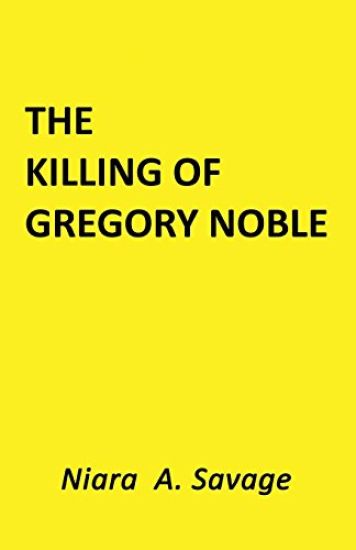
Thirty-three-year-old night watchman and father of two, Hunter Garrett finds himself under national scrutiny when an altercation with African-American teenager Gregory Noble, turns deadly. Though Hunter and his wife take steps to make the killing look like an act of self-defense, the incident garners nationwide attention from major news networks and Black Lives Matter. Samuel Noble, Gregory's identical twin, is not only devastated by the death of his brother, but also doubts the ability of his Caucasian, adoptive parents to respond adequately to the tragedy, and through anger and frustration, decides to seek revenge on the man who killed him.
Evagrius of Pontus and Gregory of Nyssa have either been overlooked by philosophers and theologians in modern times, or overshadowed by their prominent friend and brother (respectively), Gregory Nazianzus and Basil the Great. Yet they are major figures in the development of Christian thought in late antiquity and their works express a unique combination of desert and urban spiritualities in the lived and somewhat turbulent experience of an entire age. They also provide a significant link between the great ancient thinkers of the past - Plato, Aristotle, the Stoics, Clement and others - and the birth and transmission of the early Medieval period - associated with Boethius, Cassian and Augustine. This book makes accessible, to a wide audience, the thought of Evagrius and Gregory on the mind, soul and body, in the context of ancient philosophy/theology and the Cappadocians generally. Corrigan argues that in these two figures we witness the birth of new forms of thought and science. Evagrius and Gregory are no mere receivers of a monolithic pagan and Christian tradition, but innovative, critical interpreters of the range and limits of cognitive psychology, the soul-body relation, reflexive self-knowledge, personal and human identity and the soul’s practical relation to goodness in the context of human experience and divine self-disclosure. This book provides a critical evaluation of their thought on these major issues and argues that in Evagrius and Gregory we see the important integration of many different concerns that later Christian thought was not always able to balance including: mysticism, asceticism, cognitive science, philosophy, and theology.
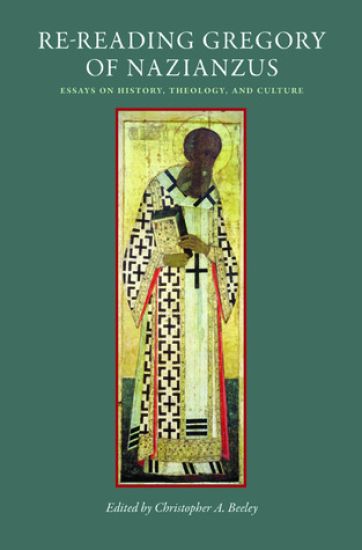
Re-Reading Gregory of Nazianzus offers a collection of cutting-edge research on one of the leading figures in the early church. Long recognized as a chief architect of Eastern Orthodox Christianity and the definitive articulator of the doctrine of the Trinity, Gregory “the Theologian” has been strangely neglected in modern patristic research. In recent decades Gregory has become the subject of careful study by scholars in a variety of humanistic disciplines, including theology, church history, classics, art history, and literature, and has attracted the renewed attention of Eastern and Western theologians and church leaders as well. This book, the newest volume in the CUA Studies in Early Christianity, presents original works by leading patristics scholars on a wide range of theological, historical, and cultural topics. It offers illuminating new readings of Gregory’s writings, ranging from the systematic theology of Gregory’s poetry to the Trinitarian doctrine found in his Festal Orations, and from his artful self-presentation in the mode of classical historiography to his later influence on Byzantine theologians and emperors. The book honors the work of American scholar Frederick W. Norris, who led the way in revitalizing the study of Gregory among English-speaking scholars. Its contributors are Christopher A. Beeley, Paul M. Blowers, Brian E. Daley, S.J., Susanna Elm, Everett Ferguson, Ben Fulford, Verna E. F. Harrison, Vasiliki Limberis, Andrew Louth, Brian J. Matz, John A. McGuckin, Neil McLynn, Claudio Moreschini, Suzanne Abrams Rebillard, Andrea Sterk, and William Tabbernee.
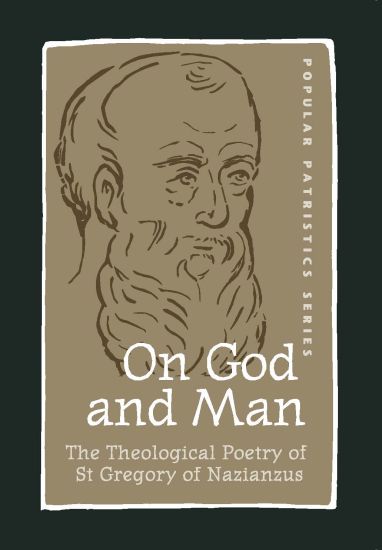
St Gregory's poetry is open and self-revealing and has personal character. In these poems he speaks of the joys and frustrations of his own life; he reveals his inner questioning about the purpose and value of life in the face of sin and mortality; and his ultimate faith in Christ at redeeming and reconciling all things. The translations in this text allow the reader to see the self-reflection of the poetry in its theological context.