Kirjojen hintavertailu. Mukana 12 016 292 kirjaa ja 12 kauppaa.

Kirjahaku

Etsi kirjoja tekijän nimen, kirjan nimen tai ISBN:n perusteella.

1000 tulosta hakusanalla HENRY CONSTABLE

Henry Fielding

Henry Fielding

Simon Varey

Cambridge University Press
1986
pokkari
This concise and lucid study provides an ideal introduction to the major work of Henry Fielding for all students. Fielding's stature as a great comic novelist is assured, but as Professor Varey illustrates, he was a remarkably versatile writer. In his day Fielding was one of England's leading dramatists and also pursued a career in law. He founded, edited, and contributed essays for four different periodicals, and wrote a political-satirical novel Jonathan Wild, in addition to a work of powerful social protest Amelia and his two outstanding contributions to the development of English prose fiction: Tom Jones and Joseph Andrews. Professor Varey clarifies and explains this varied body of writing, concentrating on Fielding's technique of combining opposites or apparently ill-matched elements - of language, character, narrative made, and even philosophical thought.
Henry James and the Visual

Henry James and the Visual

Kendall Johnson

Cambridge University Press
2011
pokkari
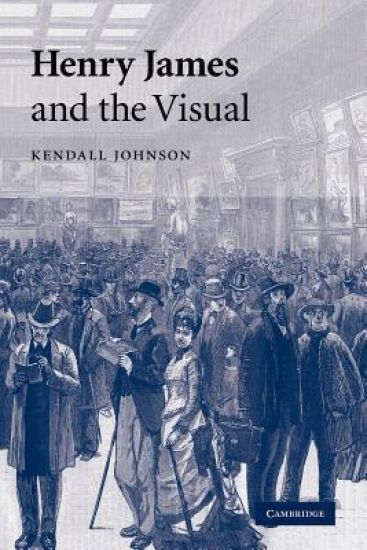
In the decades after the Civil War, how did Americans see the world and their place in it? In this text, Kendall Johnson argues that Henry James appealed to his readers' sense of vision to dramatise the ambiguity of American citizenship in scenes of tense encounter with Europeans. By reviving the eighteenth-century debates over beauty, sublimity, and the picturesque, James weaves into his narratives the national politics of emancipation, immigration, and Indian Removal. For James, visual experience is crucial to the American communal identity, a position that challenged prominent anthropologists as they defined concepts of race and culture in ways that continue to shape how we see the world today. To demonstrate the cultural stereotypes that James reworked, the book includes twenty illustrations from periodicals of the nineteenth century. This study reaches startling conclusions not just about James, but about the way America defined itself through the arts in the nineteenth century.
Henry James: Selected Literary Criticism
This 1981 book is a reissue of a selection of Henry James' literary criticism by Heinemann Educational Books in 1963. Few artists of any kind have applied to their work the degree of critical intelligence that James devoted to his, and the perfectionist care that he devoted to the practise of his own craft made him a great critic of the art of fiction in general. The essays included in this volume cover the entire span of James' career, from the essay on Whitman (1965) to The New Novel (1914). Of particular interest are the essays dealing with the great fiction writers of the nineteenth century: Dickens, George Eliot, Maupassant, Flaubert, Balzac and Zola. The book also includes by way of a preface F. R. Leavis' essay on James as a critic, in which Leavis analyses what he sees as the strengths of James' work in this field.
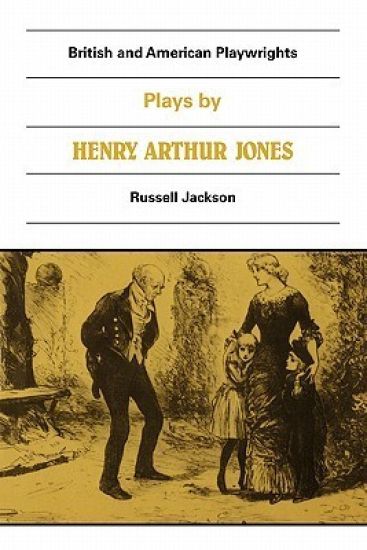
Plays by Henry Arthur Jones

Plays by Henry Arthur Jones

Henry Arthur Jones

Cambridge University Press
1982
pokkari
Henry Arthur Jones was among the most prominent British dramatists of his day. A contemporary of Pinero, Wilde and Shaw, he did his best to elevate drama to the level of literature whilst constructing plays that were also successful in the commercial theatre. Though some of his contemporaries considered him cynical and daring, he strove to confront major issues without offending accepted social and dramatic conventions. This volume contains three of Jones’s ninety-odd plays, representing the best of his work in different styles: melodrama and society drama. The Silver King (1882), the story of a man, falsely accused of murder, was Jones’s first great success. It is one of the best melodramas ever written, and won high praise from Matthew Arnold for its literary merit and convincing characterisation. Jones’s interest in the ‘New Woman’ of the 1890s is expressed in the lively dialogue of The Case of Rebellious Susan (1894), whose heroine is advised to renounce her new lover and return to her faithless husband - scarely a radical conclusion, but sympathetically handled. The Liars (1897) is a fine comedy of manners which again considers the question of marriage and the role of women in society. Dr Jackson’s full introduction places Jones in the context of late Victorian society and theatre and describes his other literary activities - the published letters and essays on drama - as well as discussing some of the plays not included here. The volume is illustrated by contemporary production prints.
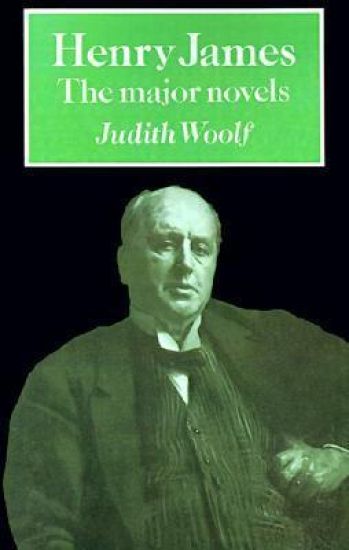
Henry James

Henry James

Woolf Judith

Cambridge University Press
1991
pokkari
Judith Woolf’s elegantly written book introduces school and university students, as well as the interested general reader, to the major novels of Henry James (1843–1916), the American writer who became a great European novelist and died a naturalised Englishman. The principal novels in which James explored his central theme, the betrayal of innocence, are discussed in a lucid way which offers fresh intrepretations and communicates to the non-specialist reader the excitement rather than the difficulty of reading James. Difficulty is nonetheless often a feature of his work, and Judith Woolf does not shun important questions. She places him in the context of the history of the English novel (Fielding, Richardson, Dickens, and George Eliot), focusing on traditions of tragic and comic vision and on the subtleties of expression and perspective enabled by the narrative form. The book includes a short account of James’s life, a list of his works and their dates, and a selected guide to further criticism.
Henry VI and the Politics of Kingship

Henry VI and the Politics of Kingship

John Watts

Cambridge University Press
1996
sidottu
Henry VI (1422–61) was one of the most spectacularly inadequate kings of England, and his reign dissolved into the conflict known as the Wars of the Roses. Yet he held on to his throne for thirty-nine years and, for almost thirty of them, without much difficulty. What was the nature of Henry's inadequacy, and why did it have such ambivalent and complicated results? Since the 1970s most histories of fifteenth-century England have focused on the individual interests and private connections of politicians as a means of making sense of politics. By contrast, this 1996 work argues that we can understand what happened in Henry VI's reign only if we look at common interests and public connections as well. Ultimately it is the problem of establishing royal authority which emerges as paramount, with the supposedly factious and 'overmighty' nobility appearing as doomed but devoted servants of the state.
Henry James and the Philosophical Novel

Henry James and the Philosophical Novel

Merle A. Williams

Cambridge University Press
1993
sidottu
Henry James and the Philosophical Novel examines James's unique position as a philosophical novelist, closely associated with the climate of ideas generated by his brother, William and his father, the elder Henry. The book offers a detailed consideration of story-telling as a mode of philosophical enquiry, showing how a range of distinguished thinkers have relied on fictional narrative as a vital technique for formulating and clarifying their ideas. At the same time, it investigates (with close reference to his novels) the affiliations between James's practice as a novelist and the epistemological, moral and linguistic concerns pursued by members of the Phenomenological movement. The study brings to light striking similarities between James's later works and the philosophical project of Merleau-Ponty; it emphasises James's growing attraction to and versatility with deconstructive strategies such as those later employed by Jacques Derrida.
Henry James

Henry James

Cambridge University Press
1996
sidottu
Henry James: The Contemporary Reviews presents the most thorough gathering of newspaper and magazine reviews of James’s work ever assembled. Other volumes in the American Critical Archives series have concentrated on reviews from American publications, but because of the importance of James’s British connection, this issue generously samples reviews from British newspapers and periodicals. The focus here is on the novels, but reviews of James’s most important travel narrative are included as well. The volume ends with reviews of The American Scene, James’s impressionistic narrative of his relationship with his birthplace. This collection also reprints many rarely seen notices written by the most important women reviewers of the late nineteenth and early twentieth centuries. Each chapter ends with a checklist of additional reviews not presented here. The introduction surveys the major themes of the reviews and also shows the extent to which they personally influenced James and his work.
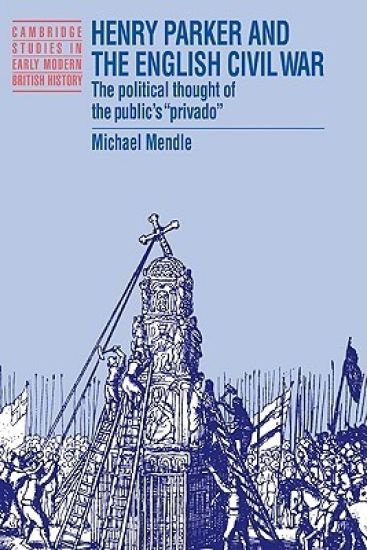
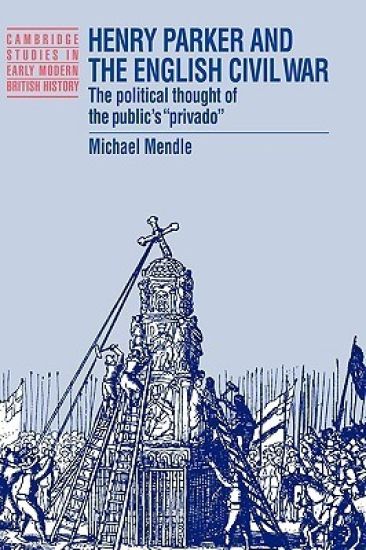
Henry Parker and the English Civil War

Henry Parker and the English Civil War

Michael Mendle

Cambridge University Press
1995
sidottu
This is the first full study in fifty years of the author of the most celebrated political tract of the early years of the English Civil War, Observations upon Some of His Majesties Late Answers and Expresses. Professor Mendle situates each of Parker’s significant tracts in its polemical, intellectual, and political context. He also views Parker’s literary work in the light of his career as privado, or intimate adviser, to leading figures of the parliamentary leadership. Parker emerges as a fierce opponent of clerical prevention from any quarter, a strikingly brutal critic of the common law mind, and a leading proponent of parliament’s most uncompromising position, a claim to a species of executive power so encompassing (and so like the claims of Charles I) that it can fitly be called parliamentary absolutism.
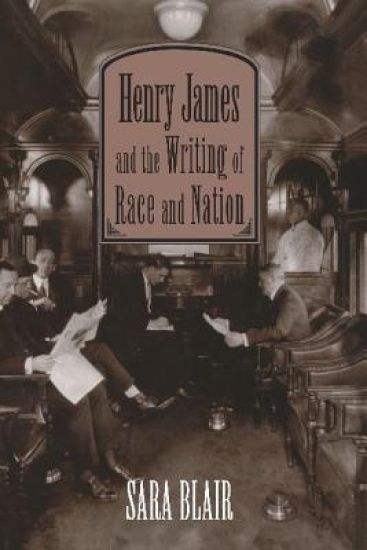
Henry James and the Writing of Race and Nation

Henry James and the Writing of Race and Nation

Sara Blair

Cambridge University Press
1996
sidottu
This book describes a new Henry James who, rather than being paraded as a beacon of high culture, actually expresses a nuanced understanding of, and engagement with, popular culture. Arguing against recent trends in critical studies which locate racial resistance in popular culture, Sara Blair uncovers this resistance within literature and high modernism. She analyses a variety of texts from early travel writing to The Princess Casamassima, The American Scene and The Tragic Muse, always setting the scene through descriptions of key events of the time such as Jack the Ripper’s murders. Blair makes a powerful case for reading James with a sense of sustained contradiction and her project absorbingly argues for the historical and ongoing importance of literary texts and discourses to the study of culture and cultural value.
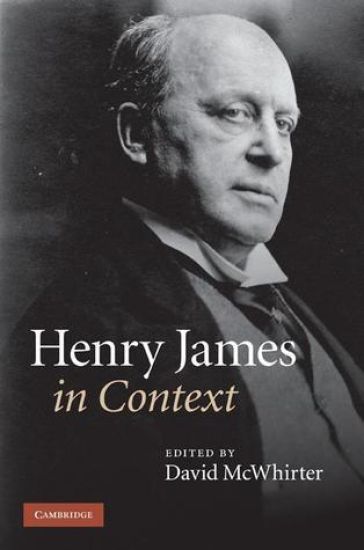
Henry James in Context

Henry James in Context

Cambridge University Press
2010
sidottu
Long misread as a novelist conspicuously lacking in historical consciousness, Henry James has often been viewed as detached from, and uninterested in, the social, political, and material realities of his time. As this volume demonstrates, however, James was acutely responsive not only to his era's changing attitudes toward gender, sexuality, class, and ethnicity, but also to changing conditions of literary production and reception, the rise of consumerism and mass culture, and the emergence of new technologies and media, of new apprehensions of time and space. These essays portray the author and his works in the context of the modernity that determined, formed, interested, appalled, and/or provoked his always curious mind. With contributions from an international cast of distinguished scholars, Henry James in Context provides a map of leading edge work in contemporary James studies, an invaluable reference work for students and scholars, and a blueprint for possible future directions.
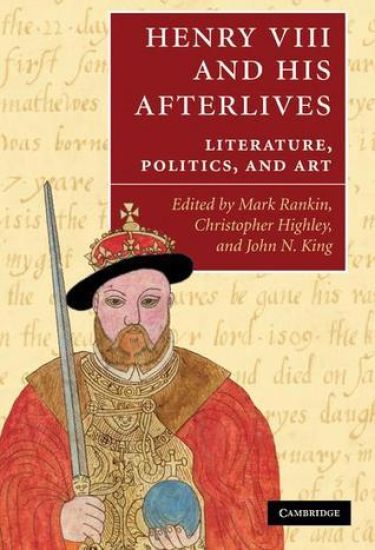
Henry VIII and his Afterlives

Henry VIII and his Afterlives

Cambridge University Press
2009
sidottu
Henry VIII remains one of the most fascinating, notorious and recognizable monarchs in English history. In the five centuries since his accession to the throne, his iconic status has been shaped by different media. From Shakespeare to The Tudors, this book reassesses treatments of Henry VIII in literature, politics, and culture during the period spanned by the king's own reign (1509–47) and the twenty-first century. Historians and literary scholars investigate how representations of the king provoked varied responses from influential writers, artists, and political figures in the decades and centuries following his death. Individual chapters consider interrelated responses to Henry's character and policies during his lifetime; his literary and political afterlife; the king's impact on art and popular culture; and King Henry's debated place in historiography, from the Tudor period to the present.
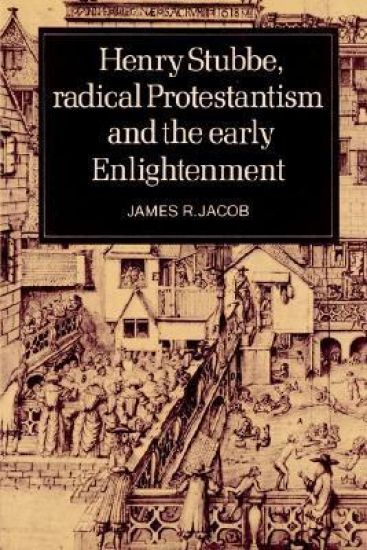
Henry Stubbe, Radical Protestantism and the Early Enlightenment
Called ‘the most noted person of his age’ by Anthony Wood, Henry Stubbe (1632–76), classicist, polemicist, physician, philosopher and the most important critic of the early Royal Society, has never had a biography. This study seeks to fill that gap, while standing received opinion about him on its head. The older view has it that at the Restoration Stubbe renounced his radical past and became the enemy of scientific progress and a reactionary defender of church and monarchy. Professor Jacob shows instead that Stubbe continued to espouse radical views after 1660 by devious means. Publicly he resorted to a rhetoric of subterfuge, while he let the full extent of his radicalism be known in private conversations at Bath and in an important clandestine manuscript (which Jacob proves to be his) that circulated among radicals from the early 1670s well into the eighteenth century.
Henry Parker and the English Civil War

Henry Parker and the English Civil War

Michael Mendle

Cambridge University Press
2003
pokkari
This is the first full study in fifty years of the author of the most celebrated political tract of the early years of the English Civil War, Observations upon Some of His Majesties Late Answers and Expresses. Professor Mendle situates each of Parker’s significant tracts in its polemical, intellectual, and political context. He also views Parker’s literary work in the light of his career as privado, or intimate adviser, to leading figures of the parliamentary leadership. Parker emerges as a fierce opponent of clerical prevention from any quarter, a strikingly brutal critic of the common law mind, and a leading proponent of parliament’s most uncompromising position, a claim to a species of executive power so encompassing (and so like the claims of Charles I) that it can fitly be called parliamentary absolutism.
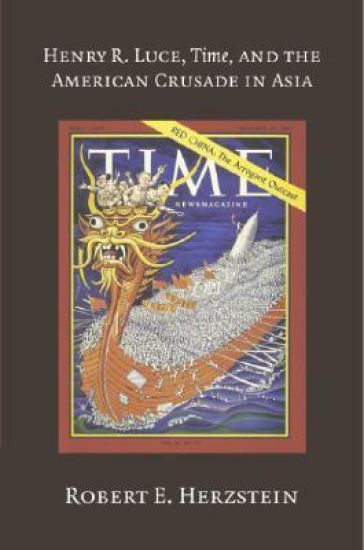
Henry R. Luce, Time, and the American Crusade in Asia

Henry R. Luce, Time, and the American Crusade in Asia

Robert E. Herzstein

Cambridge University Press
2006
pokkari
Henry Robinson Luce (1898–1967) founded Time, Life, Fortune, and Sports Illustrated. Born in China to missionary parents, Luce was a kind of lay preacher, anxious to mold the American mind and advance his ideological program: intervention, capitalism, democracy (when appropriate) and Christian activism. The most celebrated and influential editor of his day, Luce was also obsessed with the American mission in the world, and with China and East Asia, the place of his birth. Luce tried to 'sell' this mission to a sometimes reluctant public. A passionate anti-Communist interventionist, he also convinced Americans that the US had perversely 'lost' China to the Communists. A fervent advocate of the Vietnam intervention, Luce, author of the American Century edited incoming cables so that magazines might conform to his ideas.
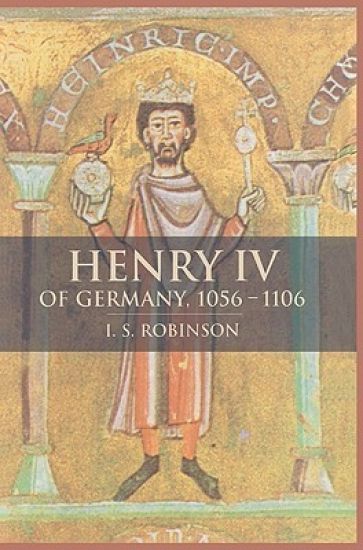
Henry IV of Germany 1056–1106

Henry IV of Germany 1056–1106

I. S. Robinson

Cambridge University Press
2003
pokkari
This is the first book in English devoted to the German king and emperor Henry IV (1056–1106), whose reign was one of the most momentous in German history and a turning-point in the history of the medieval empire (the kingdoms of Germany, Italy and Burgundy). The reign was marked by continuous rebellions and fluctuating fortune. Earlier monarchs had also witnessed conflict between crown and aristocracy, but Henry IV’s reign differed in that his conflicts could never be definitively resolved either by negotiation or by war. During the 1070s the young king gained a lasting reputation for tyranny, while his assertion of the crown’s traditional rights over the imperial church aroused papal opposition. The alliance between the German princes and the papacy haunted Henry IV for the rest of his life. He meanwhile, by turns opportunist and compromiser, dedicated himself at all times to preserving the traditional rights of the monarchy.
Henry More

Henry More

A. Rupert Hall

Cambridge University Press
1996
sidottu
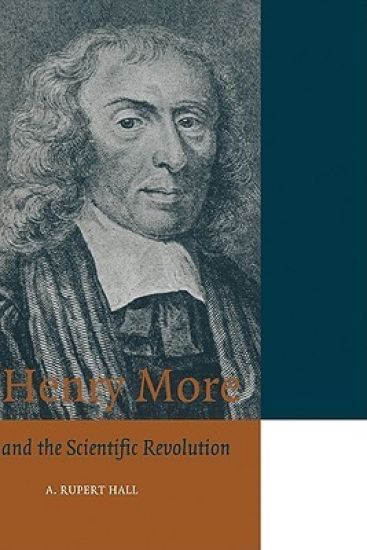
Henry More (1614–87) was the greatest English metaphysical theologian and the most perplexing; he was also perhaps the most distinguished member of the group of divines known as the Cambridge Platonists. An admirer of Galileo, Descartes, and Boyle, he rejected their detailed applications of mechanical philosophy to the explanation of natural phenomena. He was an experimenter, yet also a cabbalist and one of the few writers whom Newton acknowledged as having influenced his ideas. This thorough and accessible biography is the first book-length treatment of this remarkable character. More’s important contributions to science are illuminated, particularly his work on space and time which influenced Newton, and the book gives fascinating insights into his spiritual philosophy and his preoccupation with witchcraft. The depth of Professor Hall’s scholarship makes the book an exceptional account of the turbulent world of the Scientific Revolution.
Henry James and the Culture of Publicity

Henry James and the Culture of Publicity

Richard Salmon

Cambridge University Press
1997
sidottu
This book examines the relationship between the writings of Henry James and the historical formation of mass culture. Throughout his career, James was concerned with such characteristically modern cultural forms as advertising, biography, and the new journalism, forms which together he termed the ‘devouring publicity’ of modern life. Richard Salmon’s study situates James’s fiction and criticism within the context of the contemporary debates surrounding these rival discursive practices. He explores both the nature of James’s contribution to the critique of mass culture and the extent of his immersion within it. James’s persistent and ambivalent negotiation of the boundaries between private and public experience ranged from a defence of the artist’s right to privacy, to his own counter-practice of self-publicity. By drawing upon contemporary critical theory, Salmon offers a reassessment of the politics of James’s cultural criticism.