
Kirjahaku
Etsi kirjoja tekijän nimen, kirjan nimen tai ISBN:n perusteella.
1000 tulosta hakusanalla Harriet Pyne Grove
Harriet Tubman All Aboard the Underground Railroad U.S. Economy in the mid-1800s Biography 5th Grade Children's Biographies
Dissected Lives
Dissected Lives
2019
sidottu
Uncle Tom's Cabin (1852) ( anti-slavery ) NOVEL by: Harriet Beecher Stowe
Harriet Beecher Stowe
Createspace Independent Publishing Platform
2017
nidottu
Uncle Tom's Cabin; or, Life Among the Lowly, is an anti-slavery novel by American author Harriet Beecher Stowe. Published in 1852, the novel "helped lay the groundwork for the Civil War", according to Will Kaufman. Stowe, a Connecticut-born teacher at the Hartford Female Seminary and an active abolitionist, featured the character of Uncle Tom, a long-suffering black slave around whom the stories of other characters revolve. The sentimental novel depicts the reality of slavery while also asserting that Christian love can overcome something as destructive as enslavement of fellow human beings. Uncle Tom's Cabin was the best-selling novel of the 19th century and the second best-selling book of that century, following the Bible. It is credited with helping fuel the abolitionist cause in the 1850s. In the first year after it was published, 300,000 copies of the book were sold in the United States; one million copies in Great Britain. In 1855, three years after it was published, it was called "the most popular novel of our day." The impact attributed to the book is great, reinforced by a story that when Abraham Lincoln met Stowe at the start of the Civil War,
A Key to Uncle Tom's Cabin (1853)( anti-slavery ) NOVEL by: Harriet Beecher Stowe A Key to Uncle Tom's Cabin
Harriet Beecher Stowe
Createspace Independent Publishing Platform
2017
nidottu
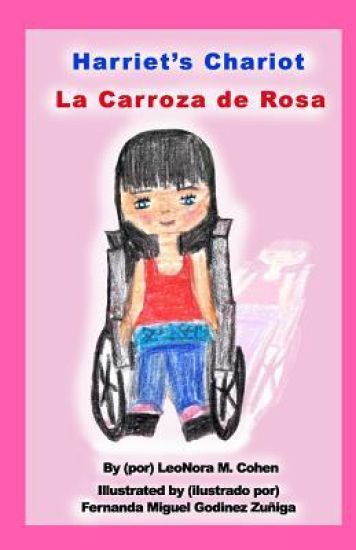
Harriet's Chariot: La Carroza de Rosa
LeoNora M. Cohen
Createspace Independent Publishing Platform
2017
nidottu
Harriet's Chariot is about a little girl who is in a terrible accident and has to use a wheel chair. When she returns to school after a long period in the hospital, she is teased and bullied about her injured legs. The story focuses on how she overcomes this problem with the help of her teacher and her mother. A contest is set up for the students, challenging them to move the wheel chair as quickly as they can from start line to finish line, their times recorded on a chart by the teacher. This helps classmates recognize how hard it is to move oneself in a wheel chair. Even the bully acknowledges Harriet's (Rosa's) wheelchair as a chariot of fire, she goes so fast The story is bilingual, written in English and Spanish. The illustrations by Fernanda Miguel Godinez Zu iga, a student at EEESMA, a school for the deaf in San Miguel de Allende, Mexico, captures the story in a charming and refreshing way, allowing the reader to make sense of the second language through the pictures. For deaf students, Mexican Sign Language is their first language, Spanish is their second, and English is third. Children ages 6-10 can relate to the bullying and get excited about how this problem was solved. They can think about being wheelchair bound and the effort the young heroine made to overcome her problems. All proceeds from this book benefit the Escuela de Educaci n Especial San Miguel de Allende (EEESMA), the school for deaf children, which makes such a huge difference in these students' lives. La Carroza de Rosa es sobre una ni a peque a que est en un terrible accidente y tiene que usar una silla de ruedas. Cuando regresa a la escuela despu s de un largo per odo en el hospital, es objeto de burlas y acoso por sus piernas da ados. La historia se centra en c mo supera este problema con la ayuda de su maestra y su madre. Se organiza un concurso para los estudiantes, desafi ndolos a mover la silla de ruedas lo m s r pido posible desde la l nea de inicio hasta la l nea de meta, sus tiempos registrados en una tabla por el maestro. Esto ayuda a los compa eros de clase a reconocer lo dif cil que es moverse uno mismo en una silla de ruedas. Incluso el mat n reconoce la silla de ruedas de Rosa como un carroza de fuego, va tan r pido La historia es biling e, escrita en ingl s y espa ol. Las ilustraciones de Fernanda Miguel God nez Z iga, una estudiante de EEESMA, una escuela para sordos en San Miguel de Allende, M xico, captan la historia de una manera encantadora y refrescante, permitiendo al lector dar sentido a la segunda lengua a trav s de las im genes. Para los estudiantes sordos, el lenguaje de se as mexicano es su primer idioma, el espa ol es el segundo y el ingl s el tercero. Los ni os de 6 a 10 a os pueden relacionarse con el acoso y entusiasmarse con la forma en que se resolvi este problema. Pueden pensar que est n en silla de ruedas y el esfuerzo que la joven hero na hizo para superar sus problemas. Todas las ganancias de este libro benefician a la Escuela de Educaci n Especial San Miguel de Allende (EEESMA), la escuela para ni os sordos, que hace una gran diferencia en la vida de estos estudiantes.
Harriet's Heart & Soul Speak through Poetry
Harriet Elaine Donnell Stamps
Createspace Independent Publishing Platform
2017
nidottu
Poetry is the window of the soul. A collection of handwritten poems started many years ago. As you read I pray you the reader will enjoy and each of these poems place a beautiful picture in your mind.
Life of Harriet Beecher Stowe
Harriet Beecher Stowe
Createspace Independent Publishing Platform
2017
nidottu
"Then came the funeral. Henry was too little to go. I can see his golden curls and little black frock as he frolicked in the sun like a kitten, full of ignorant joy. "I recollect the mourning dresses, the tears of the older children, the walking to the burial-ground, and somebody's speaking at the grave. Then all was closed, and we little ones, to whom it was so confused, asked where she was gone and would she never come back. "They told us at one time that she had been laid in the ground, and at another that she had gone to heaven. Thereupon Henry, putting the two things together, resolved to dig through the ground and go to heaven to find her; for being discovered under sister Catherine's window one morning digging with great zeal and earnestness, she called to him to know what he was doing.
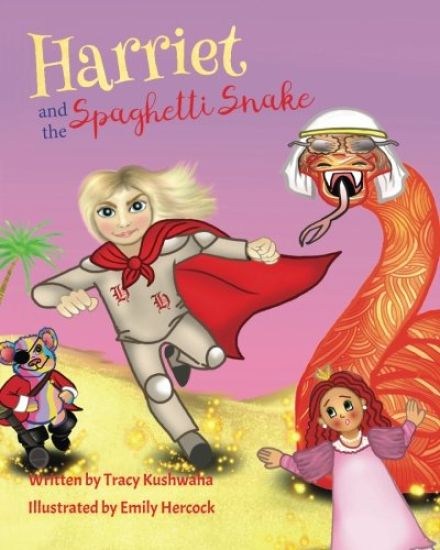
Harriet and the Spaghetti Snake
Tracy Kushwaha
Createspace Independent Publishing Platform
2017
nidottu
Life of Harriet Beecher Stowe
Harriet Beecher Stowe
Createspace Independent Publishing Platform
2017
nidottu
Life of Harriet Beecher Stowe
Harriet Beecher Stowe
Createspace Independent Publishing Platform
2017
nidottu
Harriet, the Moses of Her People
Sarah H. Bradford
Createspace Independent Publishing Platform
2017
nidottu
Harriet Tangles With The Earl
April Kihlstrom
Createspace Independent Publishing Platform
2017
nidottu
Harriet Harlowe must find a way to survive after her husband dies leaving her without a means of support in Regency England. She bands together with two other widows, equally penniless, to begin a rather unorthodox enterprise. The Earl of Darrowfield is determined to stop his cousin's widow from ruining the family reputation. Neither is willing to give an inch and tangle repeatedly. Ultimately, they must join forces against an enemy determined to make Harriet his mistress and destroy the Earl of Darrowfield--as well as everything and everyone he values. Together they discover love, laughter, adventure and that their differences matter far less than the happiness they could create together.
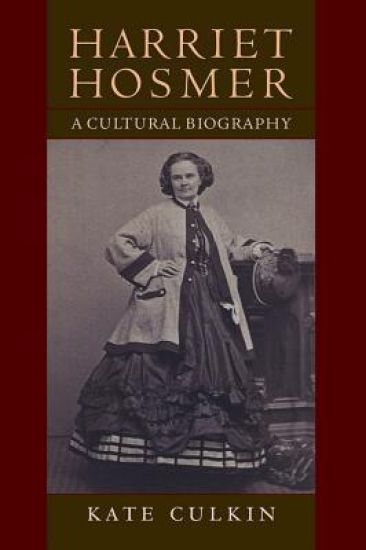
Harriet Hosmer
University of Massachusetts Press
2010
nidottu
Harriet Hosmer (1830–1908) was celebrated as one of the country's most respected artists, credited with opening the field of sculpture to women and cited as a model of female ability and American refinement. In this biographical study, Kate Culkin explores Hosmer's life and work and places her in the context of a notable group of expatriate writers and artists who gathered in Rome in the mid-nineteenth century. In 1852 Hosmer moved from Boston to Rome, where she shared a house with actress Charlotte Cushman and soon formed close friendships with such prominent expatriates as Robert and Elizabeth Barrett Browning and fellow sculptors John Gibson, Emma Stebbins, and William Wetmore Story. References to Hosmer or characters inspired by her appear in the work of Nathaniel Hawthorne, Louisa May Alcott, and Kate Field among others. Culkin argues that Hosmer's success was made possible by her extensive network of supporters, including her famous friends, boosters of American gentility, and women's rights advocates. This unlikely coalition, along with her talent, ambition, and careful maintenance of her public profile, ultimately brought her great acclaim. Culkin also addresses Hosmer's critique of women's position in nineteenth-century culture through her sculpture, women's rights advocates' use of high art to promote their cause, the role Hosmer's relationships with women played in her life and success, and the complex position a female artist occupied within a country increasingly interested in proving its gentility.
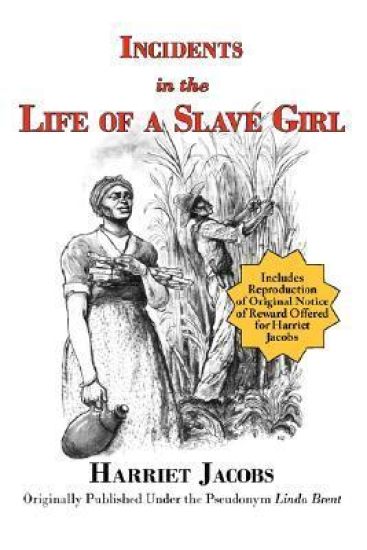
Incidents in the Life of a Slave Girl (with reproduction of original notice of reward offered for Harriet Jacobs)
Harriet Jacobs; Linda Brent
ARC Manor
2008
pokkari
Harriet Martineau (1802–1876) is one of the most prolific and well-connected Victorian writers to have fallen off the literary map in the century following her death. During a career spanning half a century, Martineau wrote over fifty didactic-fiction tales, about forty books, and well over two thousand periodical articles. Emphasizing the pervasiveness of her literary influence, most of her books underwent multiple editions and translations, while her periodicals writing placed her at the forefront of the mass-media reading public. But it is her correspondence that best illustrates the breadth and depth of her sociocultural and intellectual contributions. In 1843, Martineau notoriously asserted control over her letters by insisting that her correspondents destroy or return them or else forfeit the epistolary relationship. Just as notoriously, an astonishing number of correspondents quietly refused to comply, resulting in more than two thousand extant pieces of correspondence. The materials in Harriet Martineau: Further Letters range from the 1820s through 1870s and include both private and professional correspondence, from brief notes to long discourses, addressing topics from domestic minutiae and personal health to national and international affairs. A key strength of this collection is its eclecticism, best seen in the letters to some of the most significant people in her life—Maria Weston Chapman, Jane Welsh Carlyle, James Martineau, Elizabeth Jesser Reid, and Henry Atkinson—the originals of which have been destroyed, lost, or are otherwise unavailable. Contextualizing as prolific and well-connected an individual as Harriet Martineau contributes directly to broader scholarship on the Victorian era, its prominent players, and the issues with which they grappled. Martineau was an interdisciplinary thinker and writer long before the term acquired its present popular currency—another factor accounting both for her posthumous unfashionability and her present renaissance.
Harriet Martineau and the Irish Question
Lehigh University Press
2011
sidottu
Aside from Letters from Ireland and Endowed Schools of Ireland, Harriet Martineau wrote an additional thirty-eight articles about Ireland for London’s Daily News between 1852 and 1866, plus another thirteen articles for Household Words, Atlantic Monthly, Once a Week, Westminster Review, and New York Evening Post. It is those uncollected articles that are the focus of this study and that compliment her earlier work by providing subsequent commentary on Ireland’s post-famine, reconstruction period. Whereas Letters from Ireland (1852) is a structured, sociological travel memoir meant for both periodical and volume publication, and Endowed Schools (1858) addresses a specific aspect of Irish education reform, these articles chart the course of economic and social progress in post-famine Ireland in terms of industry, public works, economy, and agriculture. They also record the growth of Irish nationalism in America and Ireland, while exploring the question of Ireland’s political representation during this crucial pre-independence period. Points highlighted in this study include Martineau’s unshakable optimism about the economic and social recovery of post-famine Ireland, her steady refusal to consider repeal of the Union as a viable option for remedying Ireland’s troubles, and her insistence that Ireland’s problems were social, not political. Treating social issues as the primary ailment and politics as merely a symptom, Martineau’s writing on these topics provides important insights into the challenges facing Ireland during its transition from a feudal society to a modern, independent nation during the period of the British Empire’s greatest expansion and swift demise. There are five components comprising her writing on Ireland: Ireland (Illustrations of Political Economy, 1832); History of the Peace, 1849-51; Letters from Ireland (1852); Endowed Schools of Ireland (1858); and the “Condition of Post-famine Ireland” (1852-66). It is the latter that is the focus of this volume.
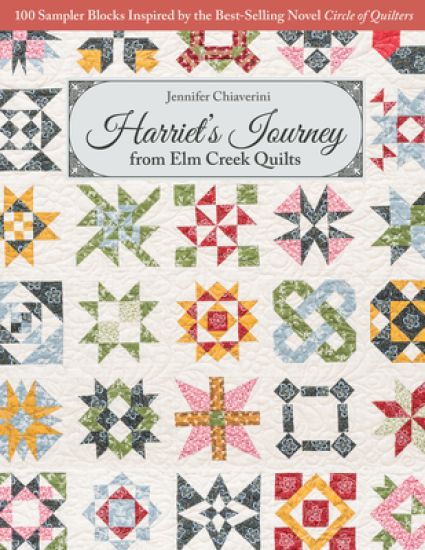
Jennifer Chiaverini of the Elm Creek Quilts series shares a new 100-block sampler quilt pattern inspired by her best-selling novel! Includes step-by-step instructions to traditionally piece or foundation piece blocks.