Kirjojen hintavertailu. Mukana 12 083 983 kirjaa ja 12 kauppaa.

Kirjahaku

Etsi kirjoja tekijän nimen, kirjan nimen tai ISBN:n perusteella.

1000 tulosta hakusanalla Howell Harris

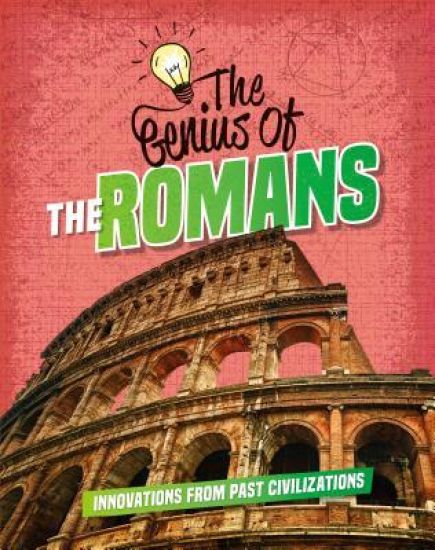
The Genius of the Romans

The Genius of the Romans

Izzi Howell

Crabtree Publishing Company
2019
sidottu
Which innovative ideas and inventions began with the Romans? Find out how the Romans trained their soldiers, built their roads and buildings, and supplied their people with food and water. Discover how their brilliant developments in language, government, law, and entertainment still influence the way we live today.
Ask for Help

Ask for Help

Izzi Howell

Crabtree Publishing Company
2020
sidottu
Why is it important to ask for help? How can helping others help you? And why are there no stupid questions when asking for help? Find out about the power of working in a team, and how getting the help you need to overcome obstacles gives you a happier, healthier mindset.
From Reliable Sources

From Reliable Sources

Martha Howell; Walter Prevenier

Cornell University Press
2001
pokkari
Among the books designed to teach aspiring historians proper procedures for their work, this volume ranks high....Readers will especially appreciate the care taken to show the link between methodological innovations and the historical contexts in which they occurred.-Choice From Reliable Sources is a lively introduction to historical methodology, an overview of the techniques historians must master in order to reconstruct the past. Its focus on the basics of source criticism, rather than on how to find references or on the process of writing, makes it an invaluable guide for all students of history and for anyone who must extract meaning from written and unwritten sources. Martha Howell and Walter Prevenier explore the methods employed by historians to establish the reliability of materials; how they choose, authenticate, decode, compare, and, finally, interpret those sources. Illustrating their discussion with examples from the distant past as well as more contemporary events, they pay particular attention to recent information media, such as television, film, and videotape. The authors do not subscribe to the positivist belief that the historian can attain objective and total knowledge of the past. Instead, they argue that each generation of historians develops its own perspective, and that our understanding of the past is constantly reshaped by the historian and the world he or she inhabits. A substantially revised and updated edition of Prevenier's Uit goede bron, originally published in Belgium and now in its seventh edition, From Reliable Sources also provides a survey of western historiography and an extensive research bibliography.
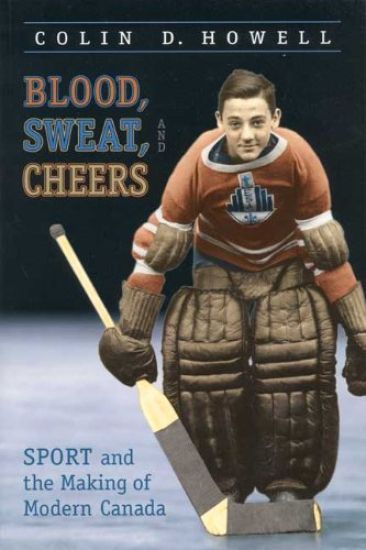
Blood, Sweat, and Cheers

Blood, Sweat, and Cheers

Colin Howell

University of Toronto Press
2001
sidottu
Blood, Sweat, and Cheers looks at the contribution of sport to the making of the Canadian nation, focusing on the gradual transition from rural sporting practices to the emphasis on contemporary team sports that accompanied the industrial and urban transition. The book also analyzes sport's pre-eminent place in our contemporary consumer-oriented culture, and the sometimes ambivalent contribution of sport to a sense of Canadian identity. Intended as an introduction to the way in which social historians approach the history of sport, rather than as an exhaustive narrative of our sporting heritage, Colin D. Howell introduces readers to a number of important issues, including amateurism and professionalism, race and ethnicity, regionalism and nationalism, the impact of British and American sporting traditions upon Canadian sporting life, and the contemporary meaning of sport in a globalizing capitalist economy. He also investigates discourses about respectability and the display of the body, gender construction and sexual identities, the changing nature of the sporting marketplace over time, as well as the involvement of spectators, the media, and the state in the production of our national sporting life. While theoretical in approach, Blood, Sweat and Cheers also looks at the accomplishments of individual athletes, including Ned Hanlan, Maurice Richard, Barbara Ann Scott, Wayne Gretzky, and Donovan Bailey, as well as major sports teams, and covers a wide array of activities from hunting, rodeo, and native sporting traditions to those associated with the Olympic Games.
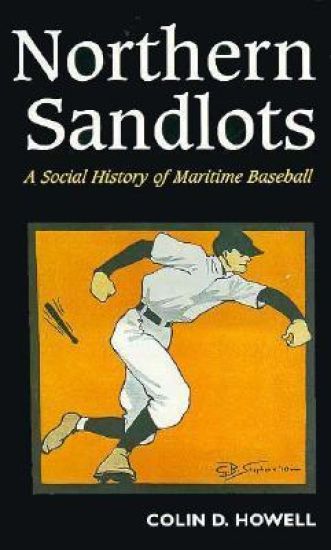
Northern Sandlots

Northern Sandlots

Colin Howell

University of Toronto Press
1995
pokkari
Northern Sandlots is the story of the rise and fall of regional baseball on the northeast coast of North America. Colin Howell writes about the social and economic influence of baseball on community life in the Maritimes and New England during the past century, from its earliest spread from cities and towns into the countryside, to the advent of television, and the withering of local semi-pro leagues after the Second World War. The history of sport is an important feature of the `new' social history. Howell discusses how baseball has been deeply implicated in debates about class and gender, race and ethnicity, regionalism and nationalism, work and play, and the commercialization of leisure. Baseball's often overlooked connection to medical and religious discourse is also explored. Howell begins with the game's earliest days when it was being molded by progressive reformers to meet what they considered to be the needs of an emerging industrial society. He then turns to the interwar years when baseball in the Maritimes became strictly amateur, revealing an emerging sense of community solidarity and regional identity. The game flourished at the community level after the Second World War, before it eventually succumbed to the new, commodified, and nationally marketed sporting culture that accompanied the development of the modern consumer society. Finally, Howell shows that fundamental changes in the nature of capitalism after the war, and in the economic and social reality of small towns and cities, hastened the death of a century-long tradition of competitive, community-level baseball. Howell has written an informative and insightful social history that examines the transformation of Maritime community life from the 1860s to the late twentieth century.
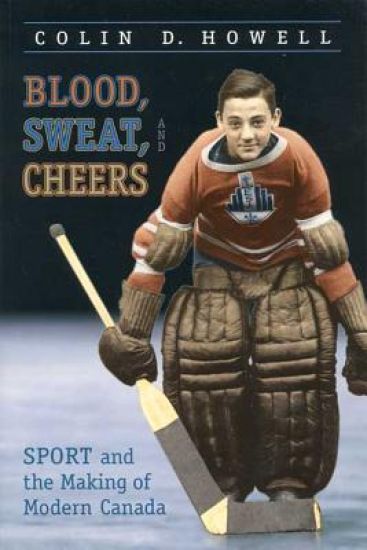
Blood, Sweat, and Cheers

Blood, Sweat, and Cheers

Colin Howell

University of Toronto Press
2001
pokkari
Blood, Sweat, and Cheers looks at the contribution of sport to the making of the Canadian nation, focusing on the gradual transition from rural sporting practices to the emphasis on contemporary team sports that accompanied the industrial and urban transition. The book also analyzes sport's pre-eminent place in our contemporary consumer-oriented culture, and the sometimes ambivalent contribution of sport to a sense of Canadian identity. Intended as an introduction to the way in which social historians approach the history of sport, rather than as an exhaustive narrative of our sporting heritage, Colin D. Howell introduces readers to a number of important issues, including amateurism and professionalism, race and ethnicity, regionalism and nationalism, the impact of British and American sporting traditions upon Canadian sporting life, and the contemporary meaning of sport in a globalizing capitalist economy. He also investigates discourses about respectability and the display of the body, gender construction and sexual identities, the changing nature of the sporting marketplace over time, as well as the involvement of spectators, the media, and the state in the production of our national sporting life. While theoretical in approach, Blood, Sweat and Cheers also looks at the accomplishments of individual athletes, including Ned Hanlan, Maurice Richard, Barbara Ann Scott, Wayne Gretzky, and Donovan Bailey, as well as major sports teams, and covers a wide array of activities from hunting, rodeo, and native sporting traditions to those associated with the Olympic Games.
At Home and Astray

At Home and Astray

Philip Howell

University of Virginia Press
2015
sidottu
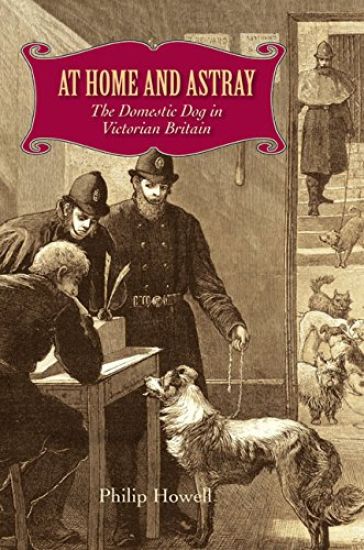
Although the British consider themselves a nation of dog lovers, what we have come to know as the modern dog came into existence only after a profound, and relatively recent, transformation in that country’s social attitudes and practices. In At Home and Astray, Philip Howell focuses on Victorian Britain, and especially London, to show how the dog’s changing place in society was the subject of intense debate and depended on a fascinating combination of forces even to come about.Despite a relationship with humans going back thousands of years, the dog only became fully domesticated and installed at the heart of the middle-class home in the nineteenth century. Dog breeding and showing proliferated at that time, and dog ownership increased considerably. At the same time, the dog was increasingly policed out of public space, the ""stray"" becoming the unloved counterpart of the household ""pet."" Howell shows how this redefinition of the dog’s place illuminates our understanding of modernity and the city. He also explores the fascinating process whereby the dog’s changing role was proposed, challenged, and confronted—and in the end conditionally accepted. With a supporting cast that includes Charles Dickens, Elizabeth Barrett Browning, Thomas Carlyle, and Charles Darwin, and subjects of inquiry ranging from vivisection and the policing of rabies to pet cemeteries, dog shelters, and the practice of walking the dog, At Home and Astray is a contribution not only to the history of animals but also to our understanding of the Victorian era and its legacies.
Style and the Single Girl

Style and the Single Girl

Hope Howell Hodgkins

Ohio State University Press
2016
sidottu
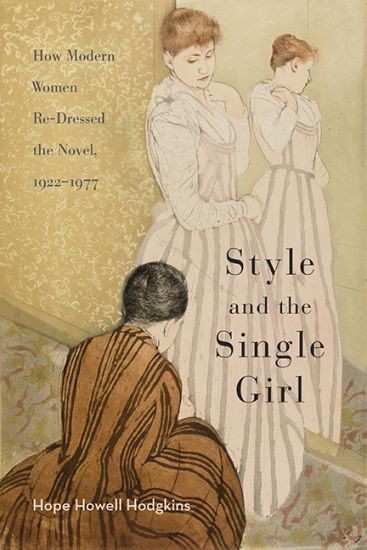
Style and the Single Girl by Hope Howell Hodgkins reveals how four very different single-girl novelists employed modern modes to re-dress the traditional English marriage plot. In the first monograph to use fashion theory and history to trace the literary progress of British women in later modernity, Hodgkins argues that correspondences between a gendered sartorial style and a gendered literary style persisted throughout the modern era. She demonstrates how those correspondences did not fade but became fraught as women matured in the sharply gendered crucible of war. Hodgkins delineates how in the 1920s and 1930s, popular novels by Dorothy Sayers and high-art fiction by Jean Rhys used dress to comment wittily and bitterly on gender relations. During World War II, changes in British Vogue and compromises made by the literary journal Horizon signaled the death of modernist styles, as Elizabeth Bowen's gender-bent wartime stories show. Then demure and reserved postwar styles--Dior's curvy New Look, the Movement's understated literary irony--were intertwined in the fictions of Barbara Pym and Muriel Spark, who re-dressed the novel with a vengeance. Whether fashioning detective fiction, literary impressionism, or postwar comedy, these novelists used style in every sense to redefine that famous question, "What do women want?"
Style and the Single Girl

Style and the Single Girl

Hope Howell Hodgkins

Ohio State University Press
2018
pokkari
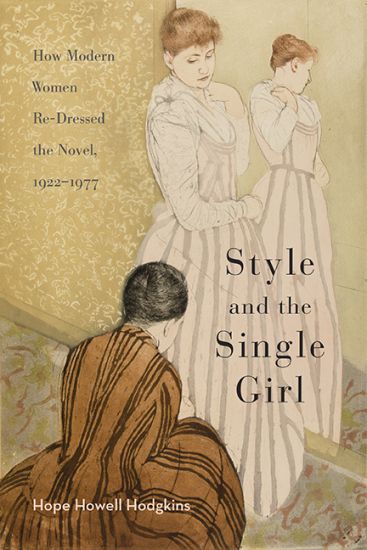
Style and the Single Girl by Hope Howell Hodgkins reveals how four very different single-girl novelists employed modern modes to re-dress the traditional English marriage plot. In the first monograph to use fashion theory and history to trace the literary progress of British women in later modernity, Hodgkins argues that correspondences between a gendered sartorial style and a gendered literary style persisted throughout the modern era. She demonstrates how those correspondences did not fade but became fraught as women matured in the sharply gendered crucible of war. Hodgkins delineates how in the 1920s and 1930s, popular novels by Dorothy Sayers and high-art fiction by Jean Rhys used dress to comment wittily and bitterly on gender relations. During World War II, changes in British Vogue and compromises made by the literary journal Horizon signaled the death of modernist styles, as Elizabeth Bowen's gender-bent wartime stories show. Then demure and reserved postwar styles-Dior's curvy New Look, the Movement's understated literary irony-were intertwined in the fictions of Barbara Pym and Muriel Spark, who re-dressed the novel with a vengeance. Whether fashioning detective fiction, literary impressionism, or postwar comedy, these novelists used style in every sense to redefine that famous question, "What do women want?"
Workbook for Aphasia

Workbook for Aphasia

Susan Howell Brubaker

Wayne State University Press
2006
sidottu
Susan Howell Brubaker has revised the classic ""Workbook for Aphasia"" to update the language and situations to better serve twenty-first-century patients. Since its first edition in 1978, this highly recognizable ""blue book"" has been used by speech-language pathologists as a treatment tool both in sessions and as a home-program supplement, with target populations ranging from adults to early adolescents. The exercises encompass basic- to higher-level tasks addressing reading, graphics, word retrieval, formulation, and a variety of other language skills. The new edition responds to the comments and suggestions of longtime users with several changes to the content and format of the book. The most visible change is the ring binder that will allow for easy copying of treatment materials for individual patients. Inside the workbook, many questions have been revised and others have been added. The Answer Key to Selected Exercises now contains more exercises and is also part of the text, in its own easy-to-find section of the binder. In addition, the book's new, larger font and improved spacing better enables patients with visual difficulties to read the text. This revised and updated third edition will enhance the ability of speech-language pathologists to address the language-impaired population within their practices.
Puritans and Radicals in North England

Puritans and Radicals in North England

Roger Howell

University Press of America
1984
sidottu
Written by one of the world's leading historians of 17th century England, this collection of essays, many biographical in nature, recreates the experience of the 17th century English revolution at the local level. The actions and responses of ordinary individuals in Northeast England cast valuable light on the nature and impact of the Revolution.
Hey, Bug Doctor!

Hey, Bug Doctor!

Jim Howell

University of Georgia Press
2006
pokkari
More than sixty bugs commonly found in homes, yards, and gardens in Georgia are profiled in an illustrated handbook that demonstrates how the difference between a pesky bug and helpful bug often comes down to how, when, and where it is found.
Boss of Black Brooklyn

Boss of Black Brooklyn

Ron Howell

FORDHAM UNIVERSITY PRESS
2018
sidottu
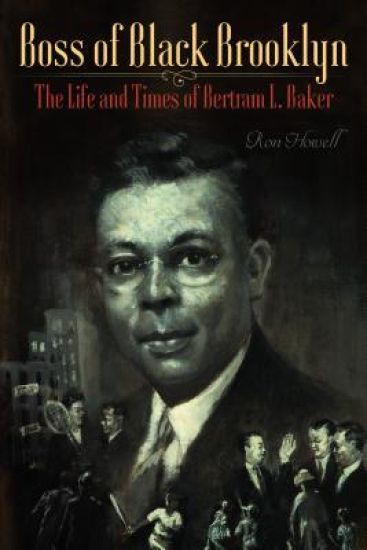
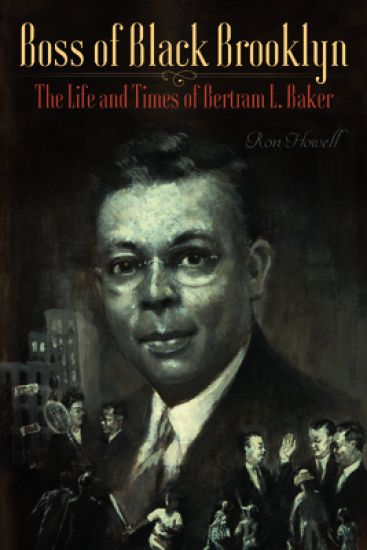
Boss of Black Brooklyn presents a riveting and untold story about the struggles and achievements of the first black person to hold public office in Brooklyn. Bertram L. Baker immigrated to the United States from the Caribbean island of Nevis in 1915. Three decades later, he was elected to the New York state legislature, representing the Bedford Stuyvesant section. A pioneer and a giant, Baker has a story that is finally revealed in intimate and honest detail by his grandson Ron Howell. Boss of Black Brooklyn begins with the tale of one man's rise to prominence in a fascinating era of black American history, a time when thousands of West Indian families began leaving their native islands in the Caribbean and settling in New York City. In 1948, Bert Baker was elected to the New York state assembly, representing the growing central Brooklyn neighborhood of Bedford Stuyvesant. Baker loved telling his fellow legislators that only one other Nevisian had ever served in the state assembly. That was Alexander Hamilton, the founding father. Making his own mark on modern history, Baker pushed through one of the nation's first bills outlawing discrimination in the sale or rental of housing. Also, for thirty years, from 1936 to 1966, he led the all-black American Tennis Association, as its executive secretary. In that capacity he successfully negotiated with white tennis administrators, getting them to accept Althea Gibson into their competitions. Gibson then made history as the first black champion of professional tennis. Yet, after all of Baker's wonderful achievements, little has been written to document his role in black history. Baker represents a remarkable turning point in the evolution of modern New York City. In the 1940s, when he won his seat in the New York state assembly, blacks made up only 4 percent of the population of Brooklyn. Today they make up a third of the population, and there are scores of black elected officials. Yet Brooklyn, often called the capital of the Black Diaspora, is a capital under siege. Developers and realtors seeking to gentrify the borough are all but conspiring to push blacks out of the city. A very important and long-overdue book, Boss of Black Brooklyn not only explores black politics and black organizations but also penetrates Baker's inner life and reveals themes that resonate today: black fatherhood, relations between black men and black women, faithfulness to place and ancestry. Bertram L. Baker's story has receded into the shadows of time, but Boss of Black Brooklyn recaptures it and inspires us to learn from it.
Boss of Black Brooklyn

Boss of Black Brooklyn

Ron Howell

Fordham University Press
2020
pokkari
Boss of Black Brooklyn presents a riveting and untold story about the struggles and achievements of the first black person to hold public office in Brooklyn. Bertram L. Baker immigrated to the United States from the Caribbean island of Nevis in 1915. Three decades later, he was elected to the New York state legislature, representing the Bedford Stuyvesant section. A pioneer and a giant, Baker has a story that is finally revealed in intimate and honest detail by his grandson Ron Howell. Boss of Black Brooklyn begins with the tale of one man's rise to prominence in a fascinating era of black American history, a time when thousands of West Indian families began leaving their native islands in the Caribbean and settling in New York City. In 1948, Bert Baker was elected to the New York state assembly, representing the growing central Brooklyn neighborhood of Bedford Stuyvesant. Baker loved telling his fellow legislators that only one other Nevisian had ever served in the state assembly. That was Alexander Hamilton, the founding father. Making his own mark on modern history, Baker pushed through one of the nation's first bills outlawing discrimination in the sale or rental of housing. Also, for thirty years, from 1936 to 1966, he led the all-black American Tennis Association, as its executive secretary. In that capacity he successfully negotiated with white tennis administrators, getting them to accept Althea Gibson into their competitions. Gibson then made history as the first black champion of professional tennis. Yet, after all of Baker's wonderful achievements, little has been written to document his role in black history. Baker represents a remarkable turning point in the evolution of modern New York City. In the 1940s, when he won his seat in the New York state assembly, blacks made up only 4 percent of the population of Brooklyn. Today they make up a third of the population, and there are scores of black elected officials. Yet Brooklyn, often called the capital of the Black Diaspora, is a capital under siege. Developers and realtors seeking to gentrify the borough are all but conspiring to push blacks out of the city. A very important and long-overdue book, Boss of Black Brooklyn not only explores black politics and black organizations but also penetrates Baker's inner life and reveals themes that resonate today: black fatherhood, relations between black men and black women, faithfulness to place and ancestry. Bertram L. Baker's story has receded into the shadows of time, but Boss of Black Brooklyn recaptures it and inspires us to learn from it.
King Al

King Al

Ron Howell

Fordham University Press
2021
sidottu
The incredible story of the man and legend who has come to symbolize the continuing pursuit of justice for Blacks in the United States Through the 1980s, the mainstream press portrayed the Reverend Al Sharpton as a buffoon, a fake minister, a hustler, an opportunist, a demagogue, a race traitor, and an anti-Semite. Today, Sharpton occupies a throne that would have shocked the white newspaper reporters who covered him forty years ago. A mesmerizing story of astounding transformation, craftiness, and survival, King Al follows Reverend Sharpton's life trajectory, from his early life as a boy preacher to his present moment as the most popular Black American activist/minister/cable news host. In the 1980s, Rev. Al created controversies that would have doomed a lesser man to the dustbin of history. Among these controversies were his work with the FBI as the agency attempted to locate Black Liberation Army leader Assata Shakur; and his involvement in the 1987 Tawana Brawley episode. Regarding the Brawley matter, a white prosecutor sued Sharpton, successfully, for falsely accusing him of having raped the then-fifteen-year-old Brawley. It was the white press, in its glory days, that created the podium from which Sharpton became both famous and infamous. Those reporters would joke that the most dangerous place in New York was between Al Sharpton and a television camera. But it was those reporters who made Sharpton the media figure he is today. Today, as host of MSNBC's PoliticsNation news program, Sharpton has more news viewers than those reporters ever had readers. The Reverend Al's rise to respectability is a testament to an endurance and boldness steeped in Black American history. Born in Brooklyn to parents from the old slave-holding South, he transformed himself into one of the most respected and politically influential Blacks in the United States. In his in-depth coverage, author Ron Howell tells the stories of Sharpton's ascendance to the throne. He tells us about the glory years of American newspapers, when Sharpton began his rise. And he tells us about the politicians who intersected with Sharpton as he climbed the ladder. King Al is an engaging read about the late-twentieth-century history of New York City politics and race relations, as well as about the remarkable staying power of the colorful, politically skillful, and enigmatic Sharpton.
First Time in Japan

First Time in Japan

Anthony Howell

Anvil Press Poetry
1995
nidottu
Imagine a character of our time whose affinities are with the Silver Poets of Ancient Rome. A person at the pivot of middle age; cosmopolitan, yet jaundiced - a hedonist with greying temples and expanding belly...This is the persona whose voice permeates "First Time in Japan", enabling Anthony Howell to speak without calculating the soundness of the view expressed. As always his poems are distilled from irony, wit and an intensity of poetic craft, creating another unsettling fusion of modernism and bravura tradition.