Kirjojen hintavertailu. Mukana 12 442 443 kirjaa ja 12 kauppaa.

Kirjahaku

Etsi kirjoja tekijän nimen, kirjan nimen tai ISBN:n perusteella.

1000 tulosta hakusanalla James C. Rodkey

History of Gwinnett County, Georgia, 1818-1943. (Volume #1)

History of Gwinnett County, Georgia, 1818-1943. (Volume #1)

James C. Flanigan

Southern Historical Press
2019
nidottu
By: James C. Flanigan, Pub. 1943, Reprint 2019, 446 pages, 0-89308-977-X. Gwinnett County was created in 1818 from Jackson County and lands gained through the cession of Creek Indian lands. It lies in the north-central part of the state. This book is similar to other books of the era, discussing such topics as: Indians, Creation of the county, commerce, education, geography, politics and etc. But the reader will discover very useful things interspersed throughout this book such as: Muster rolls of Militia from 1813-1814; Lists of First Taxpayers 1820; Census of 1820; Lists of Lottery Drawers in Gwinnett for the 4th, 5th, 6th and 7th Districts; along with Gwinnett citizens who drew lots in Monroe and Houston Counties; Lists of First Settlers; Early Court Records 1821-1850; list of Gwinnett citizens who drew land in the 1832 Cherokee Land Lottery; List of 1835 & 1840 Pensioners; Lists of owners of Slaves 1820, 1840, 1850, & 1860; Lists of Plantation owners who owned more than 500 acre, and Names of Gwinnett County citizens who served in various Companies during the Civil War along with data on the ones who died during service. The author has also included biographical sketches of some early residents of the county: Adair (2), Anthony, Arnold, Baugh, Beasley, Berry, Bracewell, Brown, Camp, Chester, Cupp, Garmany, Gordon, Hale, Hall, Hawthorne, Hopkins, Howell, Hudson, Hutchins, Jackson, King, Laurence, Liddell (2), Lietch, Loveless, Malthie, Martin, Nesbit, Pruett, Rambo, Richardson, Rogers, Russell, Sammon, Save, Smith, Spencer, Stuart, Thomas, Whitworth (2), Williams, and Wilson.
MARCEL

MARCEL

James C. Spohrer

Intellect Books
1992
sidottu
This volume describes a cognitive model of student programmers, and an implementation of that model that allows student programmers to be simulated. The focus of the model is on the problem solving that students perform to generate both correct and buggy programs as well as on the individual differences that cause different students to generate different programs for the same programming task. By developing a taxonomy of student programmer knowledge; a model of student program generation; and a preliminary model of individual differences, this research contributes to a better understanding of four areas of the study of student programmers. The most important claim is that a cognitive model of student program generation fits within a properly "fleshed out" generate test-and-debug (GTD) problem solving architecture in which impasse/repair knowledge plays a key role. This research is important theoretically because it explores the use of a GTD impasse/repair problem solving architecture in a new domain, and important practically because of its educational implications for programming instructions.
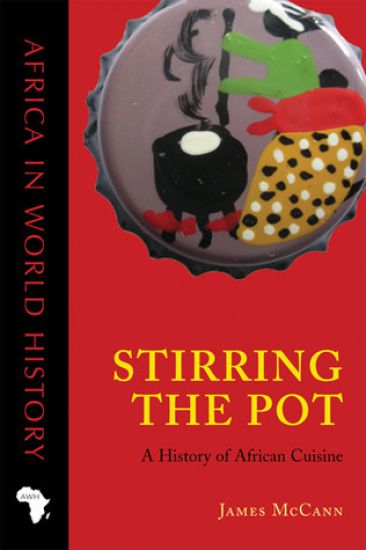
Stirring the Pot

Stirring the Pot

James C. McCann

Ohio University Center for International Studies
2010
pokkari
Africa's art of cooking is a key part of its history. All too often Africa is associated with famine, but in Stirring the Pot, James C. McCann describes how the ingredients, the practices, and the varied tastes of African cuisine comprise a body of historically gendered knowledge practiced and perfected in households across diverse human and ecological landscape. McCann reveals how tastes and culinary practices are integral to the understanding of history and more generally to the new literature on food as social history. Stirring the Pot offers a chronology of African cuisine beginning in the sixteenth century and continuing from Africa's original edible endowments to its globalization. McCann traces cooks' use of new crops, spices, and tastes, including New World imports like maize, hot peppers, cassava, potatoes, tomatoes, and peanuts, as well as plantain, sugarcane, spices, Asian rice, and other ingredients from the Indian Ocean world. He analyzes recipes, not as fixed ahistorical documents,but as lively and living records of historical change in women's knowledge and farmers' experiments. A final chapter describes in sensuous detail the direct connections of African cooking to New Orleans jambalaya, Cuban rice and beans, and the cooking of African Americans' "soul food." Stirring the Pot breaks new ground and makes clear the relationship between food and the culture, history, and national identity of Africans.
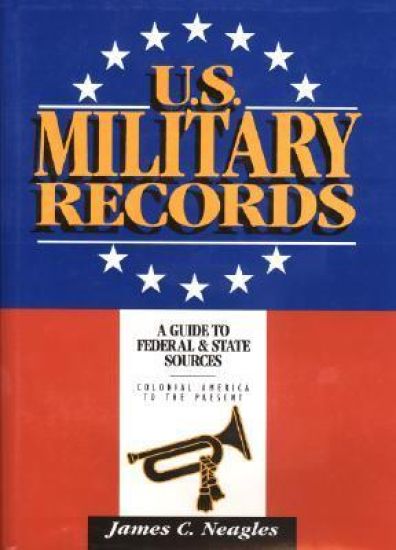
U.S. Military Records

U.S. Military Records

James C. Neagles

Ancestry.com
1994
sidottu
From the earliest days of the United States, millions of Americans have served their country in the military. Indeed, most families have seen one or more members serve in America's armed forces. For this reason, genealogists and others wisely look to military records for information needed to enhance their research. Enlistment forms, muster rolls, pension applications . . . records created as a result of individuals' military service are extremely valuable because they often contain detailed personal information about their subjects?date and place of birth, places of residence, names and addresses of loved ones, and more. The researcher's dilemma is in knowing what records are available and how to find them among the overwhelming abundance of military records. James Neagles' U.S. Military Records is the answer to this dilemma. U.S. Military Records describes the records that are available and where they can be found. Gathered in this volume is source information for the National Archives and its adjuncts; historical institutions and archives of the armed forces; the Department of Veterans Affairs (Veterans Administration); state archives, libraries and historical organizations; and such patriotic organizations as the Daughters of the American Revolution. Extensive bibliographic listings of published sources for the United States in general and published sources for each state are also included.
Our Lady of the North

Our Lady of the North

James C. Mitchell

Rafter Five Press
2012
nidottu
Somebody is killing immigration lawyer Carla Baca's clients. She hires Brinker to investigate, setting up his most dangerous case ever.From Tucson to Mexico to parts of Los Angeles that tourists seldom see, Brinker follows leads in seemingly-unrelated murders, before stumbling into mass killings in the southwestern desert.Two-time Shamus Award nominee James C. Mitchell delivers the best Brinker yet, marked by the colorful characters, shrewd plotting and on-target detail that earned the Brinker series rave reviews.
Cuestionario de Manejo de Estrés (Cme): "learning to Thrive, Not Just Survive, in a World of Stress."
STRESS MANAGEMENT QUESTIONNAIRE (SMQ) - Spanish Version The Stress Management Questionnaire (SMQ) is available to both individuals as well as trainers and stress management professionals to use in their stress management programs. Essentially, anyone can take the SMQ to identify their own unique stress risk levels. Over the past 30 years, the SMQ has helped more than 600,000 individuals to effectively manage their stress. As a result, the SMQ has become an integral part of many corporate stress management programs and wellness/health centers around the world. Now, the SMQ is available to the public for personal self-development and stress relief...right at home. Dr. James Petersen, noted psychologist and stress researcher, designed the SMQ to help "stressed-out" individuals and those under chronic stress to gain a better understanding of their stressors, personal stress warning signs and how stress maybe effecting one's health and life satisfaction. The SMQ is founded on decades of scientific research (NIOSH, 1980). It is used by individuals for self-development and has been adopted by trainers for use in corporate stress management programs and seminars. How it works. After answering 87 scientifically developed questions, a personal Stress Risk Profile is produced; i.e., from Low to High Risk on the 11 SMQ stress scales. To obtain one's risk levels on the scales, each person's score is compared to the norm group that was used to establish the SMQ. Some of the SMQ scales are: Anger, Burnout, Tension, Perfectionism, Time Urgency and 6 more. The Stressmastery Guide is an important part of the SMQ. It describes and defines the purpose of each SMQ scale, what a "Risk" score means and, then, offers a "roadmap" or plan for personal change. The Guide is a comprehensive source of techniques and strategies that have been proven successful in preventing, reducing and managing stress...wherever or wherever it may occur. The SMQ is appropriate for anyone experiencing stress and can be completed by oneself or included as part of any stress management program. An Online SMQ version is available from www.Stressmaster.com.
Stress Mastery Questionnaire

Stress Mastery Questionnaire

James C Petersen

Stressmaster
2016
pokkari
THE STRESS MASTERY QUESTIONNAIRE -SMQ The Stress Mastery Questionnaire (SMQ) was created by Dr. James Petersen, an internationally recognized psychologist, author and stress mastery expert. The SMQ is considered the "gold standard" for helping people to understand how stress is affecting them, how to recognize their personal stress warning signs, and how to make the changes necessary to reduce and master stress.The SMQ reflects the philosophy that stress can be mastered by first assessing the source of stress. The SMQ provides detailed and valid information about one's stress and how stress may be affecting them. The eleven (11) SMQ stress scales provides key information about stress in three main domains: 1. STRESS WARNING SIGN SCALESHostility/AngerPerfectionismTime-UrgencyDisappointmentBurnoutUnderachievementTension2. STRESS EFFECTS SCALESPhysical Stress EffectsLife Work Satisfaction3. STRESSOR SCALES Life EventsHasslesThe SMQ can be used as a personal self-improvement program or may be integrated into a broader stress management training or coaching program. Over 600,000 individuals and hundreds of companies have benefited from use by trainers, stress coaches, EAP programs, management consultants and mental health professionals, including Citicorp/Banamex (Mexico), JPMorgan, Nationwide Insurance, Speedway, LLc, KPMG, Federal Reserve Bank of SF, State of Arizona and many more. The SMQ is more than a stress assessment, it includes a comprehensive Stress Mastery Guide and Workbook with specific recommendations as to "WHAT TO KNOW" and "WHAT TO DO" when one scores high on any of the scales. An online version of the SMQ is also available at www.StressMaster.com or [email protected]
Stress Mastery Guide and Workbook

Stress Mastery Guide and Workbook

James C Petersen

R. R. Bowker
2019
pokkari
ABOUT THE STRESS MASTERY GUIDE AND WORKBOOKThe Stress Mastery Guide and Workbook, created by internationally recognized stress psychologist, author and stress coach, provides essential information for understanding and interpreting the results from the Stress Mastery Questionnaire (SMQ). The SMQ, that is taken online, is a powerful self-assessment tool that anyone can take to assess one's stress and how stress may be affecting one's health, quality of life and productivity. To take the SMQ, purchase this Guide and Workbook and then contact Stressmaster International to receive a link to take the SMQ online along with your Access Code. Email to [email protected] with heading "Please send Link and Access Code."The Stress Mastery Guide and Workbook helps one change to a less stressed and a better quality of life, whether at work or home. There are four steps to become Stress Mastery. . .ASSESS. Using the SMQ and other tools you will learn about more abut yourself and why stress is occurring in your work or home life. FEEDBACK. Using the Stress Mastery Report that has been provided, you will see the behaviors and attitudes, both internal and external, that drive your stress and you will be able help you to know what to change. LEARN. This Guide and Workbook provides the latest evidence-based tools, techniques and approaches to stress mastery and resilience. With this information you will be armed for not only knowing what to change, but how to develop better skills to reduce and master stress. CHANGE. Change requires nor only information, but also the self-motivation to change, along with a personal plan to make the change you want...happen WHAT IS THE SMQ?The SMQ is both a personal stress "risk" assessment and an educational tool that can help you to identify and understand your Stress Warning Signs, types of Stressors you are currently facing and the possible Effects of Stress on your health and well-being. The STRESS MASTERY GUIDE AND WORKBOOK provides information on the meaning of each Stress Mastery Questionnaire (SMQ) scale along with WHAT TO KNOW and WHAT TO DO if you scored high on any given scale. Use the Guide as a workbook for personal development and change. The SMQ is comprised of 11 scales in three (3) separate stress categories; they are: I - STRESS WARNING SIGN SCALEThe Stress Warning Sign Scales are the result of a validation study conducted and funded by the National Institute of Occupational Safety and Health (Petersen, J. and Lawrence, H. NIOSH, 1982). The specific scales are: Hostility/Anger (HO), Perfectionism (PE), Time-Urgency (TI), Disappointment (DI), Burnout (BR), Underachievement (UA), Tension (TE)II - STRESS EFFECTS SCALESThe Stress Effects Scales shows how stress may be affecting you at both a physical and emotional level. The two scales are: Physical Stress Effects (PE) & Life Work Satisfaction (LW)III - STRESSOR SCALES The Stressor Scales reflect the two major types of stressors that are known to be a cause or "trigger" of the stress response. The two scales are: Life Events (LE) & Hassles (HA)
Small Steps Toward the Missing Peace: A Memoir

Small Steps Toward the Missing Peace: A Memoir

James C. Juhnke

Flying Camel Publications
2011
nidottu
Small Steps Toward the Missing Peace chronicles the author's journey as a Mennonite peace activist, college teacher, and historian. The book traces Juhnke's story from his early moral formation in a Mennonite community in Kansas to writing the book that crowned his career, The Missing Peace: The Search for Nonviolent Alternatives in United States History. (2001) The central theme of Small Steps is the tension between Christian pacifism and American militarism. Juhnke tells about the people and events that shaped his understanding of America in the light of Christian ideals in his youth, academic preparation, overseas experiences (Germany, Botswana, China), college teaching, and political involvements. The memoir culminates with the publication and reception of The Missing Peace. That book, co-authored with Carol Hunter, is a revisionist interpretation of main themes in United States history from the viewpoint of peace values.
They Gotta Sleep Sometime

They Gotta Sleep Sometime

James C Paavola

Strauss Consultants
2011
pokkari
Memphis Police Lieutenant Julia Todd returns in the second installment in the Murder in Memphis series. She is concerned when she learns that three of her elderly aunt's high school classmates have died in their hosptial beds within the past six months. Her investigation takes her to the halls of Central High School, class of 1948, where she discovers a clique who bullied students considered to be different. Now sixty years later, the dead bodies of these bullies are piling up. Todd and her team scramble to prevent a fourth murder, then a fifth. Many have been harassed by bullies. For some, being bullied can be traumatic, life-altering--characterized by fear, anxiety and social isolation, affecting every decision they will make in life. Revenge is one of those decisions.
Divine Power Plays Against the Strategies of Satan

Divine Power Plays Against the Strategies of Satan

James C. Hash

St. Peter World Outreach Center
2011
nidottu
If there were ever a time that the Church needed to know and recognize the voice of God, it is today. The wind of adversity is blowing throughout the world, and society is plagued with a spirit of uncertainty. Our nations' leaders are constantly developing strategies to fix the problems our country faces, but they have no real answers. At best, they hope their ideas will be effective, but the kind of hope the world exercises is unstable because it has no substance. On the other hand, God's Word has the kind of substance that gives the born-again believer true hope-the confident, joyful expectation that he can endure and survive in troubled times. Satan, who is our enemy, has planned a battle strategy against the Church-five plays to defeat and ultimately wipe out God's people. Through these weapons, he has caused millions of Christians to live defeated lives. God has made you to be more than a conqueror. But to overcome the forces the enemy throws at you means you must fight-take your stand and defend what is rightfully yours. All that separates a winner from a loser is the decision to be a winner. Only you can decide to win. Get in the fight. Don't run from responsibility. Jesus was a fighter and a warrior and He desires that you be one as well. This book will show you how to develop both defensive and offensive plans to defeat the five strategic plays included in Satan's playbook-how to become a winner in a world of quitters and losers. Fight for your liberty. Fight for your family. Fight for your blessings, your marriage, your relationships and your life. Fight to keep your mind free from demonic oppression, and speak the right words in every situation. Fight to receive everything God has promised you in His Word Fight the good fight of faith