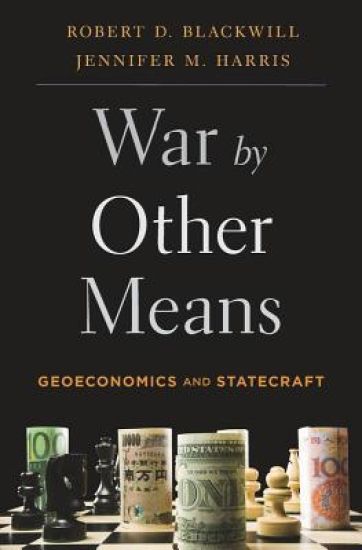
A Foreign Affairs Best Book of 2016Today, nations increasingly carry out geopolitical combat through economic means. Policies governing everything from trade and investment to energy and exchange rates are wielded as tools to win diplomatic allies, punish adversaries, and coerce those in between. Not so in the United States, however. America still too often reaches for the gun over the purse to advance its interests abroad. The result is a playing field sharply tilting against the United States.“Geoeconomics, the use of economic instruments to advance foreign policy goals, has long been a staple of great-power politics. In this impressive policy manifesto, Blackwill and Harris argue that in recent decades, the United States has tended to neglect this form of statecraft, while China, Russia, and other illiberal states have increasingly employed it to Washington’s disadvantage.”—G. John Ikenberry, Foreign Affairs“A readable and lucid primer…The book defines the extensive topic and opens readers’ eyes to its prevalence throughout history…[Presidential] candidates who care more about protecting American interests would be wise to heed the advice of War by Other Means and take our geoeconomic toolkit more seriously.—Jordan Schneider, Weekly Standard
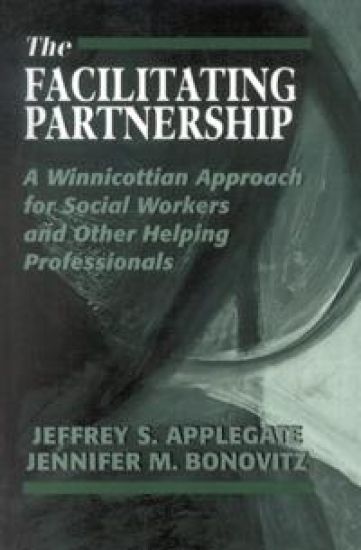
A young mother suspected of abusing her toddler, a severely behavior-disordered teenager who faces expulsion from his community residence, a depressed and illiterate homeless man who fears psychiatric evaluation. These clients populate the caseloads of most mental health professionals, who often view them as too crisis-ridden, deprived, and overwhelmed with concrete needs to benefit from an in-depth approach to their problems. However, without this kind of treatment, such people continually reappear at social service agencies, their core psychological issues left unaddressed and their life situations unraveling. What can psychoanalytic theory offer practitioners working with these challenging clients? Although the helping professions have enjoyed a long and fruitful association with psychoanalysis, often the application of this theory has focused on treating motivated, articulate, financially secure clients in private practice. In The Facilitating Partnership, Jeffrey Applegate and Jennifer Bonovitz show how D. W. Winnicott's therapeutic ideas and technique are particularly relevant to a agency-based psychodynamic treatment of clients whose histories of deprivation and trauma historically have made them unlikely—and reluctant—candidates for in-depth clinical services. Winnicott's concepts are especially powerful in capturing the "silent," supportive, sustaining, relationship-based dimensions of clinical work and the authors provide an accessible language for explicating these invaluable activities. Through extensive case vignettes, Applegate and Bonovitz demonstrate that interventions emerging from Winnicott's key concepts—the good enough mother, the holding environment—can bolster clients' ego strengths and coping capacities while promoting their psychosocial development in ways that help them profoundly alter maladaptive life patterns. A Jason Aronson Book
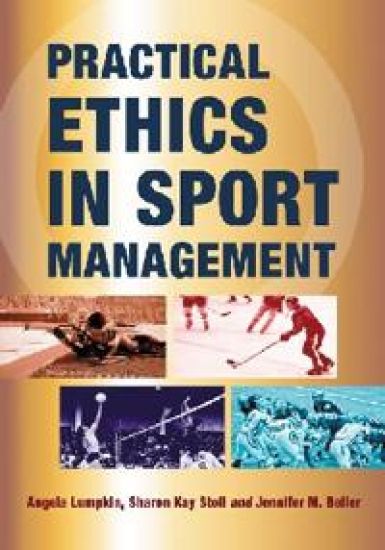
Leaders and managers throughout the sporting world face many ethical challenges on a daily basis. Should an athletic director chastise an unruly but influential supporter? What factors should affect an athlete's eligibility? Is competitiveness acceptable in youth sports? This text shows aspiring sports management professionals how to identify the moral issues in sports and develop principle-centered leadership practices to lead with justice, honesty, and beneficence. Among the issues addressed are the conflict between sportsmanship and gamesmanship, violence in sports, racial and gender equity, performance-enhancing drugs, academics, and commercialization. Throughout, specific examples from real-world sports situations and reflective questions encourage students to think critically. Instructors considering this book for use in a course may request an examination copy here.
Empire and Community provides the first comprehensive presentation of Edmund Burke’s thinking on international relations. Although Burke’s writings and speeches have been the subject of much analysis and controversy, his perspective on international relations has not been fully addressed by the scholarly community. David P. Fidler and Jennifer M. Welsh establish Burke as a “classical thinker” on international relations and help to situate his thinking within current international relations theory. Their detailed introduction is followed by edited selections from Burke’s writings and speeches on Ireland, America, India, and the French Revolution.
Quilts and Color presents more than sixty graphically bold American quilts from the Pilgrim/Roy Collection, one of the finest and largest collections of quilts in the world. These collectors recognized that quilt makers often grappled with the same concerns as many modern artists. Influenced by twentieth-century art developments such as Abstraction, Op Art and the Colour Field movement, Paul Pilgrim and Gerald Roy were among the first to appreciate quilts as more than simply decorative bedcovers, women’s fancy work, or symbols of a rustic past. Reproduced brilliantly and arranged by ideas based in colour theory – Vibrations, Mixtures, Gradation Harmonies, Contrasts, Variations, Optical Illusions and Singular Visions – each quilt in this book is celebrated as a unique work of art. The accompanying text also sheds light on the social and cultural history of the quilts as well as the practices and aspirations of their mostly anonymous makers, who created such works of enduring beauty and arresting visual impact.
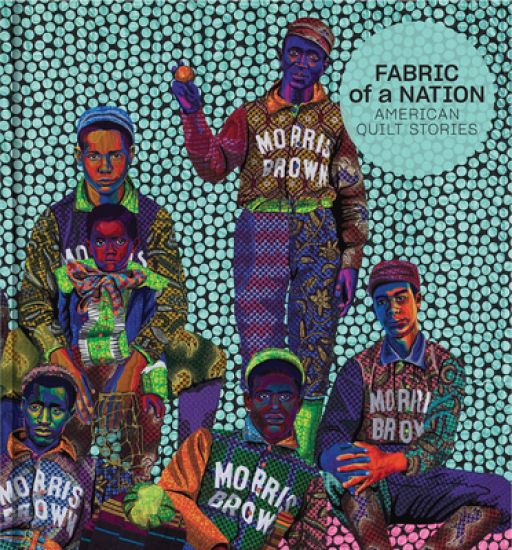
A mother stitches a few lines of prayer into a bedcover for her son serving in the Union army during the Civil War. A formerly enslaved African American woman creates a quilt populated by Biblical figures alongside celestial events. A quilted Lady Liberty, George Washington, and Abraham Lincoln mark the resignation of Richard Nixon. These are just a few of the diverse and sometimes hidden stories of the American experience told by quilts and bedcovers from the collection of the Museum of Fine Arts, Boston. Spanning more than four hundred years, the fifty-eight works of textile art in this book express the personal narratives of their makers and owners and connect to broader stories of global trade, immigration, industry, marginalisation, and territorial and cultural expansion. Made by Americans of European, African, Native, and Hispanic heritage, these engaging works of art range from family heirlooms to acts of political protest, each with its own story to tell.
This important book offers unique insight into the experience of foster youth from 27 countries around the world. It provides a systematic review of literature reporting the experiences of youth in care, addressing a wide range of key topics in this multidisciplinary field, and presenting the views and perceptions of these young people.Including a meta-analysis on contact with birth parents, it examines youth’s experiences of the foster care system; contact and relationships; caregiving and relationships with caregivers; placements; and emotional well-being. These five core themes embrace a wide range of crucial topics including foster youth’s involvement in decisions about themselves; interactions with social workers, birth families, foster families, peers, and friends; the benefits and challenges of foster care; the stigma attached to being in care; mental health, well-being, and belonging; and developing a sense of self.This essential volume is for students and scholars of child and adolescent development, social work, education, sociology, and public health. Illustrated with quotes from former and current foster youth, and with research-based recommendations for best practices in foster care, it is also for professional social workers, psychologists, child advocates, children’s therapists, children’s attorneys, youth workers, and foster parents.
This important book offers unique insight into the experience of foster youth from 27 countries around the world. It provides a systematic review of literature reporting the experiences of youth in care, addressing a wide range of key topics in this multidisciplinary field, and presenting the views and perceptions of these young people.Including a meta-analysis on contact with birth parents, it examines youth’s experiences of the foster care system; contact and relationships; caregiving and relationships with caregivers; placements; and emotional well-being. These five core themes embrace a wide range of crucial topics including foster youth’s involvement in decisions about themselves; interactions with social workers, birth families, foster families, peers, and friends; the benefits and challenges of foster care; the stigma attached to being in care; mental health, well-being, and belonging; and developing a sense of self.This essential volume is for students and scholars of child and adolescent development, social work, education, sociology, and public health. Illustrated with quotes from former and current foster youth, and with research-based recommendations for best practices in foster care, it is also for professional social workers, psychologists, child advocates, children’s therapists, children’s attorneys, youth workers, and foster parents.
Because fluency practice is not a worksheet. Fluency in mathematics is more than adeptly using basic facts or implementing algorithms. It is not about speed or recall. Real fluency is about choosing strategies that are efficient, flexible, lead to accurate solutions, and are appropriate for the given situation. Developing fluency is also a matter of equity and access for all learners. The landmark book Figuring Out Fluency in Mathematics Teaching and Learning offered educators the inspiration to develop a deeper understanding of procedural fluency, along with a plethora of pragmatic tools for shifting classrooms toward a fluency approach. Now, teachers have the chance to apply that inspiration through explicit instruction and practice every day with the classroom companion Figuring Out Fluency: Addition and Subtraction with Whole Numbers. With this book, teachers can: • Dive deeper into the Significant Strategies for fluency explained in the anchor book • Learn how these strategies grow from and relate to the basic fact strategies children learn • Access over 100 strategy-aligned and classroom-ready activities for fluency instruction and practice in adding and subtracting multi-digit whole numbers, including worked examples, routines, games, and centers • Find activities for assessing all components of addition and subtraction fluency plus support for engaging families • Download all of the needed support tools, game boards, and other resources from the companion website for immediate implementation. Give each and every student the knowledge and power to become skilled and confident mathematical thinkers and doers.
Because fluency practice is not a worksheet. Fluency in mathematics is more than adeptly using basic facts or implementing algorithms. It is not about speed or recall. Real fluency is about choosing strategies that are efficient, flexible, lead to accurate solutions, and are appropriate for the given situation. Developing fluency is also a matter of equity and access for all learners. The landmark book Figuring Out Fluency in Mathematics Teaching and Learning offered educators the inspiration to develop a deeper understanding of procedural fluency, along with a plethora of pragmatic tools for shifting classrooms toward a fluency approach. Now, teachers have the chance to apply that inspiration through explicit instruction and practice every day with the classroom companion Figuring Out Fluency: Multiplication and Division with Whole Numbers. With this book, teachers can: • Dive deeper into the Significant Strategies for fluency explained in the anchor book • Learn how these strategies grow from and relate to the basic fact strategies children learn • Access over 100 strategy-aligned and classroom-ready activities for fluency instruction and practice in multiplying and dividing multi-digit whole numbers, including worked examples, routines, games, and centers • Find activities for assessing all components of multiplication and division fluency plus support for engaging families • Download all of the needed support tools, game boards, and other resources from the companion website for immediate implementation. Give each and every student the knowledge and power to become skilled and confident mathematical thinkers and doers.
Because fluency practice is not a worksheet. Fluency in mathematics is more than basic facts or using algorithms. It is not about recall or speed. Real fluency is about choosing strategies that are efficient, flexible, lead to accurate solutions, and are appropriate for the given situation. Developing fluency is a matter of equity and access for all learners. The landmark book Figuring Out Fluency in Mathematics Teaching and Learning offered educators the inspiration to develop a deeper understanding of procedural fluency. It explained the seven Significant Strategies for fluency and offered a plethora of pragmatic tools for shifting classrooms toward a greater fluency approach. However, in order to become truly adept with these strategies, children must first have certain underlying foundational concepts and skills in place. Figuring Out Fluency-Ten Underlying Foundations for Reasoning Strategies with Whole Numbers explores the ideas that are essential to reasoning: Number Relationships; Subitizing and Decomposing; Distance to 10, 100, and 1,000; Counting and Skip-Counting; Properties of Addition and Its Inverse Relationship with Subtraction; Properties of Multiplication and Its Inverse Relationship with Division; Multiplying by 10s and 100s; Multiples and Factors; Doubling and Halving; and Computational Estimation. With this book, elementary teachers can Help children develop these foundational understandings, critical to reasoning and number sense.Leverage over 100 classroom-ready routines, centers, and games to develop these concepts both in first instruction, practice, and intervention.Download all of the needed support tools, game boards, and other resources from the companion website for immediate implementation Develop each and every students’ knowledge and power to become skilled and confident mathematical thinkers and doers.
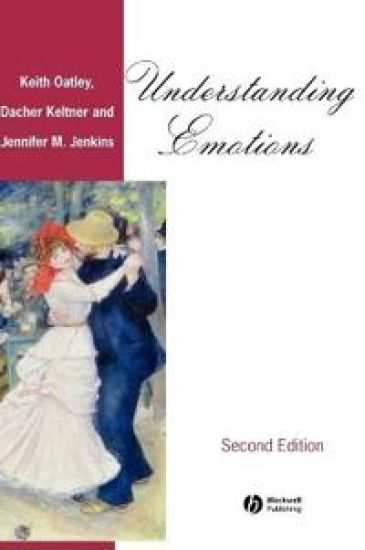
Emotions are an inescapable part of the human experience. They motivate actions and reactions, guide our interpersonal and business relationships, inspire political and societal trends, and influence our sense of self and well-being. Emphasizing the broad practical reach of this field of study, Understanding Emotions draws from neuroscience, psychiatry, biology, genetics, the humanities, economics, and more to provide a strong foundation in core concepts. An easy-to-follow narrative arc encompasses the entire life span, while representative studies provide immediate insight into the real-world implications of important findings. This new Fourth Edition continues to provide clear and concise guidance toward the factors that drive emotion, with new, revised, and expanded discussions that reflect the current state of the field. Detailed coverage of social and anti-social motivations, moral judgment, empathy, psychological disorders, the physiological components of emotion, and many more equip students with the conceptual tools to probe deeper into the material and apply methods and techniques to their own personal lives.
Keith Oatley and Jennifer M. Jenkins’s best-selling book on the psychology of emotions is the most highly regarded and engaging text for the emotions course. While retaining its interdisciplinary breadth, historical insights, and engaging format, this new edition adds the expertise of outstanding researcher and dedicated teacher Dacher Keltner. The second edition has been thoroughly updated to reflect the latest research and developments in emotions and includes the following features: Cohesive synthesis of evolutionary and cultural approaches to emotionNew chapters on communication of emotion, bodily changes, and appraisalIncreased emphasis on interpersonal implications of emotions, including studies of newly discovered expressions and systems of communicationNew coverage on moral judgment, individual differences, gene-environment interactions, and positive emotionsNew coverage of subjective well-being and pro-social emotions like gratitude and compassionUpdated references throughout reflect current research and data, including research on affective neuroscienceA new design and pedagogical features include new integrated boxes that depict historical landmarks and historical figures, updated tables, boldfaced terms, and end-of-chapter summaries. An Instructor's Manual with lecture notes and teaching tips is available upon request. Please visit www.blackwellpublishing.com/oatley.
Peopled Leadership is a new dynamic model aimed at creating new leaders and new futures. It is people centric and people oriented with a focus on developing and empowering others, serving with humility, and expressing gratitude. Peopled Leadership provides the much-needed shift from accountability and outcomes focused driven leadership behaviors to behaviors that focus on people, while assuring accountability and organizational improvement. Peopled Leadership is a model which orients a leader’s focus on people and their commitment to the people, organizations, communities, and institutions they serve. This new model empowers others to lead, be innovative, engage in collaboration, solve complex problems, and further outcomes. The result of Peopled Leadership is the transformation of people and the transformation of practices that mitigate the complexities intrinsic to peopled organizations.
Peopled Leadership is a new dynamic model aimed at creating new leaders and new futures. It is people centric and people oriented with a focus on developing and empowering others, serving with humility, and expressing gratitude. Peopled Leadership provides the much-needed shift from accountability and outcomes focused driven leadership behaviors to behaviors that focus on people, while assuring accountability and organizational improvement. Peopled Leadership is a model which orients a leader’s focus on people and their commitment to the people, organizations, communities, and institutions they serve. This new model empowers others to lead, be innovative, engage in collaboration, solve complex problems, and further outcomes. The result of Peopled Leadership is the transformation of people and the transformation of practices that mitigate the complexities intrinsic to peopled organizations.
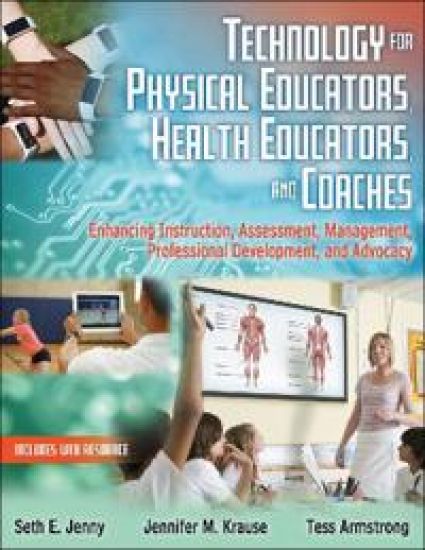
A wide variety of technology is available to physical educators, health teachers, and coaches-but technology is only helpful if people know how to use it effectively. This text will help health and physical education teachers and coaches improve their abilities by learning to effectively use technology in the areas of instruction, assessment, management, communication, professional development, and advocacy. The effective use of technology as outlined in this book can improve student and athlete performance and assessment and motivate active and healthy lifestyles among students. An important distinction with this book is that it goes beyond simply discussing the technology tools-it helps readers understand how to use technology to improve instruction. Practical examples of how to use various technological tools are included for different settings and a variety of age groups (child to adult). Readers will learn about the effective use of technology in physical education, health education, and coaching.Technology for Physical Educators, Health Educators, and Coaches is a practical, hands-on text that offers a number of useful tools: What Does the Research Say? sidebars that provide evidence for which technologies do and do not work in physical education, health education, and sport coaching, with accompanying explanationsTips, examples, and interviews from seasoned professionals on various types of technologyChapter objectives, key terms, review questions, and open-ended discussion questions, which could prove useful for online discussion boardsInstructor ancillaries, including PowerPoint presentations and learning management system (LMS)–ready quizzes for each chapter, that help instructors organize, plan, teach, and assess content effectivelyOnline web resource that offers a variety of tools, including additional practitioner interviews; links to websites, videos, and podcasts; sample handouts, and other activities and resources from practicing professionals. The online web resource will be updated annually to keep current with the changing technology.Social media accounts (@Tech4HPECoach) on Twitter and Facebook allow readers to further connect and share ideas. Use the hashtag #Tech4HPECoach across various social media platforms too! (The web resource is included with all new print books and some ebooks. For ebook formats that don’t provide access, the web resource is available separately.) The text is organized into six parts. Part I focuses on how technology can assist in meeting specific goals, objectives, and national standards within physical education, health education, and sport coaching. Part II covers technology for class and team management as well as communication technology, while part III explores how to leverage technology to facilitate teaching and learning, including within a traditional classroom, online, and with special populations. The authors address how to use technology for assessment in part IV, and part V delves into how technology can benefit professional development and advocacy. In part VI, the authors detail the all-important legal and financial aspects of technology.
A collection of poetry and prose about Christmas by members of The Informal Writers group of Loughborough. With illustrations by J. M. Harker and front cover illustration by Alison Mott.