Kirjojen hintavertailu. Mukana 11 717 486 kirjaa ja 12 kauppaa.

Kirjahaku

Etsi kirjoja tekijän nimen, kirjan nimen tai ISBN:n perusteella.

1000 tulosta hakusanalla Joyce Rodgers

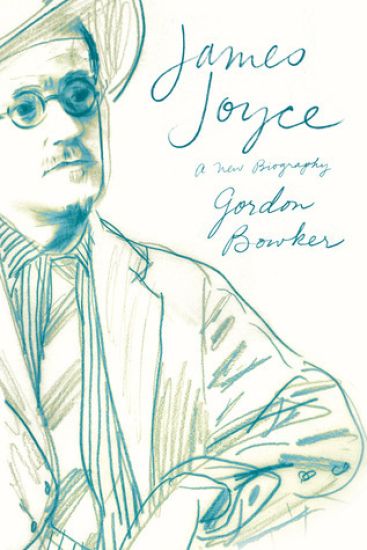
James Joyce

James Joyce

Gordon Bowker

Farrar, Straus and Giroux
2013
nidottu
A revealing biography of one of the twentieth century's towering literary figures James Joyce is one of the greatest writers of the twentieth century, foundational in the history of literary modernism. Yet Joyce's genius was not immediately recognized, nor was his success easily won. At twenty-two the author chose a life of exile; he battled poverty and financial dependency for much of his adult life; his out-of-wedlock relationship with Nora Barnacle was scandalous for the time; and the attitudes he held toward Ireland, England, sexuality, politics, Catholicism, popular culture--to name a few--were complex, contradictory, and controversial. In James Joyce, Gordon Bowker, draws on material recently come to light and reconsiders the two signal works produced about Joyce's life--Herbert Gorman's authorized biography of 1939 and Richard Ellmann's magisterial tome of 1959. By intimately binding together the life and work of this singular Irish novelist, Bowker gives us a masterful, fresh, eminently readable contribution to our understanding both of Joyce's personality and of the monumental opus he created. Bowker goes further than his predecessors in exploring Joyce's inner depths--his ambivalent relationships to England, to his native Ireland, and to Judaism--and uncovers revealing evidence. He draws convincing correspondences between the iconic fictional characters Joyce created and their real-life models and inspirations. And he paints a nuanced portrait of a man of enormous complexity, the clearest picture yet of an extraordinary writer who continues to influence and fascinate more than a century after his birth.
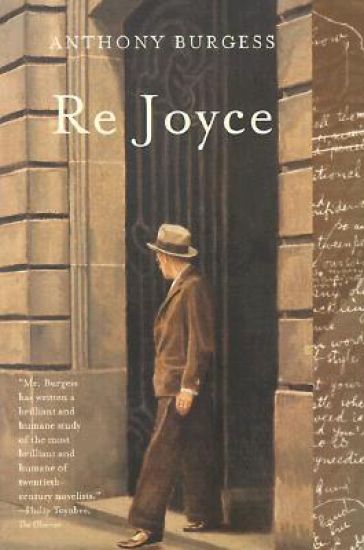
Re Joyce

Re Joyce

Anthony Burgess

W. W. Norton Company
2000
nidottu
A great and inventive writer enjoys himself immensely in discussing and explaining perhaps the most inventive and important writer of the twentieth century. Vigorous, humorous, and perceptive, Anthony Burgess's commentary is an excellent introduction and a valuable companion to reading Joyce.
James Joyce's Ulysses: A Study

James Joyce's Ulysses: A Study

Stuart Gilbert

VINTAGE
1955
pokkari
With the passing of each year, Ulysses receives wider recognition and greater acclaim as a modern literary classic. To comprehend Joyce's masterpiece fully, to gain insight into its significance and structure, the serious reader will find this analytical and systematic guide invaluable. In this exegesis, written under Joyce's supervision, Stuart Gilbert presents a work that is at once scholarly, authoritative and stimulating. "Of the many efforts made to interpret Joyce's magnum opus, the best by far is that by Stuart Gilbert."-- Chicago Sunday Tribune"Most serious Joyce readers owe to Stuart Gilbert their first introduction to the richness and complexity of Ulysses. His monumental pioneer analysis remains an essential Baedeker."-- Saturday Review
James Joyce and Nationalism

James Joyce and Nationalism

Emer Nolan

Routledge
1994
sidottu
James Joyce and Nationalism comprehensively revises our understanding of Joyce by re-examining his writing against Irish Nationalism. In this exciting and provocative book, Emer Nolan looks at the relationship between modernism and nationalism, tracing the applicability of alternative notions of nationalism to the various phases of Joyce's work. Nolan also brings post-colonial and feminist theories to a close re-reading of Joyce's works. This insightful and challenging work provides a polemical introduction to Joyce and is a much needed contribution to the vast field of Joyce studies. James Joyce and Nationalism is a ground-breaking and theoretically engaged intervention into debates about Joyce's politics and the politics of modernism.
James Joyce. Volume I: 1907-27
This set comprises 40 volumes covering nineteenth and twentieth century European and American authors. These volumes will be available as a complete set, mini boxed sets (by theme) or as individual volumes. This second set compliments the first 68 volume set of Critical Heritage published by Routledge in October 1995.
James Joyce. Volume 2: 1928-41
This set comprises 40 volumes covering nineteenth and twentieth century European and American authors. These volumes will be available as a complete set, mini boxed sets (by theme) or as individual volumes. This second set compliments the first 68 volume set of Critical Heritage published by Routledge in October 1995.
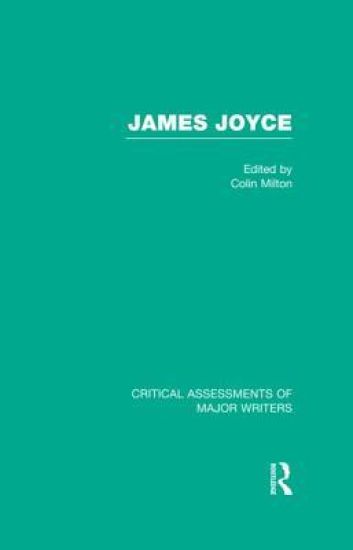
James Joyce
The Collected Critical Heritage II comprises 40 volumes covering nineteenth and twentieth century European and American authors. These volumes will be available as a complete set, mini boxed sets (by theme) or as individual volumes. This second set compliments the first 68 volume set of Critical Heritage published by Routledge in October 1995. The Critical Heritage series gathers together a large body of critical figures in literature. These carefully selected sources include: * comtemporary reviews from both popular and literary media. In these students can read about how Lady Chatterly's Lover shocked contemporary reviewers or what Ibsen's Doll's House meant to the early women's movement. * little-known documentary material, such as diaries and correspondence - often between authors and their publishers and critics. * landmark essays in the history of criticism. * significant pieces of criticism from later periods to demonstrate how an author's reputation changed over time.
James Joyce. Volume I: 1907-27
This set comprises 40 volumes covering nineteenth and twentieth century European and American authors. These volumes will be available as a complete set, mini boxed sets (by theme) or as individual volumes. This second set compliments the first 68 volume set of Critical Heritage published by Routledge in October 1995.
James Joyce. Volume 2: 1928-41
This set comprises 40 volumes covering nineteenth and twentieth century European and American authors. These volumes will be available as a complete set, mini boxed sets (by theme) or as individual volumes. This second set compliments the first 68 volume set of Critical Heritage published by Routledge in October 1995.
James Joyce
James Augustine Aloysius Joyce (1882–1941) is a towering figure in the development of English-language modernist prose fiction. And his influence extends well beyond the anglophone literary world; like his alter ego, Stephen Dedalus, Joyce flew by the nets of nationality, language, and religion, and spent most of his life in continental Europe.The significance of Joyce’s oeuvre—particularly the later and more radical prose works—far outweighs the modesty of its bulk: only two books of verse, a play, one collection of short stories, and three novels (using that term in its most elastic sense) were published in his lifetime. But the combination of a modest output with an increasingly audacious experimentalism has generated interpretative and critical commentary on a vast and bewildering scale. Joyce attracted serious attention (not always favourable) from virtually every significant writer of the age: elder statesmen like Yeats recognized his importance, as did members of his own generation, such as Pound, Eliot, and Lawrence. The major American critics of the era, like Edmund Wilson and Lionel Trilling, and, in France, Eugene Jolas and Jacques Mercanton, also responded with enthusiasm to his work, as did Cyril Connolly and F. R. Leavis in Britain. Joyce’s work has also lent itself to approaches informed by contemporary theory—whether new critical, formalist, structuralist, deconstructionist, feminist, or materialist—such that the development of Joycean criticism maps the spread and transmutations of ‘theory’ and illustrates its applications.So, while the prospective reader of Ulysses or Finnegans Wake is likely to feel a compelling need for some preparation before consuming the text itself, the daunting quantity (and variable quality) of Joyce criticism makes it difficult to discriminate the useful from the tendentious, superficial, and otiose. That is why this new Routledge title is so urgently needed. In four volumes, the collection meets the need for an authoritative reference work to allow researchers and students to make sense of the vast Joycean literature and the continuing explosion in research output. Users will now be able easily and rapidly to locate the best and most influential critical scholarship, work that is otherwise often inaccessible or scattered throughout a variety of specialist journals and books. With material gathered into one easy-to-use set, researchers and students can now spend more of their time with the key journal articles, book chapters, and other pieces, rather than on time-consuming (and sometimes fruitless) archival searches.Fully indexed and with a comprehensive introduction newly written by the editor, which places the collected material in its historical and intellectual context, James Joyce is an essential reference work and is destined to be valued as a vital research resource.
James Joyce and Nationalism

James Joyce and Nationalism

Emer Nolan

Routledge
2014
nidottu
James Joyce and Nationalism comprehensively revises our understanding of Joyce by re-examining his writing against Irish Nationalism. In this exciting and provocative book, Emer Nolan looks at the relationship between modernism and nationalism, tracing the applicability of alternative notions of nationalism to the various phases of Joyce's work. Nolan also brings post-colonial and feminist theories to a close re-reading of Joyce's works. This insightful and challenging work provides a polemical introduction to Joyce and is a much needed contribution to the vast field of Joyce studies. James Joyce and Nationalism is a ground-breaking and theoretically engaged intervention into debates about Joyce's politics and the politics of modernism.
James Joyce, Science, and Modernist Print Culture
This book makes an important intervention in the ongoing debates about modernism, science, and the divisions of early Twentieth-Century print culture. In order to establish Joyce's place in the nexus of modernism and scientific thought, Drouin uses the methods of periodical studies and textual criticism to examine the impact of Einstein's relativity theories on the development of Ulysses (1922) and Finnegans Wake (1939). Looking at experiments with space, time, motion, and perspective, it rigorously surveys discourse of science and the novel in the print culture networks connected to Joyce, with concrete analysis of avant-garde magazines, newspapers, popular science books, BBC pamphlets, and radio broadcasts between 1914 and 1939. These sources elucidate changes that Joyce made to the manuscripts, typescripts, and page proofs of certain episodes of his final two novels. The new evidence establishes for the first time the nature of the material link between Joyce and non-technical science, and the manner in which Ulysses and Finnegans Wake owe their structure and meaning to the humanistic issues associated with science during the wartime and inter-war years. In examining the relationships between Joyce's later work and the popular science industry, the book elucidates the often conflicting attitudes toward science in inter-war British print culture, filling in a piece of the puzzle that is modernism's relationship to the new physics and, simultaneously, the history of the novel.
Quare Joyce

Quare Joyce

The University of Michigan Press
2000
nidottu
Much of the most influential work on Joyce over the last decade has been devoted to the study of gender representation, performance, privilege, and anxiety. Among other results, this work has made the heterosexual imperative visible as an arbitrary ideological limit. Now, in Quare Joyce, some of the most prominent scholars of Joyce address themselves directly to questions of homoerotic desire in Joyce's work, drawing on and furthering queer theory in a dazzling set of essays.Beyond simply locating another layer of cultural import in Joyce's endlessly rich oeuvre, this project reconstructs a whole other creative and critical history for his writing. The twelve essays, organized in pairs under the headings "Intersexualities," "Rethinking the Closet," "Homophobia and Misogyny," "Homocolonial Relations," "Joyce's Lesbian Other," and "Recent Controversies," explore the range of Joyce's work, from "An Encounter" through Finnegans Wake, and take on three related tasks: to redress the compulsory heterosexuality that has traditionally hampered even the most sophisticated and progressive scholarship on Joyce; to import a queer theory perspective; and to take up the manifold question of homosexuality as it pertains to the always slippery articulation of Joyce's life and work.Quare Joyce will directly interest not only Joyceans, modernists, and students of Irish literature, but also scholars in the fields of postcolonial and queer theory, gay and cultural studies. As the only book on its subject, it will be necessary reading for upper-level undergraduate and graduate students and will prove useful in the classroom.Joseph Valente is Associate Professor of English and Interpretive Theory, University of Illinois at Urbana-Champaign.
Quare Joyce

Quare Joyce

The University of Michigan Press
1998
sidottu
Much of the most influential work on Joyce over the last decade has been devoted to the study of gender representation, performance, privilege, and anxiety. Among other results, this work has made the heterosexual imperative visible as an arbitrary ideological limit. Now, in Quare Joyce, some of the most prominent scholars of Joyce address themselves directly to questions of homoerotic desire in Joyce's work, drawing on and furthering queer theory in a dazzling set of essays.Beyond simply locating another layer of cultural import in Joyce's endlessly rich oeuvre, this project reconstructs a whole other creative and critical history for his writing. The twelve essays, organized in pairs under the headings "Intersexualities," "Rethinking the Closet," "Homophobia and Misogyny," "Homocolonial Relations," "Joyce's Lesbian Other," and "Recent Controversies," explore the range of Joyce's work, from "An Encounter" through Finnegans Wake, and take on three related tasks: to redress the compulsory heterosexuality that has traditionally hampered even the most sophisticated and progressive scholarship on Joyce; to import a queer theory perspective; and to take up the manifold question of homosexuality as it pertains to the always slippery articulation of Joyce's life and work.Quare Joyce will directly interest not only Joyceans, modernists, and students of Irish literature, but also scholars in the fields of postcolonial and queer theory, gay and cultural studies. As the only book on its subject, it will be necessary reading for upper-level undergraduate and graduate students and will prove useful in the classroom.Joseph Valente is Associate Professor of English and Interpretive Theory, University of Illinois at Urbana-Champaign.
James Joyce and the Politics of Egoism

James Joyce and the Politics of Egoism

Jean-Michel Rabaté

Cambridge University Press
2001
pokkari
In James Joyce and the Politics of Egoism a leading scholar approaches the entire Joycean canon through the concept of ‘egoism’. This concept, Jean-Michel Rabaté argues, runs throughout Joyce’s work, and involves and incorporates its opposite, ‘hospitality’, a term Rabaté understands as meaning an ethical and linguistic opening to ‘the other’. For Rabaté both concepts emerge from the fact that Joyce published crucial texts in the London based review The Egoist and later moved on to forge strong ties with the international Paris avant-garde. Rabaté examines the theoretical debates surrounding these connections, linking Joyce’s engagement with Irish politics with the aesthetic aspects of his texts. Through egoism, he shows, Joyce defined a literary sensibility founded on negation; through hospitality, Joyce postulated the creation of a new, utopian readership. Rabaté explores Joyce’s complex negotiation between these two poles in a study of interest to all Joyceans and scholars of modernism.
James Joyce, Sexuality and Social Purity

James Joyce, Sexuality and Social Purity

Katherine Mullin

Cambridge University Press
2007
nidottu
In James Joyce, Sexuality and Social Purity, Katherine Mullin offers a richly detailed account of Joyce's lifelong battle against censorship. Through prodigious archival research, Mullin shows Joyce responding to Edwardian ideologies of social purity by accentuating the 'contentious' or 'offensive' elements in his work. The censorious ambitions of the social purity movement, Mullin claims, feed directly into Joyce's writing. Paradoxically, his art becomes dependent on the very forces that seek to constrain and neutralize its revolutionary force. Acutely conscious of the dangers censorship presented to publication, Mullin shows Joyce revenging himself by energetically ridiculing purity campaigns throughout his fiction. Ulysses, A Portrait of the Artist as a Young Man and Dubliners all meticulously subvert purity discourse, as Joyce pastiches both the vice crusaders themselves and the imperilled 'Young Persons' they sought to protect. This important book will change the way Joyce is read and offers crucial insights into the sexual politics of Modernism.
James Joyce and the Difference of Language
James Joyce and the Difference of Language offers an alternative look at Joyce's writing by placing his language at the intersection of various critical perspectives: linguistics, philosophy, feminism, psychoanalysis, postcolonialism and intertextuality. Combining close textual analysis and theoretically informed readings, an international team of leading scholars explores how Joyce's experiments with language repeatedly challenge our ways of reading. Topics covered include reading Joyce through translations; the role of Dante's literary linguistics in Finnegans Wake; and the place of gender in Joyce's modernism. Two further essays illustrate aspects of Joyce's cultural politics in Ulysses and the ethics of desire in Finnegans Wake. Informed by debates in Joyce scholarship, literary studies and critical theory, and addressing the full range of his writing, this volume comprehensively examines the critical diversity of Joyce's linguistic practices. It is essential reading for all scholars of Joyce and modernism.
Ethical Joyce

Ethical Joyce

Marian Eide

Cambridge University Press
2009
pokkari
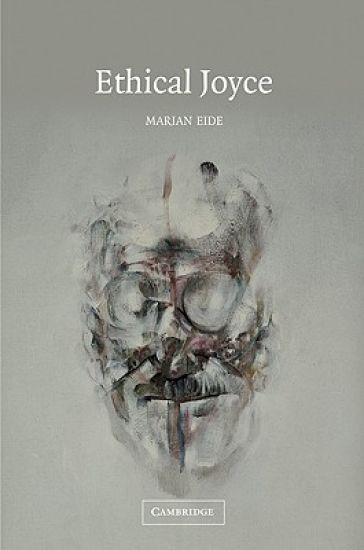
Marian Eide argues that the central concern of James Joyce's writing was the creation of a literary ethics. Eide examines Joyce's ethical preoccupations throughout his work, particularly the tension between his commitment as an artist and his social obligations as a father and citizen during a tumultuous period of European history. Eide argues that his narrative suggestion that ethics, which etymologically signifies both 'character' and 'habitat', might be understood best as an interaction between immediate and intimate processes (character) and more external and enduring structures (habitat). Drawing on feminist theory, Eide focuses on the notions of alterity and difference. The literary ethics developed in this book proceed from a textual focus in order to examine how our assumptions about what it means to read and interpret produce within each reader an implicit ethical practice. This is a study devoted to Joyce's ethical philosophy as it emerges in his writing.