

Kirjahaku
Etsi kirjoja tekijän nimen, kirjan nimen tai ISBN:n perusteella.
1000 tulosta hakusanalla Judith Freeman


Judith Shakespeare Her love affairs and other adventures (Edition1)
Elizabeth Bibesco
Alpha Editions
2025
nidottu

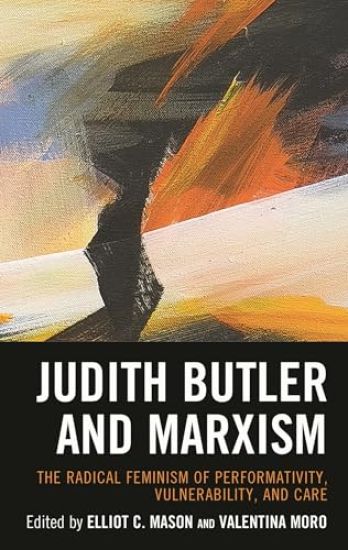
This is the first book to fully study the contentious link between the vastly influential projects of Judith Butler and Marxism. What would a Butlerian Marxism look like? Marxist criticisms of Butler range from careful comparisons of forms to the total dismissal of an unpolitical, merely cultural anarchy. None of these criticisms, however, focuses on what seems to most closely unite these two projects: the universal abolition of the universal. While Marxist communism is focused on the abolition of value and property, Butler is consistently concerned throughout their corpus with the abolition of the subject as the universal form of social relations, an abolition staged by way of a relational ontology and ethics. Their methodologies for achieving abolition, however, vary hugely. Butler’s sees the performativity of subjects and power as an opportunity for differential assembly, Marxists are primarily concerned with the working class as a revolutionary vanguard that withdraws its labor from production. This book explores the possibility of a Butlerian Marxism, understood as abolitionist performativity, differential vulnerability, and generalized practices of care. The essays in this volume attempt to actualize the antagonistic persistence of social particulars, pursuing the abolition of the domination and violence that pervade society with increasing brutality. The three sections of this volumeare structured according to three pivotal political concepts in Butler’s corpus: performativity, vulnerability, and care. Each essay contributes to a possible mutual development of Butler’s and Marxism’s concern with assembly, interdependence, and refusal, forming a revolutionary politics of care.

Judith Martin
OmniScriptum
2026
pokkari

Judith of Babenberg
VDM Publishing House
2010
nidottu
Observera att förlaget som ger ut denna produkt baserar innehållet i sina produkter på fria källor som Wikipedia. Boken är med stor sannolikhet endast ett utdrag ur dessa informationskällor, alltså inte en vanlig bok i den bemärkelsen.

Judith Resnik
OmniScriptum
2026
pokkari

The Judith Butler Reader
Blackwell Publishing Ltd
2003
sidottu
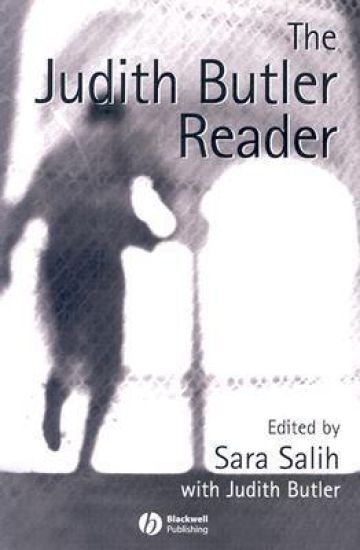
The Judith Butler Reader is a collection of writings that span her impressive career and trace her intellectual history. Judith Butler, author of influential books such as Gender Trouble, has built her international reputation as a theorist of power, gender, sexuality and identityOrganized in active collaboration between Judith Butler and Sara SalihCollects together writings that span Butler’s impressive career as a critical philosopher, including selections from both well-known and lesser-known worksIncludes an introduction and editorial material to assist students in their readings of theories that stand at the forefront of contemporary theoretical and political debates
The Judith Butler Reader
Blackwell Publishing Ltd
2003
nidottu
The Judith Butler Reader is a collection of writings that span her impressive career and trace her intellectual history. Judith Butler, author of influential books such as Gender Trouble, has built her international reputation as a theorist of power, gender, sexuality and identityOrganized in active collaboration between Judith Butler and Sara SalihCollects together writings that span Butler’s impressive career as a critical philosopher, including selections from both well-known and lesser-known worksIncludes an introduction and editorial material to assist students in their readings of theories that stand at the forefront of contemporary theoretical and political debates

This book is about how to focus your yoga practice on the chakras and how to sense your subtle energy using postures, breath-work, mantras, imagery, and meditation. Early chapters introduce what chakra yoga is all about. Following chapters each focus on one of the 7 chakras and includes a medi-tation on sensing the subtle energy of that chakra before going on to the more physical yogic pose practices. Full posture sequences are included at the end of each chakra chapter.
The Judith Rothschild Foundation Contemporary Drawings Collection
Christian Rattemeyer
Museum of Modern Art
2009
sidottu
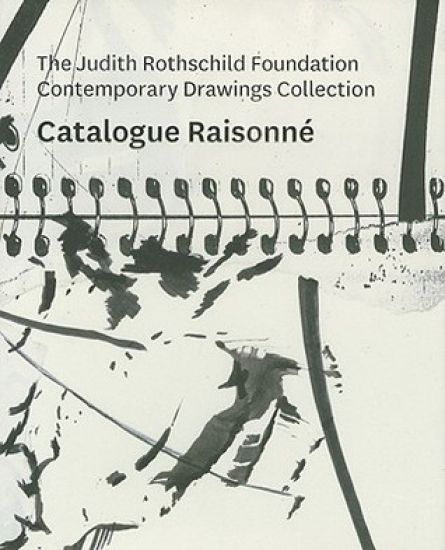
Formed by Harvey S. Shipley Miller, trustee of the Judith Rothschild Foundation, and given to MoMA in 2005, The Judith Rothschild Foundation Contemporary Drawings Collection was conceived to be a broad survey of contemporary drawing practice, and it more than fulfils that goal, mixing drawings of the 1960s and 1970s with major works of the past twenty years by such artists as Kai Althoff, Robert Crumb, Peter Doig, Marcel Dzama, Mark Grotjahn, Charline von Heyl, Martin Kippenberger, Sherrie Levine, Agnes Martin, Fred Sandback, Paul Thel and Andrea Zittel, among many others. This definitive catalogue raisonné presents the collection as a whole, with an introduction by Christian Rattemeyer; five essays each focusing on a different geographic area of artistic production; images throughout; and a text on paper conservation.

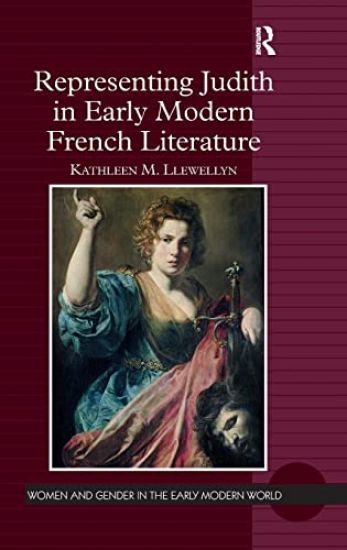
Representing Judith in Early Modern French Literature
Kathleen M. Llewellyn
Taylor Francis Ltd
2021
nidottu
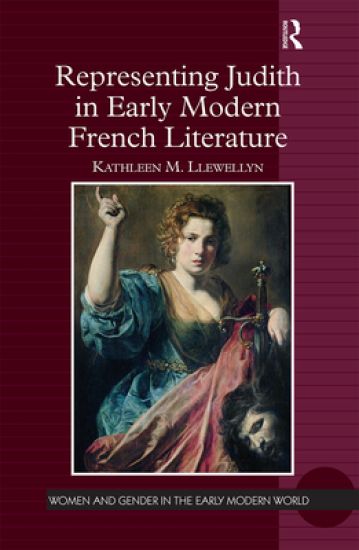
Although attention to the Book of Judith and its heroine has grown in recent years, this is the first full-length study to focus on adaptations of the Bible’s Old Testament Book of Judith across a range of literary genres written in French during the early modern era. Author Kathleen Llewellyn bases her analysis on references to Judith in a number of early modern sermons as well as the ’Judith’ texts of four early modern writers. The texts include two theatrical dramas, Le Mystère de Judith et Holofernés (c. 1500), believed to have been written by Jean Molinet, and Le Miroir des vefves: Tragédie sacrée d'Holoferne & Judith by Pierre Heyns (1596), as well as two epic poems, La Judit (1574) by Guillaume de Salluste Du Bartas, and Gabrielle de Coignard’s Imitation de la victoire de Judich (1594). Llewellyn’s goal is to see Judith as she was envisioned by early modern French writers and their readers, and to understand how the sixteenth century shaped their view of the heroine. Noting aspects of that story that were emphasized by sixteenth-century authors, as well as elements that those writers altered to suit their purposes, she also examines the ways in which writers of this era made use of Judith’s story as a means to explore interests and concerns of early modern writers, readers, and spectators. Representing Judith in Early Modern French Literature provides a deeper understanding of early modern ideas regarding the role of women, the use of exemplary stories in preaching and teaching, theories of vision, and the importance of community in Renaissance France.
Lady Judith. A Tale of Two Continents. by Justin Mccarthy.
Justin McCarthy
University of Michigan Library
2006
pokkari
Although attention to the Book of Judith and its heroine has grown in recent years, this is the first full-length study to focus on adaptations of the Bible’s Old Testament Book of Judith across a range of literary genres written in French during the early modern era. Author Kathleen Llewellyn bases her analysis on references to Judith in a number of early modern sermons as well as the ’Judith’ texts of four early modern writers. The texts include two theatrical dramas, Le Mystère de Judith et Holofernés (c. 1500), believed to have been written by Jean Molinet, and Le Miroir des vefves: Tragédie sacrée d'Holoferne & Judith by Pierre Heyns (1596), as well as two epic poems, La Judit (1574) by Guillaume de Salluste Du Bartas, and Gabrielle de Coignard’s Imitation de la victoire de Judich (1594). Llewellyn’s goal is to see Judith as she was envisioned by early modern French writers and their readers, and to understand how the sixteenth century shaped their view of the heroine. Noting aspects of that story that were emphasized by sixteenth-century authors, as well as elements that those writers altered to suit their purposes, she also examines the ways in which writers of this era made use of Judith’s story as a means to explore interests and concerns of early modern writers, readers, and spectators. Representing Judith in Early Modern French Literature provides a deeper understanding of early modern ideas regarding the role of women, the use of exemplary stories in preaching and teaching, theories of vision, and the importance of community in Renaissance France.