Shares the stories of four World War II soldiers, two from the Army and two from the Navy, who played against one another in a famous November 1941 college football game eight days before the Japanese attack on Pearl Harbor, drawing on extensive research and interviews to share their subsequent battle experiences. Reprint.
A killer is stalking the female reindeer of Stockholm; the world's leading expert on Baltic sturgeon has been kippered; and, Sweden's only unpublished thriller writer has literally lost his head. Under pressure to capture the Reindeer Strangler and facing complete elimination as a result of budget cuts, the Swedish police take Lizzy Salamander, Scandinavia's most heavily tattooed girl-sociopath and hacker extraordinaire, into custody. Mikeal Bloomberg believes Salamander has been framed. Overweight, under-exercised and hirsute in all the wrong places, chick magnet Bloomberg throws himself headlong into the investigation only to encounter an unexpected problem. If Salamander is innocent, who is the flat-chested, 4'10" girl ninja with the sturgeon tattoo captured on a surveillance camera decapitating the failed novelist? A story of corruption and perversion that reaches to the highest echelons of the world's largest producer of inexpensive ready-to-assemble wooden bookcases, "The Girl With The Sturgeon Tattoo" serves up a hilarious - and gripping - parody of the bestselling novels by Stieg.
With the canon debate, prominent in literary criticism since the early 1970s, as the sounding board, the study aims at investigating and discussing in critical perspective the function of considerations to do with canon for literary criticism at the formation stage. It focuses on the interaction between a critic's canonical preferences ('versions of the past') and his desire for improved cultural and/or aesthetic conditions ('visions of the future') in the criticism of Eliot, Leavis, Frye and Bloom.
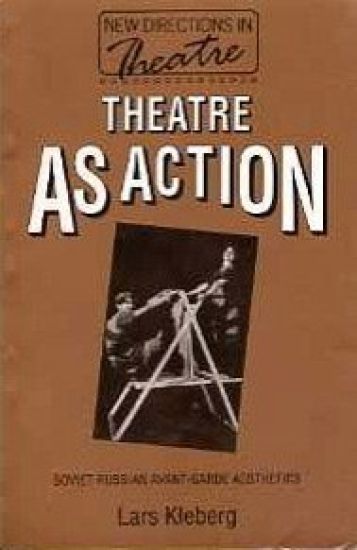
After the 1917 revolution, Russian and Soviet avant-garde theatre attempted to create a new art for post-revolutionary society. This reconsideration of the Russian avant-garde theatre investigates the burgeoning new drama/theatre forms of the period. Kleberg considers assumptions made about the audience and by the audience, and seeks to determine whether discrepancies existed between the two. Offering fresh insights into the modernist period of Russian theatre, Theatre as Action provides a new typology of the stage/audience relationship in modernist Russian theatre. Constructivism of the 1920's is discussed on light of the plays of Meyerhold, Eisenstein, and Treytykov. The relation of the Soviet Russian avant-garde to the aesthetics of Bertold Brecht is also examined. This original, comprehensive work is a major contribution to our understanding of the confrontation of the ideal and the reality of Soviet 1920's, revealing the Wagnerian and Symbolist utopia beneath, and its crisis. It will be of particular interest to students of literature and drama.
Democratization in the Third World addresses many current issues of development, democratization and civil society in countries in Asia, Africa and Latin America against the background of theoretical introductions and comparisons with the Swedish historical experience of democratisations. The authors, from seven different continents, examine civil society and its relation to the state throughout the world and assess prospects for sustainable democratization.
Improving the Sustainable Development Goals evaluates the Global Goals (Agenda 2030) by looking at their design and how they relate to theories of economic development. Adopted unanimously by the member states of the United Nations (UN) in 2015, the goals are remarkable for the global commitment on a set of targets to reach by 2030, but also for the lack of a strategy of implementation. The choice of appropriate action is handed over to individual governments, some of which are limited by their lack of resources. This book explores how implementation of the sustainable development goals (SDGs) can be developed, especially in developing countries. The content, strengths and weaknesses of the SDGs are critically examined, alongside their relationship to ongoing academic research. The authors also investigate the actions of governments over the past three years by looking at the national strategies they have presented at annual meetings of the UN High-Level Political Forum. Improving the Sustainable Development Goals takes a critical but constructive approach, pointing out risks as well as possible remedies. The SDGs are seen as an opportunity for a global conversation on what works in solving some fundamental problems relating to poverty and environmental degradation. With the inclusion of a chapter by Tobias Ogweno, former member of the Kenya’s UN mission, this book will appeal to all those who are interested in policy analysis with a focus on development issues.
This book explores the anti-Islamic turn and expansion of the far right in Western Europe, North America and beyond from 2001 and onwards. Driven by terror attacks and other moral shocks, the anti-Islamic cause has undergone four waves of transnational expansion in the period since 2001. The leaders and intellectuals involved have varied backgrounds, many coming from the left, uniting historically opposed sets of values under their banner of a civilizational struggle against Islam. The findings presented in this book indicate that anti-Islamic initiatives in Western Europe and the United States form a transnational movement and subculture characterized by a fragile balance between liberal and authoritarian values. The author draws on a broad array of data sources and methods, including network analysis and sentiment analysis, to analyze the impact of the anti-Islamic expansion and turn at a macro level, and the theoretical implications for our understanding of the current far right flowing from this. Offering an overview of anti-Islamic activism, the book explores the background of their leaders and ideologues, provides an in-depth look at their ideology, online organizational networks, and the views expressed by their online members as well as which emotions and messages continue to drive their mobilization. The book will be of interest to scholars in the social movement field as well as political scientists, sociologists, and general readers interested in issues such as populism, extremism and understanding the ways in which the contemporary far right challenges liberal democracies.
This book explores the anti-Islamic turn and expansion of the far right in Western Europe, North America and beyond from 2001 and onwards. Driven by terror attacks and other moral shocks, the anti-Islamic cause has undergone four waves of transnational expansion in the period since 2001. The leaders and intellectuals involved have varied backgrounds, many coming from the left, uniting historically opposed sets of values under their banner of a civilizational struggle against Islam. The findings presented in this book indicate that anti-Islamic initiatives in Western Europe and the United States form a transnational movement and subculture characterized by a fragile balance between liberal and authoritarian values. The author draws on a broad array of data sources and methods, including network analysis and sentiment analysis, to analyze the impact of the anti-Islamic expansion and turn at a macro level, and the theoretical implications for our understanding of the current far right flowing from this. Offering an overview of anti-Islamic activism, the book explores the background of their leaders and ideologues, provides an in-depth look at their ideology, online organizational networks, and the views expressed by their online members as well as which emotions and messages continue to drive their mobilization. The book will be of interest to scholars in the social movement field as well as political scientists, sociologists, and general readers interested in issues such as populism, extremism and understanding the ways in which the contemporary far right challenges liberal democracies.
At the core of the rational expectations revolution is the insight that economic policy does not operate independently of economic agents' knowledge of that policy and their expectations of the effects of that policy. This means that there are very complicated feedback relationships existing between policy and the behaviour of economic agents, and these relationships pose very difficult problems in econometrics when one tries to exploit the rational expectations insight in formal economic modelling. This volume consists of work by two rational expectations pioneers dealing with the "nuts and bolts" problems of modelling the complications introduced by rational expectations. Each paper deals with aspects of the problem of making inferences about parameters of a dynamic economic model on the basis of time series observations. Each exploits restrictions on an econometric model imposed by the hypothesis that agents within the model have rational expectations.
At the core of the rational expectations revolution is the insight that economic policy does not operate independently of economic agents' knowledge of that policy and their expectations of the effects of that policy. This means that there are very complicated feedback relationships existing between policy and the behaviour of economic agents, and these relationships pose very difficult problems in econometrics when one tries to exploit the rational expectations insight in formal economic modelling. This volume consists of work by two rational expectations pioneers dealing with the nuts and bolts problems of modelling the complications introduced by rational expectations. Each paper deals with aspects of the problem of making inferences about parameters of a dynamic economic model on the basis of time series observations. Each exploits restrictions on an econometric model imposed by the hypothesis that agents within the model have rational expectations.
Safety analysis can be applied as a practical tool in occupational safety. It has three main elements: the identification of hazards, the assessment of risks that arise, and the generation of measures to increase the level of safety. A number of simple methods are described that can be used in industry and the workplace, such as deviation analysis, energy analysis and job safety analysis, which address risks in ordinary workplaces. For special cases, more technically oriented methods are presented, such as fault tree analysis, event tree analysis, and HAZOP. The book describes a number of other methods and compares their features. These methods are set out in a step by step manner and practical advise is given on how to perform an analysis. Cost-benefit considerations and other useful background information, such as types of results which can be obtained, are also given.
This book presents an overview of the direct and indirect ways in which Europe continues to be influenced by its entrenched postcolonial condition. Exploring the notion of postcolonial Europe as it characterises a Europe caught at a number of crossroads, it considers the distinctly European features of a range of global crises by which Europe is beset, relating to migration, nationalism, internationalism, climate change and inequality. Linking these to the legacy of European hegemony during the era of high imperialism and the inability to come to terms with the region’s increasingly provincialised status, the reversal of migrant flows following the implosion of European empires, and the dismantling of welfare societies initially made possible by the accumulation of wealth during colonialism, the author examines the gradual disintegration of the idea of the European collectivity and the erosion of the idea that Europe is a dispenser of privileged status. A wide-ranging study of Europe’s crisis in its postcolonial era, this volume will appeal to scholars of critical sociology, political geography, cultural studies, anthropology, political science and history with interests in colonialism and postcolonialism.
This book presents an overview of the direct and indirect ways in which Europe continues to be influenced by its entrenched postcolonial condition. Exploring the notion of postcolonial Europe as it characterises a Europe caught at a number of crossroads, it considers the distinctly European features of a range of global crises by which Europe is beset, relating to migration, nationalism, internationalism, climate change and inequality. Linking these to the legacy of European hegemony during the era of high imperialism and the inability to come to terms with the region’s increasingly provincialised status, the reversal of migrant flows following the implosion of European empires, and the dismantling of welfare societies initially made possible by the accumulation of wealth during colonialism, the author examines the gradual disintegration of the idea of the European collectivity and the erosion of the idea that Europe is a dispenser of privileged status. A wide-ranging study of Europe’s crisis in its postcolonial era, this volume will appeal to scholars of critical sociology, political geography, cultural studies, anthropology, political science and history with interests in colonialism and postcolonialism.
Multifractal theory was introduced by theoretical physicists in 1986. Since then, multifractals have increasingly been studied by mathematicians. This new work presents the latest research on random results on random multifractals and the physical thermodynamical interpretation of these results. As the amount of work in this area increases, Lars Olsen presents a unifying approach to current multifractal theory. Featuring high quality, original research material, this important new book fills a gap in the current literature available, providing a rigorous mathematical treatment of multifractal measures.
Control of Microstructures and Properties in Steel Arc Welds provides an overview of the most recent developments in welding metallurgy. Topics discussed include common welding processes, the thermal cycle during welding, defects that may occur during the welding process, the metallurgy of the material, metallurgical processes in the heat-affected zone and the fused metal, and the relationship between microstructures and mechanical properties. The book's final chapter presents examples of welded joints, illustrating how modern theories are capable of predicting the microstructure and properties of these joints. This book is an excellent resource for welding engineers, metallurgists, materials scientists, and others interested in the subject.
As more people realize the cardiovascular, metabolic and muscular benefits that regular physical activity provides, the risk for potential injury also increases. To provide successful treatment, all persons involved in the management of injuries must have a thorough understanding of the healing process of the various tissues and also be familiar with the demands of different types of sports.Written by three world-renowned experts, Sports Injuries, Fifth Edition, comprehensively covers the prevention, treatment and rehabilitation of sports injuries. Essential reading for all athletes, coaches/trainers, physiotherapists, nurses and doctors, the updated edition of this highly popular and well-established textbook skillfully integrates scientific background and evidence with practical application. Updated topics covered include:Individual risk factors for sports injuriesEffects of physical inactivity on the tissuesHead and face injuries in sportCervical, thoracic and abdominal injuries in sportBack and spine injuries in sportLeg, knee and thigh injuriesOutdoor activities during extreme conditionsEthical considerations in sports and exercise medicineInjuries in sport for the disabled, growing and aging athletesRichly illustrated with more than 600 color drawings and photographs, this book covers injuries resulting from the full range of international sports. For each type of injury examined, it details the symptoms, mechanism of injury, diagnosis, treatment, rehabilitation protocols and key points – clearly stating what both non-medical and medical professionals should do in each case of injury. This easy-to-follow textbook features a glossary of key terms and protocols with rehabilitation exercises to provide readers with a solid understanding about how to effectively treat, rehabilitate and prevent sports injuries. This book will be of key reading to academics and students of sport medicine, sport injury, physiotherapy and sports rehabilitation as well as related disciplines.
As more people realize the cardiovascular, metabolic and muscular benefits that regular physical activity provides, the risk for potential injury also increases. To provide successful treatment, all persons involved in the management of injuries must have a thorough understanding of the healing process of the various tissues and also be familiar with the demands of different types of sports.Written by three world-renowned experts, Sports Injuries, Fifth Edition, comprehensively covers the prevention, treatment and rehabilitation of sports injuries. Essential reading for all athletes, coaches/trainers, physiotherapists, nurses and doctors, the updated edition of this highly popular and well-established textbook skillfully integrates scientific background and evidence with practical application. Updated topics covered include:Individual risk factors for sports injuriesEffects of physical inactivity on the tissuesHead and face injuries in sportCervical, thoracic and abdominal injuries in sportBack and spine injuries in sportLeg, knee and thigh injuriesOutdoor activities during extreme conditionsEthical considerations in sports and exercise medicineInjuries in sport for the disabled, growing and aging athletesRichly illustrated with more than 600 color drawings and photographs, this book covers injuries resulting from the full range of international sports. For each type of injury examined, it details the symptoms, mechanism of injury, diagnosis, treatment, rehabilitation protocols and key points – clearly stating what both non-medical and medical professionals should do in each case of injury. This easy-to-follow textbook features a glossary of key terms and protocols with rehabilitation exercises to provide readers with a solid understanding about how to effectively treat, rehabilitate and prevent sports injuries. This book will be of key reading to academics and students of sport medicine, sport injury, physiotherapy and sports rehabilitation as well as related disciplines.
This volume crucially provides an analytical and comparative approach, investigating the meaning and uses of the concept of exceptionalism, while demonstrating the ways in which it manifests itself in different historical and geographical settings. Exceptionalism offers comparative case studies from different parts of the world, showcasing the way in which exceptionalism has come to occupy an important narrative position in relation to different nation-states, including the United States, the United Kingdom, the Nordic countries, various European nations and countries in Latin America, Africa and Asia. An introduction to and overview of a term that has come to define the past and present identity of many nations, this book will appeal to scholars of sociology, anthropology, geography, cultural studies and politics.