Kirjojen hintavertailu. Mukana 11 717 486 kirjaa ja 12 kauppaa.

Kirjahaku

Etsi kirjoja tekijän nimen, kirjan nimen tai ISBN:n perusteella.

1000 tulosta hakusanalla Like Test Prep

Like a Natural Woman

Like a Natural Woman

Kirsten Pullen

Rutgers University Press
2014
sidottu
Bathing beauty Esther Williams, bombshell Jane Russell, exotic Carmen Miranda, chanteuse Lena Horne, and talk-show fixture Zsa Zsa Gabor are rarely hailed as great actors or as naturalistic performers. Those terms of praise are given to male stars like Marlon Brando and James Dean, whose gritty dramas are seen as a departure from the glossy spectacles in which these stars appeared. Like a Natural Woman challenges those assumptions, revealing the skill and training that went into the work of these five actresses, who employed naturalistic performance techniques, both onscreen and off.Bringing a fresh perspective to film history through the lens of performance studies, Kirsten Pullen explores the ways in which these actresses, who always appeared to be “playing themselves,” responded to the naturalist notion that actors should create authentic characters by drawing from their own lives. At the same time, she examines how Hollywood presented these female stars as sex objects, focusing on their spectacular bodies at the expense of believable characterization or narratives.Pullen not only helps us appreciate what talented actresses these five women actually were, but also reveals how they sought to express themselves and maintain agency, even while meeting the demands of their directors, studios, families, and fans to perform certain feminine roles. Drawing from a rich collection of classic films, publicity materials, and studio archives, Like a Natural Woman lets us take a new look at both Hollywood acting techniques and the performance of femininity itself.
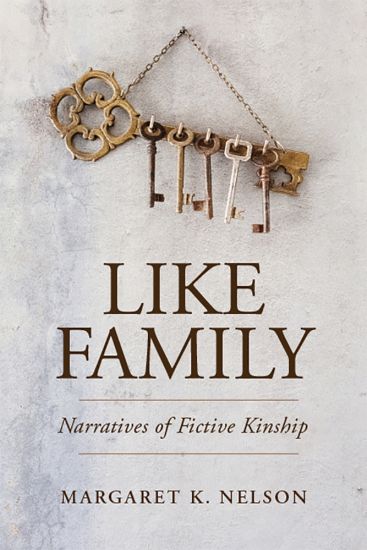
Like Family

Like Family

Margaret K. Nelson

Rutgers University Press
2020
nidottu
For decades, social scientists have assumed that “fictive kinship” is a phenomenon associated only with marginal peoples and people of color in the United States. In this innovative book, Nelson reveals the frequency, texture and dynamics of relationships which are felt to be “like family” among the white middle-class. Drawing on extensive, in-depth interviews, Nelson describes the quandaries and contradictions, delight and anxiety, benefits and costs, choice and obligation in these relationships. She shows the ways these fictive kinships are similar to one another as well as the ways they vary—whether around age or generation, co-residence, or the possibility of becoming “real” families. Moreover she shows that different parties to the same relationship understand them in some similar – and some very different – ways. Theoretically rich and beautifully written, the book is accessible to the general public while breaking new ground for scholars in the field of family studies.
Like Family

Like Family

Margaret K. Nelson

Rutgers University Press
2020
sidottu
For decades, social scientists have assumed that “fictive kinship” is a phenomenon associated only with marginal peoples and people of color in the United States. In this innovative book, Nelson reveals the frequency, texture and dynamics of relationships which are felt to be “like family” among the white middle-class. Drawing on extensive, in-depth interviews, Nelson describes the quandaries and contradictions, delight and anxiety, benefits and costs, choice and obligation in these relationships. She shows the ways these fictive kinships are similar to one another as well as the ways they vary—whether around age or generation, co-residence, or the possibility of becoming “real” families. Moreover she shows that different parties to the same relationship understand them in some similar – and some very different – ways. Theoretically rich and beautifully written, the book is accessible to the general public while breaking new ground for scholars in the field of family studies.
Like Love

Like Love

Michele Morano

Ohio State University Press
2020
pokkari
Crushes. Infatuations. Attractions. Unexpected, inexplicable allure. Entanglements steeped in taboo and disruption. In Like Love, nothing is off limits. In these remarkable essays, Michele Morano explores the pleasures, possibilities, strangeness, and lessons of unconsummated romance. With insight and imagination, Like Love interweaves poignant, humorous episodes from adulthood with the backstory of a young family's turbulent breakup. When Morano was an adolescent in blue-collar Poughkeepsie, New York, her mother left her father for a woman in an era when LGBTQ parents were widely viewed as "unfit." Through the turmoil, adolescent Morano paid attention, tucking away the stories that were shaping her and guiding her understanding of love. Turning romantic clich s inside out and challenging us to rethink our notions about what it means to love, Like Love tells hard and necessary truths about the importance of desire in growing, traveling, mourning, parenting, and figuring out who you are in the world. With precision and depth, Morano explores what it means to find ourselves in relationships that are not quite-but almost-like love.
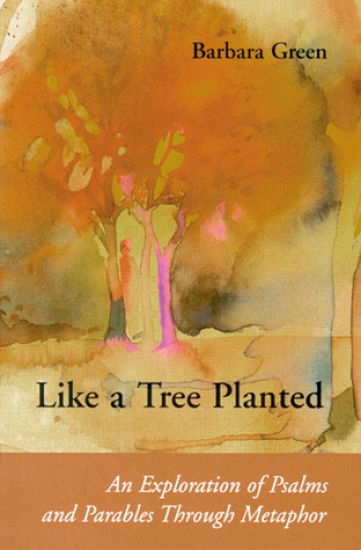
Like a Tree Planted

Like a Tree Planted

Barbara Green

Liturgical Press
1997
pokkari
How well are the psalms understood? The parables seem more accessible, but are they? And as familiar as we are with the texts of the psalms and the parables, how open are we to new perspectives on them?The studies in Like a Tree Planted, the first volume in the Connections series, encourage readers to deepen their understanding of the psalms and parables and to grow in their relationship with God. Like a Tree Planted invites reflection on eight pairs of psalms and parables by highlighting their shared metaphor. These images, familiar from our everyday lives as well as from both testaments, encourage fresh insights from familiar scriptural texts.The psalms presented here, all from the first book of the Psalter, and the parables, selected from Luke's Gospel, speak deeply and collaboratively through figures of the tree, our stature and status, searching faces, feelings of entitlement and responsiveness, the ecosystem, shepherding, the storehouse, and the other side."An introductory chapter in Like a Tree Planted introduces readers to the process of reading metaphorically, and a concluding chapter draws implications from the reading of these particular psalm and parable texts as a set.Barbara Green believes that many people want to explore both in language and in experience the mysteries of God and our own human condition. With her exciting, imaginative style she offers help for those on that journey those interested in prayer and in a deeper access to Scripture, those working with adult parish groups, preachers of Scripture, those doing retreat work, and individuals.Chapters are "Introduction to Metaphor in Psalm and Parable," "The Rooted Tree: Psalm 1 and Luke 13:1-9," "Stature: Psalm 8 and Luke 15:11-32,""Searching Faces: Psalm 27 and Luke 18:9-18," "Entitlement and Responsiveness: Psalm 18 and Luke 18:1-8," "The Ecosystem: Psalm 7 and Luke 16:1-9," "Shepherding: Psalm 23 and Luke 15:3-7," "The Storehouse: Psalm 39 and Luke 12:13-21," "The Other Side: Psalm 41, Luke 10:25-29," and "Conclusion."Barbara Green, OP, PhD, teaches Scripture and spirituality at the Graduate Theological Union in Berkeley and works with adult groups interested in deepening their spiritual commitment. She is the author of "What Profit for Us?" Remembering the Story of Joseph."
Like Memory, Caverns

Like Memory, Caverns

Elizabeth C. Dodd

New York University Press
1992
sidottu
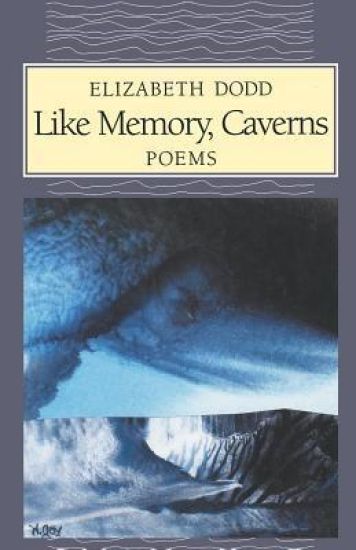
Like Memory, Caverns is an elegiac book, mourning losses from the personal to the planetary. Though personal in tone, these graceful, meditative poems reach insistently outward to the natural and social worlds, moving beyond today's confessionalism. In fact, the self keeps disappearing, as the world as it is seen seems to replace the seer. This poetry explores the tenuousness of each individual moment while affirming a necessary--if difficult--existence of the free spirit. Elizabeth Dodd writes a remarkably musical free verse, with her eye kept focused on the tangible significant detail of natural imagery.
Like Memory, Caverns

Like Memory, Caverns

Elizabeth C. Dodd

New York University Press
1992
pokkari
Like Memory, Caverns is an elegiac book, mourning losses from the personal to the planetary. Though personal in tone, these graceful, meditative poems reach insistently outward to the natural and social worlds, moving beyond today's confessionalism. In fact, the self keeps disappearing, as the world as it is seen seems to replace the seer. This poetry explores the tenuousness of each individual moment while affirming a necessary--if difficult--existence of the free spirit. Elizabeth Dodd writes a remarkably musical free verse, with her eye kept focused on the tangible significant detail of natural imagery.
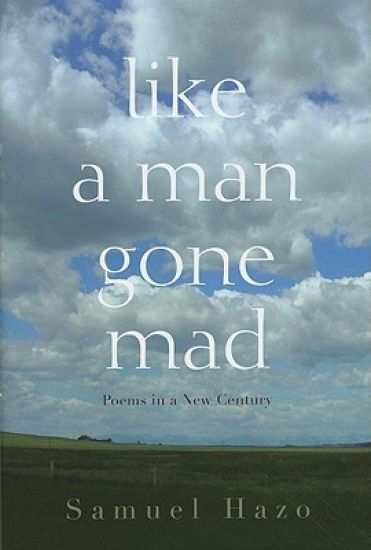
Like a Man Gone Mad

Like a Man Gone Mad

Samuel Hazo

Syracuse University Press
2010
sidottu
Hazo, National Book Award finalist and former State Poet of Pennsylvania, transports the reader with poems of both lament and celebration in his sensual new collection. Like a Man Gone Mad features much of the spare yet precise imagery of his earlier work. Searing portraits, a deft use of allegorical language, and a wry sense of humor are all signatures of Hazo’s unique voice. Taking up the theme of time, the poems carry the reader back and forth through personal and historical time, offering glimpses of a wide range of figures, from Pascal and Heraclitus to John F. Kennedy and Clark Gable. From each vantage point, Hazo meditates on themes of vitality and longevity, legacy and oblivion, and the enduring folly of both the individual and society. Accessible and eminently readable, the poems in Like a Man Gone Mad embody a rich intellectual and emotional curiosity.
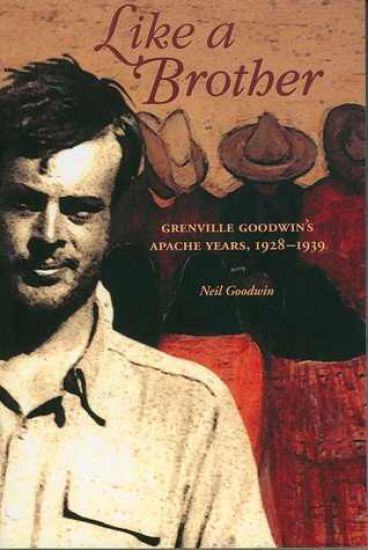
LIKE a BROTHER

LIKE a BROTHER

University of Arizona Press
2004
nidottu
When the anthropologist Grenville Goodwin died in 1940 at the age of 32, he had published several papers and one book, Myths and Tales of the White Mountain Apache, and had already achieved a stature that has only continued to grow. His posthumous landmark monograph, The Social Organization of the Western Apache, was hailed by anthropologist Edward Spicer as "one of the most detailed and best-documented studies of Indian social organization". Yet, although he was highly regarded by colleagues within the profession, Goodwin himself was largely self-taught, with neither formal training nor academic degrees. This volume is the latest in series of books derived from his unpublished papers. It helps broaden our understanding of Goodwin's life and work. It includes selections from his field notes, diaries, and letters, along with those of his wife Jan and other family members. Assembled by Goodwin's son Neil, who never knew his father, these writings are gathered in thematic chapters that extend Neil Goodwin's earlier work, The Apache Diaries, and shed light on Grenville Goodwin's deepening understanding of the Apache people and their culture, and of the wrenching problems which reservation life forced on them. In two of the chapters Neil tells how he retraced his father's search for the Sierra Madre Apache, re-discovering abandoned Apache campsites and conveying even more personally than his father's diaries what was for both father and son the adventure of a lifetime. Other chapters trace Goodwin's interest in children of the Sierra Madre Apaches who were captured in Mexican raids on these camps during the early decades of the twentieth century. The full stories of the lives of three of these children are for the first time pieced together from newly gathered research. Grenville was quiet, self-effacing and rarely revealed his inner life, but one chapter affords a closer look: a portrait of his marriage to Neil's mother, Jan. Her diary entries, juxtaposed with her vivid poetry and her paintings and drawings, illuminate her relationship with Grenville and throw his elusive personality into deeper relief than his own writings do. Here too are letters from Goodwin's Apache friends that paint a powerful and poignant portrait of their daily lives and of their relationship with him. Goodwin's daily diary excerpts relate his own experiences on the San Carlos Apache reservation from 1928 to 1936: what was happening at the store, how the cattle were doing, who was in jail, and thousands of other details that give readers a sharp sense of what the reservation was like in the 1930s. As these writings also show, Goodwin was powerfully drawn to Apache spirituality and became steeped in their sacred knowledge. His simple description of a day in the life of an Apache family captures the expression of this spirituality in the rhythms of everyday life, whether greeting the rising sun, curing an injury, plowing the earth, or simply being good to one's family. More than half a century after his death, Grenville Goodwin continues to be regarded as one of the most enigmatic and romantic figures in American anthropology. Like a Brother gives us a fuller understanding of the man and his work as it broadens our knowledge of Apache history and culture.
Like a Loaded Weapon

Like a Loaded Weapon

Robert Williams Jr.

University of Minnesota Press
2005
nidottu
Robert A. Williams Jr. boldly exposes the ongoing legal force of the racist language directed at Indians in American society. Fueled by well-known negative racial stereotypes of Indian savagery and cultural inferiority, this language, Williams contends, has functioned "like a loaded weapon" in the Supreme Court's Indian law decisions. Beginning with Chief Justice John Marshall's foundational opinions in the early nineteenth century and continuing today in the judgments of the Rehnquist Court, Williams shows how undeniably racist language and precedent are still used in Indian law to justify the denial of important rights of property, self-government, and cultural survival to Indians. Building on the insights of Malcolm X, Thurgood Marshall, and Frantz Fanon, Williams argues that racist language has been employed by the courts to legalize a uniquely American form of racial dictatorship over Indian tribes by the U.S. government. Williams concludes with a revolutionary proposal for reimagining the rights of American Indians in international law, as well as strategies for compelling the current Supreme Court to confront the racist origins of Indian law and for challenging bigoted ways of talking, thinking, and writing about American Indians. Robert A. Williams Jr. is professor of law and American Indian studies at the James E. Rogers College of Law, University of Arizona. A member of the Lumbee Indian Tribe, he is author of The American Indian in Western Legal Thought: The Discourses of Conquest and coauthor of Federal Indian Law.
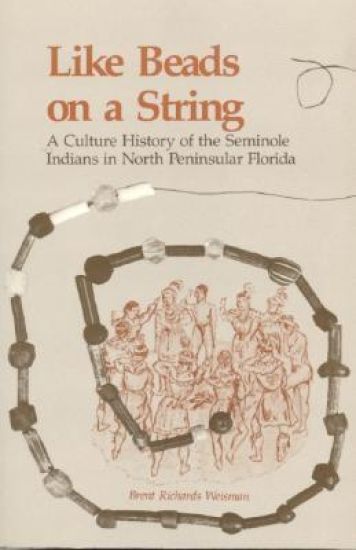
Like Beads on a String

Like Beads on a String

Brent Weisman

The University of Alabama Press
1989
nidottu
Florida's Seminole Indians are exerting an ever increasing influence on crucial issues in state politics, economy, and law. From a position of near obscurity less than a century ago, these Native Americans have staged a remarkable comeback to take an active hand in shaping Florida society, present and future. Anthropologists have long been fascinated with the Seminoles and have often remarked upon their ability to adapt to new circumstances while preserving the core features of their traditional culture. Early observers of the Seminoles also commented on the dynamic tension that existed for the individual, clan, and tribe, that drew them together, ""like beads on a string,"" into a resilient and viable society. This study traces the emergence of these qualities in the late prehistoric and early historic period in the Southeast and demonstrates their influence on the course of Seminole culture history.
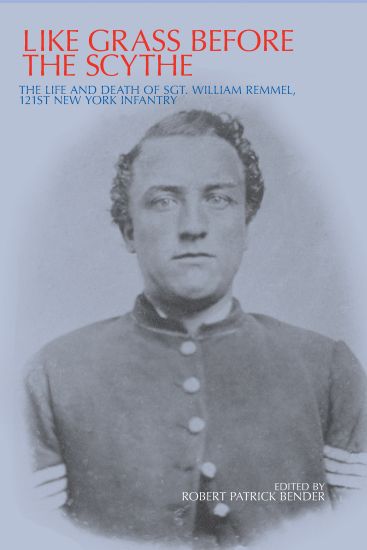
Like Grass Before the Scythe

Like Grass Before the Scythe

William Remmel

The University of Alabama Press
2019
nidottu
Uncommonly articulate letters from a young German-American soldier with the Union forces Sergeant William Remmel was a German immigrant who had settled with his parents and family in far upstate New York. His letters collected in Like Grass before the Scythe cover more than two full years of his service and provide details on military and social history in the eastern theater of operations and on the experience of the home front in upstate New York among a largely immigrant, working-class family and community. Remmel wrote in English and apparently his parents responded in German. In addition to the important material on an immigrant family's experience, Remmel also deals with the question of slavery, illness and hospital care (when he was wounded), the problem of hard war/total war, as well as the campaigns of Chancellorsville, Gettysburg, and the Shenandoah Valley in 1864.
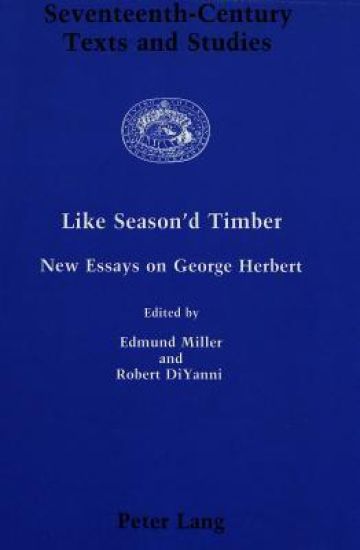
Like Season'd Timber

Like Season'd Timber

Peter Lang Publishing Inc
1988
sidottu
"Like Season'd Timber" explores new areas for the study of George Herbert. Essays offering new light on Herbert's biography and his relation to the arts are followed by studies of the less familiar works and of Herbert's relation to his poetic contemporaries. The last section of the book explores Herbert's influence on a number of major writers since the revival of interest in the early nineteenth century. Contributors include such major scholars of seventeenth-century literature as Joseph Holmes Summers, Jerome Mazzaro, and the late Amy M. Charles and also a range of younger scholars with specialized backgrounds in the subjects of their particular essays.
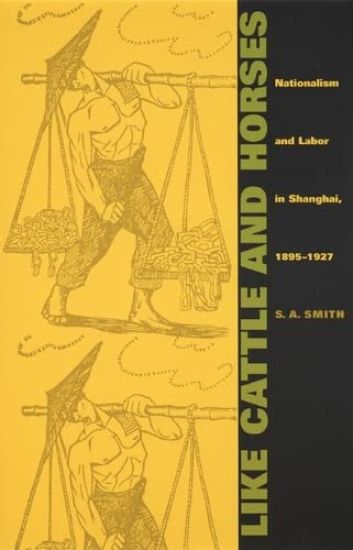
Like Cattle and Horses

Like Cattle and Horses

S. A. Smith

Duke University Press
2002
sidottu
In Like Cattle and Horses Steve Smith connects the rise of Chinese nationalism to the growth of a Chinese working class. Moving from the late nineteenth century, when foreign companies first set up factories on Chinese soil, to 1927, when the labor movement created by the Chinese Communist Party was crushed by Chiang Kai-shek, Smith uses a host of documents-journalistic accounts of strikes, memoirs by former activists, police records-to argue that a nationalist movement fueled by the effects of foreign imperialism had a far greater hold on working-class identity than did class consciousness. While the massive wave of labor protest in the 1920s was principally an expression of militant nationalism rather than of class consciousness, Smith argues, elements of a precarious class identity were in turn forged by the very discourse of nationalism. By linking work-related demands to the defense of the nation, anti-imperialist nationalism legitimized participation in strikes and sensitized workers to the fact that they were worthy of better treatment as Chinese citizens. Smith shows how the workers’ refusal to be treated “like cattle and horses” (a phrase frequently used by workers to describe their condition) came from a new but powerfully felt sense of dignity. In short, nationalism enabled workers to interpret the anger they felt at their unjust treatment in the workplace in political terms and to create a link between their position as workers and their position as members of an oppressed nation. By focusing on the role of the working class, Like Cattle and Horses is one of very few studies that examines nationalism “from below,” acknowledging the powerful agency of nonelite forces in promoting national identity.Like Cattle and Horses will interest historians of labor, modern China, and nationalism, as well as those engaged in the study of revolutions and revolt.
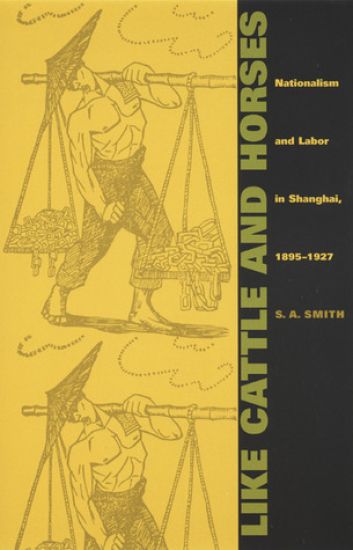
Like Cattle and Horses

Like Cattle and Horses

S. A. Smith

Duke University Press
2002
pokkari
In Like Cattle and Horses Steve Smith connects the rise of Chinese nationalism to the growth of a Chinese working class. Moving from the late nineteenth century, when foreign companies first set up factories on Chinese soil, to 1927, when the labor movement created by the Chinese Communist Party was crushed by Chiang Kai-shek, Smith uses a host of documents-journalistic accounts of strikes, memoirs by former activists, police records-to argue that a nationalist movement fueled by the effects of foreign imperialism had a far greater hold on working-class identity than did class consciousness. While the massive wave of labor protest in the 1920s was principally an expression of militant nationalism rather than of class consciousness, Smith argues, elements of a precarious class identity were in turn forged by the very discourse of nationalism. By linking work-related demands to the defense of the nation, anti-imperialist nationalism legitimized participation in strikes and sensitized workers to the fact that they were worthy of better treatment as Chinese citizens. Smith shows how the workers’ refusal to be treated “like cattle and horses” (a phrase frequently used by workers to describe their condition) came from a new but powerfully felt sense of dignity. In short, nationalism enabled workers to interpret the anger they felt at their unjust treatment in the workplace in political terms and to create a link between their position as workers and their position as members of an oppressed nation. By focusing on the role of the working class, Like Cattle and Horses is one of very few studies that examines nationalism “from below,” acknowledging the powerful agency of nonelite forces in promoting national identity.Like Cattle and Horses will interest historians of labor, modern China, and nationalism, as well as those engaged in the study of revolutions and revolt.
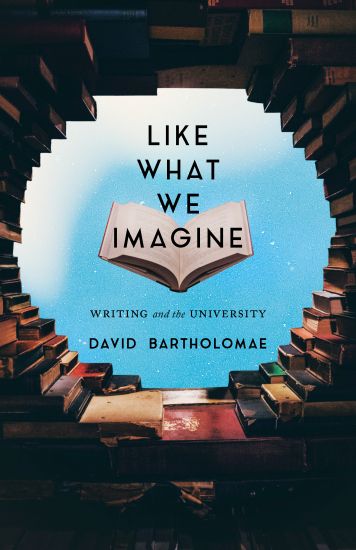
Like What We Imagine

Like What We Imagine

David Bartholomae

University of Pittsburgh Press
2021
sidottu
David Bartholomae has been a prominent figure in the field of composition and rhetoric for almost five decades. Throughout his career, his focus has always been on teaching, writing, and the teaching of writing. These essays, written over the past dozen years, are arranged and unified by a thread that connects some of the books and ideas, people and places, students and courses that have shaped and sustained his work as a teacher of writing. The essays trace his formation as a teacher, writer, and scholar, and open doors to paths of study that speak directly to issues related to global understanding across linguistic and cultural divides. Taken together, the pieces in this collection reveal Bartholomae’s ideas about writing studies and the ways in which student writing and the teaching of writing contribute to and are central to the mission of the university.
Like a Lake

Like a Lake

Carol Mavor

FORDHAM UNIVERSITY PRESS
2020
sidottu
A vivid, imaginative response to the sensual and erotic in postwar American photography, with attention to the beauty of the nude, both male and female When photographer Coda Gray befriends a family with a special interest in a young boy, the motivation behind his special attention is difficult to grasp, "like water slipping through our fingers." Can a man innocently love a boy who is not his own? Using fiction to reveal the truths about families, communities, art objects, love, and mourning, Like a Lake tells the story of ten-year-old Nico, who lives with his father (an Italian- American architect) and his mother (a Japanese-American sculptor who learned how to draw while interned during World War II). Set in the 1960s, this is a story of aesthetic perfection waiting to be broken. Nico's midcentury modern house, with its Italian pottery jars along the outside and its interior lit by Japanese lanterns. The elephant-hide gray, fiberglass reinforced plastic 1951 Eames rocking chair, with metal legs and birch runners. Clam consommé with kombu, giant kelp, yuzu rind, and a little fennel—in each bowl, two clams opened like a pair of butterflies, symbols of the happy couple. Nico's boyish delight in developing photographs under the red safety light of Coda's "Floating Zendo"— the darkroom boat that he keeps on Lake Tahoe. The lives of Nico, his parents, and Coda embody northern California's postwar landscape, giving way to fissures of alternative lifestyles and poetic visions. Author Carol Mavor addresses the sensuality and complexity of a son's love for his mother and that mother's own erotic response to it. The relationship between the mother and son is paralleled by what it means for a boy to be a model for a male photographer and to be his muse. Just as water can freeze into snow and ice, melt back into water, and steam, love takes on new forms with shifts of atmosphere. Like a Lake's haunting images and sensations stay with the reader.
Like No Other

Like No Other

Mark McNally

University of Hawai'i Press
2015
nidottu
Like No Other: Exceptionalism and Nativism in Early Modern Japan probes the association of the early modern Japanese intellectual institution called Kokugaku with the phenomenon of nativism. Uncovering profound differences that cast serious doubt on this association, Mark McNally argues that what Japanologists viewed as nativistic about Kokugaku were actually more typical of what Americanists call exceptionalism. By severing the link between Kokugaku and nativism, he is able to explore within early modern Japanese history instances that were more genuinely nativistic, such as the upheaval associated with the intercultural encounters with Westerners during the 1850s and 1860s that culminated in the overthrow of Japan's last shogun. He also documents, for the first time in Japanese studies, the ways in which exceptionalism applies to Japanese history; not by focusing on either Nihonjinron or on Kokugaku—the connection between the former and exceptionalism is one that Americanists have already made, and the connection between the two Japanese institutions is one that Japanologists already know well—but by highlighting the central role of Confucianism. While Americans looked to the Judeo-Christian tradition for their exceptionalist ideas, their counterparts in early modern Japan looked to Confucianism, whose foundational connections to exceptionalism were perhaps stronger than any analogous tradition in the West. Despite the fact that exceptionalism and nativism occupy distinct positions within the historiographical traditions of both the United States and Japan, they also intersect and overlap in the latter case, which strongly suggests that this situation may also be true in other places, including the United States.
Like No Other

Like No Other

Mark McNally

University of Hawai'i Press
2018
nidottu
Like No Other: Exceptionalism and Nativism in Early Modern Japan probes the association of the early modern Japanese intellectual institution called Kokugaku with the phenomenon of nativism. Uncovering profound differences that cast serious doubt on this association, Mark McNally argues that what Japanologists viewed as nativistic about Kokugaku were actually more typical of what Americanists call exceptionalism. By severing the link between Kokugaku and nativism, he is able to explore within early modern Japanese history instances that were more genuinely nativistic, such as the upheaval associated with the intercultural encounters with Westerners during the 1850s and 1860s that culminated in the overthrow of Japan's last shogun. He also documents, for the first time in Japanese studies, the ways in which exceptionalism applies to Japanese history; not by focusing on either Nihonjinron or on Kokugaku—the connection between the former and exceptionalism is one that Americanists have already made, and the connection between the two Japanese institutions is one that Japanologists already know well—but by highlighting the central role of Confucianism. While Americans looked to the Judeo-Christian tradition for their exceptionalist ideas, their counterparts in early modern Japan looked to Confucianism, whose foundational connections to exceptionalism were perhaps stronger than any analogous tradition in the West. Despite the fact that exceptionalism and nativism occupy distinct positions within the historiographical traditions of both the United States and Japan, they also intersect and overlap in the latter case, which strongly suggests that this situation may also be true in other places, including the United States.
Like a River from Its Course

Like a River from Its Course

Kelli Stuart

Kregel Publications,U.S.
2016
nidottu
Winner of the 2017 American Christian Fiction Writers' Carol Award --Best Christian Fiction of the Year An epic novel exposing the ugliness of war and the beauty of hopeThe city of Kiev was bombed in Hitler's blitzkrieg across the Soviet Union, but the constant siege was only the beginning for her citizens. In this sweeping historical saga, Kelli Stuart takes the reader on a captivating journey into the little--known history of Ukraine's tragedies through the eyes of four compelling characters who experience the same story from different perspectives.Maria Ivanovna is only fourteen when the bombing begins and not much older when she is forced into work at a German labor camp. She must fight to survive and to make her way back to her beloved Ukraine.Ivan Kyrilovich is falsely mistaken for a Jew and lined up with 34,000 other men, women, and children who are to be shot at the edge of Babi Yar, the "killing ditch." He survives, but not without devastating consequences.Luda is sixteen when German soldiers rape her. Now pregnant with the child of the enemy, she is abandoned by her father, alone, and in pain. She must learn to trust family and friends again and find her own strength in order to discover the redemption that awaits.Frederick Hermann is sure in his knowledge that the F hrer's plans for domination are right and just. He is driven to succeed by a desire to please a demanding father and by his own blind faith in the ideals of Nazism. Based on true stories gathered from fifteen years of research and interviews with Ukrainian World War II survivors, Like a River from Its Course is a story of love, war, heartache, forgiveness, and redemption.