Kirjojen hintavertailu. Mukana 11 504 110 kirjaa ja 12 kauppaa.

Kirjahaku

Etsi kirjoja tekijän nimen, kirjan nimen tai ISBN:n perusteella.

1000 tulosta hakusanalla Maral Atmaca

Moral Knowledge: Volume 18, Part 2

Moral Knowledge: Volume 18, Part 2

Cambridge University Press
2001
pokkari
Philosophers since ancient times have pondered how we can know whether moral claims are true or false. The first half of the twentieth century witnessed widespread skepticism concerning the possibility of moral knowledge. Indeed, some argued that moral statements lacked cognitive content altogether, because they were not susceptible to empirical verification. The British philosopher A. J. Ayer contends that ‘They are pure expressions of feeling and as such do not come under the category of truth and falsehood. They are unverifiable … because they do not express genuine propositions.’ The second half of the twentieth century brought a revival of interest among philosophers in moral and political questions. Whether or not ethics can be founded upon a rational basis continues to preoccupy the philosophical community even now.
Moral Repair

Moral Repair

Margaret Urban Walker

Cambridge University Press
2006
pokkari
Moral Repair examines the ethics and moral psychology of responses to wrongdoing. Explaining the emotional bonds and normative expectations that keep human beings responsive to moral standards and responsible to each other, Margaret Urban Walker uses realistic examples of both personal betrayal and political violence to analyze how moral bonds are damaged by serious wrongs and what must be done to repair the damage. Focusing on victims of wrong, their right to validation, and their sense of justice, Walker presents a unified and detailed philosophical account of hope, trust, resentment, forgiveness, and making amends - the emotions and practices that sustain moral relations. Moral Repair joins a multidisciplinary literature concerned with transitional and restorative justice, reparations, and restoring individual dignity and mutual trust in the wake of serious wrongs.
Moral Combat

Moral Combat

Heidi Hurd

Cambridge University Press
2008
pokkari
This book explores the thesis that legal roles force people to engage in moral combat, an idea which is implicit in the assumption that citizens may be morally required to disobey unjust laws, while judges may be morally required to punish citizens for civil disobedience. Heidi Hurd advances the surprising argument that the law cannot require us to do what morality forbids. The 'role-relative' understanding of morality is shown to be incompatible with both consequentialist and deontological moral philosophies. In the end, Hurd shows that our best moral theory is one which never makes one actor's moral success turn on another's moral failure. Moral Combat is a sophisticated, well-conceived and carefully argued book on a very important and controversial topic at the junction between legal and political philosophy. It will be of interest to moral, legal, and political philosophers, as well as teachers and students of professional ethics in law.
Moral Legislation

Moral Legislation

Conrad D. Johnson

Cambridge University Press
2009
pokkari
This is a book about moral reasoning: how we actually reason and how we ought to reason. It defends a form of 'rule' utilitarianism whereby we must sometimes judge and act in moral questions in accordance with generally accepted rules, so long as the existence of those rules is justified by the good they bring about. The author opposes the currently more fashionable view that it is always right for the individual to do that which produces the most good. Among the salient topics covered are: an account of the utilitarian function in society of generally accepted moral rules; a discussion of how we interpret existing moral rules and create new ones; and a defence of 'rule' utilitarianism against the charge that it either commits one to irrational rule worship, or collapses into a form of 'act' utilitarianism. This is a book about moral reasoning: how we actually reason and how we ought to reason. It defends a form of 'rule' utilitarianism whereby we must sometimes judge and act in moral questions in accordance with generally accepted rules, so long as the existence of those rules is justified by the good they bring about.
Moral Disagreement

Moral Disagreement

Folke Tersman

Cambridge University Press
2009
pokkari
Folke Tersman explores what we can learn about the nature of moral thinking by examining moral disagreement. He explains how diversity of opinion on moral issues undermines the idea that moral convictions can be objectively valued. Arguments on moral thinking are often criticized for not being able to explain why there is a contrast between ethics and other areas in which there is disagreement, but where one does not give up the idea of an objective truth, as in the natural sciences. Tersman shows that the contrast has to do with facts about when, and on what basis, moral convictions can be correctly attributed to an agent or speaker.
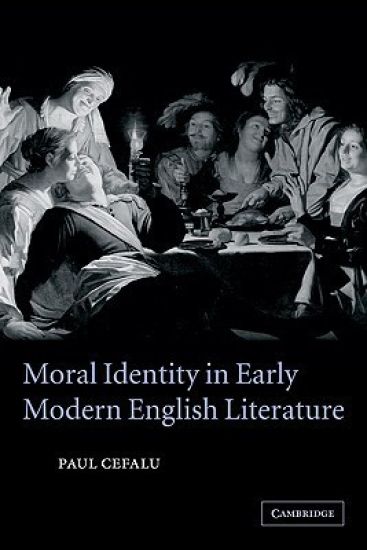
Moral Identity in Early Modern English Literature

Moral Identity in Early Modern English Literature

Paul Cefalu

Cambridge University Press
2009
pokkari
Paul Cefalu's study explores the relationship between moral character and religious conversion in the poetry and prose of Sidney, Spenser, Donne, Herbert, and Milton, as well as in early modern English Conformist and Puritan sermons, theological tracts, and philosophical treatises. Cefalu argues that early modern Protestant theologians were often unable to incorporate a coherent theory of practical morality into the order of salvation. Cefalu draws on fresh historicist theories of ideology and subversion, but takes issue with historicist tendency to conflate generic and categorical distinctions among texts. He argues that imaginative literature, by virtue of its tendency to place characters in approximately real ethical quandaries, uniquely points out the inability of early modern English Protestant theology to merge religious theory and ethical practice. This study should appeal not only to literary critics and historians, but also to scholars interested in the history of moral theory.
Moral Movements and Foreign Policy

Moral Movements and Foreign Policy

Joshua W. Busby

Cambridge University Press
2010
pokkari
Why do advocacy campaigns succeed in some cases but fail in others? What conditions motivate states to accept commitments championed by principled advocacy movements? Joshua W. Busby sheds light on these core questions through an investigation of four cases - developing-country debt relief, climate change, AIDS, and the International Criminal Court - in the G-7 advanced industrialized countries (Canada, France, Germany, Italy, Japan, the United Kingdom, and the United States). Drawing on hundreds of interviews with policy practitioners, he employs qualitative, comparative case study methods, including process-tracing and typologies, and develops a framing/gatekeepers argument, emphasizing the ways in which advocacy campaigns use rhetoric to tap into the main cultural currents in the countries where they operate. Busby argues that when values and costs potentially pull in opposing directions, values will win if domestic gatekeepers who are able to block policy change believe that the values at stake are sufficiently important.
Moral Obligation: Volume 27, Part 2

Moral Obligation: Volume 27, Part 2

Cambridge University Press
2010
pokkari
The notion of obligation of what an agent owes to himself, to others, or to society generally occupies a central place in morality. But what are the sources of our moral obligations and what are their limits? To what extent do obligations vary in their stringency and severity, and does it make sense to talk about imperfect obligations, that is, obligations that leave the individual with a broad range of freedom to determine how and when to fulfil them? The twelve essays in this volume address these and other questions and explore related issues. Some of them discuss broad theoretical questions, some essays look at moral reasons for action. Others discuss specific moral obligations or the tensions that may exist between our obligations and our other concerns.
Moral Luck

Moral Luck

Bernard Williams

Cambridge University Press
1981
sidottu
A new volume of philosophical essays by Bernard Williams. The book is a successor to Problems of the Self, but whereas that volume dealt mainly with questions of personal identity, Moral Luck centres on questions of moral philosophy and the theory of rational action. That whole area has of course been strikingly reinvigorated over the last deacde, and philosophers have both broadened and deepened their concerns in a way that now makes much earlier moral and political philosophy look sterile and trivial. Moral Luck contains a number of essays that have contributed influentially to this development. Among the recurring themes are the moral and philosophical limitations of utilitarianism, the notion of integrity, relativism, and problems of moral conflict and rational choice. The work presented here is marked by a high degree of imagination and acuity, and also conveys a strong sense of psychological reality. The volume will be a stimulating source of ideas and arguments for all philosophers and a wide range of other readers.
Moral Luck

Moral Luck

Bernard Williams

Cambridge University Press
1981
pokkari
A new volume of philosophical essays by Bernard Williams. The book is a successor to Problems of the Self, but whereas that volume dealt mainly with questions of personal identity, Moral Luck centres on questions of moral philosophy and the theory of rational action. That whole area has of course been strikingly reinvigorated over the last deacde, and philosophers have both broadened and deepened their concerns in a way that now makes much earlier moral and political philosophy look sterile and trivial. Moral Luck contains a number of essays that have contributed influentially to this development. Among the recurring themes are the moral and philosophical limitations of utilitarianism, the notion of integrity, relativism, and problems of moral conflict and rational choice. The work presented here is marked by a high degree of imagination and acuity, and also conveys a strong sense of psychological reality. The volume will be a stimulating source of ideas and arguments for all philosophers and a wide range of other readers.
Moral Paradoxes of Nuclear Deterrence

Moral Paradoxes of Nuclear Deterrence

Gregory S. Kavka

Cambridge University Press
1987
pokkari
This volume examines the complex and vitally important ethical questions connected with the deployment of nuclear weapons and their use as a deterrent. A number of the essays contained here have already established themselves as penetrating and significant contributions to the debate on nuclear ethics. They have been revised to bring out their unity and coherence, and are integrated with new essays. The books exceptional rigor and clarity make it valuable whether the reader's concern with nuclear ethics is professional or personal. Part I explores the morality of nuclear deterrrence from each of the two dominant traditions in moral philosophy, deontology and consequentialism, and points out a number of interesting ethical dilemmas. Part II criticizes a variety of alternatives to deterrence - unilateral nuclear disarmament, world government, strategic defense against ballistic missiles, and nuclear coercion - and argues for mutual nuclear disarmament as a realistic and desirable long-run alternative.
Moral Realism and the Foundations of Ethics

Moral Realism and the Foundations of Ethics

David Owen Brink

Cambridge University Press
1989
sidottu
This book is a systematic and constructive treatment of a number of traditional issues at the foundation of ethics, the possibility and nature of moral knowledge, the relationship between the moral point of view and a scientific or naturalistic world view, the nature of moral value and obligation, and the role of morality in a person's rational life plan. In striking contrast to many traditional authors and to other recent writers in the field, David Brink offers an integrated defense of the objectivity of ethics.
Moral Realism and the Foundations of Ethics

Moral Realism and the Foundations of Ethics

David Owen Brink

Cambridge University Press
1989
pokkari
This book is a systematic and constructive treatment of a number of traditional issues at the foundation of ethics, the possibility and nature of moral knowledge, the relationship between the moral point of view and a scientific or naturalistic world view, the nature of moral value and obligation, and the role of morality in a person’s rational life plan. In striking contrast to many traditional authors and to other recent writers in the field, David Brink offers an integrated defense of the objectivity of ethics.
Moral Vision and Professional Decisions

Moral Vision and Professional Decisions

Jack Rand; Jack Dana Crowley

Cambridge University Press
1989
sidottu
What does it mean today to "think like a lawyer"? Drawing on extensive interviews with men and women attorneys, the authors explore how moral reasoning affects lawyers' understanding of justice and their own role in promoting it. This examination of personal and institutional imperatives in the legal profession, illustrated with quotations from the lawyers themselves, raises questions that transcend traditional discussions of legal ethics. The authors examine: the relationship between gender and patterns of moral thinking; the ways that personal morality affects public and professional responsibility; the legal system's response to social changes in public ethics and in women's roles. For example, has the recent influx of women to the legal profession brought moral views that challenge the traditional defining characteristics of a lawyer's job? What happens when a lawyer's personal morality conflicts with the role demands of the profession? In conclusion the authors offer suggestions for constructive changes in legal education and the code of professional ethics to foster morally responsive democracy. All those concerned with moral reasoning, gender roles, and the evolution of the legal system will find this stimulating and timely reading.
Moral Theory and Medical Practice

Moral Theory and Medical Practice

K. W. M. Fulford; Baroness Warnock

Cambridge University Press
1990
pokkari
In this unique study Fulford combines the disciplines of rigorous philosophy with an intimate knowledge of psychopathology to overturn traditional hegemonies. The patient replaces the doctor at the heart of medicine. Moral theory and the logic of evaluation replace epistemology as the focus of philosophical enquiry. Ever controversial, mental illness is at the interface of philosophy and medicine. Mad or bad? Dissident or diseased? Dr Fulford shows that it is possible to achieve new insights into these traditional dilemmas, insights at once practically relevant and philosophically significant.
Moral Legislation

Moral Legislation

Conrad D. Johnson

Cambridge University Press
1991
sidottu
This is a book about moral reasoning: how we actually reason and how we ought to reason. It defends a form of 'rule' utilitarianism whereby we must sometimes judge and act in moral questions in accordance with generally accepted rules, so long as the existence of those rules is justified by the good they bring about. The author opposes the currently more fashionable view that it is always right for the individual to do that which produces the most good. Among the salient topics covered are: an account of the utilitarian function in society of generally accepted moral rules; a discussion of how we interpret existing moral rules and create new ones; and a defence of 'rule' utilitarianism against the charge that it either commits one to irrational rule worship, or collapses into a form of 'act' utilitarianism. This is a book about moral reasoning: how we actually reason and how we ought to reason. It defends a form of 'rule' utilitarianism whereby we must sometimes judge and act in moral questions in accordance with generally accepted rules, so long as the existence of those rules is justified by the good they bring about.
Moral Vision and Professional Decisions

Moral Vision and Professional Decisions

Rand Jack; Dana Crowley Jack

Cambridge University Press
2007
pokkari
What does it mean today to 'think like a lawyer'? Drawing on extensive interviews with men and women attorneys, the authors explore how moral reasoning affects lawyers' understanding of justice and their own role in promoting it. This examination of personal and institutional imperatives in the legal profession, illustrated with quotations from the lawyers themselves, raises questions that transcend traditional discussions of legal ethics. The authors examine: the relationship between gender and patterns of moral thinking; the ways that personal morality affects public and professional responsibility; the legal system's response to social changes in public ethics and in women's roles. In conclusion the authors offer suggestions for constructive changes in legal education and the code of professional ethics to foster morally responsive democracy. All those concerned with moral reasoning, gender roles, and the evolution of the legal system will find this stimulating and timely reading.
Moral Perception and Particularity

Moral Perception and Particularity

Lawrence A. Blum

Cambridge University Press
1994
sidottu
Most contemporary moral philosophy is concerned with issues of rationality, universality, impartiality, and principle. By contrast Laurence Blum is concerned with the psychology of moral agency. The essays in this collection examine the moral import of emotion, motivation, judgment, perception, and group identifications, and explore how all these psychic capacities contribute to a morally good life. Blum takes up the challenge of Iris Murdoch to articulate a vision of moral excellence that provides a worthy aspiration for human beings. Drawing on accounts of non-Jewish rescuers of Jews during the Holocaust Blum argues that impartial principle can mislead us about the variety of forms of moral excellence.