Kirjojen hintavertailu. Mukana 11 437 666 kirjaa ja 12 kauppaa.

Kirjahaku

Etsi kirjoja tekijän nimen, kirjan nimen tai ISBN:n perusteella.

1000 tulosta hakusanalla Mark Rowe

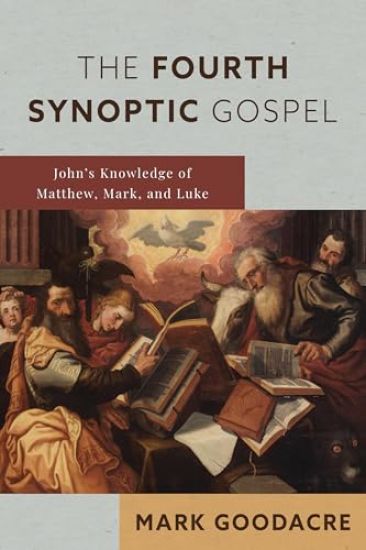
The Fourth Synoptic Gospel: John's Knowledge of Matthew, Mark, and Luke

The Fourth Synoptic Gospel: John's Knowledge of Matthew, Mark, and Luke

Mark Goodacre

William B. Eerdmans Publishing Company
2025
nidottu
A bold reassessment of John's Gospel and its relationship to the Gospels of Matthew, Mark, and Luke Generations ago in biblical studies, it was taken for granted that John wrote with full knowledge of Matthew, Mark, and Luke. But this consensus was overturned in the 1930s and since then, there has been no agreement on the issue. Today many scholars view the problem as unsolvable or impossibly complex. Mark Goodacre, however, takes a different view. In his galvanizing new book, Goodacre synthesizes long-neglected data with newer perspectives to make a strong case for John's familiarity with all three Synoptic Gospels. Writing in a clear and accessible style, Goodacre takes a systematic, step by step approach to showing that John knew and used the narratives of Matthew, Mark, and Luke. Goodacre identifies key points of agreement that range from diagnostic shards to shared structures. He also analyzes key differences; in his telling, John dramatically transforms the Synoptics and develops their Christology while adding a beloved disciple of Jesus, who is himself a Synoptic character. To make his argument accessible to a broad audience, Goodacre minimizes the use of scholarly citations and translates all Greek words. Just as importantly, he illustrates his claims with clear, simple charts so that readers can see for themselves the evidence that John knew and used the Synoptics. The Fourth Synoptic Gospel is sure to spark lively discussions among biblical scholars. Given that John's relationship to the Synoptics is a fundamental issue in New Testament studies, Goodacre's book is also a must read for students and professors alike.
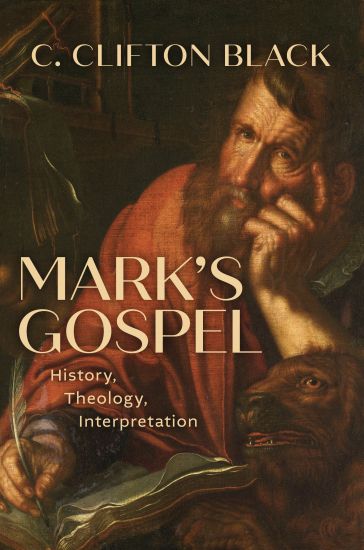
Mark's Gospel

Mark's Gospel

C Clifton Black

WILLIAM B EERDMANS PUBLISHING CO
2023
sidottu
A culmination of contemporary scholarship on the Gospel of Mark. A preeminent scholar of the Gospel of Mark, C. Clifton Black has been studying and publishing on the gospel for over thirty years. This new collection brings together his most pivotal work and fresh investigations to constitute an all-in-one compendium of contemporary Markan scholarship and exegesis. The essays included cover scriptural commentary, historical studies, literary analysis, theological argument, and pastoral considerations. Among other topics Black explores: - the gospel's provenance, authorship, and attribution - the significance of redaction criticism in Markan studies - recent approaches to the gospel's interpretation - literary and rhetorical analyses of the gospel's narrative - the kingdom of God and its revelation in Jesus - Mark's theology of creation, suffering, and discipleship - the Gospel of Mark's relationship to the Gospel of John and Paul's letters - the passion in Mark as the gospel's recapitulation Scholars, advanced students, and clergy alike will consider this book an indispensable resource for understanding the foundational gospel.
Mark Twain Made Me Do It and Other Plains Adventures
Mark Twain Made Me Do It and Other Plains Adventures is a collection of humorous essays portraying western Nebraska life and culture of the 1950s. Anecdotes on small-town baseball and the polio epidemic of 1952 provide a historic backdrop to the story of a wide-eyed boy exploring the limits of his universe. The adventures of a Twain-inspired raft trip down the South Platte and Sputnik-inspired homemade rockets mirror a society of seemingly settled lifestyles and frenzied technological advances. Family travels, holidays with Grandpa and Grandma, and marvelous creations like his sister's stories of Susabelle and the magic Band-Aids weave a splendid tale. But Jones's world is not one of sentimental nostalgia; running battles with town bullies, sobering encounters with religious buffoons, and an impressive collection of pedagogues specializing in violent corporal punishment capture the earthy essence of a world now largely disappeared.
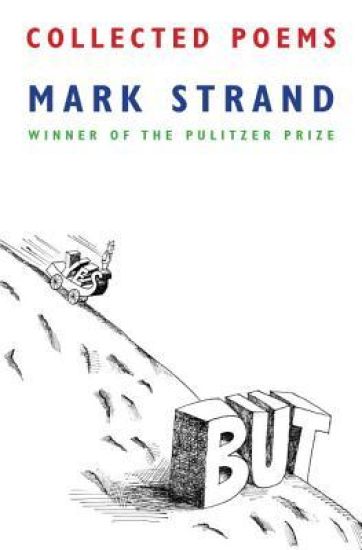
Collected Poems of Mark Strand

Collected Poems of Mark Strand

Mark Strand

Knopf Publishing Group
2016
nidottu
Longlisted for the 2014 National Book Award Gathered here is a half century's magnificent work by the former poet laureate of the United States and Pulitzer Prize winner whose haunting and exemplary style has influenced an entire generation of American poets. Beginning with the limited-edition volume Sleeping with One Eye Open, published in 1964, Mark Strand was hailed as a poet of piercing originality and elegance, and in the ensuing decades he has not swerved from his vision of how a poem should be shaped and what it should deliver. As he entered the middle period of his career, with volumes such as The Continuous Life (1990), Strand was already well-known for his ability to capture the subtle music of consciousness, and for creating painterly physical landscapes that could answer to the inner self: "And here the dark infinitive to feel, / Which would endure and have the earth be still / And the star-strewn night pour down the mountains / Into the hissing fields and silent towns." In his later work, from Blizzard of One (1998) which won the Pulitzer Prize, through the sly, provocative riddles of his recent Almost Invisible (2012), Strand has delighted in reminding us that there is no poet quite like him for a dose of dark wit that turns out to be deep wisdom and self-deprecation. He has given voice to our collective imagination with a grandeur and comic honesty worthy of his great Knopf forebear Wallace Stevens. With this volume, we celebrate his canonical work.
Mark Bittman's Kitchen Matrix

Mark Bittman's Kitchen Matrix

Mark Bittman

Pam Krauss Books
2015
sidottu
Bestselling author Mark Bittman anthologizes his popular Matrix series in a boldly graphic new cookbook featuring 400 recipes that emphasize creativity, improvisation, and simplicity as the keys to varied cooking. For years, Mark Bittman has shared his formulas, recipes, and kitchen improvisations in his popular New York Times Eat column, in which an ingredient or essential technique is presented in different variations in a bold matrix. Accompanied by striking photographs and brief, straightforward instructions, these thematic matrices show how simple changes in preparation and ingredient swaps in a master recipe can yield dishes that are each completely different from the original, and equally delicious. In Mark Bittman's Kitchen Matrix, Mark's matrices come together to create a collection of over 400 flexible recipes covering vegetables, fruits, meats and chicken, and even desserts. Whether you're cooking up soup (creamy, brothy, earthy, or hearty), freezing ice pops (in fruity, savory, creamy, or boozy varieties), or preparing asparagus (steamed, roasted, stir-fried, or grilled), following Mark's approach to culinary improvisation will deliver stand-out results.
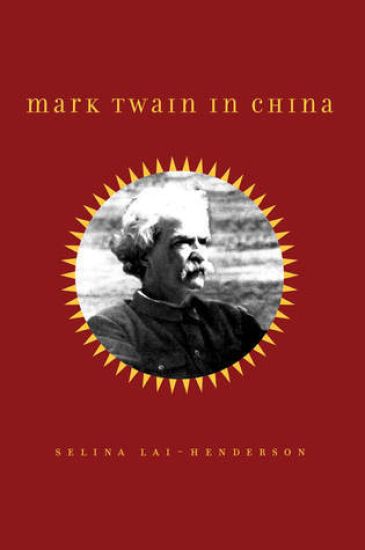
Mark Twain in China

Mark Twain in China

Selina Lai-Henderson

Stanford University Press
2015
sidottu
Mark Twain (Samuel Langhorne Clemens, 1835–1910) has had an intriguing relationship with China that is not as widely known as it should be. Although he never visited the country, he played a significant role in speaking for the Chinese people both at home and abroad. After his death, his Chinese adventures did not come to an end, for his body of works continued to travel through China in translation throughout the twentieth century. Were Twain alive today, he would be elated to know that he is widely studied and admired there, and that Adventures of Huckleberry Finn alone has gone through no less than ninety different Chinese translations, traversing China, Taiwan, and Hong Kong. Looking at Twain in various Chinese contexts—his response to events involving the American Chinese community and to the Chinese across the Pacific, his posthumous journey through translation, and China's reception of the author and his work, Mark Twain in China points to the repercussions of Twain in a global theater. It highlights the cultural specificity of concepts such as "race," "nation," and "empire," and helps us rethink their alternative legacies in countries with dramatically different racial and cultural dynamics from the United States.
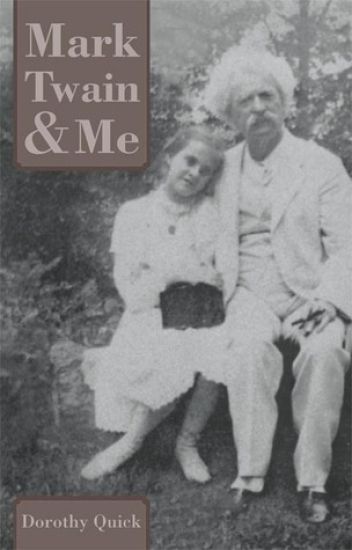
Mark Twain and Me

Mark Twain and Me

Dorothy Quick

University of Oklahoma Press
1961
nidottu
Samuel Langhorne Clemens and Dorothy Quick met aboard the S. S. Minnetonka in 1907. He was seventy-two years old, she almost eleven. The two began a great friendship that would endure until his death some years later. Dorothy became a frequent houseguest of Twain's, both at his Tuxedo Park home, in New York City, and in Redding Connecticut. Her recollections of life in those places dispel the image of Twain as a man bitter and pessimistic in his later years, revealing him instead as warm and fun-loving. Together they read his stories, which she knew well and loved, and he encouraged her to write, forming the ""Author's League for Two.
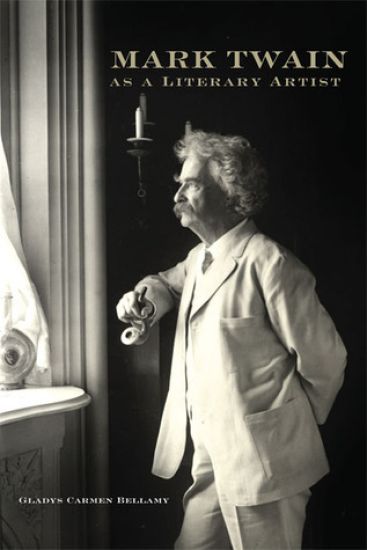
Mark Twain as a Literary Artist

Mark Twain as a Literary Artist

Gladys Carmen Bellamy

University of Oklahoma Press
2012
nidottu
Mark Twain has been the subject of violent disagreement among critics. Most of them have believed that he was an ""unconscious artist,"" working by impulse. Mark Twain as a Literary Artist shows that Mark Twain was much more the conscious craftsman than is generally believed.Here is revealed Twain's violent mental conflict, a logical dilemma, which forced much of his work into distorted patterns of thought and structure. Through years of practice he evolved methods to achieve detachment through techniques such as speaking through the lips of Huckleberry Finn or some other childlike person; placing satiric scenes far off in time or space; diminishing the human race to microscopic proportions so that its wrongs could be treated with detachment; and reducing life to a dream in which the greatest wrongs become tolerable because they seem unreal.Mark Twain as a Literary Artist is a mature, thorough, and revealing reassessment of the mind and methods of one of the most controversial figures in American literature.
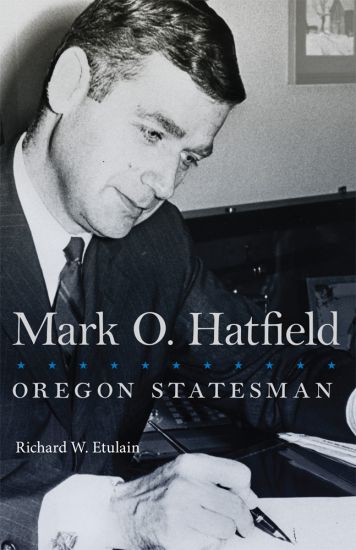
Mark O. Hatfield

Mark O. Hatfield

Richard W. Etulain

University of Oklahoma Press
2021
nidottu
In a career in public office spanning five decades, Mark Odom Hatfield (1922-2011) never lost an election. First elected to the Oregon House of Representatives in 1950, he retired from political office in 1997 after serving as Oregon state senator, secretary of state, and governor and as United States senator for five terms. He was arguably the state’s most important politician, but his brand of liberal-to-moderate Republicanism has long since vanished from the political stage. Mark O. Hatfield: Oregon Statesman tells Hatfield’s story-as an Oregonian, a politician, and a man of practical vision, deep convictions, and far-reaching consequence in the civic life of the state and the nation. A lifelong evangelical Christian and Republican-per his mother’s fondest wishes-and politically inclined from a young age, Hatfield came to office after studying and teaching political science and observing firsthand the ravages of war in the Pacific and the cruelty of segregation at home. Historian Richard W. Etulain portrays Hatfield as an energetic young Republican legislator in a state becoming increasingly Democratic. He pushed civil rights legislation, supported laborers as well as business interests, and struck a balance that would align him with moderates even as the party’s conservative wing became ascendant. Elected in 1958 as Oregon’s youngest-ever governor, Hatfield went on to become the first in the twentieth century to hold that office for two terms, using his tenure to streamline the state’s executive branch and promote Oregon as a prime destination for business and tourism-efforts that quickly earned him a place on the national stage. Etulain focuses on Hatfield as a force in Oregon state politics but also examines his long tenure as a U.S. senator, garnering attention early for his stance against the Vietnam War and later for his antinuclear position. The private life, the public figure, the man of faith and family, of an older West and the new: this biography, while compact, captures Mark Hatfield in full, as a major western politician of the twentieth century.
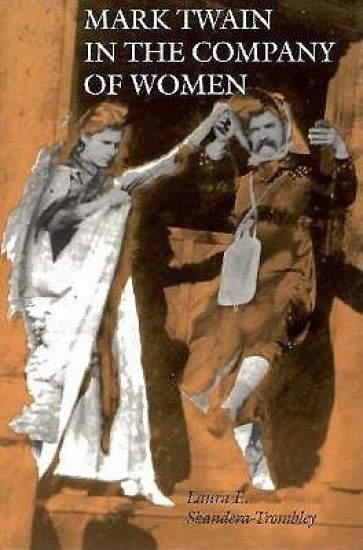
Mark Twain in the Company of Women

Mark Twain in the Company of Women

Laura E. Skandera Trombley

University of Pennsylvania Press
1997
pokkari
Riverboat pilot, Western correspondent, silver prospector, and world traveler, Samuel Clemens has long seemed the quintessential man's man. To Laura Skandera-Trombley, however, he is a writer who intentionally surrounded himself with women, one whose capacity to produce fiction had almost as much to do with the environment shaped by his female family and associates as with his own talent and genius. In Mark Twain in the Company of Women, Skandera-Trombley resettles Clemens in the company of the women authors with whom he corresponded; his daughters Susy, Clara, and Jean; the inhabitants of the progressive community of Elmira, New York; and, perhaps most important, his beloved wife, Livy, who emerges here as a figure of strength, intelligence, and influence.
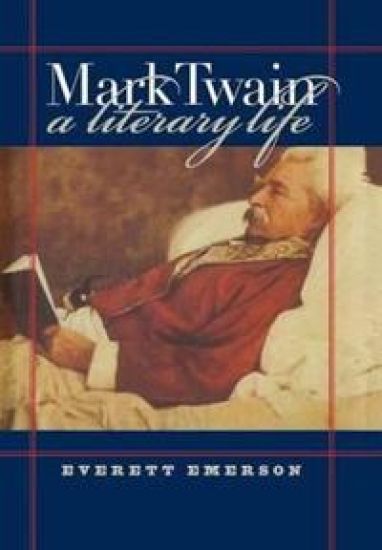
Mark Twain, a Literary Life

Mark Twain, a Literary Life

Everett Emerson

University of Pennsylvania Press
1999
sidottu
Selected by Choice magazine as an Outstanding Academic Title "Mark Twain endures. Readers sense his humanity, enjoy his humor, and appreciate his insights into human nature, even into such painful experiences as embarrassment and humiliation. No matter how remarkable the life of Samuel Clemens was, what matters most is the relationship of Mark Twain the writer and his writings. That is the subject of this book."-from the Preface In Mark Twain, A Literary Life, Everett Emerson revisits one of America's greatest and most popular writers to explore the relationship between the life of the writer and his writings. The assumption throughout is that to see Mark Twain's writings in focus, one must give proper attention to their biographical context. Mark Twain's literary career is fascinating in its strangeness. How could this genius have had so little sense of what he should next do? As a young man, Samuel Clemens's first vocation, that of journeyman printer, took him far from home to the sights of New York, Philadelphia, and Washington, while his next vocation would give him the identity by which we most frequently know him. His choice of "Mark Twain" as a pen name cemented his bond with the river, as did such books as Life on the Mississippi and Huckleberry Finn. Then following an unsuccessful try at silver mining, Clemens worked as a newspaperman, humorist, lecturer, but also cultivated an interest in playwriting, politics, and philosophizing. In reporting the author's life, Emerson has endeavored to permit Mark Twain to tell his own story as much as possible, through the use of letters and autobiographical writings, some unpublished. These fascinating glimpses into the life of the writer will be of interest to all who have an abiding affection for Samuel Clemens and his extraordinary legacy.
The Best Short Stories of Mark Twain

The Best Short Stories of Mark Twain

Mark Twain

Modern Library Inc
2004
pokkari
This unique collection of Twain's essential short stories and semiautobiographical narratives is a testament to the author's vast imagination. Featuring popular stories such as "The Notorious Jumping Frog of Calaveras County," "The Man That Corrupted Hadleyburg," and "The Facts Concerning the Recent Carnival of Crime in Connecticut," the edition also includes some darker works written in the author's twilight years. Together, these selections illuminate the depth of Twain's artistry, humor, irony, and narrative genius.
Mark Twain - American Writers 5

Mark Twain - American Writers 5

Leary Lewis

UNIVERSITY OF MINNESOTA PRESS
1960
nidottu
Mark Twain - American Writers 5 was first published in 1960. Minnesota Archive Editions uses digital technology to make long-unavailable books once again accessible, and are published unaltered from the original University of Minnesota Press editions.
Mark My Words

Mark My Words

Mishuana Goeman

University of Minnesota Press
2013
nidottu
Dominant history would have us believe that colonialism belongs to a previous era that has long come to an end. But as Native people become mobile, reservation lands become overcrowded and the state seeks to enforce means of containment, closing its borders to incoming, often indigenous, immigrants.In Mark My Words, Mishuana Goeman traces settler colonialism as an enduring form of gendered spatial violence, demonstrating how it persists in the contemporary context of neoliberal globalization. The book argues that it is vital to refocus the efforts of Native nations beyond replicating settler models of territory, jurisdiction, and race. Through an examination of twentieth-century Native women’s poetry and prose, Goeman illuminates how these works can serve to remap settler geographies and center Native knowledges. She positions Native women as pivotal to how our nations, both tribal and nontribal, have been imagined and mapped, and how these women play an ongoing role in decolonization.In a strong and lucid voice, Goeman provides close readings of literary texts, including those of E. Pauline Johnson, Esther Belin, Joy Harjo, Leslie Marmon Silko, and Heid Erdrich. In addition, she places these works in the framework of U.S. and Canadian Indian law and policy. Her charting of women’s struggles to define themselves and their communities reveals the significant power in all of our stories.
Mark Twain in the Margins

Mark Twain in the Margins

Joe B. Fulton

The University of Alabama Press
2000
nidottu
The common characterization of Mark Twain as an uneducated and improvizational writer took hold largely because of the novelist's own claims about his writing practices. This book argues that Twain approached his work with careful research and calculated design.
Mark Twain

Mark Twain

The University of Alabama Press
2006
sidottu
This volume is an annotated and indexed scholarly edition of every known interview with Mark Twain spanning his entire career. In these interviews, Twain discusses such topical issues as his lecture style, his writings, and his bankruptcy, while holding forth on such timeless issues as human nature, politics, war and peace, government corruption, humor, race relations, imperialism, international copyright, the elite, and his impressions of other writers (Howells, Gorky, George Bernard Shaw, Tennyson, Longfellow, Kipling, Hawthorne, Dickens, Bret Harte, among others). These interviews are both oral performances in their own right and a new basis for evaluating contemporary responses to Twain's writings. Some of the parameters Gary Scharnhorst has followed in assembling the collection is to omit self-interviews, humorous sketches written by Twain in interview form, interviews judged by Twain scholars to be spurious, purported interviews that contain no direct quotations, and interviews that exist only in versions translated from the English, as there is no way to verify the accuracy of their retranslations back into English. Because the interviews are records of verbal conversations rather than texts written in Twain's hand, Scharnhorst has corrected errors in spelling and regularized punctuation. Four interviews here are new to scholarship; fewer than a fifth have ever been reprinted. Because ""Mark Twain: The Complete Interviews"" makes accessible, in one volume, source documents of immeasurable value to understanding one of America's most consequential writers, it will be valued by both academic and public libraries, Twain scholars and enthusiasts, and general readers of humor.
Mark Twain at Home

Mark Twain at Home

Michael J. Kiskis; Laura Skandera Trombley; Gary Scharnhorst

The University of Alabama Press
2016
sidottu
Twain scholar Michael Kiskis opens this fascinating new exploration of Twain with the observation that most readers have no idea that Samuel Clemens was the father of four and that he lived through the deaths of three of his children as well as his wife. In Mark Twain at Home: How Family Shaped Twain’s Fiction, Kiskis persuasively argues that not only was Mark Twain not, as many believe, “antidomestic,” but rather the home and family were the muse and core message of his writing.Mark Twain was the child of a loveless marriage and a homelife over which hovered the constant specter of violence. Informed by his difficult childhood, orthodox readings of The Adventures of Tom Sawyer and Adventures of Huckleberry Finn frame these canonical literary figures as nostalgic—autobiographical fables of heroic individualists slipping the bonds of domestic life.Kiskis, however, presents a wealth of biographical details about Samuel Clemens and his family that reinterpret Twain’s work as a robust affirmation of domestic spheres of life. Among Kiskis’s themes are that, as the nineteenth century witnessed high rates of orphanhood and childhood mortality, Clemens’s work often depicted unmoored children seeking not escape from home but rather seeking the redemption and safety available only in familial structures. Similarly, Mark Twain at Home demonstrates that, following the birth of his first daughter, Twain began to exhibit in his writing an anxiety with social ills, notably those that affected children.In vigorous and accessible descriptions of Twain’s life as it became reflected in his prose, Kiskis offers a compelling and fresh understanding of this work of this iconic American author.
Mark Twain and Money

Mark Twain and Money

The University of Alabama Press
2017
sidottu
This groundbreaking volume explores the importance of economics and prosperity throughout Samuel Clemens’s writing and personal life.Mark Twain and Money: Language, Capital, and Culture focuses on an overlooked feature of the story of one of America’s most celebrated writers. Investigating Samuel Clemens’s often conflicting but insightful views on the roles of money in American culture and identity, this collection of essays shows how his fascination with the complexity of nineteenth-century economics informs much of Mark Twain’s writing. While most readers are familiar with Mark Twain the worldly wise writer, fewer are acquainted with Samuel Clemens the avid businessman. Throughout his life, he sought to strike it rich, whether mining for silver in Nevada, founding his own publishing company, or staking out ownership in the Paige typesetting machine. He was ever on the lookout for investment schemes and was intrigued by inventions, his own and those of others, that he imagined would net a windfall. Conventional wisdom has held that Clemens’s obsession with business and material wealth hindered his ability to write more and better books. However, this perspective fails to recognize how his interest in economics served as a rich source of inspiration for his literary creativity and is inseparable from his achievements as a writer. In fact, without this preoccupation with monetary success, Henry B. Wonham and Lawrence Howe argue, Twain’s writing would lack an important connection to a cornerstone of American culture. The contributors to this volume examine a variety of topics, such as a Clemens family myth of vast landholdings, Clemens’s strategies for protecting the Mark Twain brand, his insights into rapidly evolving nineteenth-century financial practices, the persistence of patronage in the literary marketplace, the association of manhood and monetary success, Clemens’s attitude and actions toward poverty, his response to the pains of bankruptcy through writing, and the intersection of racial identity and economics in American culture. These illuminating essays show how pecuniary matters invigorate a wide range of Twain’s writing from The Gilded Age, Roughing It,The Adventures of Tom Sawyer, The Prince and the Pauper, and A Connecticut Yankee in King Arthur’s Court, to later stories like “The £1,000,000 Banknote” and the Autobiography.