Kirjojen hintavertailu. Mukana 11 342 296 kirjaa ja 12 kauppaa.

Kirjahaku

Etsi kirjoja tekijän nimen, kirjan nimen tai ISBN:n perusteella.

1000 tulosta hakusanalla Mark Textor

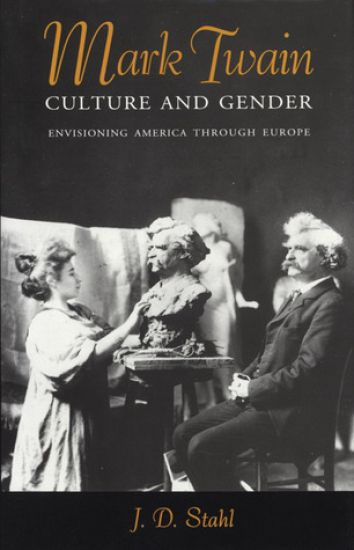
Mark Twain, Culture and Gender

Mark Twain, Culture and Gender

J. D. Stahl

University of Georgia Press
2012
pokkari
Often regarded as the quintessential American author, Mark Twain in fact mined his knowledge and experience of Europe as assiduously as he did his adventures on the Mississippi and in the American West. In this challenging and original study, J. D. Stall looks closely at various Twain works with European settings and traces the manner in which the great writer redefined European notions of class into American concepts of gender, identity, and society.Stahl not only examines such famous writings as The Innocents Abroad, The Prince and the Pauper, A Connecticut Yankee in King Arthur's Court, and the "Mysterious Stranger" manuscripts but also treats a number of neglected works, including 1601, "A Memorable Midnight Experience", and Personal Recollections of Joan of Arc. In these writings, Stahl shows, Twain utilized the terms and symbols of European society and history to express his deepest concerns involving father–son relationships, the legitimation of parentage, female political and sexual power, the victimization of "good" women, and, ultimately, the desire to bridge or even destroy the barriers between the sexes. The "exoticism" of foreign culture—with its kings and queens, priests, and aristocrats—furnished Twain with some especially potent images of power, authority, and tradition. These images, Stahl argues, were "plastic material in Mark Twain's hands", enabling the writer to explore the uncertainties and ambiguities of gender in America: what it meant to be a man in Victorian America; what Twain thought it meant to be a woman; how men and women did, could, and should relate to each other.Stahl's approach yields a wealth of fresh insights into Twain's work. In discussing The Innocents Abroad, for example, he analyzes the emergence of the "Mark Twain" persona as part of a quest for cultural authority that often took the form of sexual role-playing. He also demonstrates that The Prince and the Pauper, even more strikingly than Adventures of Huckleberry Finn, embodies the writer's central myth of orphaned sons searching for surrogate fathers. His reading of A Connecticut Yankee is a tour de force, uncovering the psychological contradictions in Twain's political aspirations toward democratic equality.Stahl's book is an important contribution to literary scholarship, informed by psychology, gender study, cultural theory, and traditional Twain criticism. It confirms Mark Twain's debt to European culture even as it illuminates his re-envisioning of that culture in his own uniquely American way.
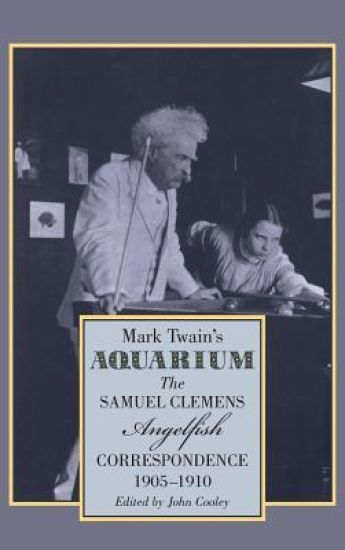
Mark Twain's Aquarium

Mark Twain's Aquarium

Samuel Clemens

University of Georgia Press
2018
sidottu
"What I lacked and what I needed," confessed Samuel Clemens in 1908, "was grandchildren." Near the end of his life, Clemens became the doting friend and correspondent of twelve schoolgirls ranging in age from ten to sixteen. For Clemens, "collecting" these surrogate granddaughters was a way of overcoming his loneliness, a respite from the pessimism, illness, and depression that dominated his later years.In Mark Twain's Aquarium, John Cooley brings together virtually every known communication exchanged between the writer and the girls he called his "angelfish." Cooley also includes a number of Clemens's notebook entries, autobiographical dictations, short manuscripts, and other relevant materials that further illuminate this fascinating story.Clemens relished the attention of these girls, orchestrating chaperoned visits to his homes and creating an elaborate set of rules and emblems for the Aquarium Club. He hung their portraits in his billiard room and invented games and plays for their amusement. For much of 1908, he was sending and receiving a letter a week from his angelfish. Cooley argues that Clemens saw cheerfulness and laughter as his only defenses against the despair of his late years. His enchantment with children, years before, had given birth to such characters as Tom Sawyer, Becky Thatcher, and Huck Finn. In the frivolities of the Aquarium Club, it found its final expression.Cooley finds no evidence of impropriety in Clemens behavior with the girls. Perhaps his greatest crime, the editor suggests, was in idealizing them, in regarding them as precious collectibles. "He tried to trap them in the amber of endless adolescence," Cooley writes. "By pleading that they stay young and innocent, he was perhaps attempting to deny that, as they and the world continued to change, so must he."
Mark Twain and Religion

Mark Twain and Religion

John Q Hays

Peter Lang Publishing Inc
1989
sidottu
Literary scholars long have insisted that, because of familial and financial tragedy and a growing feeling of artistic failure, Samuel L. Clemens (Mark Twain) suffered the deterioration of his religious writing into inconsistency and bleak despair. Refuting that critical dogmatism, John Q. Hays's seminal "Mark Twain" "and Religion: A Mirror of American Eclecticism" rejects notions of personal causation and instead attributes the inconsistency and despair to the properties of the materials with which Twain worked. Having rejected religious orthodoxy, Twain successively examines 18th century Rationalism, early 19th century Romanticism, and late 19th and early 20th century Scientific Determinism (all with undercurrents of folkloric supernaturalism he had learned from black slaves of his youth) in a literary eclectic journey similar to that of the corporate national mind and soul and reflective of someone spiritually alive.
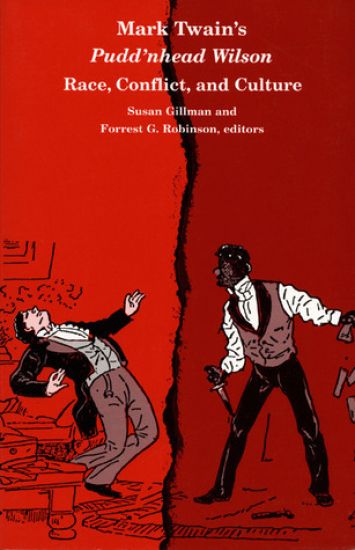
Mark Twain's Pudd'nhead Wilson

Mark Twain's Pudd'nhead Wilson

Duke University Press
1990
pokkari
This collection seeks to place Pudd’nhead Wilson-a neglected, textually fragmented work of Mark Twain’s-in the context of contemporary critical approaches to literary studies. The editors’ introduction argues the virtues of using Pudd’nhead Wilson as a teaching text, a case study in many of the issues presently occupying literary criticism: issues of history and the uses of history, of canon formation, of textual problematics, and finally of race, class, and gender. In a variety of ways the essays build arguments out of, not in spite of, the anomalies, inconsistencies, and dead ends in the text itself. Such wrinkles and gaps, the authors find, are the symptoms of an inconclusive, even evasive, but culturally illuminating struggle to confront and resolve difficult questions bearing on race and sex. Such fresh, intellectually enriching perspectives on the novel arise directly from the broad-based interdisciplinary foundations provided by the participating scholars. Drawing on a wide variety of critical methodologies, the essays place the novel in ways that illuminate the world in which it was produced and that further promise to stimulate further study.Contributors. Michael Cowan, James M. Cox, Susan Gillman, Myra Jehlen, Wilson Carey McWilliams, George E. Marcus, Carolyn Porter, Forrest Robinson, Michael Rogin, John Carlos Rowe, John Schaar, Eric Sundquist
Mark These Men

Mark These Men

Baxter J.Sidlow

KREGEL PUBLICATIONS,U.S.
1993
nidottu
A treasure-house of Bible biographies including Elisha, Elijah, King Saul, Daniel, Gideon, Balaam, the apostle Paul, Lazarus, the rich young ruler, Ananias, and Simon of Cyrene.
Mark Through Old Testament Eyes – A Background and Application Commentary
Mark Through Old Testament Eyes is the first in a new kind of commentary series, Through Old Testament Eyes, which opens the gospel in greater depth to anyone committed to understanding or teaching Scripture. In this volume, the richness of Old Testament allusions and background in Mark clarifies puzzling passages and explains others in fresh ways.The exodus motif structures Mark. Mark also presents Jesus as the true temple of God in contrast to the existing temple, which has been corrupted. These important themes are hidden to modern eyes without the insight of an Old Testament perspective, and this commentary builds on that insight to emphasize how the gospel applies to the daily lives of Christians today.
Mark Twain

Mark Twain

Louis J. Budd

University of Missouri Press
2001
nidottu
A comprehensive study of Mark Twain's social and political attitudes. The author traces the growth of Twain's political and social convictions and thus shows his relationship to the age in which he lived. The work is based on research in the newspapers of the day, personal letters, and other little-known material, as well as intensive analysis of the most relevant works by Twain. The material is presented in a forthright style that moves at a springy pace.
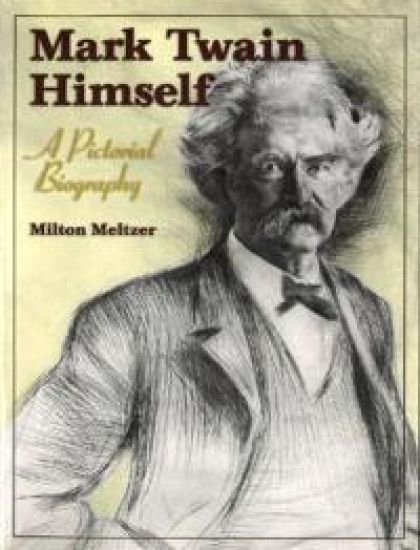
Mark Twain Himself

Mark Twain Himself

Milton Meltzer

University of Missouri Press
2002
nidottu
Mark Twain's life is portrayed here in this mosaic of words and over 600 pictures. The words are Twain's own, taken from his writings - not only the autobiography, but also his letters, notebooks, newspaper reporting, sketches, travel pieces and fiction - and the illustrations provide a counterpoint to the text. Presented in the hundreds of photos, prints, drawings, cartoons and paintings is Twain himself, from the apprentice in his printer's cap to the dying world-famous figure finishing his last voyage in a wheelchair.
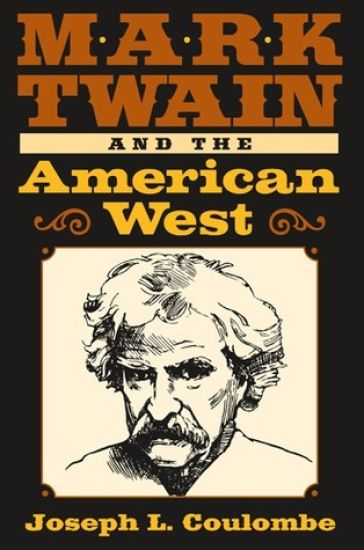
Mark Twain and the American West

Mark Twain and the American West

Joseph L. Coulombe

University of Missouri Press
2003
sidottu
In Mark Twain and the American West, Joseph Coulombe maintains that for more than twenty-five years, Mark Twain deliberately manipulated contemporary conceptions of the American West to create and then modify a public image that won worldwide fame. He establishes the central role of the region in the development of a persona that not only helped redefine American manhood and literary celebrity in the late nineteenth century, but also produced some of the most complex and challenging writings in the American canon. Coulombe sheds new light on previously underappreciated components of Twain's distinctly western persona. Gathering new evidence from contemporary newspapers, letters, literature, and advice manuals, Coulombe shows how Twain's persona in the early 1860s as a hard-drinking, low-living straight-talker was an implicit response to western conventions of manhood. He then traces the author's movement toward a more sophisticated public image, arguing that Twain characterized language and authorship in the same manner that he described western men: direct, bold, physical, even violent. In this way, Twain capitalized upon common images of the West to create himself as a new sort of western outlaw - one who wrote. Coulombe outlines Twain's struggle to find the proper balance between changing cultural attitudes toward male respectability and rebellion and his own shifting perceptions of the East and the West. Focusing on his unpredictable treatment of American Indians, Coulombe links Twain's enigmatic use of racial stereotypes in the West to Huck's treatment of Jim in Adventures of Huckleberry Finn. He argues that the repeated pattern not only illuminates the great moments in Huck's journey, but also clarifies inconsistencies within one of America's most important novels. Mark Twain and the American West is sure to generate new interest and discussion about Mark Twain and his influence. By understanding how conventions of the region, conceptions of money and class, and constructions of manhood intersect with the creation of Twain's persona, Coulombe helps us better appreciate the writer's lasting influence on American thought and literature through the twentieth century and into the twenty-first.
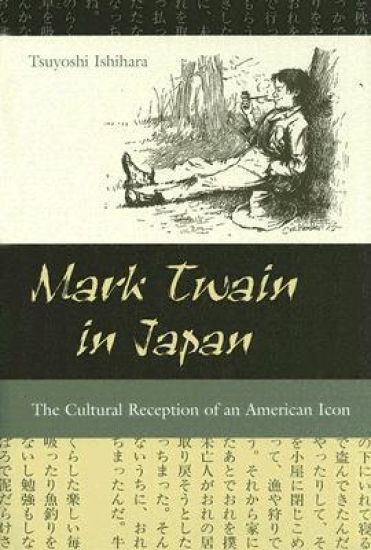
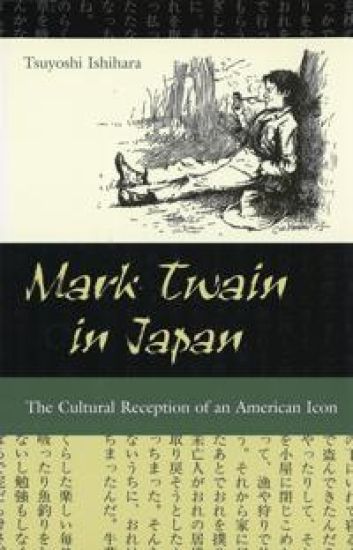
Mark Twain in Japan

Mark Twain in Japan

Tsuyoshi Ishihara

University of Missouri Press
2005
sidottu
Best known for his sharp wit and his portrayals of life along the banks of the Mississippi River, Mark Twain is indeed an American icon, and many scholars have examined how he and his work are perceived in the United States. In Mark Twain in Japan, however, Tsuyoshi Ishihara explores how Twain's uniquely American work is viewed in a completely different culture. Mark Twain in Japan addresses three principal areas. First, the author considers Japanese translations of Twain's books, which have been overlooked by scholars but which have had a significant impact on the formation of the public image of Twain and his works in Japan. Second, he discusses the ways in which traditional and contemporary Japanese culture have transformed Twain's originals and shaped Japanese adaptations. Finally, he uses the example of Twain in Japan as a vehicle to delve into the complexity of American cultural influences on other countries, challenging the simplistic one-way model of ""cultural imperialism."" Ishihara builds on the recent work of other researchers who have examined such models of American cultural imperialism and found them wanting. The reality is that other countries sometimes show their autonomy by transforming, distorting, and rejecting aspects of American culture, and Ishihara explains how this is no less true in the case of Twain. Featuring a wealth of information on how the Japanese have regarded Twain over time, this book offers both a history lesson on Japanese-American relations and a thorough analysis of the ""Japanization"" of Mark Twain, as Ishihara adds his voice to the growing international chorus of scholars who emphasize the global localization of American culture. While the book will naturally be of interest to Twain scholars, it also will appeal to other groups, particularly those interested in popular culture, Japanese culture, juvenile literature, film, and animation.
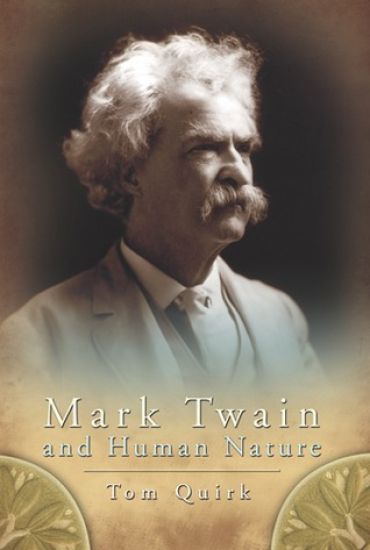
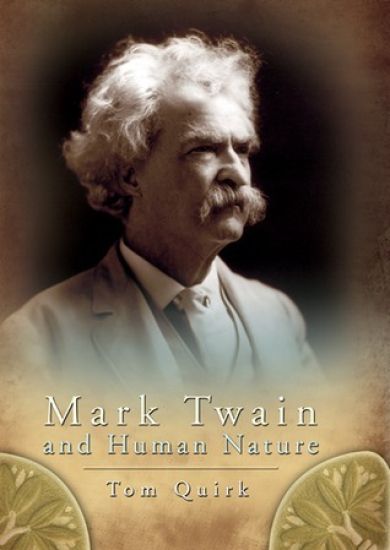
Mark Twain and Human Nature

Mark Twain and Human Nature

Tom Quirk

University of Missouri Press
2007
sidottu
Mark Twain once claimed that he could read human character as well as he could read the Mississippi River, and he studied his fellow humans with the same devoted attention. In both his fiction and his nonfiction, he was disposed to dramatize how the human creature acts in a given environment - and to understand why. Now one of America's preeminent Twain scholars takes a closer look at this icon's abiding interest in his fellow creatures. In seeking to account for how Twain might have reasonably believed the things he said he believed, Tom Quirk has interwoven the author's inner life with his writings to produce a meditation on how Twain's understanding of human nature evolved and deepened and to show that this was one of the central preoccupations of his life. Quirk charts the ways in which this humorist and occasional philosopher contemplated the subject of human nature from early adulthood until the end of his life, revealing how his outlook changed over the years. His travels, his readings in history and science, his political and social commitments, and his own pragmatic testing of human nature in his writing contributed to Twain's mature view of his kind. Quirk establishes the social and scientific contexts that clarify Twain's thinking, and he considers not only Twain's stated intentions about his purposes in his published works but also his ad hoc remarks about the human condition. Viewing both major and minor works through the lens of Twain's shifting attitude, Quirk provides refreshing new perspectives on the master's oeuvre. He offers a detailed look at the travel writings, including ""The Innocents Abroad"" and ""Following the Equator"", the novels, including ""The Adventures of Tom Sawyer"", ""Adventures of Huckleberry Finn"", and ""Pudd'nhead Wilson""; and an important review of works from Twain's last decade, including fantasies centering on man's insignificance in ""Creation"", works preoccupied with isolation - notably ""No. 44, The Mysterious Stranger"" and ""Eve's Diary"" - and polemical writings such as ""What is Man?"" Comprising the well-seasoned reflections of a mature scholar, this persuasive and eminently readable study comes to terms with the life-shaping ideas and attitudes of one of America's best-loved writers. ""Mark Twain and Human Nature"" offers readers a better understanding of Twain's intellect as it enriches our understanding of his craft and his ineluctable humor.
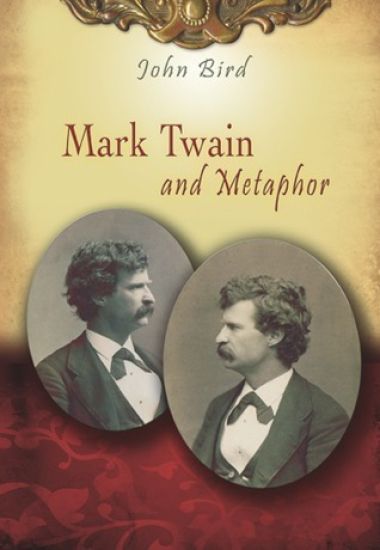
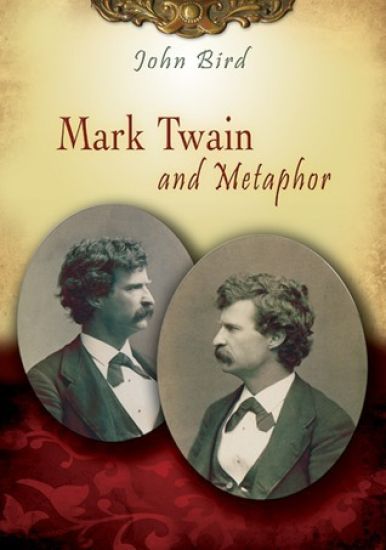
Mark Twain and Metaphor

Mark Twain and Metaphor

John Bird

University of Missouri Press
2007
sidottu
Metaphor theory, observes John Bird, is like Mark Twain: both seem simple upon first introduction. Now, in the most complete study to date of Twain's use of figurative language, a veteran Twain scholar tackles the core of his writing and explores it with theoretical approaches that have rarely been applied to Twain, providing new insights into how he imagined his world - and the singular ways in which he expressed himself. From ""The Jumping Frog"" to the late dream narratives, Bird considers Twain's metaphoric construction over his complete career and especially sheds new light on his central texts: Roughing It; The Adventures of Tom Sawyer; Adventures of Huckleberry Finn; A Connecticut Yankee in King Arthur's Court; Pudd'nhead Wilson; and No. 44, The Mysterious Stranger. He reconsiders ""Old Times on the Mississippi"" as the most purely metaphorical of Twain's writings, goes on to look at how Twain used metaphor and talked about it in a variety of works and genres, and even argues that Clemens' pseudonym is not so much an alter ego as a metaphorized self. By offering insight into how Twain handled figurative language during the composing process, Bird reveals not only hidden facets of his artistry but also new aspects of works that we think we know well - including some entirely new ideas regarding Huck Finn that draw on the recent discovery of the first half of the manuscript. In addition to dealing with issues currently central to Twain studies, such as race and gender, he also links metaphor to humor and dream theory to further illuminate topics central to his work. More than a study of Twain's language, the book delves into the psychological aspects of metaphor to reveal the writer's attitudes and thoughts, showing how using metaphor as a guide to Twain reveals much about his composition process. Applying the insights of metaphor theorists such as Roman Jakobson and Colin M. Turbayne, Bird offers readers not only new insights into Twain but also an introduction to this interdisciplinary field. In lively prose, Mark Twain and Metaphor provides a vital way to read Twain's entire corpus, allowing readers to better appreciate his style, humor, and obsession with dreams. It opens new ground and makes old ground fresh again, offering ways to see and resee this essential American writer.
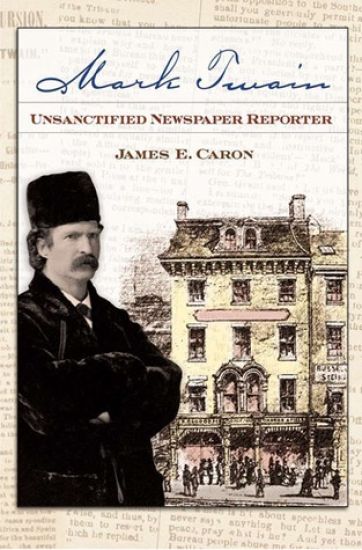
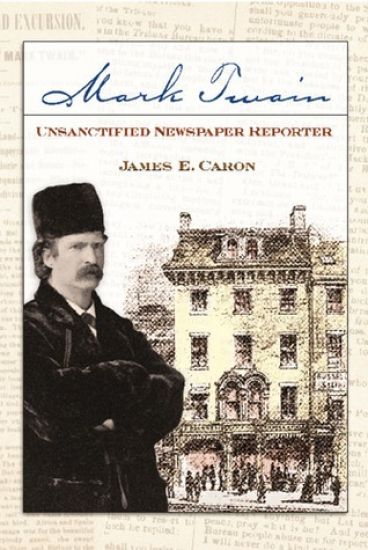
Mark Twain, Unsanctified Newspaper Reporter

Mark Twain, Unsanctified Newspaper Reporter

James E. Caron

University of Missouri Press
2008
sidottu
Before Mark Twain became a national celebrity with his best-selling ""The Innocents Abroad"", he was just another struggling writer perfecting his craft - but already ""playin' hell"" with the world. In the first book in more than fifty years to examine the initial phase of Samuel Clemens' writing career, James Caron draws on contemporary scholarship and his own careful readings to offer a fresh and comprehensive perspective on those early years - and to challenge many long-standing views of Mark Twain's place in the tradition of American humor.Tracing the arc of Clemens' career from self-described ""unsanctified newspaper reporter"" to national author between 1862 and 1867, Caron reexamines the early and largely neglected writings - especially the travel letters from Hawaii and the letters chronicling Clemens' trip from California to New York City. Caron connects those sets of letters with comic materials Clemens had already published, drawing on all known items from this first phase of his career - even the virtually forgotten pieces from the ""San Francisco Morning Call in 1864"" - to reveal how Mark Twain's humor was shaped by the sociocultural context and how it catered to his audience's sensibilities while unpredictably transgressing its standards.Caron reveals how Sam Clemens' contemporaries, notably Charles Webb, provided important comic models, and he shows how Clemens not only adjusted to but also challenged the guidelines of the newspapers and magazines for which he wrote, evolving as a comic writer who transmuted personal circumstances into literary art. Plumbing Mark Twain's cultural significance, Caron draws on anthropological insights from Victor Turner and others to compare the performative aspects of Clemens' early work to the role of ritual clowns in traditional societies.Brimming with fresh insights into such benchmarks as ""Our Fellow Savages of the Sandwich Islands"" and ""Jim Smiley and His Jumping Frog,"" this book is a gracefully written work that reflects both patient research and considered judgment to chart the development of an iconic American talent. ""Mark Twain, Unsanctified Newspaper Reporter"" should be required reading for all serious scholars of his work, as well as for anyone interested in the interplay between artistic creativity and the literary marketplace.
Mark Twain and Metaphor

Mark Twain and Metaphor

John Bird

University of Missouri Press
2011
nidottu
Metaphor theory, observes John Bird, is like Mark Twain: both seem simple upon first introduction. Now, in the most complete study to date of Twain's use of figurative language, a veteran Twain scholar tackles the core of his writing and explores it with theoretical approaches that have rarely been applied to Twain, providing new insights into how he imagined his world - and the singular ways in which he expressed himself. From 'The Jumping Frog' to the late dream narratives, Bird considers Twain's metaphoric construction over his complete career and especially sheds new light on his central texts: Roughing It; The Adventures of Tom Sawyer; Adventures of Huckleberry Finn; A Connecticut Yankee in King Arthur's Court; Pudd'nhead Wilson; and No. 44, The Mysterious Stranger. He reconsiders 'Old Times on the Mississippi' as the most purely metaphorical of Twain's writings, goes on to look at how Twain used metaphor and talked about it in a variety of works and genres, and even argues that Clemens's pseudonym is not so much an alter ego as a metaphorized self. By offering insight into how Twain handled figurative language during the composing process, Bird reveals not only hidden facets of his artistry but also new aspects of works that we think we know well - including some entirely new ideas regarding Huck Finn that draw on the recent discovery of the first half of the manuscript. In addition to dealing with issues currently central to Twain studies, such as race and gender, he also links metaphor to humor and dream theory to further illuminate topics central to his work. More than a study of Twain's language, the book delves into the psychological aspects of metaphor to reveal the writer's attitudes and thoughts, showing how using metaphor as a guide to Twain reveals much about his composition process. Applying the insights of metaphor theorists such as Roman Jakobson and Colin M. Turbayne, Bird offers readers not only new insights into Twain but also an introduction to this interdisciplinary field. In lively prose, Mark Twain and Metaphor provides a vital way to read Twain's entire corpus, allowing readers to better appreciate his style, humor, and obsession with dreams. It opens new ground and makes old ground fresh again, offering ways to see and resee this essential American writer.
Mark Twain, Unsanctified Newspaper Reporter

Mark Twain, Unsanctified Newspaper Reporter

James E. Caron

University of Missouri Press
2011
nidottu
Before Mark Twain became a national celebrity with his best-selling The Innocents Abroad, he was just another struggling writer perfecting his craft—but already “playin’ hell” with the world. In the first book in more than fifty years to examine the initial phase of Samuel Clemens’s writing career, James Caron draws on contemporary scholarship and his own careful readings to offer a fresh and comprehensive perspective on those early years—and to challenge many long-standing views of Mark Twain’s place in the tradition of American humour. Tracing the arc of Clemens’s career from self-described “unsanctified newspaper reporter” to national author between 1862 and 1867, Caron reexamines the early and largely neglected writings—especially the travel letters from Hawaii and the letters chronicling Clemens’s trip from California to New York City. Caron connects those sets of letters with comic materials Clemens had already published, drawing on all known items from this first phase of his career—even the virtually forgotten pieces from the San Francisco Morning Call in 1864—to reveal how Mark Twain’s humour was shaped by the sociocultural context and how it catered to his audience’s sensibilities while unpredictably transgressing its standards. Caron reveals how Sam Clemens’s contemporaries, notably Charles Webb, provided important comic models, and he shows how Clemens not only adjusted to but also challenged the guidelines of the newspapers and magazines for which he wrote, evolving as a comic writer who transmuted personal circumstances into literary art. Plumbing Mark Twain’s cultural significance, Caron draws on anthropological insights from Victor Turner and others to compare the performative aspects of Clemens’s early work to the role of ritual clowns in traditional societies. Brimming with fresh insights into such benchmarks as “Our Fellow Savages of the Sandwich Islands” and “Jim Smiley and His Jumping Frog,” this book is a gracefully written work that reflects both patient research and considered judgment to chart the development of an iconic American talent. Mark Twain, Unsanctified Newspaper Reporter should be required reading for all serious scholars of his work, as well as for anyone interested in the interplay between artistic creativity and the literary marketplace.
Mark Twain and the American West

Mark Twain and the American West

Joseph L. Coulombe

University of Missouri Press
2011
nidottu
In Mark Twain and the American West, Joseph Coulombe explores how Mark Twain deliberately manipulated contemporary conceptions of the American West to create and then modify a public image that eventually won worldwide fame. He establishes the central role of the western region in the development of a persona that not only helped redefine American manhood and literary celebrity in the late nineteenth century, but also produced some of the most complex and challenging writings in the American canon. Coulombe sheds new light on previously underappreciated components of Twain's distinctly western persona. Gathering evidence from contemporary newspapers, letters, literature, and advice manuals, Coulombe shows how Twain's persona in the early 1860s as a hard-drinking, low-living straight-talker was an implicit response to western conventions of manhood. He then traces the author's movement toward a more sophisticated public image, arguing that Twain characterized language and authorship in the same manner that he described western men: direct, bold, physical, even violent. In this way, Twain capitalized upon common images of the West to create himself as a new sort of western outlaw - one who wrote. Coulombe outlines Twain's struggle to find the proper balance between changing cultural attitudes toward male respectability and rebellion and his own shifting perceptions of the East and the West. Focusing on the tension between these goals, Coulombe explores Twain's emergence as the moneyed and masculine man-of-letters, his treatment of American Indians in its relation to his depiction of Jim in Adventures of Huckleberry Finn, the enigmatic connection of Huck Finn to the natural world, and Twain's profound influence on Willa Cather's western novels. Mark Twain and the American West is sure to generate new interest and discussion about Mark Twain and his influence. By understanding how conventions of the region, conceptions of money and class, and constructions of manhood intersect with the creation of Twain's persona, Coulombe helps us better appreciate the writer's lasting effect on American thought and literature through the twentieth century and into the twenty-first.
Mark Twain in Japan

Mark Twain in Japan

Tsuyoshi Ishihara

University of Missouri Press
2011
nidottu
Best known for his sharp wit and his portrayals of life along the banks of the Mississippi River, Mark Twain is indeed an American icon, and many scholars have examined how he and his work are perceived in the United States. In Mark Twain in Japan, however, Tsuyoshi Ishihara explores how Twain’s uniquely American work is viewed in a completely different culture.Mark Twain in Japan addresses three principal areas. First, the author considers Japanese translations of Twain’s books, which have been overlooked by scholars but which have had a significant impact on the formation of the public image of Twain and his works in Japan. Second, he discusses the ways in which traditional and contemporary Japanese culture have transformed Twain’s originals and shaped Japanese adaptations. Finally, he uses the example of Twain in Japan as a vehicle to delve into the complexity of American cultural influences on other countries, challenging the simplistic one-way model of “cultural imperialism.” Ishihara builds on the recent work of other researchers who have examined such models of American cultural imperialism and found them wanting. The reality is that other countries sometimes show their autonomy by transforming, distorting, and rejecting aspects of American culture, and Ishihara explains how this is no less true in the case of Twain.Featuring a wealth of information on how the Japanese have regarded Twain over time, this book offers both a history lesson on Japanese-American relations and a thorough analysis of the “Japanisation” of Mark Twain, as Ishihara adds his voice to the growing international chorus of scholars who emphasise the global localisation of American culture. While the book will naturally be of interest to Twain scholars, it also will appeal to other groups, particularly those interested in popular culture, Japanese culture, juvenile literature, film, animation, and globalisation of American culture.
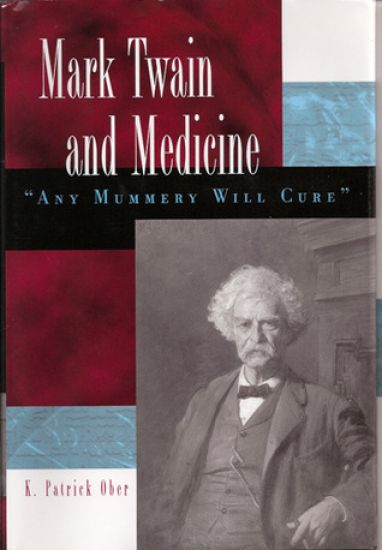
Mark Twain and Medicine

Mark Twain and Medicine

K. Patrick Ober

University of Missouri Press
2011
nidottu
Mark Twain has always been America's spokesman, and his comments on a wide range of topics continue to be accurate, valid, and frequently amusing. His opinions on the medical field are no exception. While Twain's works, including his popular novels about Tom Sawyer and Huckleberry Finn, are rich in medical imagery and medical themes derived from his personal experiences, his interactions with the medical profession and his comments about health, illness, and physicians have largely been overlooked. In Mark Twain and Medicine, K. Patrick Ober remedies this omission. The nineteenth century was a critical time in the development of American medicine, with much competition among the different systems of health care, both traditional and alternative. Not surprisingly, Mark Twain was right in the middle of it all. He experimented with many of the alternative care systems that were available in his day--in part because of his frustration with traditional medicine and in part because he hoped to find the """"perfect"""" system that would bring health to his family. Twain's commentary provides a unique perspective on American medicine and the revolution in medical systems that he experienced firsthand. Ober explores Twain's personal perspective in this area, as he expressed it in fiction, speeches, and letters. As a medical educator, Ober explains in sufficient detail and with clarity all medical and scientific terms, making this volume accessible to the general reader. Ober demonstrates that many of Twain's observations are still relevant to today's health care issues, including the use of alternative or complementary medicine in dealing with illness, the utility of placebo therapies, and the role of hope in the healing process. Twain's evaluation of the medical practices of his era provides a fresh, humanistic, and personalised view of the dramatic changes that occurred in medicine through the nineteenth century and into the first decade of the twentieth. Twain scholars, general readers, and medical professionals will all find this unique look at his work appealing.
Mark Twain and Human Nature

Mark Twain and Human Nature

Tom Quirk

University of Missouri Press
2011
nidottu
Mark Twain once claimed that he could read human character as well as he could read the Mississippi River, and he studied his fellow humans with the same devoted attention. In both his fiction and his nonfiction, he was disposed to dramatise how the human creature acts in a given environment—and to understand why. Now one of America’s preeminent Twain scholars takes a closer look at this icon’s abiding interest in his fellow creatures. In seeking to account for how Twain might have reasonably believed the things he said he believed, Tom Quirk has interwoven the author’s inner life with his writings to produce a meditation on how Twain’s understanding of human nature evolved and deepened, and to show that this was one of the central preoccupations of his life. Quirk charts the ways in which this humourist and occasional philosopher contemplated the subject of human nature from early adulthood until the end of his life, revealing how his outlook changed over the years. His travels, his readings in history and science, his political and social commitments, and his own pragmatic testing of human nature in his writing contributed to Twain’s mature view of his kind. Quirk establishes the social and scientific contexts that clarify Twain’s thinking, and he considers not only Twain’s stated intentions about his purposes in his published works but also his ad hoc remarks about the human condition. Viewing both major and minor works through the lens of Twain’s shifting attitude, Quirk provides refreshing new perspectives on the master’s oeuvre. He offers a detailed look at the travel writings, including The Innocents Abroad and Following the Equator, and the novels, including The Adventures of Tom Sawyer, Adventures of Huckleberry Finn, and Pudd’nhead Wilson, as well as an important review of works from Twain’s last decade, including fantasies centering on man’s insignificance in Creation, works preoccupied with isolation—notably No. 44, The Mysterious Stranger and “Eve’s Diary”—and polemical writings such as What Is Man? Comprising the well-seasoned reflections of a mature scholar, this persuasive and eminently readable study comes to terms with the life-shaping ideas and attitudes of one of America’s best-loved writers. Mark Twain and Human Nature offers readers a better understanding of Twain’s intellect as it enriches our understanding of his craft and his ineluctable humour.
Mark Twain's Homes and Literary Tourism

Mark Twain's Homes and Literary Tourism

Hilary Lowe

University of Missouri Press
2012
sidottu
A century after Samuel Clemens's death, Mark Twain thrives - his recently released autobiography topped bestseller lists. One way fans still celebrate the first true American writer and his work is by visiting any number of Mark Twain destinations. They believe they can learn something unique by visiting the places where he lived. Mark Twain's Homes and Literary Tourism untangles the complicated ways that Clemens's houses, now museums, have come to tell the stories that they do about Twain and, in the process, reminds us that the sites themselves are the products of multiple agendas and, in some cases, unpleasant histories. Hilary Iris Lowe leads us through four Twain homes, beginning at the beginning - Florida, Missouri, where Clemens was born. Today the site is simply a concrete pedestal missing its bust, a plaque, and an otherwise-empty field. Though the original cabin where he was born likely no longer exists, Lowe treats us to an overview of the history of the area and the state park challenged with somehow marking this site. Next, we travel with Lowe to Hannibal, Missouri, Clemens's childhood home, which he saw become a tourist destination in his own lifetime. Today mannequins remind visitors of the man that the boy who lived there became and the literature that grew out of his experiences in the house and little town on the Mississippi. Hartford, Connecticut, boasts one of Clemens's only surviving adulthood homes, the house where he spent his most productive years. Lowe describes the house's construction, its sale when the high cost of living led the family to seek residence abroad, and its transformation into the museum. Lastly, we travel to Elmira, New York, where Clemens spent many summers with his family at Quarry Farm. His study is the only room at this destination open to the public, and yet, tourists follow in the footsteps of literary pilgrim Rudyard Kipling to see this small space. Literary historic sites pin their authority on the promise of exclusive insight into authors and texts through firsthand experience. As tempting as it is to accept the authenticity of Clemens's homes, Mark Twain's Homes and Literary Tourism argues that house museums are not reliable critical texts but are instead carefully constructed spaces designed to satisfy visitors. This volume shows us how these houses' portrayals of Clemens change frequently to accommodate and shape our own expectations of the author and his work.