Kirjojen hintavertailu. Mukana 11 717 486 kirjaa ja 12 kauppaa.

Kirjahaku

Etsi kirjoja tekijän nimen, kirjan nimen tai ISBN:n perusteella.

1000 tulosta hakusanalla Melvin L. Butler

The Georgia State Constitution

The Georgia State Constitution

Melvin B. Hill; G. LaVerne Williamson Hill

Oxford University Press Inc
2018
sidottu
In The Georgia State Constitution, the authors offer a detailed description of the creation and development of Georgia's constitution. They explain how political and cultural events, from colonial times, through the Civil War, to the present, have affected Georgia's constitutional law. Accompanying the full text of the constitution is a rich commentary of the constitutional provisions. The authors trace their origins and interpretation by the courts and other governmental bodies. This volume also provides a bibliographical essay which features the most important sources of Georgia's constitutional history and constitutional law. It concludes with a table of cases cited in the history and the constitutional commentary, as well as a subject index. The second edition provides updates to the constitution including all constitutional amendments through the 2016 general election and additional case-law reflecting current thinking on critical legal issues in Georgia. The Oxford Commentaries on the State Constitutions of the United States is an important series that reflects a renewed international interest in constitutional history and provides expert insight into each of the 50 state constitutions. Each volume in this innovative series contains a historical overview of the state's constitutional development, a section-by-section analysis of its current constitution, and a comprehensive guide to further research. Under the expert editorship of Professor G. Alan Tarr, Director of the Center on State Constitutional Studies at Rutgers University, this series provides essential reference tools for understanding state constitutional law. Books in the series can be purchased individually or as part of a complete set, giving readers unmatched access to these important political documents.

Research in Psychotherapy

Research in Psychotherapy

Melvin Kornreich

AldineTransaction
2008
nidottu
Research in Psychotherapy is a comprehensive synthesis and assessment of the psychotherapeutic research literature for the use of both researchers and those in clinical practice. It is designed as a general reference work, an instruction guide, and a source of information about specific aspects and problems of research.The book consists of three parts. Part 1 discusses principles and methods of research as they are applied to psychotherapy. It provides general background material and principles to help non-researchers appreciate some of the important problems that are encountered. In Part 2, existing research on the effects of psychotherapy and the determinants and correlates of outcome are clustered and reviewed. Chapters 4 to 7 are concerned strictly with a review and appraisal of controlled studies that were designed to evaluate the effects of psychotherapy. Chapters 8 to 13 deal with a large body of research on various factors associated with therapeutic outcome--method, style, and technique variables; patient, therapist, and time variables. Part 3 is concerned with research on aspects of the therapeutic process and on the effect of many of these same variables on the therapeutic interchange as distinct from the outcome of therapy. Also discussed is research on various therapeutic phenomena and conditions about which so much has been written and so little really known.Research in Psychotherapy was written in the conviction that clinical practice should be influenced by research and that rigorous research that meets acceptable experimental standards can be done on the field of psychotherapy.
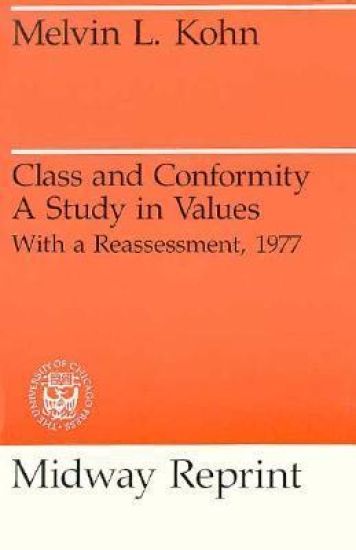
Class and Conformity

Class and Conformity

Melvin Kohn

University of Chicago Press
1989
nidottu
First published in 1969 and augmented by the author with a new essay in 1977, Class and Conformity remains a model of sociological craftsmanship. Kohn's work marshals evidence from three studies to show a decided connection between social class and values. He emphasizes that occupation fosters either self-direction or conformity in people, depending upon the amount of freedom from supervision, the complexity of the task, and the variety of work that the job entails. The extent of parents' self-direction on the job further determines the value placed on self-direction for their children; thus, Kohn finds, is the most critical and pervasive factor distinguishing children raised in different socioeconomic classes.
Economics

Economics

Melvin W. Reder

University of Chicago Press
1999
sidottu
Economics has always had an unstable reputation in the academic world as well as in the public eye. Some consider economists to be scientists while others see them as disguised ideologues. The resulting insecurity of their discipline's status has driven economists continually to redefine its scope, methods, and content. Since the 1930s economists have increasingly emphasized the scientific, quantitative side of their field, which has directed research to topics that can be elaborated through mathematical models. Economist Melvin Reder argues that this ongoing historical shift has been the result of pressure from two directions: from society's demand that expert advice be based on "scientific findings", and from economists themselves, who have wanted to view their own profession as a science. This book describes the profession of economics as it has developed in response to these challenges. The diversity of the responses points to persistent internal disagreements within the economics community about its proper scope and methods. These disagreements, in turn, have led to incompatible proposals for the direction of research and divergent recommendations for public policy. Although Reder does not pretend to resolve these difficulties, he appraises different arguments and demonstrates how they have influenced both economists' behaviour and public esteem for the profession. While recognizing that serious questions remain about economics's scientific status and practical utility, this text shows where economics has obtained practically usable results and where its fruits have been limited to elaboration of analytical constructions of uncertain applicability.
Economics

Economics

Melvin W. Reder

University of Chicago Press
2001
nidottu
Economics has always had an unstable reputation in the academic world as well as in the public eye. Some consider economists to be scientists while others see them as disguised ideologues. The resulting insecurity of their discipline's status has driven economists continually to redefine its scope, methods, and content. Since the 1930s economists have increasingly emphasized the scientific, quantitative side of their field, which has directed research to topics that can be elaborated through mathematical models. Economist Melvin Reder argues that this ongoing historical shift has been the result of pressure from two directions: from society's demand that expert advice be based on "scientific findings", and from economists themselves, who have wanted to view their own profession as a science. This book describes the profession of economics as it has developed in response to these challenges. The diversity of the responses points to persistent internal disagreements within the economics community about its proper scope and methods. These disagreements, in turn, have led to incompatible proposals for the direction of research and divergent recommendations for public policy. Although Reder does not pretend to resolve these difficulties, he appraises different arguments and demonstrates how they have influenced both economists' behaviour and public esteem for the profession. While recognizing that serious questions remain about economics's scientific status and practical utility of economics, this text shows where economics has obtained practically usable results and where its fruits have been limited to elaboration of analytical constructions of uncertain applicability.
Joseph Roberts Smallwood

Joseph Roberts Smallwood

Melvin Baker; Peter Neary

McGill-Queen's University Press
2021
sidottu
No other figure, historical or political, features more prominently in recent Newfoundland history than Joey Smallwood. During his long career in Newfoundland politics, Smallwood used the literary, rhetorical, and theatrical skills honed in the first five decades of his life to create a distinct and celebrated persona. He told his own story in his lively autobiography, I Chose Canada, published in 1973 only a year after he left office.Talented, venturesome, and above all resilient, he was no ordinary Joe. Smallwood was born in Gambo, Bonavista Bay, but grew up in St John's. Leaving school at fifteen, he quickly established himself as a journalist and as a publicist for Sir William Coaker's Fishermen's Protective Union. In the early 1920s Smallwood sojourned twice in New York, where he planned a Newfoundland labour party. Ambition, however, led him to support the Liberal Party of Sir Richard Squires. Defeated as a candidate in the general election of June 1932, he next promoted producer and consumer cooperatives, but with mixed results. In 1937 he edited The Book of Newfoundland and thereafter enjoyed great success on the radio as "The Barrelman." The book culminates with Smallwood's adoption of the cause of Confederation and his swearing in on 1 April 1949 as premier of the new Province of Newfoundland.There are multiple J.R. Smallwoods, but the aspiring and ambitious figure presented in this biography stands apart. Melvin Baker and Peter Neary use the largely untapped sources of Smallwood's own papers and his extensive journalistic writing to add a documentary basis to what is known or conjectured about the first five decades of Smallwood's remarkable life, both public and private.
New Arenas for Community Social Work Practice with Urban Youth
This book urges professionals who work with urban youth to develop or rediscover innovative, capacity-enhancing, community-based approaches for engaging young people in activities that systematically build on their talents and energy. Delgado argues that these interventions must be grounded in the community and conceptualized and implemented by the community in order for the youths to become potential community assets rather than a drain on the family and community.
New Arenas for Community Social Work Practice with Urban Youth
This book urges professionals who work with urban youth to develop or rediscover innovative, capacity-enhancing, community-based approaches for engaging young people in activities that systematically build on their talents and energy. Delgado argues that these interventions must be grounded in the community and conceptualized and implemented by the community in order for the youths to become potential community assets rather than a drain on the family and community.
Where Are All the Young Men and Women of Color?

Where Are All the Young Men and Women of Color?

Melvin Delgado

Columbia University Press
2001
sidottu
When it comes to social work practice in community outreach programs, in juvenile detention centres, in prisons, in parole and probation programs, and in the inner cities, Melvin Delgado asks the question: Where are all the young men and women of color? Although many urban residents, especially persons of color, are or have been involved in the juvenile and/or criminal justice system, the topic of criminal offenders and ex-offenders has been much neglected by the human services literature. This book stands as the only work to discuss correctional supervision and the needs of individuals in a nonprescriptive manner, marking a shift toward a capacity enhancement, or strengths perspective, approach- specifically what are the strengths of individuals and how can they capitalize on them? Delgado includes a section of reflections from the field that applies capacity enhancement principles and methods to case studies.
Where Are All the Young Men and Women of Color?

Where Are All the Young Men and Women of Color?

Melvin Delgado

Columbia University Press
2001
pokkari
When it comes to social work practice in community outreach programs, in juvenile detention centres, in prisons, in parole and probation programs, and in the inner cities, Melvin Delgado asks the question: Where are all the young men and women of color? Although many urban residents, especially persons of color, are or have been involved in the juvenile and/or criminal justice system, the topic of criminal offenders and ex-offenders has been much neglected by the human services literature. This book stands as the only work to discuss correctional supervision and the needs of individuals in a nonprescriptive manner, marking a shift toward a capacity enhancement, or strengths perspective, approach- specifically what are the strengths of individuals and how can they capitalize on them? Delgado includes a section of reflections from the field that applies capacity enhancement principles and methods to case studies.
New Frontiers for Youth Development in the Twenty-First Century
Practical guide and theoretical manifesto, New Frontiers for Youth Development is a vital roadmap to the problems and prospects of youth development programs today and in the future. In response to an unprecedented array of challenges, policy makers and care providers in the field of youth dvevelopment have begun to expand the field both practically and conceptually. This expansion has thus far outstripped comprehensive analysis of the issues it raises, among them the important matter of establishing common standards of legitimacy and competence for practitioners. New Frontiers for Youth Development is an overview of the field designed to foster a better understanding of the multifaceted aspects and inherent tensions of youth development. Melvin Delgado outlines the broad social forces that affect youth, particularly at-risk or marginalized youth, and the programs designed to address their needs. He stresses the importance of a contextualized approach that avoids rigid standardization and is attuned to the many factors that shape a child's development: cognitive, emotional, physical, moral, social, and spiritual. The key characteristic of youth development in the twenty-first century, Delgado suggests, is the participation of young people as practitioners themselves. Youth must be seen as assets as well as clients, incorporated into the educational process in ways that build character, maturity, and self-confidence.
New Frontiers for Youth Development in the Twenty-First Century
Practical guide and theoretical manifesto, New Frontiers for Youth Development is a vital roadmap to the problems and prospects of youth development programs today and in the future. In response to an unprecedented array of challenges, policy makers and care providers in the field of youth dvevelopment have begun to expand the field both practically and conceptually. This expansion has thus far outstripped comprehensive analysis of the issues it raises, among them the important matter of establishing common standards of legitimacy and competence for practitioners. New Frontiers for Youth Development is an overview of the field designed to foster a better understanding of the multifaceted aspects and inherent tensions of youth development. Melvin Delgado outlines the broad social forces that affect youth, particularly at-risk or marginalized youth, and the programs designed to address their needs. He stresses the importance of a contextualized approach that avoids rigid standardization and is attuned to the many factors that shape a child's development: cognitive, emotional, physical, moral, social, and spiritual. The key characteristic of youth development in the twenty-first century, Delgado suggests, is the participation of young people as practitioners themselves. Youth must be seen as assets as well as clients, incorporated into the educational process in ways that build character, maturity, and self-confidence.
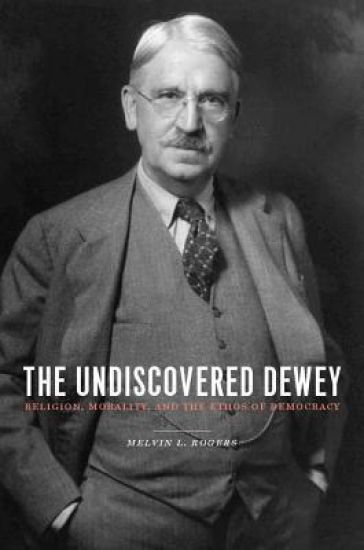
The Undiscovered Dewey

The Undiscovered Dewey

Melvin Rogers

Columbia University Press
2008
sidottu
The Undiscovered Dewey explores the profound influence of evolution and its corresponding ideas of contingency and uncertainty on John Dewey's philosophy of action, particularly its argument that inquiry proceeds from the uncertainty of human activity. Dewey separated the meaningfulness of inquiry from a larger metaphysical story concerning the certainty of human progress. He then connected this thread to the way in which our reflective capacities aid us in improving our lives. Dewey therefore launched a new understanding of the modern self that encouraged intervention in social and natural environments but which nonetheless demanded courage and humility because of the intimate relationship between action and uncertainty. Melvin L. Rogers explicitly connects Dewey's theory of inquiry to his religious, moral, and political philosophy. He argues that, contrary to common belief, Dewey sought a place for religious commitment within a democratic society sensitive to modern pluralism. Against those who regard Dewey as indifferent to moral conflict, Rogers points to Dewey's appreciation for the incommensurability of our ethical commitments. His deep respect for modern pluralism, argues Rogers, led Dewey to articulate a negotiation between experts and the public so that power did not lapse into domination. Exhibiting an abiding faith in the reflective and contestable character of inquiry, Dewey strongly engaged with the complexity of our religious, moral, and political lives.
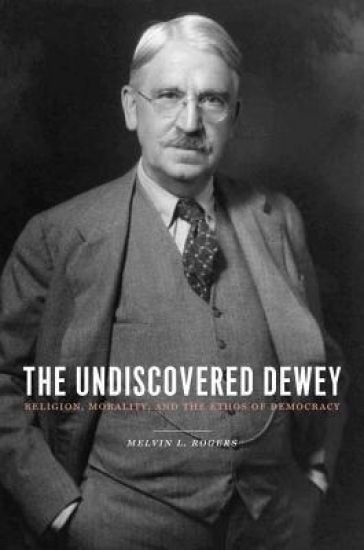
The Undiscovered Dewey

The Undiscovered Dewey

Melvin Rogers

Columbia University Press
2012
pokkari
The Undiscovered Dewey explores the profound influence of evolution and its corresponding ideas of contingency and uncertainty on John Dewey's philosophy of action, particularly its argument that inquiry proceeds from the uncertainty of human activity. Dewey separated the meaningfulness of inquiry from a larger metaphysical story concerning the certainty of human progress. He then connected this thread to the way in which our reflective capacities aid us in improving our lives. Dewey therefore launched a new understanding of the modern self that encouraged intervention in social and natural environments but which nonetheless demanded courage and humility because of the intimate relationship between action and uncertainty. Melvin L. Rogers explicitly connects Dewey's theory of inquiry to his religious, moral, and political philosophy. He argues that, contrary to common belief, Dewey sought a place for religious commitment within a democratic society sensitive to modern pluralism. Against those who regard Dewey as indifferent to moral conflict, Rogers points to Dewey's appreciation for the incommensurability of our ethical commitments. His deep respect for modern pluralism, argues Rogers, led Dewey to articulate a negotiation between experts and the public so that power did not lapse into domination. Exhibiting an abiding faith in the reflective and contestable character of inquiry, Dewey strongly engaged with the complexity of our religious, moral, and political lives.
Latino Small Businesses and the American Dream

Latino Small Businesses and the American Dream

Melvin Delgado

Columbia University Press
2011
sidottu
Latino small businesses provide social, economic, and cultural comfort to their communities. They are also excellent facilitators of community capacity-a major component of effective social work practice. Social work practitioners have a vested interest in seeing such businesses grow, not only among Latinos but all communities of color. Reviewing the latest research on formal and informal economies within urban communities of color, Melvin Delgado lays out the demographic foundations for a richer collaboration between theory and practice. Delgado deploys numerous case studies to cement the link between indigenous small businesses and community well-being. Whether regulated or unregulated, these establishments hire from within and promote immigrant self-employment. Latino small businesses often provide jobs for those whose criminal and mental health backgrounds intimidate conventional businesses. Recently estimated to be the largest group of color running small businesses in the United States, Latino owners top two million, with the number expected to double within the next few years. Joining an understanding of these institutions with the kind of practice that enables their social and economic improvement, Delgado explains how to identify and mobilize the kinds of resources that best spur their development.
Latino Small Businesses and the American Dream

Latino Small Businesses and the American Dream

Melvin Delgado

Columbia University Press
2011
pokkari
Latino small businesses provide social, economic, and cultural comfort to their communities. They are also excellent facilitators of community capacity-a major component of effective social work practice. Social work practitioners have a vested interest in seeing such businesses grow, not only among Latinos but all communities of color. Reviewing the latest research on formal and informal economies within urban communities of color, Melvin Delgado lays out the demographic foundations for a richer collaboration between theory and practice. Delgado deploys numerous case studies to cement the link between indigenous small businesses and community well-being. Whether regulated or unregulated, these establishments hire from within and promote immigrant self-employment. Latino small businesses often provide jobs for those whose criminal and mental health backgrounds intimidate conventional businesses. Recently estimated to be the largest group of color running small businesses in the United States, Latino owners top two million, with the number expected to double within the next few years. Joining an understanding of these institutions with the kind of practice that enables their social and economic improvement, Delgado explains how to identify and mobilize the kinds of resources that best spur their development.
Social Justice and the Urban Obesity Crisis

Social Justice and the Urban Obesity Crisis

Melvin Delgado

Columbia University Press
2013
sidottu
A number of economic, cultural, and contextual factors are driving urban America's obesity crisis, which can create chronic health conditions for those least able to manage them. Considering urban obesity through a social justice lens, this book is the first to help social workers and others develop targeted interventions for effective outcomes. The text dissects the problem of urban obesity in populations of color from individual, family, group, community, and policy perspectives. Beginning with a historical survey of urban obesity in communities of color, anti-obesity policies and programs, and the role of social work in addressing this threat, the volume follows with an analysis of the social, ecological, environmental, and spatial aggravators of urban obesity, such as the food industry's advertising strategies, which promote unhealthy choices; the failure of local markets to provide good food options; the lack of safe exercise spaces; and the paucity of heath education. Melvin Delgado reviews recent national obesity statistics; explores the connection between food stamps and obesity; and reveals the financial and social consequences of the epidemic for society as a whole. He concludes with recommendations for effective health promotion programs, such as youth-focused interventions, community gardens, and community-based food initiatives, and a unique consideration of urban obesity in relation to acts of genocide and national defense.
Social Justice and the Urban Obesity Crisis

Social Justice and the Urban Obesity Crisis

Melvin Delgado

Columbia University Press
2013
pokkari
A number of economic, cultural, and contextual factors are driving urban America's obesity crisis, which can create chronic health conditions for those least able to manage them. Considering urban obesity through a social justice lens, this book is the first to help social workers and others develop targeted interventions for effective outcomes. The text dissects the problem of urban obesity in populations of color from individual, family, group, community, and policy perspectives. Beginning with a historical survey of urban obesity in communities of color, anti-obesity policies and programs, and the role of social work in addressing this threat, the volume follows with an analysis of the social, ecological, environmental, and spatial aggravators of urban obesity, such as the food industry's advertising strategies, which promote unhealthy choices; the failure of local markets to provide good food options; the lack of safe exercise spaces; and the paucity of heath education. Melvin Delgado reviews recent national obesity statistics; explores the connection between food stamps and obesity; and reveals the financial and social consequences of the epidemic for society as a whole. He concludes with recommendations for effective health promotion programs, such as youth-focused interventions, community gardens, and community-based food initiatives, and a unique consideration of urban obesity in relation to acts of genocide and national defense.
Baby Boomers of Color

Baby Boomers of Color

Melvin Delgado

Columbia University Press
2014
sidottu
Because researchers often treat baby boomers of color as belonging to one group, quality data on the individual status of specific racial populations is lacking, leading to insufficiently designed programs, policies, and services. The absence of data is a testament to the invisibility of baby boomers of color in society and deeply affects the practice of social work and other helping professions that require culturally sensitive approaches. Melvin Delgado rectifies this injustice by providing a comprehensive portrait of the status and unique assets of boomers of color. Using specific data, he grounds an understanding of boomers'financial, medical, and emotional needs within a historical, socioeconomic, cultural, and political context, resulting in tailored recommendations for meeting the challenges of a growing population. His research focuses on African American, Hispanic, Asian/Pacific Islander, and Native American older adults and addresses issues of financial security, employment stability, housing, and health care, which are often complicated by linguistic and cultural differences. Rather than treat baby boomers of color as a financial burden on society and its resources, Delgado recognizes their strengths and positive contributions to families and communities, resulting in an affirming and empowering approach to service.
Baby Boomers of Color

Baby Boomers of Color

Melvin Delgado

Columbia University Press
2014
pokkari
Because researchers often treat baby boomers of color as belonging to one group, quality data on the individual status of specific racial populations is lacking, leading to insufficiently designed programs, policies, and services. The absence of data is a testament to the invisibility of baby boomers of color in society and deeply affects the practice of social work and other helping professions that require culturally sensitive approaches. Melvin Delgado rectifies this injustice by providing a comprehensive portrait of the status and unique assets of boomers of color. Using specific data, he grounds an understanding of boomers'financial, medical, and emotional needs within a historical, socioeconomic, cultural, and political context, resulting in tailored recommendations for meeting the challenges of a growing population. His research focuses on African American, Hispanic, Asian/Pacific Islander, and Native American older adults and addresses issues of financial security, employment stability, housing, and health care, which are often complicated by linguistic and cultural differences. Rather than treat baby boomers of color as a financial burden on society and its resources, Delgado recognizes their strengths and positive contributions to families and communities, resulting in an affirming and empowering approach to service.