
Kirjahaku
Etsi kirjoja tekijän nimen, kirjan nimen tai ISBN:n perusteella.
1000 tulosta hakusanalla Paul Mathieu
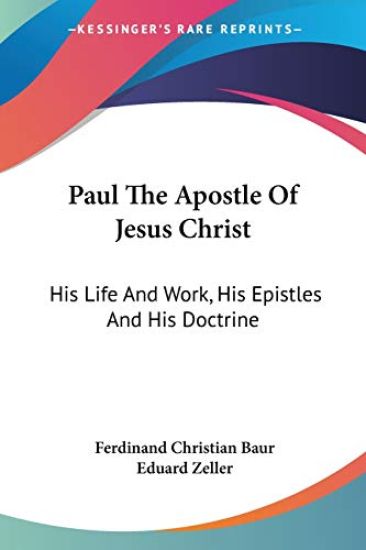
Paul The Apostle Of Jesus Christ
Ferdinand Christian Baur; Eduard (TRN) Zeller
Kessinger Pub
2007
pokkari

Paul Gerhardt As A Hymn Writer And His Influence On English Hymnody
Theodore Brown Hewitt
Kessinger Pub
2008
pokkari
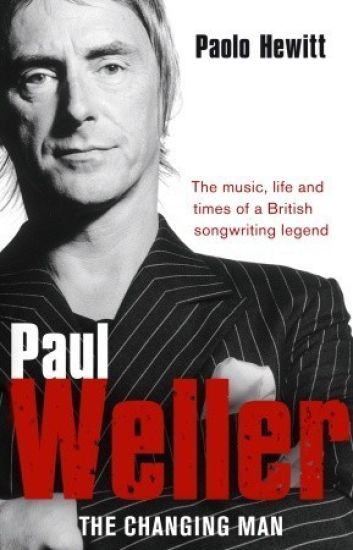
Paolo Hewitt has known Paul Weller since they were both teenagers in the depths of Woking, through his ascent to fame with The Jam, the halcyon years of The Style Council and for all of his critically acclaimed solo career. Hewitt has even been the inspiration for some of Weller's songs - and he has extraordinary in-depth knowledge of the inspiration behind the rest.Once, when Hewitt interviewed Weller for a music magazine, he complained - 'I don't know why people ask me all these questions. All the answers are in my songs.' Largely unnoticed, Weller has used thirty-years of lyrics to explore his personal history and beliefs. Taking as his starting point these lyrics, alongside a lifetime's friendship, Paolo Hewitt shows us the real Paul Weller, the man inside the music.

THE SUNDAY TIMES BESTSELLERA fascinating and hilarious glimpse into Paul's life at home in the country with his animalsPaul O'Grady's Country Life for the first time gives a glimpse into the home life of one of Britain’s best loved stars, alongside the animals he adores. Sometimes rural idyll, sometimes hell on earth, Paul’s life in rural Kent has been shared over the years with some very vocal pigs, a mad cow, various rescued barn owls, the world’s most sadistic geese and Christine the psychotic sheep – among many other animal waifs and strays. And of course Paul tells the stories of the dogs in his life – including the tiny chihuahua/Jack Russell cross with Napoleonic ambitions, Eddie, Miss Olga, Bullseye, Louis, Boycie and, of course, Buster, the greatest canine star since Lassie. In addition, Paul shares some of his favourite recipes, explores country lore and superstitions, and extols the benefits of growing your own vegetables, herbs and fruit.This is a warts-and-all account of country living, as far removed from the bright lights of celebrity as you could ever imagine. The trials and tribulations Paul experienced on moving to deepest darkest Kent as a dyed-in-the-wool city dweller are every bit as hilarious and eventful as you would think. He had a lot of new skills to learn, and fast: everything from how to churn your own butter and how to birth a lamb to the best way to lure a cow out of your kitchen while naked from the waist down.Brilliantly funny and full of classic stories, Paul O’Grady’s Country Life is your armchair guide to the wonders and horrors of rural existence.

Paul Auster's the New York Trilogy: City of Glass, Ghosts, the Locked Room
Paul Auster
Pantheon Books
2025
sidottu
From award-winning novelist Paul Auster comes the graphic adaptation of his deeply beloved series, The New York Trilogy, a postmodern take on detective and noir fiction. In 1994, Paul Auster's City of Glass was adapted into a graphic novel and became an immediate cult classic, published in over 30 editions worldwide, excerpted in The Norton Anthology of Postmodern Fiction. But City of Glass was only the first novel in a series of books, Auster's acclaimed New York Trilogy, and graphic novel readers have been waiting for years for the other two tales to be translated into comics. Now the wait is over. The New York Trilogy is post-modern literature disguised as Noir fiction where language is the prime suspect. An interpretation of detective and mystery fiction, each book explores various philosophical themes. In City of Glass, an author of detective fiction investigates a murder and descends into madness. Ghosts features a private eye named Blue, trailing a man named Black, for a client called White. This too ends with the protagonist's downfall. And in The Locked Room, another author is experiencing writer's block, and hopes to brake it by solving the disappearance of his childhood friend. The second two parts of this trilogy will be appearing in this volume for the very first time as a graphic novel. Paul Karasik, the mastermind behind the three adaptations, art directed all three books. City of Glass is illustrated by the award-winning cartoonist David Mazzucchielli, the second volume, Ghosts, is illustrated by New Yorker cover artist, Lorenzo Mattotti, and The Locked Room is adapted and drawn by Karasik himself. These adaptations take Auster's sophisticated wordplay and translate it into comicsplay: both highbrow and lowbrow and immensely fun reading.
The life of Christianity's greatest missionary is organized into lessons for small group or private study.
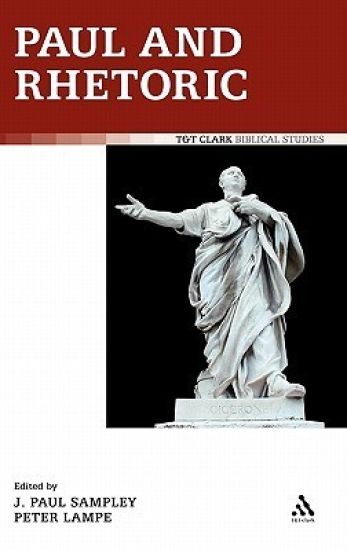
Paul and Rhetoric
BLOOMSBURY PUBLISHING PLC
2010
sidottu
Paul and Rhetoric contains essays that have been presented in a seminar called "Paul and Rhetoric" in the annual meetings of the Studiorum Novi Testamenti Societas, the leading international forum for New Testament and Christian Origin scholars. Translated into English, these essays, by leaders in the field and in the topic, engage and represent modern scholarship on Paul and rhetorical studies.The foundational essays are listed under the heading "State of the Discussion", attempting to take the major rhetorical categories of the time contemporary with Paul (types of rhetoric, invention and arrangement, and figures and tropes) and, first, lays out where the discussion is now. They then note the problems and highlights where continued discussion and deliberation would be helpful. The "Broad Questions" section asks what can be learned about reading Paul's letters to congregations in light of ancient epistolography, how theology and rhetoric are related (because the two are often treated as if they are alien to one another), and how ancient rhetoric and ancient psychology are associated with one another.All in all a volume that illustrates, examines and assesses where we are now in the study of rhetorical traditions in Pauline scholarship, and in some instances suggests the direction of future studies.
Paul's Parallels
T. T.Clark Ltd
2009
sidottu
Paul's Parallels is the first and only New Testament resource text in tables format presenting Paul's verses in column one, next to a row of parallels, echoes, or like-minded quotes from Old and New Testament resources as well as other extant biblical materials. The passages are cited in full. This master of the epistolary writings, gives a verse by verse demonstration of Paul's thoughts, his ethic, and his actions that were picked-up by later Christian writers, copied by pseudo-Pauline admirers. It delineates some as distinctively Christian while others remained only in Paul's writing.In addition, Luke's history about Paul in Acts is presented using the same format so the reader can easily cross-reference each epistle to its chronological setting. Documenting the history of Paul's ministry in the same text allows the reader to instantly turn to the time and place in which Paul wrote that particular message. While investigating serious textual, literary, genre, and other theological characteristics, the reader has the opportunity of simultaneously locating Acts in its historical context.
Welborn argues that Paul's acceptance of the role of a 'fool', and his evaluation of the message of the cross as 'foolishness', are best understood against the background of the popular theatre and the fool's role in the mime. Welborn's investigation demonstrates that the term 'folly' (moria) was generally understood as a designation of the attitude and behaviour of a particular social type - the lower class buffoon. As a source of amusement, these lower class types were widely represented on the stage in the vulgar and realistic comedy known as the mime. Paul's acceptance of the role of the fool mirrors the strategy of a number of intellectuals in the early Empire who exploited the paradoxical freedom that the role permitted for the utterance of a dangerous truth. Welborn locates Paul's exposition of the 'folly' of the message about the cross in a submerged intellectual tradition that connects Cynic philosophy, satire, and the mime. In this tradition, the world is viewed from the perspective of the poor, the dishonoured, and the outsiders. The hero of this tradition is the 'wise fool,' who, in grotesque disguise, is allowed to utter critical truths about authority. The book demonstrates that Paul participates fully in this tradition in his discourse about the folly of the word of the cross. The major components of Paul's argument in "1 Corinthians 1-4" find their closest analogies in the tradition that valorizes Socrates, Aesop, and the mimic fool.
This investigation builds upon recent developments in the study of Paul's use of Scripture that center around the concept of "intertextuality." Abasciano uses an exegetical method that incorporates into a thorough traditional exegesis a comprehensive analysis of Paul's use of Scripture against the background of interpretive traditions surrounding the texts alluded to, with great emphasis placed on analyzing the original contexts of Paul's citations and allusions. Such an intertextual exegesis is conducted in Romans 9:1-9 with an awareness of the broader unit of chapters 9-11 especially, and also the epistle as a whole. The study finds that many of the themes Paul deals with in Romans 9-11 are also present in ancient Jewish and Christian interpretive traditions surrounding the passages he invokes, and more importantly, that Paul's scriptural quotations and allusions function as pointers to their broad original contexts, from which he developed much of the form, content, and direction of his argument, holding significance for a number of exegetical details as well as broader themes and rhetorical movements. The final chapter seeks to draw conclusions concerning the significance of Paul's use of the Old Testament in Romans 9:1-9 for the exegesis and theology of Romans and for Pauline intertextuality. The identity of the true people of God is central to Romans 9-11 and the epistle. And Paul's use of Scripture is contextual and referential, calling for attention to Pauline intertextuality in standard exegetical procedure. JSNTS 301
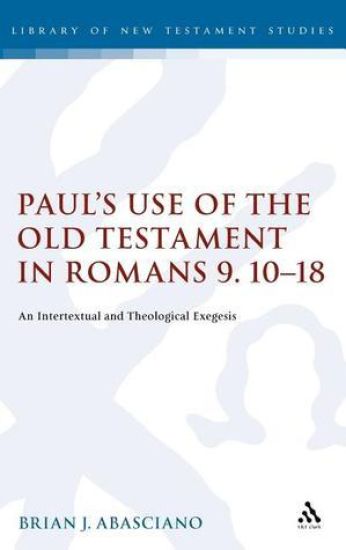
Abasciano builds upon his forthcoming LNTS volume Paul's Use of the Old Testament in Romans 9.1-9, continuing the project begun in that volume and its intertextual methodology. This method incorporates into a thorough traditional exegesis a comprehensive analysis of Paul's use of Scripture against the background of interpretive traditions surrounding the texts alluded to, with great emphasis placed on analyzing the original contexts of Paul's citations and allusions. Such an intertextual exegesis is conducted in Romans 9:10-33 with an awareness of the broader unit of chapters 9-11 especially, and also the epistle as a whole. Conclusions for the meaning of these passages and their theological significance are drawn. LNTS and SSEJC.