The characters who inhabit Varma's play are all seeking the common good. But they are not guided by the same priorities. To get what they want, they must negotiate with each other. Each time they do, something is lost. And these losses ultimately add up to disaster. This play--a pitiless analysis of the stakes of globalization--explores how this happens.
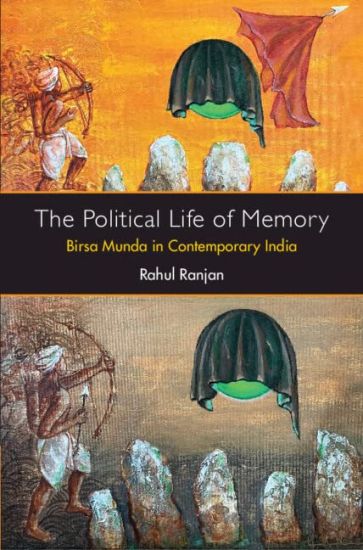
This book examines the representation of Birsa's political life, memory politics and the making of anticolonialism in contemporary Jharkhand. It offers contrasting features of political imaginations deployed in developing memorial landscapes. Framing of Birsa in the heroic narrative through a grand scale of memorialisation, often in the form of the built environment, curates a selective version. This isolates the scope of elaborating his political ideas outside the confines of atypical historical records and their relevance in the contemporary context. The book argues that everyday politics through affective sites such as memorials and statues produce political visions, emotions, and opportunities. It shows how such symbolic sites are often strategically placed and politically motivated to inscribe ideologies. This process outlines how the state and Adivasi use memory as a political tool to lay claims to the past of the Birsa Movement.
Online algorithms are a rich area of research with widespread applications in scheduling, combinatorial optimization, and resource allocation problems. This lucid textbook provides an easy but rigorous introduction to online algorithms for graduate and senior undergraduate students. In-depth coverage of most of the important topics is presented with special emphasis on elegant analysis. The book starts with classical online paradigms like the ski-rental, paging, list-accessing, bin packing, where performance of online algorithms is studied under the worst-case input and moves on to newer paradigms like 'beyond worst case', where online algorithms are augmented with predictions using machine learning algorithms. The book goes on to cover multiple applied problems such as routing in communication networks, server provisioning in cloud systems, communication with energy harvested from renewable sources, and sub-modular partitioning. Finally, a wide range of solved examples and practice exercises are included, allowing hands-on exposure to the concepts.
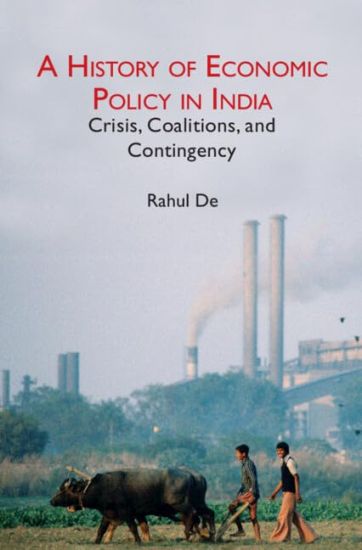
Economic Policy in Independent India provides an immersive, accessible yet rigorous understanding of the Indian economy through a political economy analysis of economic policies. It provides a birds-eye view of the politics, context, and ideas that shaped major economic policies in independent India and argues that they are the product of crisis, coalitions, and contingency - not necessarily choice. Each chapter focuses on specific political regimes: Colonial Rule, Jawahar Lal Nehru, Indira Gandhi, liberalisation under coalition governments, the UPA Government, and the NDA Government. The book evaluates how well a government executed its policies based on the economic and political constraints it faced, rather than economic outcomes. Using theories to make sense of the economy, political ideology, historical conditions, and international context, the book's framework provides multiple perspectives and analyses economic policies as an outcome of interactions between dynamics in the economy.
Economic Policy in Independent India provides an immersive, accessible yet rigorous understanding of the Indian economy through a political economy analysis of economic policies. It provides a birds-eye view of the politics, context, and ideas that shaped major economic policies in independent India and argues that they are the product of crisis, coalitions, and contingency - not necessarily choice. Each chapter focuses on specific political regimes: Colonial Rule, Jawahar Lal Nehru, Indira Gandhi, liberalisation under coalition governments, the UPA Government, and the NDA Government. The book evaluates how well a government executed its policies based on the economic and political constraints it faced, rather than economic outcomes. Using theories to make sense of the economy, political ideology, historical conditions, and international context, the book's framework provides multiple perspectives and analyses economic policies as an outcome of interactions between dynamics in the economy.
Sustainable world economy requires a steady supply of crude oil without any production constraints. Thus, the ever-increasing energy demand of the entire world can be mostly met through the enhanced production from crude oil from existing reservoirs. With the fact that newer reservoirs with large quantities of crude oil could not be explored at a faster pace, it will be inevitable to produce the crude oil from matured reservoirs at an affordable cost. Among alternate technologies, the chemical enhanced oil recovery (EOR) technique has promising potential to recover residual oil from matured reservoirs being subjected to primary and secondary water flooding operations. Due to pertinent complex phenomena that often have a combinatorial role and influence, the implementation of chemical EOR schemes such as alkali/surfactant/polymer flooding and their combinations necessitates upon a fundamental understanding of the potential mechanisms and their influences upon one another and desired response variables. Addressing these issues, the book attempts to provide useful screening criteria, guidelines, and rules of thumb for the identification of process parametric sets (including reservoir characteristics) and response characteristics (such as IFT, adsorption etc.,) that favor alternate chemical EOR systems. Finally, the book highlights the relevance of nanofluid/nanoparticle for conventional and unconventional reservoirs and serves as a needful resource to understand the emerging oil recovery technology. Overall, the volume will be of greater relevance for practicing engineers and consultants that wish to accelerate on field applications of chemical and nano-fluid EOR systems. Further, to those budding engineers that wish to improvise upon their technical know-how, the book will serve as a much-needed repository.
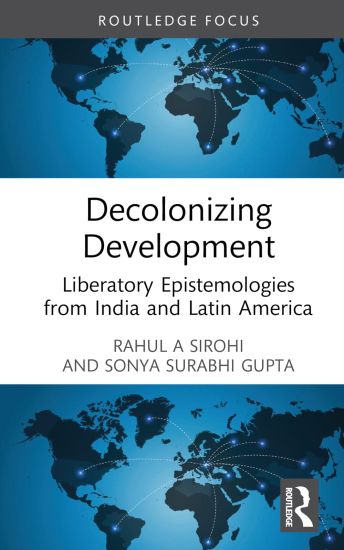
This book turns to the intellectual discourses that have emerged from India and Latin America, two outposts of the Global South, on the themes of imperialism, sovereignty, development, and socio-economic, racial and caste inequalities.It recovers the elided reflective traditions of thinkers, writers and activists from these peripheries and highlights the distinctive ideas, alliances and parallelisms in their works, as well as the manner in which they articulate liberatory paradigms which continue to have contemporary relevance. The book maps the innovative epistemic engagements of thinkers from India and Latin America, highlighting the manner in which they have disrupted and challenged the hierarchies of global knowledge production. It argues that political, spatial and historical distinctions notwithstanding, the experiences of peripheralization, their common traditions of resistance to oppression and their deeply entangled histories have forged a shared intellectual identity and a rich alternative set of emancipatory epistemologies grounded in the realities and histories of Southern nations. The book recovers this body of work as mass movements the world over seek civilizational alternatives to capitalist modernity.The book will be of interest to students and researchers of development studies, history, political science, sociology, political economy, South Asian studies, Latin American studies and Global South studies.
This book turns to the intellectual discourses that have emerged from India and Latin America, two outposts of the Global South, on the themes of imperialism, sovereignty, development, and socio-economic, racial and caste inequalities.It recovers the elided reflective traditions of thinkers, writers and activists from these peripheries and highlights the distinctive ideas, alliances and parallelisms in their works, as well as the manner in which they articulate liberatory paradigms which continue to have contemporary relevance. The book maps the innovative epistemic engagements of thinkers from India and Latin America, highlighting the manner in which they have disrupted and challenged the hierarchies of global knowledge production. It argues that political, spatial and historical distinctions notwithstanding, the experiences of peripheralization, their common traditions of resistance to oppression and their deeply entangled histories have forged a shared intellectual identity and a rich alternative set of emancipatory epistemologies grounded in the realities and histories of Southern nations. The book recovers this body of work as mass movements the world over seek civilizational alternatives to capitalist modernity.The book will be of interest to students and researchers of development studies, history, political science, sociology, political economy, South Asian studies, Latin American studies and Global South studies.
This monograph aims to present the recent advances in state estimation, in terms of relaxing the conventional assumption that probability densities remain Gaussian. The book explains how MCC is integrated into the conventional Bayesian estimation framework and their implementation to real-life problems. Some key points discussed in the book are-Reviews well-established non-Gaussian estimation methods including applications of techniques Covers relaxation of gaussian assumption Discusses challenges in formulating non-liner non-Gaussian estimation framework Illustrates the applicability of the algorithms mentioned to real-life problems Explores derivation of non-linear non-Gaussian estimation framework based on maximum correntropy criterion This book is aimed at researchers and graduate students in electrical engineering, robotics, and dynamic systems.
A breathtaking novel about a woman forging a life for herself on the railways, Railsong is the story of an individual coming of age amid the social and political upheavals of twentieth-century India
The book brings together narratives of earth-stolid pastoral nomads and experiences of their mobility across different terrains as they negotiate the harsh terrain in interiors of the Thar. Synthesising learnings from lived experience of development practice with pastoralists for two and a half decades and an ethnographic study of selected villages in Bikaner and Jaisalmer, the volume transcends tragic tropes about pastoralism that have obfuscated perspectives about pastoralists in academia, policy discourse and state action. Instead, it argues for an interweaving of pastoral destinies with our destinies in the quest for a sustainable world. Pastoral communities offer useful cues on sustainable natural resource management, values of frugality and gratitude to nature. In the context of a globally renewed interest in pastoralism and sustainable use of terrestrial ecosystems, this volume would be of interest to researchers, students of environment and development, sociology, economics, development studies, and public policy. It will also appeal to humanities and development practitioners, arid zone specialists, travellers and desert enthusiasts.
In this series of posts named 'Python Shorts, ' I will explain some simple constructs provided by Python, some essential tips and some use cases I come up with regularly in my Data Science work
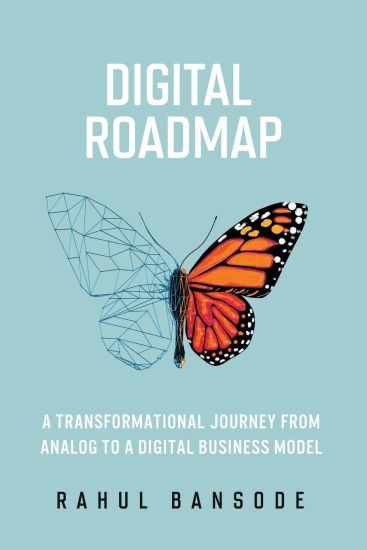
Everyone understands the "WHY" of Digital Transformation, but "HOW" to do it is challenging.Any organization that is thinking of adopting Digital Transformation means their business model is already disrupted. Digital Transformation is the process of shifting the organization from a legacy approach to a new way of doing business. To be competitive and be relevant in the digital age the incumbents need to continuously adapt to the changed business model and customer expectations. Being a digital organization is no more optional but an obligation to remain relevant in the business and to their customer.Digital Roadmap illustrates the journey for the incumbents to understand the digital landscape, consider the digital ecosystem as an opportunity, and define their digital milestones to achieve their transformation.The author, Rahul Bansode is a Digital Transformation Strategist and has worked on multiple transformation initiatives for building new digital products, services, and delivery channels. His first-hand experience in understanding the digital ecosystem and technology expertise has helped envision a new business model using the First Principle Design Thinking approach.In his experience, there cannot be a general framework adopted to transform the legacy business model to the digital era. Each organization is distinct and possesses unique challenges to overcome the transformation goal.Digital Roadmap evades providing a stapled business transformation framework but instead shares a glimpse of the challenges, new digital technology evolutions, and also explains who should be leading the digital transformation initiative. The focus is to explain the challenges with simplistic real-life examples, understand the importance of employee buy-in, market cannibalization, and in turn induce the culture of innovations. This book will provide the guideline for incumbents to build their digital transformation journey.
Managing the managers is the one of the most essential and critical aspects for any corporate professional. Managing those managers who are also engaged in managing the managerial profiles under them, is more complicated and tricky task for any new person in their work space. The job of managing the managers is becoming more complicated as the hierarchy of any given organisation starts escalating.If you understand the basic nature of your managers and his style of working you can manage your acts accordingly and create a better bonding with them.This book will help you to keep yourself more aligned and productive, which will help you survive in the corporate Jungle for a longer duration without succumbing down to major challenges.
Ever Visited the McDonald Restaurant? Had A Happy Meal? Ever wondered while eating a Hamburger that you have visited a Real Estate Investment Trust? Explore all the minute details about its business and its unique marketing mix strategies and also on leadership of Ray Kroc and the business' real estate model
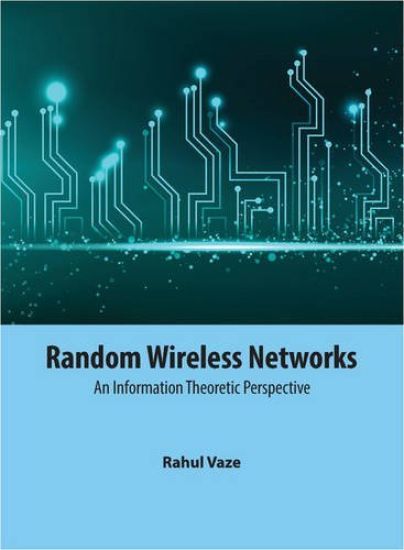
This book discusses the theoretical limits of information transfer in random wireless networks or ad hoc networks, where nodes are distributed uniformly in space and there is no centralised control. It provides a detailed analysis of the two relevant notions of capacity for random wireless networks – transmission capacity and throughput capacity. The book starts with the transmission capacity framework that is first presented for the single-hop model and later extended to the multi-hop model with retransmissions. Reusing some of the tools developed for analysis of transmission capacity, a few key long-standing questions about the performance analysis of cellular networks are also provided for the benefit of students. The discussion goes further into the concept of hierarchical co-operation that allows throughput capacity to scale linearly with the number of nodes. The author finally discusses the concept of hierarchical co-operation that allows throughput capacity to scale linearly with the number of nodes.