

Kirjahaku
Etsi kirjoja tekijän nimen, kirjan nimen tai ISBN:n perusteella.
1000 tulosta hakusanalla Randall Calhoun
Origin And History Of The Lambeth Conferences Of 1867 And 1878
Randall T. Davidson
Kessinger Pub
2007
pokkari

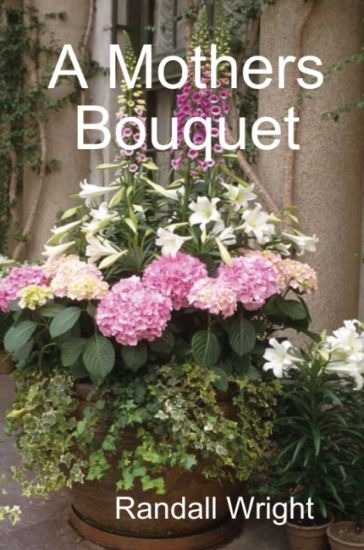
This is a simple man's view of the life that we all live. It is written based on true stories as they occurred.
When the pupils of 9B (3B at the time the play was written) arrive in Italy on a cultural exchange visit, little do they realize that they are going to have to contend not only with a strange language, foreign food and a gang of Italian boys who seem intent on re- running World War II, but also a sea monster which has been terrorizing the town. With the help of their long-suffering teacher, the boys of 9B destroy the monster and even manage to reach a sort of d tente with the local youths.-Large flexible cast
In a suburban bedroom three boys Don, Bryn and Shaun, are "immersed in a world of fantasy, a world where good and evil meet in battle across a landscape of the imagination". Mean-while, on Wuldor, a parallel world, King Fruma is having a spot of bother with his wicked brother Snithan, and instructs his wizard, Dwimor, to protect his son, Prince Erfa.Large flexible cast
Eustace Crucible, crazed chemistry teacher, has found a formula to enhance his appearance and intelligence.5 women, 9 men
The Kindness Givers' Formula: Four Simple Steps for Making a Transformational Difference for Good
Randall D. McNeely
Kindness Giver
2019
nidottu
We seem to be facing a crisis of epic proportions. Just as a tidal wave erodes and displaces everything in its path, darkness, hate, division and contention, so readily visible in this digital age, are eroding and displacing life sustaining light, love, unity and peace. If these things trouble you, you're not alone. But what can we do? Is it possible to stem this tide? Can you and I, as individuals possibly make a difference? The answer is a resounding YES The Kindness Givers' Formula - Four Simple Steps for Making a Transformational Difference for Good provides an easy yet powerfully effective solution that anyone who is willing to can readily learn and implement.In forty-five minutes, you can learn the four straightforward habit-building-steps for intentional daily kindness giving, get practical information for ingraining them in your life and unleashing the power of kindness giving, and read inspiring examples of the formula inaction.This gem of a book is a solution for our time that will resonate with your heart. It is a formula to bring back civility and peace to a troubled world. Come and join the Kindness Giver's movement Not only will you bless others, but you will also come to know that the boomerang effect (what goes around comes around) is real. The more kindness you give away, the more happiness and joy you will find in your own life, and the more kindness you will want to share It becomes contagious Learn the formula Use the formula Make a difference Change the world Get your copy of The Kindness Givers' Formula today.
It's time to discover your God-given purpose The Bible teaches us we each have a purpose. However this purpose can remain hidden from our knowledge. Are you unsure what your God-given purpose is? While many are aware that living without purpose means living an unfulfilled life, it can be tough to discover God's plan for us. This book takes a fresh look at what the Bible teaches us about the link between purpose and our heart's satisfaction. If you've been lacking stability, lost your sense of direction in life, or if you're simply miserable, then this book is for you. Using a Biblical roadmap to guide readers to God's true objective for them, while offering keys for you to use while you embark on a journey of learning His purpose for you, this book shows you: -Keys for a more stable life-How to keep from dissatisfaction and self-destruction-Things we overlook that are clues to our purpose-How to follow God into His plan without pressure-That your past does not have to limit your future-Perfection is not a requirement of God's calling-The limitless possibilities of purpose Gain a better understanding of your place in God's kingdom Be strengthened in the value and worth our heavenly Father has for you Find and walk in the eternal plan God has for you Start discovering your purpose with the power of God's wisdom and love strengthening you
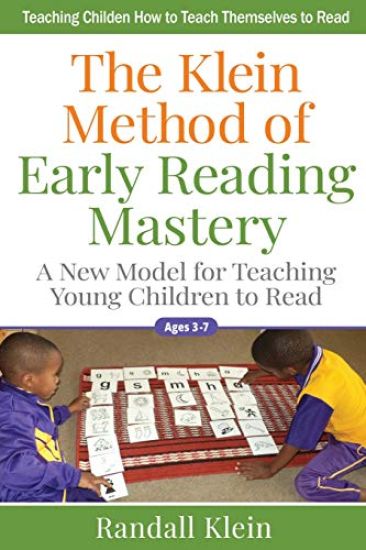
Core Principles of Teaching Children How to Teach Themselves to Read: - Effective early reading instruction is based on activities that guide the child from speech to print, from sound to symbol and which move from the concrete to the abstract.- Teach the alphabetic principle before you teach the alphabet.- Letter knowledge and decoding skills are best learned through the child's application of the alphabetic principle using self-guided materials to match speech sounds to printed letters and words.- Freedom to choose activities in the learning environment is key to gradually shifting responsibility for learning to the student.- Freedom to choose individualizes the learning experience for the student, according to his strengths and interests.- Repetition is the healing balm of education. It is the teacher's best teaching tool and the quickest, most direct way for a child to master early literacy skills.- Emphasis must shift from a traditional model of memorization through drill, to a deeper, more permanent learning through self-guided hands-on activities.
Short pithy topical essays ranging from love and marriage to birth and death, from cats and dogs to bears and birds, from racism and war to Mother's Day and Valentine's Day, from theism and humanism to hotdogs and addictions, from COVID-19 and UFOs to Jesus and Trump. Suitable for mediation over morning coffee or evening glass of wine.
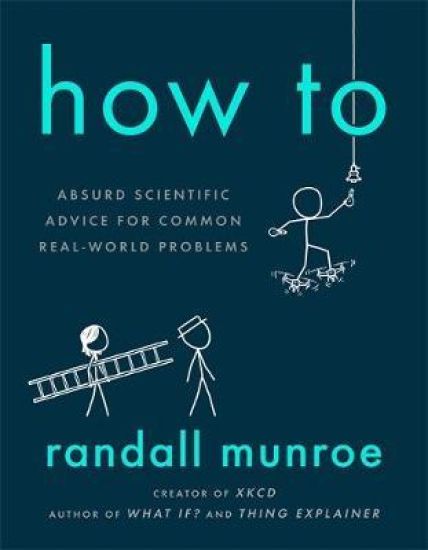
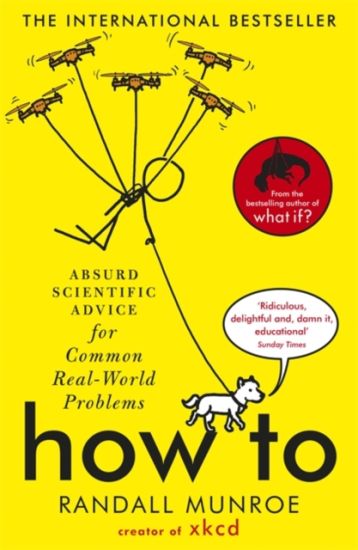
For any task you might want to do, there's a right way, a wrong way, and a way so monumentally bad that no one would ever try it. How To is a guide to the third kind of approach. It's full of highly impractical advice for everything from landing a plane to digging a hole.Bestselling author and cartoonist Randall Munroe explains how to predict the weather by analyzing the pixels of your Facebook photos. He teaches you how to tell if you're a baby boomer or a 90's kid by measuring the radioactivity of your teeth. He offers tips for taking a selfie with a telescope, crossing a river by boiling it, and getting to your appointments on time by destroying the Moon. And if you want to get rid of the book once you're done with it, he walks you through your options for proper disposal, including dissolving it in the ocean, converting it to a vapor, using tectonic plates to subduct it into the Earth's mantle, or launching it into the Sun.By exploring the most complicated ways to do simple tasks, Munroe doesn't just make things difficult for himself and his readers. As he did so brilliantly in What If?, Munroe invites us to explore the most absurd reaches of the possible. Full of clever infographics and amusing illustrations, How To is a delightfully mind-bending way to better understand the science and technology underlying the things we do every day.
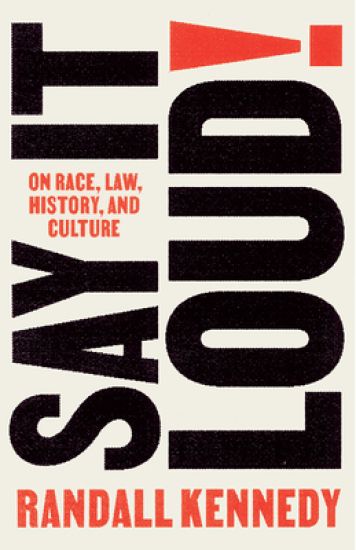
A NEW YORK TIMES NOTABLE BOOK OF THE YEAR - A collection of provocative essays exploring the key social justice issues of our time--from George Floyd to antiracism to inequality and the Supreme Court. Kennedy is among the most incisive American commentators on race (The New York Times). Informed by sharpness of observation and often courting controversy, deep fellow feeling, decency, and wit, Say It Loud includes: The George Floyd Moment: Promise and Peril - Isabel Wilkerson, the Election of 2020, and Racial Caste - The Princeton Ultimatum: Antiracism Gone Awry - The Constitutional Roots of "Birtherism" - Inequality and the Supreme Court - "Nigger" The Strange Career Continues - Frederick Douglass: Everyone's Hero - Remembering Thurgood Marshall - Why Clarence Thomas Ought to Be Ostracized - The Politics of Black Respectability - Policing Racial Solidarity In each essay, Kennedy is mindful of complexity, ambivalence, and paradox, and he is always stirring and enlightening. Say It Loud is a wide-ranging summa of Randall Kennedy's thought on the realities and imaginaries of race in America.
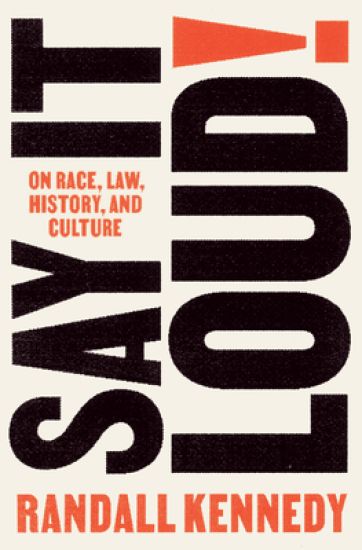
A NEW YORK TIMES NOTABLE BOOK OF THE YEAR - A collection of provocative essays exploring the key social justice issues of our time--from George Floyd to antiracism to inequality and the Supreme Court. Kennedy is "among the most incisive American commentators on race" (The New York Times). Informed by sharpness of observation and often courting controversy, deep fellow feeling, decency, and wit, Say It Loud includes: The George Floyd Moment: Promise and Peril - Isabel Wilkerson, the Election of 2020, and Racial Caste - The Princeton Ultimatum: Antiracism Gone Awry - The Constitutional Roots of "Birtherism" - Inequality and the Supreme Court - "Nigger" The Strange Career Continues - Frederick Douglass: Everyone's Hero - Remembering Thurgood Marshall - Why Clarence Thomas Ought to Be Ostracized - The Politics of Black Respectability - Policing Racial Solidarity In each essay, Kennedy is mindful of complexity, ambivalence, and paradox, and he is always stirring and enlightening. Say It Loud is a wide-ranging summa of Randall Kennedy's thought on the realities and imaginaries of race in America.
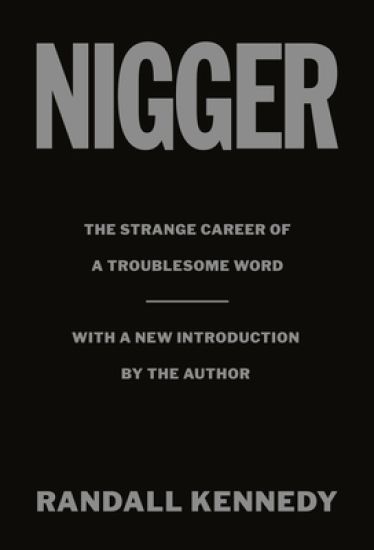
Nigger: The Strange Career of a Troublesome Word - With a New Introduction by the Author
Randall Kennedy
Pantheon Books
2022
sidottu
The twentieth anniversary edition of one of the most controversial books ever published on race and language is now more relevant than ever in this season of racial reckoning--from "one of our most important and perceptive writers on race" (The Washington Post). In addition to a brave and bracing inquiry into the origins, uses, and impact of the infamous word, this edition features an extensive new introduction that addresses major developments in its evolution during the last two decades of its vexed history. In the new introduction to his classic work, Kennedy questions the claim that "nigger" is the most tabooed term in the American language, faced with the implacable prevalence of its old-fashioned anti-Black sense. "Nigger" continues to be part of the loud soundtrack of the worst instances of racial aggression in American life--racially motivated assaults and murders, arson, intentional infliction of emotional distress, and workplace harassment. Consider this: twenty years ago, Kennedy wrote that any major politician credibly accused of using "nigger" would be immediately abandoned and ostracized. He was wrong. Donald Trump, former POTUS himself, was credibly charged, and the allegation caused little more than a yawn. No one doubted the accuracy of the claim but amidst all his other racist acts his "nigger-baiting" no longer seemed shocking. "Nigger" is still very much alive and all too widely accepted. On the other hand, Kennedy is concerned to address the many episodes in which people have been punished for quoting, enunciating, or saying "nigger" in circumstances that should have made it clear that the speakers were doing nothing wrong--or at least nothing sufficiently wrong to merit the extent of the denunciation they suffered. He discusses, for example, the inquisition of Bill Maher (and his pathetic apology) and the (white) teachers who have been disciplined for reading out loud texts that contain "nigger." He argues that in assessing these controversies, we ought to be more careful about the use/mention distinction: menacingly calling someone a "nigger" is wholly different than quoting a sentence from a text by James Baldwin or Toni Morrison or Flannery O'Connor or Mark Twain. Kennedy argues against the proposition that different rules should apply depending upon the race of the speaker of "nigger," offering stunningly commonsensical reasons for abjuring the erection of such boundaries. He concludes by venturing a forecast about the likely status of "nigger" in American culture during the next twenty years when we will see the clear ascendance of a so-called "minority majority" body politic--which term itself is redolent of white supremacy.