Kirjojen hintavertailu. Mukana 11 717 486 kirjaa ja 12 kauppaa.

Kirjahaku

Etsi kirjoja tekijän nimen, kirjan nimen tai ISBN:n perusteella.

1000 tulosta hakusanalla Ray Perman

Man Ray

Man Ray

Michael R. Taylor

Yale University Press
2022
sidottu
A close look at Man Ray’s interwar portraiture, as well as the friendships between the photographer and his subjects: the international avant garde in Paris Shortly after his arrival in Paris in July 1921, Man Ray (1890–1976)—the pseudonym of Emmanuel Radnitzky—embarked on a sustained campaign to document the city’s international avant-garde in a series of remarkable portraits that established his reputation as one of the leading photographers of his era. Man Ray’s subjects included cultural luminaries such as Berenice Abbott, André Breton, Jean Cocteau, Marcel Duchamp, Ernest Hemingway, Miriam Hopkins, Aldous Huxley, James Joyce, Lee Miller, Méret Oppenheim, Pablo Picasso, Alice Prin (Kiki de Montparnasse), Elsa Schiaparelli, Erik Satie, and Gertrude Stein. As this lavishly illustrated publication demonstrates, Man Ray’s portraits went beyond recording the mere outward appearance of the person depicted and aimed instead to capture the essence of his sitters as creative individuals, as well as the collective nature and character of Les Années folles (the crazy years) of Paris between the two world wars, when the city became famous the world over as a powerful and evocative symbol of artistic freedom and daring experimentation. Distributed for the Virginia Museum of Fine ArtsExhibition Schedule:Virginia Museum of Fine Arts, Richmond (October 30, 2021–February 21, 2022)

X-Ray Spectrometry in Electron Beam Instruments

X-Ray Spectrometry in Electron Beam Instruments

Kluwer Academic/Plenum Publishers
1995
sidottu
From its early days in the 1950s, the electron microanalyzer has offered two principal ways of obtaining x-ray spectra: wavelength dispersive spectrometry (WDS), which utilizes crystal diffraction, and energy dispersive spectrometry (EDS), in which the x-ray quantum energy is measured directly. In general, WDS offers much better peak separation for complex line spectra, whereas EDS gives a higher collection efficiency and is easier and cheaper to use. Both techniques have undergone major transformations since those early days, from the simple focusing spectrometerand gas proportional counter of the 1950s to the advanced semiconductor detectors and programmable spectrometersoftoday. Becauseofthesedevelopments, thecapabilities and relative merits of EDS and WDS techniques have been a recurring feature of microprobeconferences for nearly40 years, and this volume bringstogetherthepapers presented at the Chuck Fiori Memorial Symposium, held at the Microbeam Analysis Society Meeting of 1993. Several themes are apparent in this rich and authoritative collection of papers, which have both a historical and an up-to-the-minute dimension. Light element analysis has long been a goal of microprobe analysts since Ray Dolby first detected K radiation with a gas proportional counter in 1960. WDS techniques (using carbon lead stearate films) were not used for this purpose until four years later. Now synthetic multilayers provide the best dispersive elements for quantitative light element analy­ sis-still used in conjunction with a gas counter.
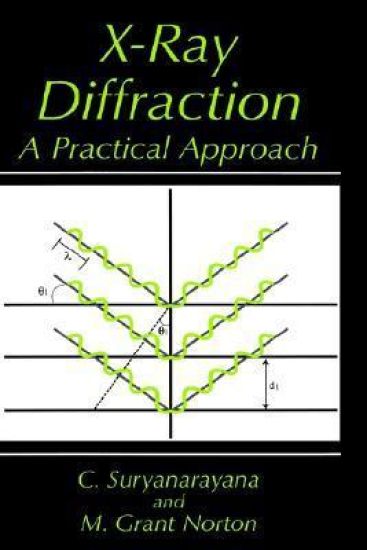
X-Ray Diffraction

X-Ray Diffraction

C. Suryanarayana; M. Grant Norton

Kluwer Academic/Plenum Publishers
1998
sidottu
In this, the only book available to combine both theoretical and practical aspects of x-ray diffraction, the authors emphasize a "hands on" approach through experiments and examples based on actual laboratory data. Part I presents the basics of x-ray diffraction and explains its use in obtaining structural and chemical information. In Part II, eight experimental modules enable the students to gain an appreciation for what information can be obtained by x-ray diffraction and how to interpret it. Examples from all classes of materials -- metals, ceramics, semiconductors, and polymers -- are included. Diffraction patterns and Bragg angles are provided for students without diffractometers. 192 illustrations.
Sugar Ray

Sugar Ray

Dave Anderson; Sugar Robinson

Da Capo Press Inc
1994
pokkari
Sugar Ray Robinson (1921-1989) was hailed as the finest boxer to ever enter a ring. Muhammad Ali once called him "the king, my master, my idol",and indeed, he was the idol of everyone who had anything to do with boxing. But for African Americans, he was more than a great boxer. In an era when blacks were supposed to be humble and grateful for favours received, he was a man whose every move in and out of the ring showed what black pride and power meant.Sugar Ray grew up during the Depression in the ghettos of Detroit and New York, rose through the amateur boxing ranks, became Golden Gloves champion at the featherweight at the age of eighteen, and become world welterweight champion in 1946 and middleweight in 1951. Robinson had it all, but later lost it all and in this classic autobiography he tells it all with remarkable candour. Here is Sugar Ray: the dazzlingly handsome champion with a craving for fast cars and fast living the kid who was terrified of elevators the young GI who, together with Joe Louis, combated racial discrimination the honest fighter who refused a million dollars to throw a fight against Rocky Graziano the boxer who dreamed he would kill his opponent in the ring, and did so the following night.This Da Capo edition is supplemented with a new foreword and afterword by Dave Anderson about Sugar Ray's last years in Los Angeles and the legacy he left behind, and with eight new pages of stunning photographs.
Brother Ray

Brother Ray

David Ritz; Ray Charles

Da Capo Press Inc
2004
pokkari
Ray Charles (1930-2004) led one of the most extraordinary lives of any popular musician. In Brother Ray, he tells his story in an inimitable and unsparing voice, from the chronicle of his musical development to his heroin addiction to his tangled romantic life. Brother Ray is "candid, explicit, sometimes embarrassing . . . and deeply human — just like his music" (Chicago Sun-Times).
Stevie Ray Vaughan

Stevie Ray Vaughan

Patoski Joe Nick; Crawford Bill

LITTLE, BROWN COMPANY
1994
nidottu
Hailed as the greatest guitarist since Hendrix, virtuoso Stevie Ray Vaughan forged a distinctive style out of blues, rock and roll and R&B roots. A genuine guitar hero who crafted his attack in countless pass-the-hat jams in Austin bars and ended his career performing to sold-out stadiums full of awestruck devotees. This biography chronicles Vaughan's emergence from the hotbed of Texas blues, his bitter rivalry with his brother Jimmy, his constant battle with drugs and alcohol, his recovery from addiction and the impact of his helicopter crash accident on the music community.
Sting-Ray Afternoons

Sting-Ray Afternoons

Steve Rushin

Back Bay Books
2018
pokkari
ONE OF AMAZON'S BEST BOOKS OF 2017A wild and bittersweet memoir of a classic '70s childhoodIt's a story of the 1970s. Of a road trip in a wood-paneled station wagon, with the kids in the way-back, singing along to the Steve Miller Band. Brothers waking up early on Saturday mornings for five consecutive hours of cartoons and advertising jingles that they'll be humming all day. A father-one of 3M's greatest and last eight-track-salesman fathers-traveling across the country on the brand-new Boeing 747, providing for his family but wanting nothing more than to get home.It's Steve Rushin's story: of growing up within a '70s landscape populated with Bic pens, Mr. Clean and Scrubbing Bubbles, lightsabers and those oh-so-coveted Schwinn Sting-Ray bikes. Sting-Ray Afternoons paints an utterly fond, psychedelically vibrant, laugh-out-loud-funny portrait of an exuberant decade. With sidesplitting commentary, Rushin creates a vivid picture of a decade of wild youth, cultural rebirth, and the meaning of parental, brotherly, sisterly, whole lotta love.
Sears Genealogical Catalogue - Ray's Notes Index
Name Index (INDEX ONLY) of the 26,000 grtx-grandchildren of Richard Sears of Yarmouth, Plymouth Colony circa 1639. This index will point you to a record at Ancestry.com or Wikitree.com or into one of the twelve volumes of details about each generation of Richard's descendants. These descendants have been a critical part of every element of the history of the United States and the world. (INDEX ONLY)
V-Ray 5 for 3ds Max 2020

V-Ray 5 for 3ds Max 2020

Jamie Cardoso

CRC Press
2021
nidottu
Increase the photorealism of your 3d visualizations with enhanced toolsets of V-Ray 5 for 3ds Max 2020. The book is filled with colorful illustrations depicting step-by-step tutorials about the process of creating a photorealistic day-and-night exterior scene. Each tutorial includes a 3d project scene to guide users through the production and the post-production processes. The book begins with an overview of the best techniques to approach clients via emails, calls, meetings, and via social media. There are also key insights into the best practices of handling projects, pricing, contracts, invoices, the pre-production, production, and the post-production, to name but a few. Throughout the book, users are taken through VRayMtl functions such as Diffuse, Roughness, Reflect, Glossiness, Metalness, Refract, Index of Refraction (IOR), Abbe number, Fog color, Translucency, BRDF, Coat, Sheen, and Bump.Also, users will learn how to use procedural maps such as VRayBitmap, VRayTriplanarTex, Bricks, Metals, Carpaint, VRayDisplacementMod, VRayUVWRandomizer, VRayMultiSubTex, VRayPointCloudColor, VRayDirt, VRayAerialPersepective, VRayLightMtl, VRayMtlWrapper, VRayOverrideMtl, VRay2SidedMtl, VRayBlendMtl, and VRayEdgesTex.In addition, there are tips and tricks accompanied with videos highlighting how to create VR interactive apps using Verge 3d; how to create verified views; and how to use plug-ins and scripts such as Project Manager, Auto grid pivot point, GarageFarm, Zmapping, gobotree, and VIShopper.Finally, users will have a rare insight into all functionalities of a VRay camera, VRayLight objects, Render settings, Frame buffer, Global switches, IPR options, Bucket and Progressive image samplers, Image filters, Global DMC, Color mapping, Brute force global illumination, Light cache, Color management, Distributed rendering, Render elements, VRay image file format, VFB History settings, VFB Lens Effects, LightMix, Film tonemap, Hue/Saturation, Lookup Table, and much more. Key Features This book deals with real projects/3d scenes and delivers up-to-date V-Ray 5 functionalities and production workflows using 3ds Max 2020 This book has professional supporting files ready to open and explore This book details the meticulous step-by-step processes of creating jaw-dropping 3d renderings This book includes unrivaled in-depth coverage of V-Ray 5 for 3ds Max 2020 This book includes 3d rendering methodologies currently used by key industry playersAuthorJamie Cardoso is a renowned author, reviewer, computer artist, and technologist, withyears of experience in creating state-of-the-art 3d photomontages, verified views, VR, AR,XR, MR, Stereos, and photorealistic interior and exterior visualizations for architects anddesigners.
V-Ray 5 for 3ds Max 2020

V-Ray 5 for 3ds Max 2020

Jamie Cardoso

CRC Press
2021
sidottu
Increase the photorealism of your 3d visualizations with enhanced toolsets of V-Ray 5 for 3ds Max 2020. The book is filled with colorful illustrations depicting step-by-step tutorials about the process of creating a photorealistic day-and-night exterior scene. Each tutorial includes a 3d project scene to guide users through the production and the post-production processes. The book begins with an overview of the best techniques to approach clients via emails, calls, meetings, and via social media. There are also key insights into the best practices of handling projects, pricing, contracts, invoices, the pre-production, production, and the post-production, to name but a few. Throughout the book, users are taken through VRayMtl functions such as Diffuse, Roughness, Reflect, Glossiness, Metalness, Refract, Index of Refraction (IOR), Abbe number, Fog color, Translucency, BRDF, Coat, Sheen, and Bump.Also, users will learn how to use procedural maps such as VRayBitmap, VRayTriplanarTex, Bricks, Metals, Carpaint, VRayDisplacementMod, VRayUVWRandomizer, VRayMultiSubTex, VRayPointCloudColor, VRayDirt, VRayAerialPersepective, VRayLightMtl, VRayMtlWrapper, VRayOverrideMtl, VRay2SidedMtl, VRayBlendMtl, and VRayEdgesTex.In addition, there are tips and tricks accompanied with videos highlighting how to create VR interactive apps using Verge 3d; how to create verified views; and how to use plug-ins and scripts such as Project Manager, Auto grid pivot point, GarageFarm, Zmapping, gobotree, and VIShopper.Finally, users will have a rare insight into all functionalities of a VRay camera, VRayLight objects, Render settings, Frame buffer, Global switches, IPR options, Bucket and Progressive image samplers, Image filters, Global DMC, Color mapping, Brute force global illumination, Light cache, Color management, Distributed rendering, Render elements, VRay image file format, VFB History settings, VFB Lens Effects, LightMix, Film tonemap, Hue/Saturation, Lookup Table, and much more. Key Features This book deals with real projects/3d scenes and delivers up-to-date V-Ray 5 functionalities and production workflows using 3ds Max 2020 This book has professional supporting files ready to open and explore This book details the meticulous step-by-step processes of creating jaw-dropping 3d renderings This book includes unrivaled in-depth coverage of V-Ray 5 for 3ds Max 2020 This book includes 3d rendering methodologies currently used by key industry playersAuthorJamie Cardoso is a renowned author, reviewer, computer artist, and technologist, withyears of experience in creating state-of-the-art 3d photomontages, verified views, VR, AR,XR, MR, Stereos, and photorealistic interior and exterior visualizations for architects anddesigners.
X-ray Contrast Agent Technology

X-ray Contrast Agent Technology

Christoph de Haen

CRC Press
2020
nidottu
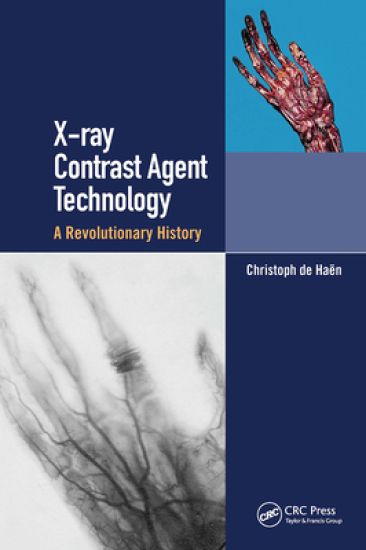
This book documents the fascinating history of radiological techniques that use contrast agents. The text includes many of the fundamental documentary sources that bring to life the social and scientific background of the discoveries, the personalities of the discoverers, and implementation of new technologies. Such agents when used with X-rays allow clinicians to distinguish anatomical structures with nearly identical densities. Focus is on urological and angiographic uses of contrast agents.Key selling features:Documents and thoroughly references the history of contrast agent developmentReviews the priority and importance of patentsDiscusses the role that important individual scientists and leading research institutions have played in technology development and implementation
V-Ray My Way

V-Ray My Way

Lee Wylde

CRC Press
2014
nidottu
V-Ray My Way: A Practical Designers Guide to Creating Realistic Imagery Using V-Ray & 3ds Max is a practical, hands-on guide to creating some of the most stunning computer-generated images possible. It caters to the design masses; architects, engineers, interior designers, industrial designers, photographers, and enthusiasts will find this book essential in their quest to express themselves through visual communication. V-Ray My Way is an accumulation of 13 years of experimental experience and will have you creating content within minutes, help grow your company, help develop your portfolio, and help you make that career leap. Additional resources and exercises are available at the book’s companion website, http://routledgetextbooks.com/textbooks/_author/wylde-9780415709637/
A Ray of Light

A Ray of Light

Walter Wick

Scholastic Press
2019
sidottu
A photographic exploration into the beauty and magic of light from the creator of the bestselling A Drop of Water and the Can You See What I See? series.The wonder of light has fascinated readers for ages. Walter Wick's mesmerizing photographs paired with simple yet fascinating text and scientific observations help readers understand the secrets and complexity of light. You will learn what light is made of and how it fits alongside everything else in the world. Walter introduces readers into the mystery behind incandescence, light waves, the color spectrum, and iridescence as well as how we perceive light in our world and beyond. Walter Wick demonstrates that science and art both offer ways to observe the world around us. A Ray of Light is perfect for the STEM curriculum as it incorporates the early disciplines of science, technology, engineering, and mathematics.
Linear Ray and Wave Optics in Phase Space

Linear Ray and Wave Optics in Phase Space

Amalia Torre

Elsevier Science Ltd
2005
nidottu
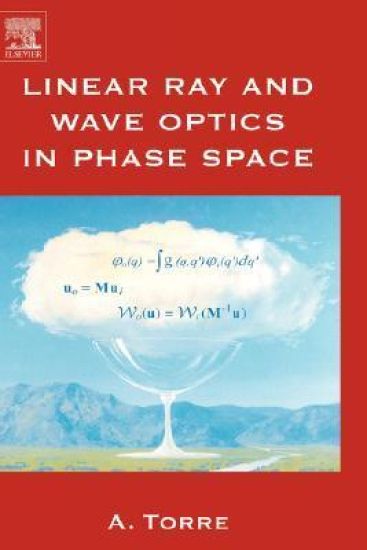
Ray, wave and quantum concepts are central to diverse and seemingly incompatible models of light. Each model particularizes a specific ''manifestation'' of light, and then corresponds to adequate physical assumptions and formal approximations, whose domains of applicability are well-established. Accordingly each model comprises its own set of geometric and dynamic postulates with the pertinent mathematical means. At a basic level, the book is a complete introduction to the Wigner optics, which bridges between ray and wave optics, offering the optical phase space as the ambience and the Wigner function based technique as the mathematical machinery to accommodate between the two opposite extremes of light representation: the localized ray of geometrical optics and the unlocalized wave function of wave optics. At a parallel level, the analogies with other branches of both classical and quantum physics, like classical and quantum mechanics, quantum optics, signal theory as well as magnetic optics, are evidenced by pertinent comments and/or rigorous mathematics. So, the Lie algebra and group methods are introduced and explained through the elementary optical systems within both the ray and wave optics contexts, the former being related to the symplectic group and the latter to the metaplectic group. In a like manner, the Wigner function is introduced by following the original issue to individualize a phase space representation of quantum mechanics, which is mirrored by the issue to individualize a local frequency spectrum within the signal theory context. The basic analogy with the optics of charged particles inherently underlying the ray-optics picture in phase space is also evidenced within the wave-optics picture in the Wigner phase space.
Linear Ray and Wave Optics in Phase Space

Linear Ray and Wave Optics in Phase Space

Amalia Torre

Elsevier Science Ltd
2019
pokkari
Linear Ray and Wave Optics in Phase Space, Second Edition, is a comprehensive introduction to Wigner optics. The book connects ray and wave optics, offering the optical phase space as the ambience and the Wigner function based technique as the mathematical machinery to accommodate between the two opposite extremes of light representation: the localized ray of geometrical optics and the unlocalized wave function of wave optics. Analogies with other branches of classical and quantum physics-such as classical and quantum mechanics, quantum optics, signal theory and magnetic optics-are evidenced by pertinent comments and/or rigorous mathematics. Lie algebra and group methods are introduced and explained through the elementary optical systems within the ray and wave optics contexts, the former being related to the symplectic group and the latter to the metaplectic group. In a similar manner, the Wigner function is introduced by following the original issue to individualize a phase space representation of quantum mechanics, which is mirrored by the issue to individualize a local frequency spectrum within the signal theory context. The basic analogy with the optics of charged particles inherently underlying the ray-optics picture in phase space is also evidenced within the wave-optics picture in the Wigner phase space. This second edition contains 150 pages of new material on Wigner distribution functions, ambiguity functions for partially coherent beams, and phase-space picture and fast optics. All chapters are fully revised and updated. All topics have been developed to a deeper level than in the previous edition and are now supported with Mathematica and Mathcad codes.
X-Ray Fluorescence Spectrometry

X-Ray Fluorescence Spectrometry

Ron Jenkins

John Wiley Sons Inc
1999
sidottu
X-ray fluorescence spectroscopy, one of the most powerful and flexible techniques available for the analysis and characterization of materials today, has gone through major changes during the past decade. Fully revised and expanded by 30%, X-Ray Fluorescence Spectrometry, Second Edition incorporates the latest industrial and scientific trends in all areas. It updates all previous material and adds new chapters on such topics as the history of X-ray fluorescence spectroscopy, the design of X-ray spectrometers, state-of-the-art applications, and X-ray spectra. Ron Jenkins draws on his extensive experience in training and consulting industry professionals for this clear and concise treatment, covering first the basic aspects of X rays, then the methodology of X-ray fluorescence spectroscopy and available instrumentation. He offers a comparison between wavelength and energy dispersive spectrometers as well as step-by-step guidelines to X-ray spectrometric techniques for qualitative and quantitative analysis-from specimen preparation to real-world industrial application. Favored by the American Chemical Society and the International Centre for Diffraction Data, X-Ray Fluorescence Spectrometry, Second Edition is an ideal introduction for newcomers to the field and an invaluable reference for experienced spectroscopists-in chemical analysis, geology, metallurgy, and materials science. An up-to-date review of X-ray spectroscopic techniques. This proven guidebook for industry professionals is thoroughly updated and expanded to reflect advances in X-ray analysis over the last decade. X-Ray Fluorescence Spectrometry, Second Edition includes: The history of X-ray fluorescence spectrometry-new to this edition.A critical review of the most useful X-ray spectrometers.Techniques and procedures for quantitative and qualitative analysis.Modern applications and industrial trends.X-ray spectra-new to this edition.
X-Ray Spectrometry

X-Ray Spectrometry

John Wiley Sons Inc
2004
sidottu
During the last decade, remarkable and often spectacular progress has been made in the methodological and instrumental aspects of x-ray spectrometry. This progress includes considerable technological improvements in the design and production of detectors as well as significant advances in x-ray optics, special configurations and computing approaches. All this has resulted in improved analytical performance and new applications, as well as in the perspective of a dramatic enhancement in the potential of x-ray based analysis techniques for the near future. The book is divided into the following sections: *Introduction *X-Ray Sources *X-Ray Optics *X-Ray Detectors *Special Configurations *New Computerization Methods *New Applications each covering the most advanced and high-tech aspects of the chemical analysis techniques based on x-rays. By its nature, such a book cannot cover the fundamental, well-known and more routine aspects of the technique; for this, reference is made to seve ral existing handbooks and textbooks. Each chapter is prepared by internationally recognized scientists, all of whom are eminent specialists in each of the sub-fields. This book will assist all analytical chemists and other users of x-ray spectrometry to fully exploit the capabilities of this set of powerful analytical tools and to further expand applications in such fields as material and environmental sciences, medicine, toxicology, forensics, archaeometry and many others.
X-Ray Diffraction Procedures

X-Ray Diffraction Procedures

Harold P. Klug; Leroy E. Alexander

John Wiley Sons Inc
1974
sidottu
A complete view of x-ray diffraction procedures For those working in the field who wish to go beyond push-button applications, X-Ray Diffraction Procedures for Polycrystalline and Amorphous Materials provides a strong guide to the science and practical techniques of geometrical crystallography and x-ray diffraction of crystals. The book then moves on to provide more complete coverage of space lattices, point groups and space groups, the production of x-rays, measurement of x-rays, photographic powder techniques, and a host of other related topics. The book is then rounded out with a number of appendices for further reference.