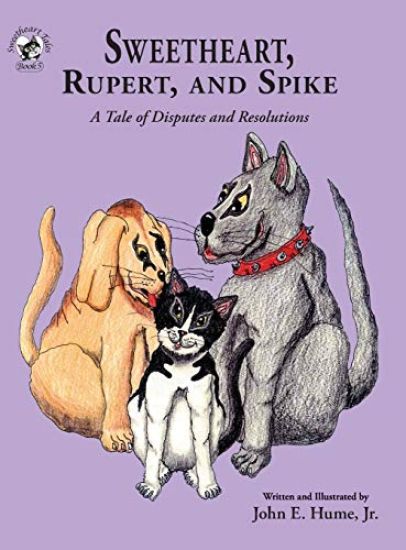
How do you solve disputes? Follow Sweetheart, Rupert, and the porch cats as they search for ways to resolve disputes. Can they find a gentler, kinder solution when Spike and Rupert have a confrontation? Discover their method in this whimsical Sweetheart Tale filled with colorful illustrations by John Hume. Educational materials are included after the story.
Anbieter von Kapitalanlagen erstellen im Zuge der Vermarktung ihrer Produkte in der Regel ausfuhrliche Verkaufsprospekte, bei deren Erstellung sie sich der Hilfe von Experten - beispielsweise Rechtsanwalten, Wirtschaftsprufern, Steuerberatern oder Sachverstandigen - bedienen. Die Arbeit beschaftigt sich mit der Haftung dieser Experten gegenuber Kapitalanlegern bei Veroeffentlichung ihrer Aussagen in Verkaufsprospekten. Untersucht wird die Haftung de lege lata und de lege ferenda unter Berucksichtigung des Rupert Scholz-Urteils des BGH vom 17.11.2011 (Az. III ZR 103/10), welches in Bezug auf die prospektbezogene Expertenhaftung massgebliche neue Grundsatze aufgestellt hat. Abgerundet wird die Arbeit mit einem abschliessenden Gesetzesvorschlag.
Die Notwendigkeit eines sicheren und zufriedenstellenden Lebens in der relativ kleinen Welt von Waskaganish war die Motivation f r diese Abschlussarbeit. Der Autor suchte nach Garantien f r Rechtsanspr che, als weite Teile Kanadas annektiert wurden. Die Untersuchungen deckten ein feierliches und verbindliches Versprechen des kanadischen Parlaments an die Regierung Ihrer Majest t in Gro britannien auf. Dieses Versprechen war in der ersten Verfassung Kanadas verankert, die selbst ein britisches Gesetz war. Diese Studie deckte Beweise f r solche Garantien auf, die vor kanadischen Gerichten ohne Weiteres zul ssig sind. Diese Garantien sind von grundlegender Bedeutung f r die Verwirklichung jeglicher bildungsbezogener oder soziokultureller Ziele. Ebenso wichtig ist es zu verstehen, warum und wie diese Garantien so lange unterdr ckt wurden. Dar ber hinaus musste der Autor die m gliche Integration der staatlichen Ordnung in die traditionelle Ordnung der Ureinwohner von Rupert's Land untersuchen, eine Voraussetzung f r die Wiederherstellung eines bijuralen Gleichgewichts der Beziehungen zwischen der Hudson's Bay Company und den Ureinwohnern der First Nations in den vergangenen Jahrhunderten. Schlie lich veranschaulicht der Autor einen solchen bijuralen Ansatz am Beispiel der Ausbildung, Lehre und Anerkennung von Kompetenzen in provinziell zertifizierten Berufen.
C'est le besoin d'une vie s re et satisfaisante dans le monde relativement petit de Waskaganish qui a motiv cette th se. L'auteur a cherch des garanties de droits l gaux lorsque de vastes parties du Canada ont t annex es. Les recherches ont r v l une promesse solennelle et contraignante faite par le Parlement canadien au gouvernement de Sa Majest la Grande-Bretagne. Cette promesse tait inscrite dans la premi re constitution du Canada, elle-m me une loi britannique. Cette tude a mis au jour des preuves de ces garanties, sous des formes facilement admissibles devant les tribunaux canadiens. Ces garanties sont fondamentales pour atteindre tout objectif ducatif ou socioculturel. Il est tout aussi important de comprendre pourquoi et comment ces garanties ont t si longtemps supprim es. En outre, l'auteur a d explorer l'int gration possible de l'ordre tatique avec l'ordre coutumier des Autochtones de la Terre de Rupert, condition pr alable la restauration d'un quilibre bijural des relations entre la Compagnie de la Baie d'Hudson et les Premi res Nations autochtones au cours des si cles pr c dents. Enfin, l'auteur illustre cette approche bijurale l'aide de l'exemple de la formation, de l'apprentissage et de la reconnaissance des comp tences dans les m tiers certifi s par les provinces.
stata la necessit di garantire una vita sicura e soddisfacente nel mondo relativamente piccolo di Waskaganish a motivare questa tesi di laurea. L'autore ha cercato garanzie dei diritti legali quando vaste parti del Canada sono state annesse. Le indagini hanno portato alla luce una promessa solenne e vincolante fatta dal Parlamento canadese al governo di Sua Maest della Gran Bretagna. Tale promessa era sancita nella prima costituzione canadese, essa stessa uno statuto britannico. Questo studio ha portato alla luce prove di tali garanzie, in forme facilmente ammissibili nei tribunali canadesi. Queste garanzie sono di fondamentale importanza per il raggiungimento di qualsiasi obiettivo educativo o socio-culturale. Altrettanto importante comprendere perch e come queste garanzie siano state soppresse per cos tanto tempo. Inoltre, l'autore ha dovuto esplorare la possibile integrazione dell'ordine statale con l'ordine consuetudinario degli aborigeni della Terra di Rupert, prerequisito per ripristinare un equilibrio bijuridico dei secoli precedenti di relazioni tra la Compagnia della Baia di Hudson e le Prime Nazioni aborigene. Infine, l'autore illustra tale approccio bijuridico nell'esempio della formazione, dell'apprendistato e del riconoscimento delle competenze nell'ambito dei mestieri certificati a livello provinciale.
Foi a necessidade de uma vida segura e satisfat ria no mundo relativamente pequeno de Waskaganish que motivou este estudo de tese. O autor procurou garantias de direitos legais quando vastas partes do Canad foram anexadas. As investiga es revelaram uma promessa solene e vinculativa feita pelo Parlamento canadiano ao Governo de Sua Majestade da Gr -Bretanha. Essa promessa estava consagrada na primeira constitui o do Canad , ela pr pria um estatuto brit nico. Este estudo revelou provas dessas garantias, em formas facilmente admiss veis nos tribunais canadianos. Estas garantias s o fundamentalmente importantes para alcan ar qualquer objetivo educativo ou sociocultural. Igualmente importante compreender por que e como estas garantias foram suprimidas durante tanto tempo. Al m disso, este autor precisou explorar a poss vel integra o da ordem de comando do Estado com a ordem consuetudin ria dos abor genes da Terra de Rupert, pr -requisito para restaurar um equil brio bijural das rela es dos s culos anteriores entre a Companhia da Ba a de Hudson e as Primeiras Na es Abor genes. Por fim, o autor ilustra essa abordagem bijural no exemplo de forma o, aprendizagem e reconhecimento de compet ncia em of cios certificados pela prov ncia.
The Prisoner of Zenda (1894), by Anthony Hope, is an adventure novel in which the King of Ruritania is drugged on the eve of his coronation and thus is unable to attend the ceremony. Political forces within the realm are such that, in order for the king to retain the crown, his coronation must proceed. Fortuitously, an English gentleman on holiday in Ruritania who resembles the monarch is persuaded to act as his political decoy in an effort to save the unstable political situation of the interregnum. The name of the villain in The Prisoner of Zenda, Rupert of Hentzau, is the title of the sequel novel, Rupert of Hentzau (1898), published four years later, and is included in some editions of The Prisoner of Zenda. The popularity of the novels inspired the Ruritanian romance genre of literature, film, and theatre that features stories set in a fictional country, usually in Central Europe and Eastern Europe, such as Ruritania, the Central European realm that named the genre, which includes the Graustark novels by George Barr McCutcheon. The Complete Prisoner of Zenda Story contains both The Prisoner of Zenda and Rupert of Hentzau.
Ruritania is a fictional country in central Europe which forms the setting for three books by Anthony Hope: The Prisoner of Zenda (1894), The Heart of Princess Osra (1896), and Rupert of Hentzau (1898). The first and third are set in the recent past, between the 1850s and 1880s. The second is set in the 1730s, though it refers to subsequent events that happened between that time and the time of writing. The Complete Ruritanian Romances contains all three novels by Anthony Hope set in Ruritania. Odin's Library Classics is dedicated to bringing the world the best of humankind's literature from throughout the ages. Carefully selected, each work is unabridged from classic works of fiction, nonfiction, poetry, or drama.
He had Elvis' private phone number. He spent an afternoon with a young activist named Martin Luther King, Jr. He talked for hours sipping soda with evangelist Billy Graham. In his memoirs, Final Edition and Me, LaRue Gilleland shares his reporting of these young and up-and-coming game changers and recounts numerous stories from his impressive journalism career including posing as a bootleg whiskey buyer to uncover a local moonshine operation, interviewing a woman who had murdered and sawed her husband into pieces, escaping from a forbidden night club in the old Soviet Union, and failing to measure up to an invitation from movie actress Joan Crawford. A self-professed "hillbilly," Gilleland grew up in a small town in Missouri just north of the Lake of the Ozarks in the 1930s. He earned undergraduate and graduate degrees from the prestigious University of Missouri, Columbia, School of Journalism. Gilleland's career as a reporter took him from Honolulu, to L.A., to Tulsa, to Memphis. At the Memphis Commercial Appeal in the 1950s, Gilleland met Elvis Presley as his career began to skyrocket and Martin Luther King, Jr. early in the civil rights movement. In 1962, Gilleland began his career in academia. After a year at Arkansas State, he moved his new family to Reno, Nevada to become professor of journalism at the University of Nevada. He was later appointed Chair of the Journalism Department where he earned a reputation as a reformer. "He made a Chevette into a Camry," said Bill Kirtz who was on the hiring committee that recruited Gilleland in 1981 to head the Department of Journalism at Northeastern University, Boston. During his 11 years at Northeastern, he transformed the Department of Journalism into the School of Journalism and took on university administrators over issues ranging from soda machines in the lobby to the tenure system in the College of Arts and Sciences. His tenacity and hard work earned him high praise from colleagues and students alike. LaRue retired to The Villages, Florida with his wife Betsy where they live today.
This book interrogates how districts were used in British North America to inspect, and document indigenous people by the Hudson’s Bay Company (HBC). In particular, it examines how the HBC utilized districts to create a political geography that allowed for closer surveillance of indigenous people and stabilized debt. An initial examination of how the district was used to rework earlier 18th-century conducts of observation into the more ordered and spatially limited regime of inspection is undertaken, followed by an investigation of how the district became central to the HBC’s efforts to limit the movement of indigenous people, individualize hunters, and spur ‘industriousness’. The book points to how districts became key to a number of colonial projects, laying the infrastructure for the modern reserve system in Canada. In this sense, the book provides a critical genealogy of how the command of space and social vision shaped Canada’s colonial geography.
This book interrogates how districts were used in British North America to inspect, and document indigenous people by the Hudson’s Bay Company (HBC). In particular, it examines how the HBC utilized districts to create a political geography that allowed for closer surveillance of indigenous people and stabilized debt. An initial examination of how the district was used to rework earlier 18th-century conducts of observation into the more ordered and spatially limited regime of inspection is undertaken, followed by an investigation of how the district became central to the HBC’s efforts to limit the movement of indigenous people, individualize hunters, and spur ‘industriousness’. The book points to how districts became key to a number of colonial projects, laying the infrastructure for the modern reserve system in Canada. In this sense, the book provides a critical genealogy of how the command of space and social vision shaped Canada’s colonial geography.