Kirjojen hintavertailu. Mukana 11 699 587 kirjaa ja 12 kauppaa.

Kirjahaku

Etsi kirjoja tekijän nimen, kirjan nimen tai ISBN:n perusteella.

1000 tulosta hakusanalla S. Englander

Bede'S Ecclesiastical History Of England
Bede's Ecclesiastical History of England,' written by Bede, is a renowned historical work that offers a comprehensive account of the early Christian history of England. Composed in the 8th century, Bede's meticulous chronicle covers the period from the Roman occupation of Britain to his own time. The book provides valuable insights into the conversion of the Anglo-Saxons to Christianity and the subsequent growth of the Church in England. Bede recounts the missionary efforts of figures such as Augustine of Canterbury and the establishment of important monastic centers. He also delves into the lives and deeds of various kings, bishops, and saints, shedding light on the religious, political, and cultural landscape of the time. Bede's meticulous research, attention to detail, and objective approach make his work a significant historical source. Bede's Ecclesiastical History stands as a remarkable historical achievement, preserving important accounts of early English Christianity and serving as a cornerstone for our understanding of the era.
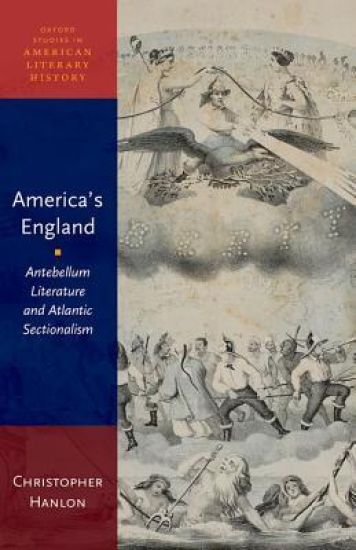
America's England

America's England

Christopher Hanlon

Oxford University Press Inc
2016
nidottu
The wealth of transatlantic scholarship to emerge in recent years has greatly enriched our understanding of the mutual, far-reaching cultural exchange between Great Britain and the United States. Yet scholars often lose sight of this relationship in the years immediately leading up to the outbreak of the Civil War. Drawing on a capacious array of travel narratives, novels, poems, political scuffles, and more, Christopher Hanlon's innovative study examines the patterns of affiliation through which U.S. culture encoded the turmoil of antebellum America in terms of imagined connections with England. Through engagement with contemporaneous renditions of English race, history, landscape aesthetics, telecommunications, and economic discourse, America's England reveals how Northern and Southern partisans re-imagined the terms behind their antagonisms, forming a transatlantic surround for the otherwise cisatlantic political struggles that would dissolve the Union in 1861. Among other ramifications, the re-conceptualization of sectional issues in transatlantic terms undermined the notion that white citizens of the United States formed a unified biological or cultural community, effectively polarizing the imagined ethnic and cultural bases of the American polity. But beyond that, a continued reference to English historical, cultural, and political formations allowed figures such as Ralph Waldo Emerson, Frederick Douglass, Henry Timrod, Lydia Maria Child, Nathaniel Hawthorne, Charles Sumner, and others to situate an era of developing national acrimony along longer historical and transnational curves, forming accounts of national crisis that situated questions of a domestic political bearing at oceanic removes from Northern and Southern combatants. Demonstrating that English genealogies, geographies, and economics shaped the sectional crisis for antebellum Americans on both sides of the Mason-Dixon, America's England locates the key crisis points of the period in a broader transatlantic constellation that provided distinctive circumstances for literary production.
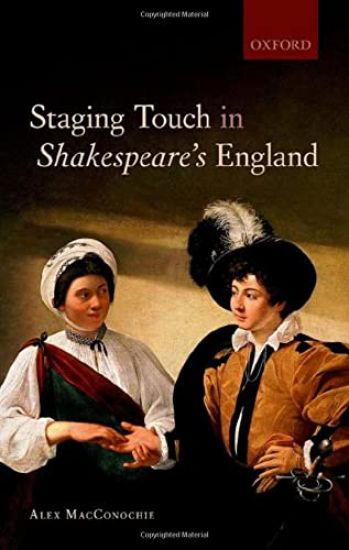
Staging Touch in Shakespeare's England

Staging Touch in Shakespeare's England

Alex MacConochie

Oxford University Press
2022
sidottu
When Shakespearean characters kiss, embrace, or shake hands, what does it mean? Are dramatic characters following established rules of conduct, or breaking them? Are there rules to break? Staging Touch in Shakespeare's England addresses these and related questions and, in the process, uncovers the social semiotics of contact in the early modern theatre. Its central argument is twofold. First, dramatic characters use touch to define and contest the nature of their relationships: taking hands means something different than embracing or, indeed, holding hands a different way. Second, the definitions, the social roles of actions like these, are up for debate in venues ranging from sermons to the era's burgeoning literature on conduct. The drama not only portrays but participates in these debates. Where characters touch, so do different ideas about contact's role in a variety of contexts, from love and friendship to politics and business deals. Attending to the social roles of touch--what it signifies as much as how it feels--the book develops an outside-in approach to our understanding of early modern sensation: a sociology, rather than a phenomenology, of theatrical contact. It will be of use to editors, performers, and anyone interested in Shakespearean approaches to embodiment. Locating interpersonal touch at the centre of dialogues on consent, subjection, agency, and sexuality, this study offers new perspectives on an essential element of Renaissance drama.
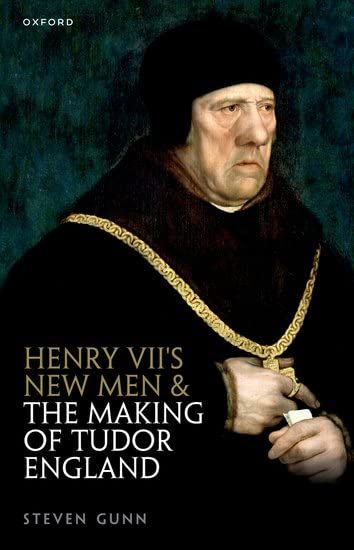
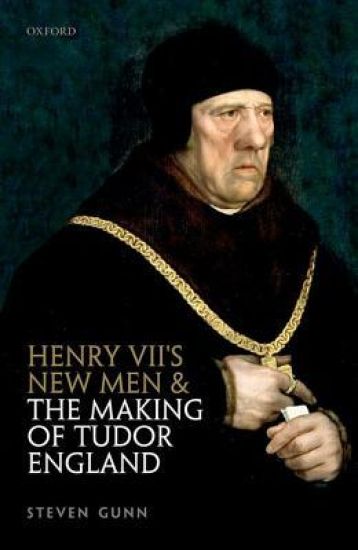
Henry VII's New Men and the Making of Tudor England

Henry VII's New Men and the Making of Tudor England

Steven Gunn

Oxford University Press
2023
nidottu
The reign of Henry VII is important but mysterious. He ended the Wars of the Roses and laid the foundations for the strong governments of Henry VIII and Elizabeth I. Yet his style of rule was unconventional and at times oppressive. At the heart of his regime stood his new men, low-born ministers with legal, financial, political, and military skills who enforced the king's will and in the process built their own careers and their families' fortunes. Some are well known, like Sir Edward Poynings, governor of Ireland, or Empson and Dudley, executed to buy popularity for the young Henry VIII. Others are less famous. Sir Robert Southwell was the king's chief auditor, Sir Andrew Windsor the keeper of the king's wardrobe, Sir Thomas Lovell, the Chancellor of the Exchequer so trusted by Henry that he was allowed to employ the former Yorkist pretender Lambert Simnel as his household falconer. Some paved the way to glory for their relatives. Sir Thomas Brandon, master of the horse, was the uncle of Henry VIII's favourite Charles Brandon, duke of Suffolk. Sir Henry Wyatt, keeper of the jewel house, was father to the poet Sir Thomas Wyatt. This volume, based on extensive archival research, presents a kaleidoscopic portrait of the new men. It analyses the offices and relationships through which they exercised power and the ways they gained their wealth and spent it to sustain their new-found status. It establishes their importance in the operation of Henry's government and, as their careers continued under his son, in the making of Tudor England.
Henry VII's New Men and the Making of Tudor England

Henry VII's New Men and the Making of Tudor England

Steven Gunn

Oxford University Press
2016
sidottu
The reign of Henry VII is important but mysterious. He ended the Wars of the Roses and laid the foundations for the strong governments of Henry VIII and Elizabeth I. Yet his style of rule was unconventional and at times oppressive. At the heart of his regime stood his new men, low-born ministers with legal, financial, political, and military skills who enforced the king's will and in the process built their own careers and their families' fortunes. Some are well known, like Sir Edward Poynings, governor of Ireland, or Empson and Dudley, executed to buy popularity for the young Henry VIII. Others are less famous. Sir Robert Southwell was the king's chief auditor, Sir Andrew Windsor the keeper of the king's wardrobe, Sir Thomas Lovell, the Chancellor of the Exchequer so trusted by Henry that he was allowed to employ the former Yorkist pretender Lambert Simnel as his household falconer. Some paved the way to glory for their relatives. Sir Thomas Brandon, master of the horse, was the uncle of Henry VIII's favourite Charles Brandon, duke of Suffolk. Sir Henry Wyatt, keeper of the jewel house, was father to the poet Sir Thomas Wyatt. This volume, based on extensive archival research, presents a kaleidoscopic portrait of the new men. It analyses the offices and relationships through which they exercised power and the ways they gained their wealth and spent it to sustain their new-found status. It establishes their importance in the operation of Henry's government and, as their careers continued under his son, in the making of Tudor England.
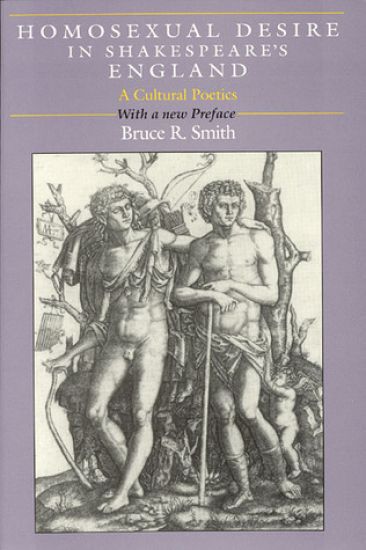
Homosexual Desire in Shakespeare's England

Homosexual Desire in Shakespeare's England

Bruce R. Smith

University of Chicago Press
1995
nidottu
In the most comprehensive study yet of homosexuality in the English Renaissance, Bruce R. Smith examines and rejects the assessments of homosexual acts in moral philosophy, laws, and medical books in favor of a poetics of homosexual desire. Smith isolates six different "myths" from classical literature and discusses each in relation to a particular Renaissance literary genre and to a particular part of the social structure of early modern England. Smith's new Preface places his work in the context of the continuing controversies in gay, lesbian, and bisexual studies."The best single analysis of the homoerotic element in Renaissance English literature."—Keith Thomas, New York Review of Books"Smith's lucid and subtle book offer[s] a poetics of homosexual desire. . . . Its scholarship, impressively broad and deftly deployed, aims to further a serious social purpose: the redemptive location of homosexual desire in history and the recuperation for our own time, through an understanding of its discursive embodiments, of that desire's changing imperatives and parameters."—Terence Hawkes, Times Literary Supplement"The great strength of Bruce Smith's book is that it does not sidestep the complex challenge of engaging in the sexual politics of the present while attending to the resistant discourses and practices of Renaissance England. Homosexual Desire in Shakespeare's England demonstrates how a commitment to the present opens up our understanding of the past."—Peter Stallybrass, Shakespeare Quarterly"A major contribution to the understanding of homosexuality in Renaissance England and by far the best and most comprehensive account yet offered of the homoeroticism that suffuses Renaissance literature."—Claude J. Summers, Journal of Homosexuality
From Performance to Print in Shakespeare's England
What can the printed texts of plays from Shakespeare's time say about performance? How have printed plays been read and interpreted? This collection of essays considers the evidence of early modern printed plays and their histories of production and reception, examining a wide variety of cases, from early performance to the psychology of Hamlet.
Orwell's England

Orwell's England

George Orwell

Penguin Classics
2020
pokkari
Including The Road to Wigan Pier'No one wrote better about the English character than Orwell' New York Review of BooksMuch of George Orwell's best writing, brought together in this collection, is concerned with his complex, often contradictory attitude to England. In the brilliantly perceptive The English People, he lists the national characteristics as 'suspicion of foreigners, sentimentality about animals, hypocrisy, exaggerated class distinctions and an obsession with sport'. The Road to Wigan Pier, his blistering account of poverty in the north of England, and many of his essays, attack what he called 'the most class-ridden country under the sun', while other writings here ruminate on the merits of cricket, gardening, roast dinners, pubs, tea and seaside postcards.Edited by Peter Davison with an Introduction by Ben Pimlott
Liza's England

Liza's England

Pat Barker

Picador USA
2001
nidottu
"Pat Barker's writing is so sure, and her characters so vital, that a powerful story emerges, honest, grim but often funny, and always engrossing." -NewsdayIn Liza's England, Liza Garrett is the first child in town born in the twentieth century--whose life in many ways mirrors the turmoil of England itself. The tough, severe, but very real and recognizable world of women is put to the most strenuous tests, and Liza, at eighty-four, is proof that loyalty, fortitude and humor survive.
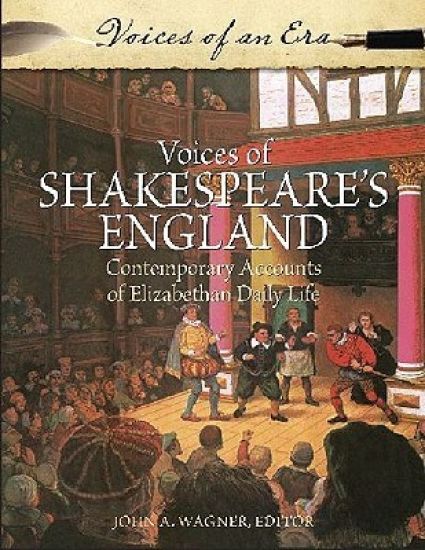
Voices of Shakespeare's England
Voices of Shakespeare's England offers students and public library patrons over 50 primary documents that illuminate the character, personalities, and events of the Elizabethan and Jacobean periods. Voices of Shakespeare's England: Contemporary Accounts of Elizabethan Daily Life helps readers explore the era that produced, among other things, the world's greatest playwright. It brings together excerpts from over 50 primary documents written in William Shakespeare's lifetime, including letters, literature, speeches and polemics, official reports, and descriptive narratives. Voices of Shakespeare's England includes the works of Shakespeare himself, as well as other poets and playwrights, but it also expands beyond the literary world to cover politics, religion, economics, social change, and the royal court. By allowing Shakespeare's contemporaries to speak in their own voices, it offers an illuminating look at the breadth of Elizabethan society, including major historic events in England as well as Scotland, Ireland, the European continent, and even the new world of America.
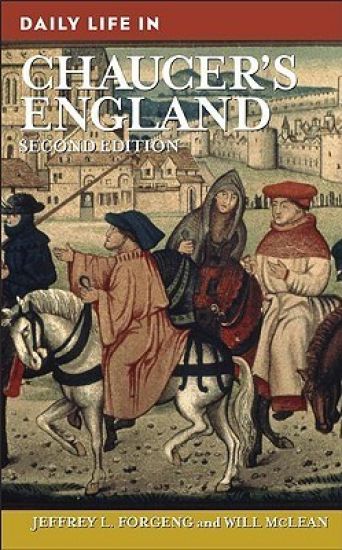
Daily Life in Chaucer's England

Daily Life in Chaucer's England

Jeffrey L. Forgeng; Will Mclean

Greenwood Press
2008
sidottu
Experience the medieval world firsthand in this indispensable hands-on resource, and examine life as it was actually lived. The first book on medieval England to arise out of the living history movement, this volume allows readers to understand-and, if possible, recreate-what life was like for ordinary people in the days of Geoffrey Chaucer. Readers will learn not only what types of games medieval Britons played, what clothes they wore, or what food they ate, but actual rules for games, clothing patterns, and recipes. Written with impeccable detail, this volume examines all aspects of life in medieval England, down to basic fundamentals like nutrition, waste management, and table manners. Parallel situations and quoted material from The Canterbury Tales draw direct connections to Chaucer's work. Student researchers will benefit from a multitude of resources, including primary source sidebars, a chapter on online resources and digital research, information on medieval reenactments, a timeline of events, a glossary of terms, numerous illustrations, and a comprehensive print and nonprint bibliography of accessible sources. Supporting the world history curriculum and offering an interactive supplement to literature curricula, this volume is a must-have for students and interested readers. Detailed and meticulous, this volume examines all aspects of life in medieval England, down to basic fundamentals like nutrition, waste management, and table manners. Readers will explore, seasons, holidays and holy days, the prevalence and normalcy of death, the average workday, crafts and trade, decorating practices, and recreational activities like archery and falconry. Parallel situations and quoted material from The Canterbury Tales also draw direct connections to Chaucer's work.
Lawrence's England

Lawrence's England

M. Black

Palgrave Macmillan
2001
sidottu
Written during and immediately after the 1914-18 War, Lawrence's major fictions - notably The Rainbow and Women in Love - trace the growth and contemplate the state of industrial England in the twentieth century. Michael Black's introductory chapters show the theoretical interest of Lawrence's writing-method, and how in discarded draft material he was seeking the narrative modes of the great novels which followed. The analysis of these finds Lawrence seeking a modern form of spirituality as well as rediscovered sexual relationships.
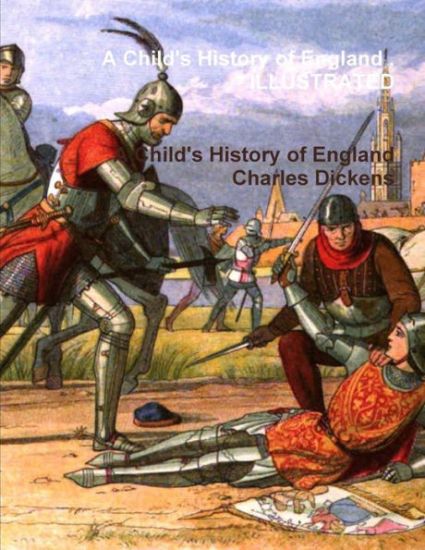
A Child's History of England . ILLUSTRATED
A Child's History of England is a book by Charles Dickens. It first appeared in serial form in Household Words, running from 25 January 1851 to 10 December 1853. Dickens also published the work in book form in three volumes: the first volume on 20 December 1851, the second on 25 December 1852 and the third on 24 December 1853