Kirjojen hintavertailu. Mukana 11 717 486 kirjaa ja 12 kauppaa.

Kirjahaku

Etsi kirjoja tekijän nimen, kirjan nimen tai ISBN:n perusteella.

1000 tulosta hakusanalla S. Zellinger

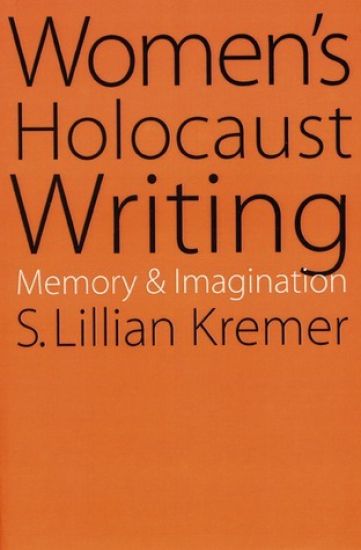
Women's Holocaust Writing

Women's Holocaust Writing

S. Lillian Kremer

University of Nebraska Press
2001
pokkari
Women's Holocaust Writing extends Holocaust and literary studies by examining women's artistic representations of female Holocaust experiences, as given voice by Cynthia Ozick, Ilona Karmel, Elzbieta Ettinger, Hana Demetz, Susan Fromberg Schaeffer, Norma Rosen, and Marge Piercy. Through close, insightful reading of fiction, S. Lillian Kremer explores Holocaust representations in works distinguished by the power of their literary expression and attention to women's diverse experiences. She draws upon history, psychology, women's studies, literary analysis, and interviews with authors to compare writing by eyewitnesses working from memory with that by remote "witnesses through the imagination."
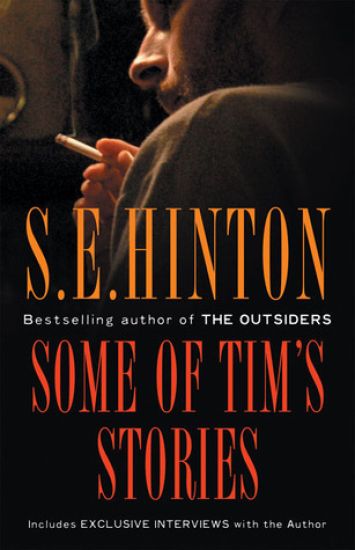
Some of Tim's Stories

Some of Tim's Stories

S. E. Hinton

University of Oklahoma Press
2007
sidottu
Short Stories from the bestselling author of The Outsiders, plus exclusive interviews A teenager when she first gained fame, now a seasoned writer, S. E. Hinton takes her trademark themes to a new level in Some of Tim's Stories - fourteen original stories depicting adults trapped in lives of missed connections and opportunities. The stories in this collection merge into a larger narrative about two cousins, Terry and Mike, whose lives and families are intertwined but whose paths lead to very different futures: one in prison, the other enduring a guilt-ridden existence working in a bar.The tales are made especially distinctive in the telling. The ""author"" of the stories is a bartender named Tim - the ""Mike"" of his own narrative - whose idiosyncrasies are perfectly captured in Hinton's intriguing use of metafiction.The book also features exclusive interviews with Hinton conducted by Teresa Miller, host of public television's Writing Out Loud. Hinton allows readers into her world as she never has before - speaking openly about her life and career. Complementing the book are line drawings that illustrate the stories and photographs that document the author's life.In one interview, Hinton calls Some of Tim's Stories ""the best writing I've ever done."" These stories capture the feel of the earlier books that won her fame while demonstrating an adult edginess and a more disciplined talent. Some of Tim's Stories is sure to captivate Hinton's long-time fans as it shows new readers that her soul-searching fiction extends masterfully to adult themes as well.
Aristotle's Poetics

Aristotle's Poetics

S. H. Butcher

Hill Wang
2003
nidottu
Introduced by Francis Fergusson, the Poetics, written in the fourth century B.C., is still an essential study of the art of drama, indeed the most fundamental one we have. It has been used by both playwrights and theorists of many periods, and interpreted, in the course of its two thousand years of life, in various ways. The literature which has accumulated around it is, as Mr. Fergusson points out, "full of disputes so erudite that the nonspecialist can only look on in respectful silence." But the Poetics itself is still with us, in all its suggestiveness, for the modern reader to make use of in his turn and for his own purposes. Francis Fergusson's lucid, informative, and entertaining Introduction will prove invaluable to anyone who wishes to understand and appreciate the Poetics. Using Sophocles' Oedipus Rex, as Aristotle did, to illustrate his analysis, Mr. Fergusson pints out that Aristotle did not lay down strict rules, as is often thought: "The Poetics," he says, "is much more like a cookbook than it is like a textbook of elementary engineering." Read in this way, it is an essential guide not only to Sophoclean tragedy, but to the work of so modern a playwright as Bertolt Brecht, who considered his own "epic drama" the first non-Aristotelian form.
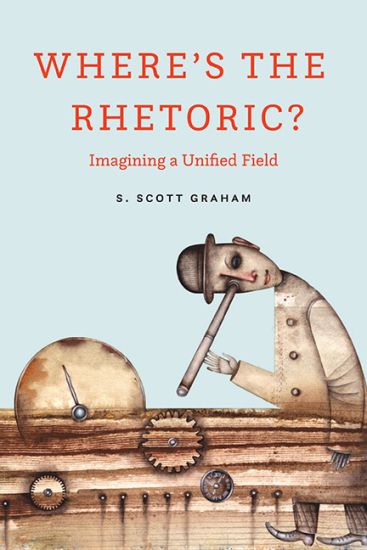
Where's the Rhetoric?

Where's the Rhetoric?

S Scott Graham

Ohio State University Press
2020
sidottu
The emergence of rhetorical new materialisms and computational rhetorics has provoked something of an existential crisis within rhetorical studies. In Where's the Rhetoric?, S. Scott Graham tackles this titular question by arguing first that scholarly efforts in rhetorical new materialisms and computational rhetoric be understood as coextensive with longstanding disciplinary commitments in rhetoric. In making this argument, Graham excavates the shared intellectual history of traditional rhetorical inquiry, rhetorical new materialisms, and computational rhetoric with particular emphasis on the works of Carolyn Miller, Kenneth Burke, and Henri Bergson. Building on this foundation, Graham then argues for a more unified approach to contemporary rhetorical inquiry-one that eschews disciplinary demarcations between rhetoric's various subareas. Specifically, Graham uses his unified field theory to explore 1) the rise of the "tweetorial" as a parascientific genre, 2) inventional practices in new media design, 3) statistical approaches to understanding biomedical discourse, and 4) American electioneering rhetorics. The book overall demonstrates how seemingly disparate intellectual approaches within rhetoric can be made to speak productively to one another in the pursuit of shared scholarly goals around questions of genre, media, and political discourse-thereby providing a foundation for imagining a more unified field.
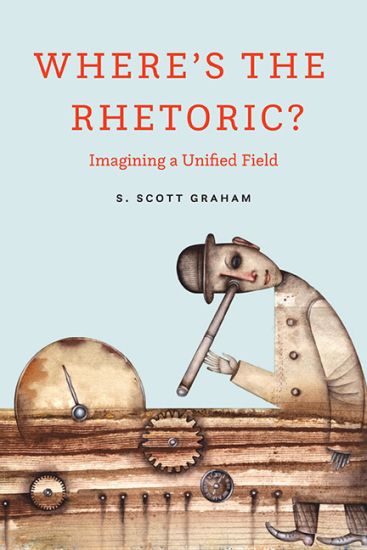
Where's the Rhetoric?

Where's the Rhetoric?

S Scott Graham

Ohio State University Press
2020
pokkari
The emergence of rhetorical new materialisms and computational rhetorics has provoked something of an existential crisis within rhetorical studies. In Where's the Rhetoric?, S. Scott Graham tackles this titular question by arguing first that scholarly efforts in rhetorical new materialisms and computational rhetoric be understood as coextensive with longstanding disciplinary commitments in rhetoric. In making this argument, Graham excavates the shared intellectual history of traditional rhetorical inquiry, rhetorical new materialisms, and computational rhetoric with particular emphasis on the works of Carolyn Miller, Kenneth Burke, and Henri Bergson. Building on this foundation, Graham then argues for a more unified approach to contemporary rhetorical inquiry-one that eschews disciplinary demarcations between rhetoric's various subareas. Specifically, Graham uses his unified field theory to explore 1) the rise of the "tweetorial" as a parascientific genre, 2) inventional practices in new media design, 3) statistical approaches to understanding biomedical discourse, and 4) American electioneering rhetorics. The book overall demonstrates how seemingly disparate intellectual approaches within rhetoric can be made to speak productively to one another in the pursuit of shared scholarly goals around questions of genre, media, and political discourse-thereby providing a foundation for imagining a more unified field.
Bolivia's Radical Tradition

Bolivia's Radical Tradition

S. Sandor John

University of Arizona Press
2012
nidottu
In December 2005, following a series of convulsive upheavals that saw the overthrow of two presidents in three years, Bolivian peasant leader Evo Morales became the first Indian president in South American history. Consequently, according to S. Sándor John, Bolivia symbolizes new shifts in Latin America, pushed by radical social movements of the poor, the dispossessed, and indigenous people once crossed off the maps of 'official' history. But, as John explains, Bolivian radicalism has a distinctive genealogy that does not fit into ready-made patterns of the Latin American left. According to its author, this book grew out of a desire to answer nagging questions about this unusual place. Why was Bolivia home to the most persistent and heroically combative labor movement in the Western Hemisphere? Why did this movement take root so deeply and so stubbornly? What does the distinctive radical tradition of Trotskyism in Bolivia tell us about the past fifty years there, and what about the explosive developments of more recent years? To answer these questions, John clearly and carefully pieces together a fragmented past to show a part of Latin American radical history that has been overlooked for far too long. Based on years of research in archives and extensive interviews with labor, peasant, and student activists--as well as Chaco War veterans and prominent political figures--the book brings together political, social, and cultural history, linking the origins of Bolivian radicalism to events unfolding today in the country that calls itself 'the heart of South America.'
Bolivia's Radical Tradition

Bolivia's Radical Tradition

S. Sandor John

University of Arizona Press
2009
sidottu
In December 2005, following a series of convulsive upheavals that saw the overthrow of two presidents in three years, Bolivian peasant leader Evo Morales became the first Indian president in South American history. Consequently, according to S. Sandor John, Bolivia symbolizes new shifts in Latin America, pushed by radical social movements of the poor, the dispossessed, and indigenous people once crossed off the maps of official history. But, as John explains, Bolivian radicalism has a distinctive genealogy that does not fit into ready-made patterns of the Latin American left. According to its author, this book grew out of a desire to answer nagging questions about this unusual place. Why was Bolivia home to the most persistent and heroically combative labor movement in the Western Hemisphere? Why did this movement take root so deeply and so stubbornly? What does the distinctive radical tradition of Trotskyism in Bolivia tell us about the past fifty years there, and what about the explosive developments of more recent years? To answer these questions, John clearly and carefully pieces together a fragmented past to show a part of Latin American radical history that has been overlooked for far too long. Based on years of research in archives and extensive interviews with labor, peasant, and student activists, s well as Chaco War veterans and prominent political figures the book brings together political, social, and cultural history, linking the origins of Bolivian radicalism to events unfolding today in the country that calls itself the heart of South America.?
Hope's Promise

Hope's Promise

S. Scott Rohrer

The University of Alabama Press
2014
nidottu
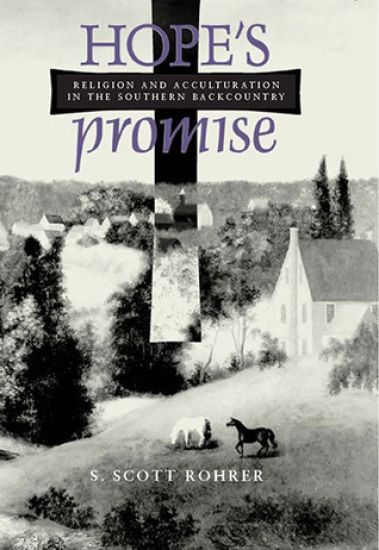
This eloquent study describes the complex process of assimilation that occurred among multi-ethnic groups in Wachovia, the evangelical community that settled a 100,000-acre tract in Piedmont North Carolina from 1750 to 1860. It counters commonplace notions that evangelicalism was a divisive force in the antebellum South, demonstrating instead the ability of evangelical beliefs and practices to unify diverse peoples and foster shared cultural values. In Hope's Promise, Scott Rohrer dissects the internal workings of the ecumenical Moravian movement at Wachovia?how this disparate group of pilgrims hailing from many countries (Germany, Ireland, Scandinavia, England) and different denominations (Lutheran, Reformed, Methodist, Anglican) yielded their ethnicities as they became, above all, a people of faith. By examining the ""open"" farm congregations of Hope, Friedberg, and Friedland, Rohrer offers a sensitive portrayal of their evangelical life and the momentous cultural changes it wrought: the organization of tight-knit congregations bound by ""heart religion;"" the theology of the new birth; the shape of religious discipline; the sacrament of communion; and the role of music. Drawing on courthouse documents and church records, Rohrer carefully demonstrates how various groups began to take on traits of the others. He also illustrates how evangelical values propelled interaction with the outside world?at the meetinghouse and the frontier store, for example?and fostered even more collective and accelerated change. As the Moravians became ever more ""American"" and ""southern,"" the polyglot of ethnicities that was Wachovia would, under the unifying banner of evangelicalism, meld into one of the most sophisticated religious communities in early America.
S. S. Savannah, the Elegant Steam Ship

S. S. Savannah, the Elegant Steam Ship

Frank O. Braynard

University of Georgia Press
2008
pokkari
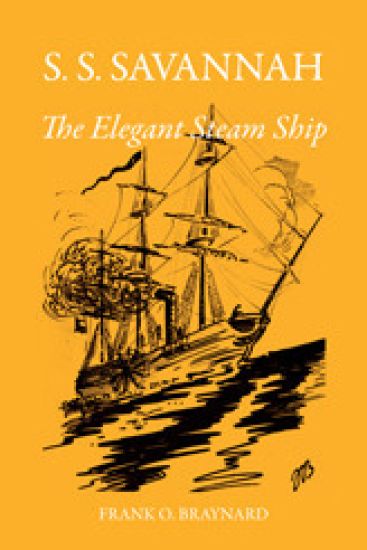
This is the story of a ship and her pioneer master, Moses Rogers, who had the idea of making the first transatlantic voyage in a steam-propelled vessel. His "laudable and meritorious experiment" marked one of the world's maritime epochs.The conception and building of the S. S. Savannah was guided by the engineering genius of Captain Rogers who, with Robert Fulton, was a leading exponent of steam in his day. The momentous voyage began in Savannah, Georgia, in 1819, and took the courageous crew to England, Sweden, and Russia. These were the elegant steam ship's times of triumph. Yet she also had moments of pathos, from the first doubts and fears of a public that dubbed her a "steam coffin" to that sad day when a Washington newspaper said her engine could be removed for only $200, leaving her "just as good" as any other ship.The previously untold story of the first steam-powered vessel to cross the Atlantic is written in a scholarly, well-documented fashion, yet with the color, imagination, and humor of the men who lived it.
S. L. Frank

S. L. Frank

D. Philip Boobbyer

Ohio University Press
1995
sidottu
"There are many reasons for writing a biography of Semyon Frank. Quite apart from his philosophy, he lived a remarkable life. Born in Moscow in 1877, he was exiled from Soviet Russia in 1922 and died in London in 1950. The son of a Jewish doctor, he became a revolutionary Social Democrat in his teens and finished his life as a Neoplatonist Christian. One of the Russian revisionist Marxists, he was then involved in the Kadet Party during the 1905 revolution before breaking with active political activity and turning to philosophy. He lived in Petrograd through the First World War until September 1917, after which he went to Saratov, where he experienced the chaos of the Russian Civil War. Living in Germany after his exile, he witnessed the rise of Hitler in Berlin, left for France in a hurry in 1937, and spent part of the war hiding from the Gestapo in the Grenoble mountains. It was a life that encompassed a lot of history. "Yet along with this, Frank was arguably Russia's greatest twentieth-century philosopher. Indeed, V.V. Zen'kovskii, the historian of Russian philosophy, considered Frank 'in strength of philosophic vision … the most outstanding among Russian philosophers generally — not merely among those who share his ideas.' For its lucidity, conciseness, systematic character, and unity, Zen'kovskii considered Frank's system ' the highest achievement … of Russian philosophy.' Doubtless, Zen'kovskii's assessment is disputable, but his remarks emphasize Frank's stature in the Russian tradition. In the style of German idealism, Frank constructed a comprehensive philosophical system, which he believed offered a coherent alternative to materialism. He was deeply worried by the implications of epistemological relativism and constructed a system of metaphysics designed to link epistemology and ontology, to bridge the gulf between thought and being. In addition, he attempted to express the idea of a personal God in philosophical language. His system also embraced social philosophy, anthropology, and ethics." — from the Introduction by the author
Stan Lee's How to Draw Comics

Stan Lee's How to Draw Comics

S Lee

Watson-Guptill Publications Inc.,U.S.
2010
nidottu
This book covers producing concepts and character sketches to laying out the final page of art. From comics icon Stan Lee, creator of the Mighty Marvel Universe and characters such as Spider-Man, Incredible Hulk and the X-Men, comes this ultimate how-to book for aspiring comic book artists. In Stan Lee's "How to Draw Comics", the author sets out to teach everything he knows about writing, drawing and creating comic book characters. The book focuses primarily on action-adventure comics, but will touch upon other genres and styles, such as romance, humour, horror and the widely influential manga style. From producing concepts and character sketches to laying out the final page of art, the man with no peer, Stan Lee, is the ultimate guide to the world of creating comics.
Stan Lee's How to Write Comics

Stan Lee's How to Write Comics

S Lee

Watson-Guptill Publications Inc.,U.S.
2011
nidottu
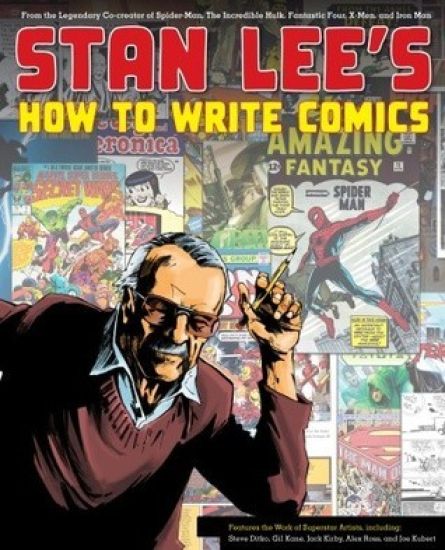
From comics icon Stan Lee, creator of the Mighty Marvel Universe and characters such as Spider-Man, Incredible Hulk and the X-Men, comes the ultimate how-to book for aspiring comic book writers. In these pages, aspiring comics writers will learn everything they need to know about how to write their own comic book stories, complete with easy-to-understand instruction, tips of the trade and invaluable advice for even more advanced writers. From the secrets to creating concepts, plots, to writing the script, the man with no peer, Stan Lee, is your guide to the world of writing and creating comics.
Stan Lee's How to Draw Superheroes

Stan Lee's How to Draw Superheroes

S Lee

Watson-Guptill Publications Inc.,U.S.
2013
nidottu
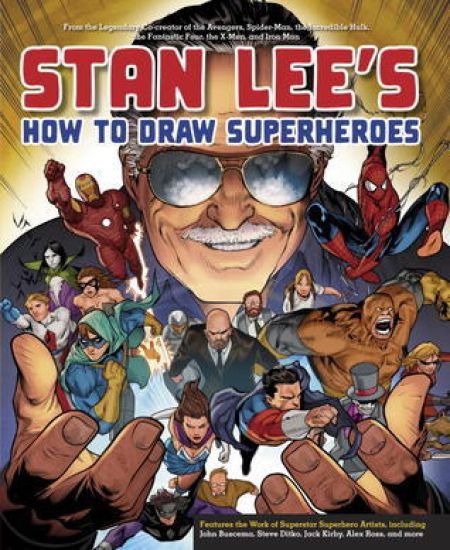
This is the third installment in comics icon Stan Lee's series showing readers how to draw some of the most exciting and dynamic superheroes of all time. Spider-Man, the X-Men, the Fantastic Four, Iron Man, the Incredible Hulk, and the Avengers all share a common trait - these hugely popular Marvel Comics superheroes were co-created by the legendary Stan Lee. Now, Lee shows readers everything they'll need to make their own mighty superheroes, just like his classic creations. Lee exposes his secret tools and techniques for bringing strong, inspiring heroes and heroines to life. He even shows aspiring creators how to expand their super-universes with evil villains, trusty sidekicks, brutes and monsters, super-pets, secret hideouts, and more! These invaluable insights from one of the greatest superhero creators of all time are must-haves for all fans of Lee's legendary superhero comic work.
S Is for Style

S Is for Style

Dara Caponigro

Rizzoli International Publications
2020
sidottu
With a focus on Schumacher s greatest contemporary patterns everything from classic stripes and exuberant florals to edgy animal prints this accessible and highly useful style guide is organized thematically by chapters such as Sensual and Spare; Preppy; Ladylike; Exuberant; and Opulent, with each featuring a stunning selection of patterns along with inspiring interiors designed in the same spirit. To help readers better understand their style preferences, every chapter begins with a questionnaire, for example: Are You an Acolyte of High Style? Do You Prefer a Midnight Supper to a Power Lunch?; Consider Jewel Tones Neutral?; Think Champagne Is Not Just for Special Occasions? Page after page after page of lavish imagery and pattern details are juxtaposed alongside beautiful interiors designed by such luminaries as Miles Redd, Tom Scheerer, Amanda Lindroth, Celerie Kemble, Veere Grenney, and Mark D. Sikes, to name a few, illustrating how Schumacher s iconic patterns can be integrated into a wide range of chic and stylish room designs. The texts provide insights and tips on how patterns can be used in your decor, along with guidance for deciding what style is best for you and your home. Full of inspiring design ideas, as well as an unparalled resource of prints and patterns, S Is for Style is a visual feast of interior design for all styles and tastes.
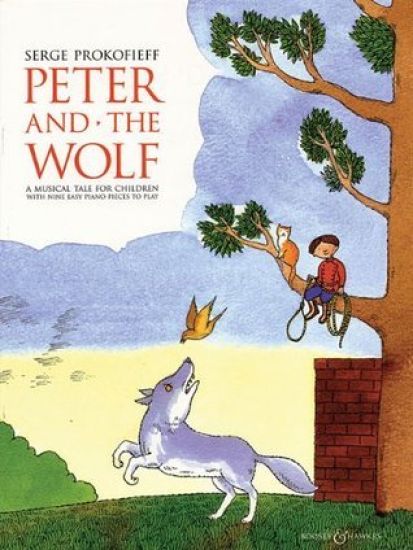
Peter and the Wolf Children's Book with Easy Piano Pieces

Peter and the Wolf Children's Book with Easy Piano Pieces

S.S. Prokof'ev

Boosey Hawkes Music Publishers Ltd
2000
nidottu
(Piano). In this delightful full-color songbook, Prokofieff's classic musical tale is retold in verse with easy, yet faithful arrangements of the main musical themes each of which represents a character in the story. The verse makes it ideal either for reading aloud, or as a performance source: beginners will be able to play some of the music, and intermediate pianists will be able to play it all with relative ease. Includes nine easy piano pieces, and illustrations by Peter Bailey.
Lamb's Questions and Answers on Marine Diesel Engines
Lamb's Questions and Answers on the Marine Diesel Engine is a comprehensive reference book for Marine Engineers and all seekeing a working knowledge of the marine diesel engine. This fully revised eighth edition has been completely rewritten. New coverage includes super-longstroke and slow-speed engines, and a new generation of medium-speed engines burning lower quality fuels. New purifier systems for fuel treatment, and the testing of fuel and lubrication oils on board ship are also discussed.
Retrieving Women's History

Retrieving Women's History

S. J. Kleinberg

Berg Publishers
1992
nidottu
Edited by S. Jay Kleinberg, this volume investigates the role played by women in ancient, more recent and contemporary history and demonstrates that taking into account the activities of women radically alters the perspectives of historians.
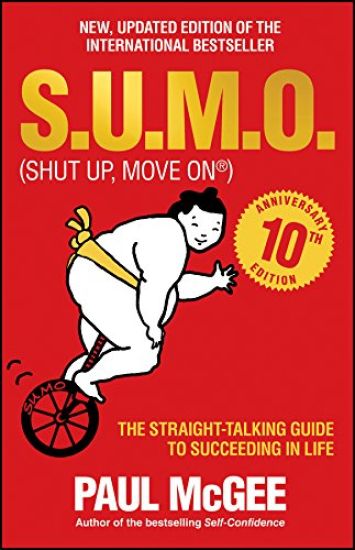
S.U.M.O (Shut Up, Move On)

S.U.M.O (Shut Up, Move On)

Paul McGee

Capstone Publishing Ltd
2015
nidottu
THE SUNDAY TIMES BESTSELLER* Celebrating 10 Years of Shut Up, Move On! Paul McGee's international bestselling personal development heavyweight S.U.M.O. has helped hundreds of thousands of people around the world fulfil their potential, seize opportunities, succeed at work, and respond to adverse situations with a positive attitude. Weighing in with humour, insight, practical tips, and personal anecdotes, it's a thought provoking—and possibly life-changing—read. Now newly updated to celebrate 10 years since its first publication and including up-to-date case studies and examples, as well brand new exercises to test yourself, S.U.M.O: 10th Anniversary Edition will help SUMO fans, as well as SUMO amateurs, get more out of this bestselling, self-help classic. There are six S.U.M.O. principles that are designed to help you create and enjoy a brilliant life: Change Your T-Shirt— take responsibility for your own life and don't be a victim.Develop Fruity Thinking— change your thinking and change your results.Hippo Time is OK— understand how setbacks affect you and how to recover from them.Remember the Beachball— increase your understanding and awareness of other people's world.Learn Latin— change comes through action not intention.Overcome the tendency to put things off.Ditch Doris Day— create your own future rather than leave it to chance. Forget the attitude ‘que sera, sera, whatever will be, will be.' *The Sunday Times, June 2015
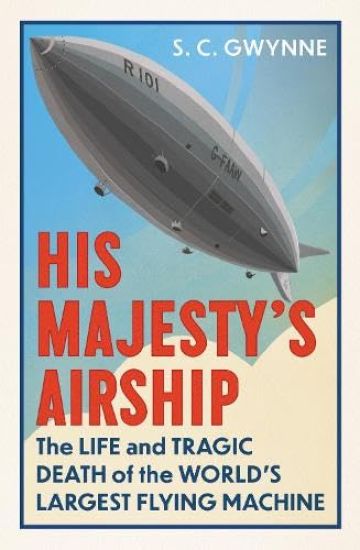
His Majesty's Airship

His Majesty's Airship

S.C. Gwynne

Oneworld Publications
2023
sidottu
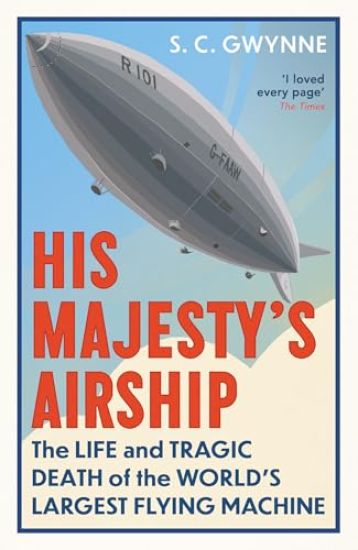
When the R101 first took to the skies, she was the largest aircraft ever to fly. What followed was a tragic finale to a tale of human folly on a grand scale. 'I loved every page of this book.' THE TIMES, BEST HISTORY BOOKS OF 2023 In 1929, the R101 was the largest object ever to take to the air. It was meant to dazzle the world with cutting-edge technology and awesome size. Better than a plane, more luxurious than an ocean liner, the R101 would connect the furthest reaches of the British Empire, tying together far-flung dominions at a time when imperial bonds were fraying. It was, however, not to be. The spectacular crash of the British airship R101 in 1930 changed the world of aviation forever. Most have heard of the fiery crash of the Hindenburg, a German ship that went down in New Jersey seven years later. But the story of R101 and its forty-eight victims has largely been forgotten. His Majesty’s Airship recounts the epic narrative of the ill-fated airship and her eccentric champion, Christopher Thomson. S. C. Gwynne brings to life a lost world of aviators driven by ambition, and killed by hubris.
His Majesty's Airship

His Majesty's Airship

S.C. Gwynne

Oneworld Publications
2024
pokkari
When the R101 first took to the skies, she was the largest aircraft ever to fly. What followed was a tragic finale to a tale of human folly on a grand scale. 'I loved every page of this book.' THE TIMES, BEST HISTORY BOOKS OF 2023 In 1929, the R101 was the largest object ever to take to the air. It was meant to dazzle the world with cutting-edge technology and awesome size. Better than a plane, more luxurious than an ocean liner, the R101 would connect the furthest reaches of the British Empire, tying together far-flung dominions at a time when imperial bonds were fraying. It was, however, not to be. The spectacular crash of the British airship R101 in 1930 changed the world of aviation forever. Most have heard of the fiery crash of the Hindenburg, a German ship that went down in New Jersey seven years later. But the story of R101 and its forty-eight victims has largely been forgotten. His Majesty’s Airship recounts the epic narrative of the ill-fated airship and her eccentric champion, Christopher Thomson. S. C. Gwynne brings to life a lost world of aviators driven by ambition, and killed by hubris.