The history of Christianity's relationship to government is long and complex. From the glory days of the Holy Roman Empire, when church and state were virtually synonymous, to the present day's dizzying array of denominations and forms of government, Christian ideas about the state have varied tremendously. This book will attempt to bring order to the chaos by offering essays on how particular branches of the Christian tradition-Catholic, reformed, evangelical, etc.-view the institution of the modern state. Each chapter begins by discussing the historical roots of a particular tradition, moves on to address the theological distinctives of that tradition, and finally discusses the ways in which the theological beliefs about the appropriate role of the state influence political behavior. The essays will not be limited geographically, but will rather look at each tradition as broadly as possible, from the institutionalized (but not necessarily thriving) churches of Europe, to the independent Christian movements of Africa, to the vibrant religious marketplace of the United States.
The history of Christianity's relationship to government is long and complex. From the glory days of the Holy Roman Empire, when church and state were virtually synonymous, to the present day's dizzying array of denominations and forms of government, Christian ideas about the state have varied tremendously. This book will attempt to bring order to the chaos by offering essays on how particular branches of the Christian tradition-Catholic, reformed, evangelical, etc.-view the institution of the modern state. Each chapter begins by discussing the historical roots of a particular tradition, moves on to address the theological distinctives of that tradition, and finally discusses the ways in which the theological beliefs about the appropriate role of the state influence political behavior. The essays will not be limited geographically, but will rather look at each tradition as broadly as possible, from the institutionalized (but not necessarily thriving) churches of Europe, to the independent Christian movements of Africa, to the vibrant religious marketplace of the United States.
We live in an age of growing dissatisfaction with the standard operations of representative democracy. The solution, according to a long radical democratic tradition, is the unmediated power of the people. Mass plebiscites and mass protest movements are celebrated as the quintessential expression of popular power, and this power promises to transcend ordinary institutional politics. But the outcomes of mass political phenomena can be just as disappointing as the ordinary politics they sought to overcome, breeding skepticism about democratic politics in all its forms. Potentia argues that the very meaning of popular power needs to be rethought. It offers a detailed study of the political philosophies of Thomas Hobbes and Benedict de Spinoza, focusing on their concept of power as potentia, concrete power, rather than power as potestas, authorized power. Specifically, the book's argument turns on a new interpretation of potentia as a capacity that is dynamically constituted in a web of actual human relations. This means that a group's potentia reflects any hostility or hierarchy present in the relations between its members. There is nothing spontaneously egalitarian or good about human collective existence; a group's power deserves to be called popular only if it avoids oligarchy and instead durably establishes its members' equality. Where radical democrats interpret Hobbes' "sleeping sovereign" or Spinoza's "multitude" as the classic formulations of unmediated popular power, Sandra Leonie Field argues that for both Hobbes and Spinoza, conscious institutional design is required in order for true popular power to be achieved. Between Hobbes' commitment to repressing private power and Spinoza's exploration of civic strengthening, Field draws on early modern understandings of popular power to provide a new lens for thinking about the risks and promise of democracy.
We live in an age of growing dissatisfaction with the standard operations of representative democracy. The solution, according to a long radical democratic tradition, is the unmediated power of the people. Mass plebiscites and mass protest movements are celebrated as the quintessential expression of popular power, and this power promises to transcend ordinary institutional politics. But the outcomes of mass political phenomena can be just as disappointing as the ordinary politics they sought to overcome, breeding skepticism about democratic politics in all its forms. Potentia argues that the very meaning of popular power needs to be rethought. It offers a detailed study of the political philosophies of Thomas Hobbes and Benedict de Spinoza, focusing on their concept of power as potentia, concrete power, rather than power as potestas, authorized power. Specifically, the book's argument turns on a new interpretation of potentia as a capacity that is dynamically constituted in a web of actual human relations. This means that a group's potentia reflects any hostility or hierarchy present in the relations between its members. There is nothing spontaneously egalitarian or good about human collective existence; a group's power deserves to be called popular only if it avoids oligarchy and instead durably establishes its members' equality. Where radical democrats interpret Hobbes' "sleeping sovereign" or Spinoza's "multitude" as the classic formulations of unmediated popular power, Sandra Leonie Field argues that for both Hobbes and Spinoza, conscious institutional design is required in order for true popular power to be achieved. Between Hobbes' commitment to repressing private power and Spinoza's exploration of civic strengthening, Field draws on early modern understandings of popular power to provide a new lens for thinking about the risks and promise of democracy.
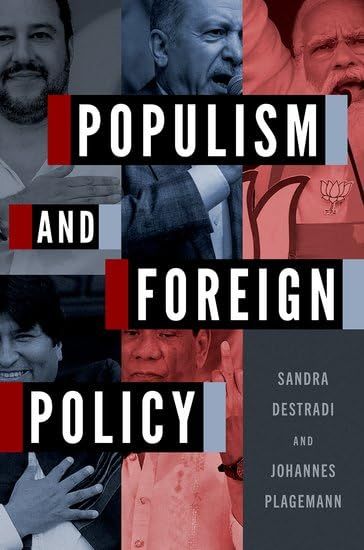
How and why does the formation of populist governments lead to changes in foreign policy? This book theorizes and empirically analyzes how populism, understood as a thin-centred ideology, impacts foreign policy. It argues that two common features of populists' foreign policy, the use of foreign policy issues for domestic political mobilization and the personalization of decision making, are key to explain different intensities of foreign policy change. The strongest change can be expected if both mobilization and personalization in a specific issue area are strong. More moderate changes are a result of a combination of strong mobilization and weak personalization, or weak mobilization and strong personalization. The empirical analysis focuses on transitions from non-populist to populist governments in Bolivia, India, the Philippines, and Turkey. It addresses foreign policy change in four fields: the escalation of international disputes, the provision of global public goods, the engagement in multilateral institutions, and the reorientation of each country's international partnerships. As a part of an abductive research process, the theory of populism and foreign policy initially applied to cases from the Global South is then also used to analyze populist governments' foreign policies in Hungary, the UK, and Italy.
How and why does the formation of populist governments lead to changes in foreign policy? This book theorizes and empirically analyzes how populism, understood as a thin-centred ideology, impacts foreign policy. It argues that two common features of populists' foreign policy, the use of foreign policy issues for domestic political mobilization and the personalization of decision making, are key to explain different intensities of foreign policy change. The strongest change can be expected if both mobilization and personalization in a specific issue area are strong. More moderate changes are a result of a combination of strong mobilization and weak personalization, or weak mobilization and strong personalization. The empirical analysis focuses on transitions from non-populist to populist governments in Bolivia, India, the Philippines, and Turkey. It addresses foreign policy change in four fields: the escalation of international disputes, the provision of global public goods, the engagement in multilateral institutions, and the reorientation of each country's international partnerships. As a part of an abductive research process, the theory of populism and foreign policy initially applied to cases from the Global South is then also used to analyze populist governments' foreign policies in Hungary, the UK, and Italy.
Qualitative Methods in Media and Communication offers a learning-centered guide to designing, conducting, and evaluating qualitative communication and media research methods. Drawing upon years of teaching qualitative research methods, Sandra L. Faulkner and Joshua D. Atkinson introduce and unpack qualitative communication research method design, analysis, representation, writing, and evaluation using extended examples and clear discussion. The authors use key terms, extended examples, discussion questions, student-tested writing and research activities, examples of student work and questions, and suggested resources to help readers design, do, and analyze qualitative research. As a textbook, its pedagogical goals for the student include: (1) becoming a critical reader of research studies by understanding the epistemologies and methodological assumptions used by researchers, (2) learning the various methods, strategies, and approaches for doing qualitative research, (3) developing a strong basic vocabulary and understanding of concepts relating to qualitative and humanistic research methods, (4) understanding special concerns related to particular research methods, and (5) designing, executing, and representing original qualitative research projects. With numerous elements intended to engage students and enrich the learning process, the book provides examples of how to do qualitative and critical analyses, including arts-based and media and textual analyses to understand, describe, and query communication and media research in a variety of communication areas. There is also an extensive discussion of ethics in qualitative research and spotlights with renowned researchers on hot topics in qualitative research.
King-led outlaw defiance, riotous lords of misrule, proud midsummer mock kings, and stately Inns-of-Court princes: in diverse ways all were reflections of the dominant social order in the Medieval and Tudor periods and, as this book shows, all influenced the writings of Shakespeare and his contemporaries. Mock Kings considers kingship in the light of contemporary accounts of elected kings in outlaw and rebel groups, and compares them with the phenomenon of festive mock kings. The result is a complex picture of interrelation between festive and more serious opposition to the dominant order, as well as the discovery of a midsummer mock-king play tradition. The second part of the book considers the professional theatre from the late 1580s to the mid-Jacobean period, and demonstrates that mock-king patterns, found in less literary contexts, form the structure of many scripted plays. The popularity of some of the minor dramas is understood for the first time when their festive patterns are identified and, by contrast, Shakespeare's genius in transforming inherited structures into complex works of art is thrown into relief. The book shows that serious reflection on the nature of kingship was maintained throughout Renaissance drama.
Idealism became the dominant philosphical school of thought in late nineteenth-century Britain. In this original and stimulating study, Sandra den Otter examines its roots in Greek and German thinking and locates it among the prevalent methodologies and theories of the period: empiricism and positivism, naturalism, evolution, and utilitarianism. In particular, she sets it in the context of the late nineteenth- and early twentieth-century debate about a science of society and the contemporary preoccupation with `community'. The new discipline of sociology was closely tied to the study of and search for community, and Dr den Otter shows how the idealists offered a philosophy of community to a generation particularly concerned by this notion. Dr den Otter investigates the idealist construction - by thinkers such as Bosanquet, MacKenzie, and Ritchie - of an interpretive social philosophy which none the less adopted various strands of empiricist, positivist, and even naturalist thought in its attempt to frame a social theory suited to the dilemmas of an industrialized and urbanized Britain. This study of a multifarious movement of ideas and their interaction with pioneering social groups interweaves philosophical and sociological concerns to make an important contribution to intellectual history.
Covering contemporary topics and issues such as globalisation, digital technology and business ethics, this is the only textbook that fully supports the OxfordAQA International AS Level Business specification (9625), for first teaching from September 2018. The thematic structure enables students to build on the skills and knowledge gained in previous study, preparing them for their next steps in employment or higher level education, whilst international, real-life case studies enhance students' understanding of current business practice. Furthermore, this book offers exam preparation support across a range of assessment styles, building the skills required to evaluate business behaviour and to examine and interpret the quantitative and qualitative data relevant to business decision making.
'This oozing, bulging wealth of the English upper and upper-middle classes.' This was how George Orwell saw the Edwardian period. What images do we see when we think of that era? Ladies munching delicately on cucumber sandwiches? Gentlemen in straw boaters punting gently down rivers? Looking at the authors and authoresses of this time and the things that they wrote about, it seems that there is more to that era than this chocolate-box image of long, lazy summer afternoons would imply. In fact the Edwardian period was a time of much anxiety and insecurity about the changes that were taking place and the ideas that were emerging, and the fiction which arose from them serves as evidence for this. In this unique guide, described as 'a tremendous achievement' by the TLS, literature scholars Sandra Kemp, Charlotte Mitchell, and David Trotter explore the broad sweep of writing that emerged from the early 20th century. Now available in paperback, the Companion offers a wealth of information on the writers, the works, the themes, and the ideas of this fascinating literary era. From Walter Besant's The Fourth Generation, to James Joyce's Dubliners, the Companion doesn't merely centre on works from the Edwardian period but also explores those whose fiction influenced writers at the start of the period and those who took those writers' themes and ideas up to the next level. It also provides details on some of the now neglected and forgotten gems that came from that era. Around 800 authors are covered and there are also entries on some of the most significant novels of the period. An unprecedented number of women began to publish at this time and they represent nearly half of the author-entries in the Companion. There are also entries on the themes and genres that emerged. This was a period when the urban middle and lower classes became not only the subject of fiction but also a substantial part of its readership. Never before had novels been so cheap to buy (and produce). Entries include: Writers: Alice and Claude Askew, J. M. Barrie, Max Beerbohm, M. McDonnell Bodkin, G. K. Chesterton, Walter de la Mare, Ethel M. Dell, A. Conan Doyle, John Galsworthy, Jerome K Jerome, Rudyard Kipling, Oliver Onions, Baroness Orczy, H. G. Wells Publications: The Albany Review, The Athenaeum, Contemporary Review, The Cornhill Magazine, The English Review, The New Age, Pall Mall Magazine Works: Anna of the Five Towns, The Country House, The Dark Flower, The Golden Bowl, The Hound of the Baskervilles, Lord Jim, The Ragged-Trousered Philanthropists, The Railway Children, The Secret Garden, The White Peacock Themes: Boer War, crime fiction, exoticism, family sagas, fantasy, feminist fiction, historical romance, invasion scare stories, marriage problem novels, regional fiction, suburban life Other: literary agents, publishers In addition to the A-Z entries, there is a chronology charting major historical and cultural events, a list of books frequently consulted, and a very useful index of pseudonyms and changes of name.
A concise and easy-to-follow introduction to competition law, which provides a clear path through this highly technical subject. Rooted in the fundamental economic principles behind the law, this text balances theory with lively discussion of key cases and real-life applications of the law. Key features - Clear and concise, providing targeted coverage of the essentials of competition law so that students can get to grips with this complex subject area - An engaging approach, focusing on competition law from an analytical comparative perspective, which allows students to appreciate the nuance and variation in competition law across the EU and UK - Visually appealing, using flowcharts and diagrams to help students to understand the steps in the application of the law - Rooted in everyday realities, with key case boxes to enable students to master competition law in context New to this edition - Covers recent developments in the area of abuse of dominance, including the Intel case, the Google Shopping and Android decisions in the EU, and the Pfizer and Flynn Pharma cases in the UK - Discusses the clarifications made to the distinction between object and effect under Article 101(1) TFEU in Cartes Bancaires and subsequent case law - Focuses on the new cases relating to vertical issues in Pierre Fabre and Coty, and the recent fines imposed by the Commission for vertical price fixing - Provides an overview of the Damages Directive and the changes introduced by the Consumer Rights Act 2015 to damage claims in the UK, as well as the MasterCard litigation -Explores the changes introduced to UK competition law by the Enterprise and Regulatory Reform Act 2013, including the new institutional framework, the revised cartel offence, and the modified UK merger control regime Digital formats and resources The 8th edition is available for students and institutions to purchase in a variety of formats: the e-book and Law Trove offer an online experience and convenient access. For more information about e-books and Law Trove, please visit www.oxfordtextbooks.co.uk/ebooks
As the millennium draws to a close, it is clear that equality between men and women remains a pipe-dream. Thus argues Sandra Fredman in her stimulating, new book on women and the law. Women's pay still lags significantly behind that of men; and women continue to congregate in low status, low paid jobs. Yet men and women are now formally equal before the law: indeed, legislation positively outlawing discrimination has been in force for over two decades both in the UK and the European Union. The key question asked by the author is: Why has the law had so little impact? The answer, the author argues, lies in the structure of the law itself. In a wide-ranging examination of sources drawn from political theory, social history and law, the first part of the book develops a critical framework to illuminate the limitations of the law in addressing women's disadvantaged status. In particular, the author unmask the apparent objectivity and neutrality of law, exposing the assumptions which have systematically impeded women's progress. Part II of the book applies this critique to a detailed examination of key legal issues in the UK and EU, with illuminating references to the law in North America and Australia. The result is an original and incisive analysis of pressing legal issues ranging from low pay, sexual harassment and flexible working to parenting rights and reverse discrimination. The book locates women's role in the family as a key contributory factor to their continued disadvantage within the paid workforce. Yet, in signalling the way forward, the author rejects the notion that the aim is simply to slot more women into existing structures. Instead of expecting women to conform to structures which exclude and devalue caring responsibilities, she argues, real change will only occur if paid work is restructured so that both men and women can be active participants in family life as well as in the paid workforce. The book does not, however, offer single dimensional solutions. In particular, the very difficult conflicts of interest which can arise between women, on grounds such as class or race, are directly confronted.
As the millennium draws to a close, it is clear that equality between men and women remains a pipe-dream. Thus argues Sandra Fredman in her stimulating, new book on women and the law. Women's pay still lags significantly behind that of men; and women continue to congregate in low status, low paid jobs. Yet men and women are now formally equal before the law: indeed, legislation positively outlawing discrimination has been in force for over two decades both in the UK and the European Union. The key question asked by the author is: Why has the law had so little impact? The answer, the author argues, lies in the structure of the law itself. In a wide-ranging examination of sources drawn from political theory, social history and law, the first part of the book develops a critical framework to illuminate the limitations of the law in addressing women's disadvantaged status. In particular, the author unmask the apparent objectivity and neutrality of law, exposing the assumptions which have systematically impeded women's progress. Part II of the book applies this critique to a detailed examination of key legal issues in the UK and EU, with illuminating references to the law in North America and Australia. The result is an original and incisive analysis of pressing legal issues ranging from low pay, sexual harassment and flexible working to parenting rights and reverse discrimination. The book locates women's role in the family as a key contributory factor to their continued disadvantage within the paid workforce. Yet, in signalling the way forward, the author rejects the notion that the aim is simply to slot more women into existing structures. Instead of expecting women to conform to structures which exclude and devalue caring responsibilities, she argues, real change will only occur if paid work is restructured so that both men and women can be active participants in family life as well as in the paid workforce. The book does not, however, offer single dimensional solutions. In particular, the very difficult conflicts of interest which can arise between women, on grounds such as class or rase, are directly confronted.
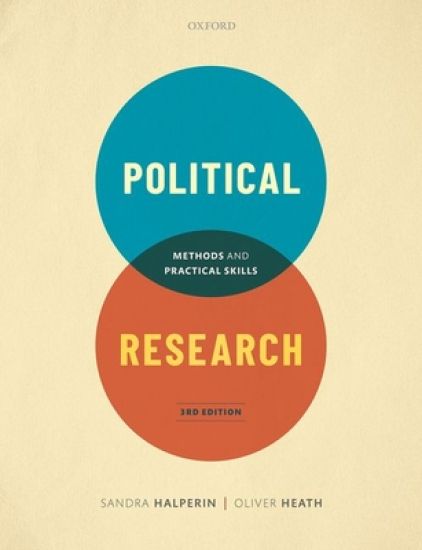
How do I determine my research question? How do I answer my research question? What is data? How do I conduct research in an ethical way? Political Research: Methods and Practical Skills equips you with the knowledge and skills you need to answer questions such as these. Using a step-by-step approach, the authors guide you through the process of asking and answering research questions, and the different methods used in political science. With coverage of both quantitative and qualitative methods, the authors provide advice on how to be critical, rigorous and ethical when both evaluating research findings and conducting your own independent research. The book emphasises how research can impact our ability to answer important political questions, and helps you to learn how to formulate significant questions, make sense of conflicting arguments, and develop your research skills.
This book is a challenging, thought-provoking yet highly accessible introduction to discrimination law. It takes a thematic approach, illuminating the major issues in discrimination law, while imparting an in-depth understanding of the strengths and weaknesses of legal responses to complex social problems of inequality. This is enhanced by the comparative approach. By considering equality law in the UK, US, India, Canada, and South Africa, as well as the European Union and under the European Convention on Human Rights, the book exposes common problems across different jurisdictions and canvasses a variety of differing solutions. As in the highly successful previous editions, the book locates discrimination law within its historical and social context. One of its major strengths is the development of an analytic framework of substantive equality, drawing on a range of sources, and the author's wide experience of equality law in many jurisdictions. As well as chapters charting the social challenges and legal responses, the book compares the ways in which different jurisdictions formulate grounds of discrimination or protected characteristics; the meaning of key concepts such as direct discrimination (disparate treatment); indirect discrimination (disparate impact); and when limitations on equality are legitimate. Later chapters test these concepts in some of the most challenging contexts: pregnancy and parenting, equal pay, reasonable accommodation, and sexual harassment; as well as to the particularly controversial issue of affirmative action or deliberate preference policies. Discussing at length how racisms, sexism, LGBTQ+ rights, and other topics impact these contexts. The final chapter asks how the right to equality can be made more effective, critically assessing the paradigm individual complaints model, and possible alternatives, from class actions and strategic litigation to mainstreaming and positive duties to promote equality.
This book is a challenging, thought-provoking yet highly accessible introduction to discrimination law. It takes a thematic approach, illuminating the major issues in discrimination law, while imparting an in-depth understanding of the strengths and weaknesses of legal responses to complex social problems of inequality. This is enhanced by the comparative approach. By considering equality law in the UK, US, India, Canada, and South Africa, as well as the European Union and under the European Convention on Human Rights, the book exposes common problems across different jurisdictions and canvasses a variety of differing solutions. As in the highly successful previous editions, the book locates discrimination law within its historical and social context. One of its major strengths is the development of an analytic framework of substantive equality, drawing on a range of sources, and the author's wide experience of equality law in many jurisdictions. As well as chapters charting the social challenges and legal responses, the book compares the ways in which different jurisdictions formulate grounds of discrimination or protected characteristics; the meaning of key concepts such as direct discrimination (disparate treatment); indirect discrimination (disparate impact); and when limitations on equality are legitimate. Later chapters test these concepts in some of the most challenging contexts: pregnancy and parenting, equal pay, reasonable accommodation, and sexual harassment; as well as to the particularly controversial issue of affirmative action or deliberate preference policies. Discussing at length how racisms, sexism, LGBTQ+ rights, and other topics impact these contexts. The final chapter asks how the right to equality can be made more effective, critically assessing the paradigm individual complaints model, and possible alternatives, from class actions and strategic litigation to mainstreaming and positive duties to promote equality.
The 1279-80 hundred rolls are one of the most important sources for later thirteenth century England, yet this is the first comprehensive study of the inquiry which brought them into being. A Second Domesday will be an indispensable working tool for historians and is based on the latest knowledge of the returns. More of these are being discovered all the time and one of the aims of this book is to stimulate the recognition of other surviving texts. The book places the inquiry in its historical context, continental as well as English. This is followed by an examination of its purpose and whether or not it was conceived deliberately as a second Domesday Book. Central to the study is a consideration of the geographical range of the inquiry, how it was conducted and the way in which the returns were compiled. The way in which the inquiry was used, by historians as well as contemporaries, along with the introductory chapters will be particularly helpful to students. The book concludes with a description of all known returns, which, together with the appendices, are designed to assist future users.
Human rights have traditionally been understood as protecting individual freedom against intrusion by the State. In this book, Sandra Fredman argues that this understanding requires radical revision. Human rights are based on a far richer view of freedom, which goes beyond being let alone, and instead pays attention to individuals' ability to exercise their rights. This view fundamentally shifts the focus of human rights. As well as restraining the State, human rights require the State to act positively to remove barriers and facilitate the exercise of freedom. This in turn breaks down traditional distinctions between civil and political rights and socio-economic rights. Instead, all rights give rise to a range of duties, both negative and positive. However, because positive duties have for so long been regarded as a question of policy or aspiration, little sustained attention has been given to their role in actualising human rights. Drawing on comparative experience from India, South Africa, the European Convention on Human Rights, the European Union, Canada and the UK, this book aims to create a theoretical and applied framework for understanding positive human rights duties. Part I elaborates the values of freedom, equality, and solidarity underpinning a positive approach to human rights duties, and argues that the dichotomy between democracy and human rights is misplaced. Instead, positive human rights duties should strengthen rather than substitute for democracy, particularly in the face of globalization and privatization. Part II considers justiciability, fashioning a democratic role for the courts based on their potential to stimulate deliberative democracy in the wider environment. Part III applies this framework to key positive duties, particularly substantive equality and positive duties to provide, traditionally associated with the Welfare State or socio-economic rights.
Human rights have traditionally been understood as protecting individual freedom against intrusion by the State. In this book, Sandra Fredman argues that this understanding requires radical revision. Human rights are based on a far richer view of freedom, which goes beyond being let alone, and instead pays attention to individuals' ability to exercise their rights. This view fundamentally shifts the focus of human rights. As well as restraining the State, human rights require the State to act positively to remove barriers and facilitate the exercise of freedom. This in turn breaks down traditional distinctions between civil and political rights and socio-economic rights. Instead, all rights give rise to a range of duties, both negative and positive. However, because positive duties have for so long been regarded as a question of policy or aspiration, little sustained attention has been given to their role in actualising human rights. Drawing on comparative experience from India, South Africa, the European Convention on Human Rights, the European Union, Canada and the UK, this book aims to create a theoretical and applied framework for understanding positive human rights duties. Part I elaborates the values of freedom, equality, and solidarity underpinning a positive approach to human rights duties, and argues that the dichotomy between democracy and human rights is misplaced. Instead, positive human rights duties should strengthen rather than substitute for democracy, particularly in the face of globalization and privatization. Part II considers justiciability, fashioning a democratic role for the courts based on their potential to stimulate deliberative democracy in the wider environment. Part III applies this framework to key positive duties, particularly substantive equality and positive duties to provide, traditionally associated with the Welfare State or socio-economic rights.