

Kirjahaku
Etsi kirjoja tekijän nimen, kirjan nimen tai ISBN:n perusteella.
1000 tulosta hakusanalla Simone Linde
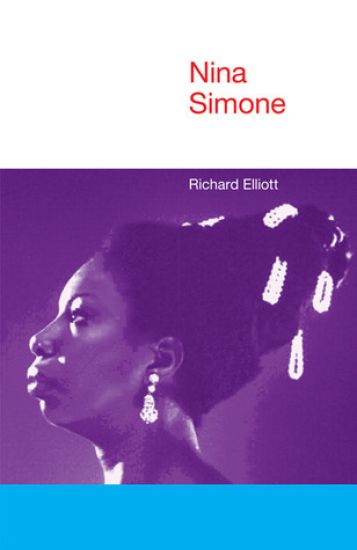
Since her death in 2003, Nina Simone has continued to be revered as a cultural icon and role model for scores of fans and fellow musicians. Much of her fame derives from her association with the civil rights movement, for which she wrote such classic songs as 'Mississippi Goddam', 'Four Women' and 'Young, Gifted and Black'. The defiance and affirmation of such anthems was accompanied by an equal dedication to songs of melancholy, yearning and spiritual questing. Placing Simone and her music firmly within the socio-historical context of the 1960s, this book also argues for the importance of considering the artist's entire career and for paying greater attention to her music than is often the case in biographical accounts. Simone defied musical categories even as she fought against social ones and the result is a body of work that draws upon classical and jazz music, country blues, French chanson, gospel, protest songs, pop and rock tunes, turning genres and styles inside out in pursuit of what Simone called "black classical music". The book begins with a focus on the early part of Simone's career and a discussion of genre and style.Connecting its analysis to a discussion of social categorization (with particular regard to race), it argues that Simone's defiance of stylistic boundaries can be seen as a political act. From here, the focus shifts to Simone's self-written protest material, connecting it to her increasing involvement in the struggle for civil rights. The book also provides an in-depth account of Simone's 'possession' of material by writers such as Leonard Cohen, Bob Dylan, Sandy Denny and Judy Collins, while exploring the relationship between the personal and the political. In considering material from the Simone's lesser-known work from the 1970s to the 1990s, the study proposes a theory of the "late voice" in which issues of age, experience and memory are emphasised. The book concludes with a discussion of Simone's ongoing legacy.

Tex Simone: The Man Who Saved Baseball in Syracuse tells the unforgettable story of a local legend whose love for baseball brought the community together. From humble beginnings, Tex Simone's life journey led him to become a cornerstone of the Syracuse Chiefs, tirelessly working to ensure the team's success through financial crises and fires, and fostering relationships that kept baseball alive in Syracuse. With personal stories from family members, teammates, and fans, this book is a heartfelt tribute to a man whose dedication turned challenges into triumphs, leaving a lasting impact on the world of baseball.


‘I wanted to make this book—this memoir, this memory of the house of someone who had meant a great deal to me, to us all, and of a universe which was a sort of laboratory for what I was to become’. —Dominique Nabokov Photographer Dominique Nabokov was raised by her aunt Simone from the age of four, in a detached house surrounded by a modest garden in the French town of Compiègne. Those formative years would be a blend of everydayness—from picnics to car rides in the family’s Deux Chevaux—and of vivid daydreams propelled by her fascination with Hollywood and its stars. After her aunt’s death in 1999, Dominique decided to photograph the house, as it was left, to keep a record of the place where it all began and a memory of the person behind it. This book follows Dominique’s celebrated Living Rooms series, which intimately portrayed the interior worlds of the cultural nomenclature in New York, Paris, and Berlin, three pivotal cities for the photographer. Our publication of these volumes, born out of a series originally commissioned by the New Yorker in the ‘90s, renewed an appreciation for the French photographer. This is our fourth collaboration in a relationship that spans more than a decade, and is Dominique’s most personal project to date. The photographs are accompanied by a vivid memoir, written by Gini Alhadeff from an interview with Dominique, to give a glimpse into her generally unknown and extraordinary life story.

"Jag vet inte var den stora kärleken kommer ifrån. Den som flödar genom mig med en sådan kraft nu att jag varit tvungen att ge upp allt annat. Jag måste lära mig att kontrollera kärleken. Bara galningar älskar så här. Och möjligtvis nunnor. Jag är ingen nunna."


The Birds are back in action--smarter, tougher, and more fearless than ever. Gail Simone's legendary run continues with high-stakes missions, deep character drama, and a sisterhood that never quits. This second omnibus volume collects the thrilling continuation of Gail Simone's acclaimed run on Birds of Prey, featuring Oracle, Black Canary, Huntress, and a rotating cast of DC's fiercest heroines. From covert ops to personal reckonings, the Birds face enemies old and new, including the sinister Spy Smasher and the mysterious White Canary. With sharp dialogue, emotional depth, and explosive action, this collection is a definitive showcase of Simone's groundbreaking work in redefining female-led superhero teams.

The Legacy of Simone de Beauvoir
Clarendon Press
2004
sidottu
The legacy of Simone de Beauvoir has yet to be properly assessed and explored. The 50th anniversary of the publication of The Second Sex inspired this volume which brings together philosophers and literary critics, some of whom are well known for their books on Beauvoir (Bauer, Le Doeuff, Moi), others new to Beauvoir studies though long familiar with her work (Grosholz, Imbert, James, Stevenson, Wilson). One aim of this collection is to encourage greater recognition of Beauvoir's philosophical writings through systematic reflection on their place in the canon and on her methods. The Second Sex played a central role in the profound shift in philosophy's self-understanding that took place in the latter half of the twentieth century, and today offers new problems for reflection and novel means for appropriating older texts. Its reflective iconoclasm can be compared to that of Descartes' Meditations; its enormous, directly discernible impact on our social world invites comparison with Locke's Two Treatises of Government. The collection also examines the relationship between Beauvoir's literary writing and her philosophical thought. Deeply concerned with the critical and creative powers of reason as well as with the betterment of our suffering world, Simone de Beauvoir wrote in a variety of genres in addition to the philosophical essay: the novel, political journalism, and the memoir. The multiplicity of her voices was closely related to her philosophical project. Since Beauvoir's method (like that of W. E. B. du Bois) proceeded from her own immediate experience, her reflections had to find expression sometimes as narrative, sometimes as autobiography, sometimes as argument. The Legacy of Simone de Beauvoir demonstrates the many ways in which Beauvoir's writings, in particular The Second Sex, can serve as resources for thought, for the life of the mind which is as concerned with the past and future as it is with the present.

The Legacy of Simone de Beauvoir
Clarendon Press
2006
nidottu
The legacy of Simone de Beauvoir has yet to be properly assessed and explored. The 50th anniversary of the publication of The Second Sex inspired this volume which brings together philosophers and literary critics, some of whom are well known for their books on Beauvoir (Bauer, Le Doeuff, Moi), others new to Beauvoir studies though long familiar with her work (Grosholz, Imbert, James, Stevenson, Wilson). One aim of this collection is to encourage greater recognition of Beauvoir's philosophical writings through systematic reflection on their place in the canon and on her methods. The Second Sex played a central role in the profound shift in philosophy's self-understanding that took place in the latter half of the twentieth century, and today offers new problems for reflection and novel means for appropriating older texts. Its reflective iconoclasm can be compared to that of Descartes' Meditations; its enormous, directly discernible impact on our social world invites comparison with Locke's Two Treatises of Government. The collection also examines the relationship between Beauvoir's literary writing and her philosophical thought. Deeply concerned with the critical and creative powers of reason as well as with the betterment of our suffering world, Simone de Beauvoir wrote in a variety of genres in addition to the philosophical essay: the novel, political journalism, and the memoir. The multiplicity of her voices was closely related to her philosophical project. Since Beauvoir's method (like that of W. E. B. du Bois) proceeded from her own immediate experience, her reflections had to find expression sometimes as narrative, sometimes as autobiography, sometimes as argument. The Legacy of Simone de Beauvoir demonstrates the many ways in which Beauvoir's writings, in particular The Second Sex, can serve as resources for thought, for the life of the mind which is as concerned with the past and future as it is with the present.
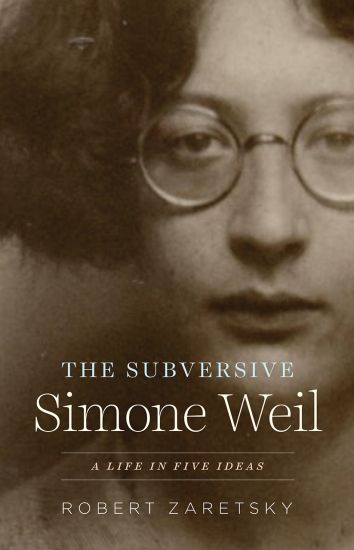
Known as the "patron saint of all outsiders," Simone Weil (1909-43) was one of the twentieth century's most remarkable thinkers, a philosopher who truly lived by her political and ethical ideals. In a short life framed by the two world wars, Weil taught philosophy to lycee students and organized union workers, fought alongside anarchists during the Spanish Civil War and labored alongside workers on assembly lines, joined the Free French movement in London and died in despair because she was not sent to France to help the Resistance. Though Weil published little during her life, after her death, thanks largely to the efforts of Albert Camus, hundreds of pages of her manuscripts were published to critical and popular acclaim. While many seekers have been attracted to Weil's religious thought, Robert Zaretsky gives us a different Weil, exploring her insights into politics and ethics, and showing us a new side of Weil that balances her contradictions-the rigorous rationalist who also had her own brand of Catholic mysticism; the revolutionary with a soft spot for anarchism yet who believed in the hierarchy of labor; and the humanitarian who emphasized human needs and obligations over human rights. Reflecting on the relationship between thought and action in Weil's life, The Subversive Simone Weil honors the complexity of Weil's thought and speaks to why it matters and continues to fascinate readers today.
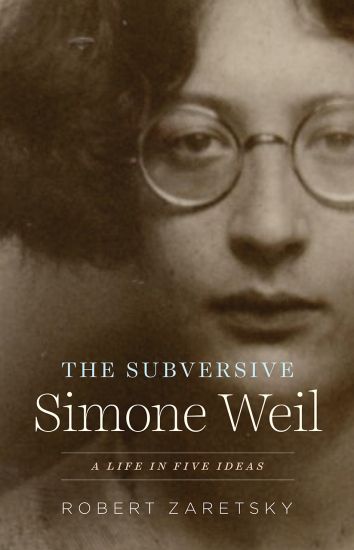
Known as the “patron saint of all outsiders,” Simone Weil (1909–43) was one of the twentieth century’s most remarkable thinkers, a philosopher who truly lived by her political and ethical ideals. In a short life framed by the two world wars, Weil taught philosophy to lycée students and organized union workers, fought alongside anarchists during the Spanish Civil War and labored alongside workers on assembly lines, joined the Free French movement in London and died in despair because she was not sent to France to help the Resistance. Though Weil published little during her life, after her death, thanks largely to the efforts of Albert Camus, hundreds of pages of her manuscripts were published to critical and popular acclaim. While many seekers have been attracted to Weil’s religious thought, Robert Zaretsky gives us a different Weil, exploring her insights into politics and ethics, and showing us a new side of Weil that balances her contradictions—the rigorous rationalist who also had her own brand of Catholic mysticism; the revolutionary with a soft spot for anarchism yet who believed in the hierarchy of labor; and the humanitarian who emphasized human needs and obligations over human rights. Reflecting on the relationship between thought and action in Weil’s life, The Subversive Simone Weil honors the complexity of Weil’s thought and speaks to why it matters and continues to fascinate readers today.
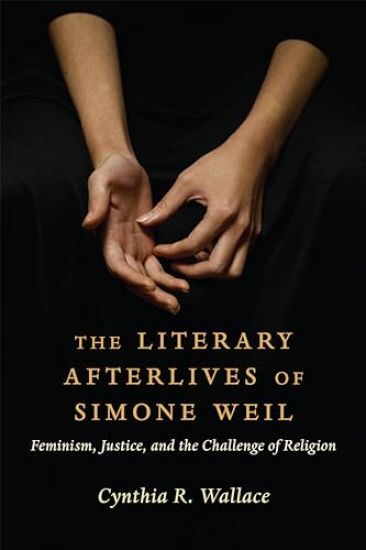
The French philosopher-mystic-activist Simone Weil (1909–1943) has drawn both passionate admiration and scornful dismissal since her early death and the posthumous publication of her writings. She has also provoked an extraordinary range of literary writing focused on not only her ideas but also her person: novels, nonfiction, and especially poetry. Given the challenges of Weil’s ethic of self-emptying attention, what accounts for her appeal, especially among women writers?This book tells the story of some of Weil’s most dedicated—and at points surprising—literary conversation partners, exploring why writers with varied political and religious commitments have found her thought and life so resonant. Cynthia R. Wallace considers authors who have devoted decades of attention to Weil, such as Adrienne Rich, Annie Dillard, and Mary Gordon, and who have written poetic sequences or book-length verse biographies of Weil, including Maggie Helwig, Stephanie Strickland, Kate Daniels, Sarah Klassen, Anne Carson, and Lorri Neilsen Glenn. She illuminates how writing to, of, and in the tradition of Weil has helped these writers grapple with the linked harms and possibilities of religious belief, self-giving attention, and the kind of moral seriousness required by the ethical and political crises of late modernity. The first book to trace Weil’s influence on Anglophone literature, The Literary Afterlives of Simone Weil provides new ways to understand Weil’s legacy and why her provocative wisdom continues to challenge and inspire writers and readers.
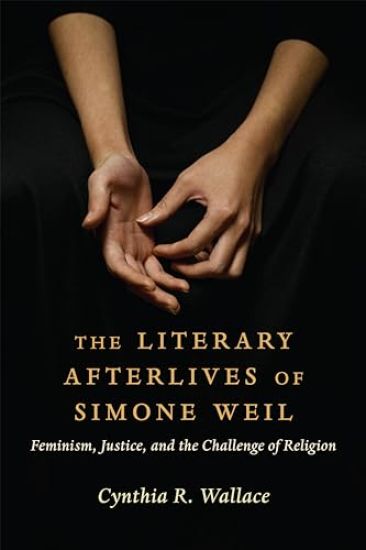
The French philosopher-mystic-activist Simone Weil (1909–1943) has drawn both passionate admiration and scornful dismissal since her early death and the posthumous publication of her writings. She has also provoked an extraordinary range of literary writing focused on not only her ideas but also her person: novels, nonfiction, and especially poetry. Given the challenges of Weil’s ethic of self-emptying attention, what accounts for her appeal, especially among women writers?This book tells the story of some of Weil’s most dedicated—and at points surprising—literary conversation partners, exploring why writers with varied political and religious commitments have found her thought and life so resonant. Cynthia R. Wallace considers authors who have devoted decades of attention to Weil, such as Adrienne Rich, Annie Dillard, and Mary Gordon, and who have written poetic sequences or book-length verse biographies of Weil, including Maggie Helwig, Stephanie Strickland, Kate Daniels, Sarah Klassen, Anne Carson, and Lorri Neilsen Glenn. She illuminates how writing to, of, and in the tradition of Weil has helped these writers grapple with the linked harms and possibilities of religious belief, self-giving attention, and the kind of moral seriousness required by the ethical and political crises of late modernity. The first book to trace Weil’s influence on Anglophone literature, The Literary Afterlives of Simone Weil provides new ways to understand Weil’s legacy and why her provocative wisdom continues to challenge and inspire writers and readers.
The Philosophy of Simone De Beauvoir
Indiana University Press
2006
pokkari
Since her death in 1986 and the publication of her letters and diaries in 1990, interest in the philosophy of Simone de Beauvoir has never been greater. In this engaging and timely volume, Margaret A. Simons and an international group of philosophers present 16 essays that reveal Beauvoir as one of the century's most important and influential thinkers. As they set Beauvoir's work into dialogue with Husserl, Merleau-Ponty, Heidegger, Foucault, Levinas, and others, these essays consider questions such as Beauvoir's philosophical relationship with Sartre; her ethic of the erotic; her views on marriage, motherhood, and female friendship; and her interpretations of oppression and liberation. This book discusses the full range of Beauvoir's work, including The Second Sex, her unpublished diaries, autobiographical writings, novels, and philosophical essays, and broadens the scope and interpretive context of her unique philosophy. Contributors are Nancy Bauer, Debra Bergoffen, Suzanne Laba Cataldi, Edward Fullbrook, Eva Gothlin, Sara Heinämaa, Laura Hengehold, Stacy Keltner, Michèle Le Doeuff, Ann Murphy, Shannon M. Mussett, Margaret A. Simons, Ursula Tidd, Andrea Veltman, Karen Vintges, Julie Ward, Gail Weiss.

Christian Platonism of Simone Weil
University of Notre Dame Press
2004
sidottu
In this book a group of renowned international scholars seek to discern the ways in which Simone Weil was indebted to Plato, and how her provocative readings of his work offer challenges to contemporary philosophy, theology, and spirituality. This is the first book in twenty years to systematically investigate Weil's Christian Platonism. The opening essays explore what actually constitutes Weil's Platonism. Louis Dupré addresses the Platonic and Gnostic elements of her thought with respect to her negative theology, and the Christian Platonism of her positive theology as found in her reflections on beauty and the Good. Michel Narcy provides a close historical reading of Weil and discusses the degree to which her teacher Alain influenced her Platonism. Michael Ross contends that Weil's interest in Plato is in "ethical Platonism." Essays by Robert Chenavier and by Patrick Patterson and Lawrence E. Schmidt consider the importance of matter and materialism in Weil's Platonism and argue that it is key to understanding her political thought. A middle group of essays addresses more classically metaphysical themes in Weil's thought. Vance G. Morgan examines her use of Greek mathematics. Florence de Lussy analyzes Weil's distinctive, mystical Platonic reflections on Being in the last notebooks from Marseilles. Emmauel Gabellieri discusses Weil's "metaxology," that is, the mediation and relatedness of Being, shown in her speculative thought. Martin Andic underlines the importance of her notion of attention. The final set of essays considers Weil's relevance for contemporary spirituality and moral theology. Cyril O'Regan examines her thinking on violence and evil. Eric Springsted looks at the conceptual links that exist between Weil and Augustine. Finally, David Tracy contends that Weil is the foremost predecessor of recent attempts to reunite the mystical and prophetic. Drawing together some of the top Weil scholars in the world, this collection offers important new insights into her thought, and will be appreciated by philosophers and theologians.
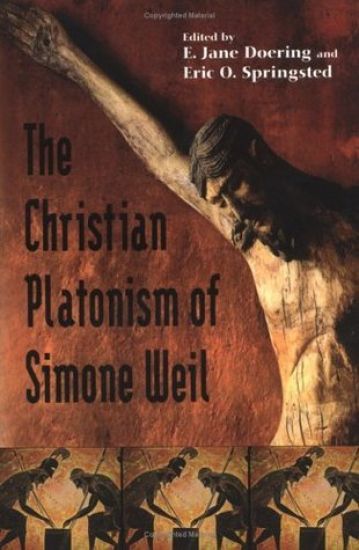
Christian Platonism of Simone Weil
University of Notre Dame Press
2004
nidottu
In this book a group of renowned international scholars seek to discern the ways in which Simone Weil was indebted to Plato, and how her provocative readings of his work offer challenges to contemporary philosophy, theology, and spirituality. This is the first book in twenty years to systematically investigate Weil's Christian Platonism. The opening essays explore what actually constitutes Weil's Platonism. Louis Dupré addresses the Platonic and Gnostic elements of her thought with respect to her negative theology, and the Christian Platonism of her positive theology as found in her reflections on beauty and the Good. Michel Narcy provides a close historical reading of Weil and discusses the degree to which her teacher Alain influenced her Platonism. Michael Ross contends that Weil's interest in Plato is in "ethical Platonism." Essays by Robert Chenavier and by Patrick Patterson and Lawrence E. Schmidt consider the importance of matter and materialism in Weil's Platonism and argue that it is key to understanding her political thought. A middle group of essays addresses more classically metaphysical themes in Weil's thought. Vance G. Morgan examines her use of Greek mathematics. Florence de Lussy analyzes Weil's distinctive, mystical Platonic reflections on Being in the last notebooks from Marseilles. Emmauel Gabellieri discusses Weil's "metaxology," that is, the mediation and relatedness of Being, shown in her speculative thought. Martin Andic underlines the importance of her notion of attention. The final set of essays considers Weil's relevance for contemporary spirituality and moral theology. Cyril O'Regan examines her thinking on violence and evil. Eric Springsted looks at the conceptual links that exist between Weil and Augustine. Finally, David Tracy contends that Weil is the foremost predecessor of recent attempts to reunite the mystical and prophetic. Drawing together some of the top Weil scholars in the world, this collection offers important new insights into her thought, and will be appreciated by philosophers and theologians.
Feminist Interpretations of Simone de Beauvoir
Pennsylvania State University Press
1995
sidottu
For almost twenty years, feminist readings of Simone de Beauvoir’s feminist classic The Second Sex have been dominated by dismissive interpretation of Beauvoir’s philosophy as Sartrean and phallocentric. Beauvoir’s angry refusal to acknowledge either her philosophical originality or her lesbian relationships led to an interpretive impasse on two issues: her relationship to existentialism and her relationship to feminism. It was not until Beauvoir’s death in 1986 that this interpretive impasse would be broken. Feminist scholars reacted to news of Beauvoir’s death in 1986 by initiating a reevaluation of her life’s work, a task encouraged by Sylvie Le Bon de Beauvoir, her adopted daughter, who edited for posthumous publication many of Beauvoir’s personal notebooks and letters to Sartre. Some of the most exciting new interpretations of Beauvoir’s philosophy that have resulted are brought together here for the first time; many of them, indeed, were written expressly for this first volume of essays on Beauvoir’s philosophy written since her death.From phenomenology and literary criticism to analytic philosophy and postmodern deconstruction, this collection presents a unique variety of methodological approaches to reading Beauvoir: placing her within the phenomenological tradition and identifying the Husserlean influence on her work; using the posthumously published letters and notebooks to shed light on Beauvoir’s own experience of oppression and to deconstruct the philosophical movement that exploited her; analyzing the themes and structure of Beauvoir’s novel The Mandarins to study her philosophy of the erotic; examining the structure of her argument about women’s biology and sexual difference to challenge the criticism of Beauvoir’s phallocentricism; locating her writings on decolonization as a historical antecedent of the postmodern philosophy of destruction. Of particular interest may be the scholarly reading of little-known texts, such as Beauvoir’s essay on the Marquis de Sade, or her essay “Literature and Metaphysics,” in the context of her better-known texts, such as Ethics of Ambiguity, to trace Beauvoir’s philosophical development and challenge the view that Beauvoir was either Sartrean or phallocentric.

Feminist Interpretations of Simone de Beauvoir
Pennsylvania State University Press
1995
pokkari
For almost twenty years, feminist readings of Simone de Beauvoir’s feminist classic The Second Sex have been dominated by dismissive interpretation of Beauvoir’s philosophy as Sartrean and phallocentric. Beauvoir’s angry refusal to acknowledge either her philosophical originality or her lesbian relationships led to an interpretive impasse on two issues: her relationship to existentialism and her relationship to feminism. It was not until Beauvoir’s death in 1986 that this interpretive impasse would be broken. Feminist scholars reacted to news of Beauvoir’s death in 1986 by initiating a reevaluation of her life’s work, a task encouraged by Sylvie Le Bon de Beauvoir, her adopted daughter, who edited for posthumous publication many of Beauvoir’s personal notebooks and letters to Sartre. Some of the most exciting new interpretations of Beauvoir’s philosophy that have resulted are brought together here for the first time; many of them, indeed, were written expressly for this first volume of essays on Beauvoir’s philosophy written since her death.From phenomenology and literary criticism to analytic philosophy and postmodern deconstruction, this collection presents a unique variety of methodological approaches to reading Beauvoir: placing her within the phenomenological tradition and identifying the Husserlean influence on her work; using the posthumously published letters and notebooks to shed light on Beauvoir’s own experience of oppression and to deconstruct the philosophical movement that exploited her; analyzing the themes and structure of Beauvoir’s novel The Mandarins to study her philosophy of the erotic; examining the structure of her argument about women’s biology and sexual difference to challenge the criticism of Beauvoir’s phallocentricism; locating her writings on decolonization as a historical antecedent of the postmodern philosophy of destruction. Of particular interest may be the scholarly reading of little-known texts, such as Beauvoir’s essay on the Marquis de Sade, or her essay “Literature and Metaphysics,” in the context of her better-known texts, such as Ethics of Ambiguity, to trace Beauvoir’s philosophical development and challenge the view that Beauvoir was either Sartrean or phallocentric.