Kirjojen hintavertailu. Mukana 11 717 486 kirjaa ja 12 kauppaa.

Kirjahaku

Etsi kirjoja tekijän nimen, kirjan nimen tai ISBN:n perusteella.

1000 tulosta hakusanalla Society Promoting Christian Knowledge

Society in Prehistory

Society in Prehistory

Tim Megarry

New York University Press
1996
sidottu
Reveals a profound understanding of evolutionary biology, and an excellent up-to-date knowledge of human evolution studies. It is not only very well done, but...it is written from a novel point of view. It needs to be very widely read and I hope that it will be. Megarry is doing his subject a great service. --Bernard Campbell University of California Social scientists have tended to neglect prehistory in their approach to human societies. Tim Megarry's lucid and authoritative book remedies this neglect. It will be of great value to students of anthropology, psychology, and sociology. --Paul HirstBirkbeck College, University of London Stressing the importance of culture as a formative agent in the evolutionary emergence of modern humans, Society in Prehistory provides an impressive, interdisciplinary, and deeply informed survey of prehistory. Individual chapters focus on culture and evolution; biology and culture; primate societies; the first hominids; tools and culture; the economics of foraging; modern humans and human behavior; sex and the division of labor; and sexuality and social life.The book reveals that, while social behavior is biologically grounded, it is not biologically determined.
Society in Prehistory

Society in Prehistory

Tim Megarry

New York University Press
1996
pokkari
Reveals a profound understanding of evolutionary biology, and an excellent up-to-date knowledge of human evolution studies. It is not only very well done, but...it is written from a novel point of view. It needs to be very widely read and I hope that it will be. Megarry is doing his subject a great service. --Bernard Campbell University of California Social scientists have tended to neglect prehistory in their approach to human societies. Tim Megarry's lucid and authoritative book remedies this neglect. It will be of great value to students of anthropology, psychology, and sociology. --Paul HirstBirkbeck College, University of London Stressing the importance of culture as a formative agent in the evolutionary emergence of modern humans, Society in Prehistory provides an impressive, interdisciplinary, and deeply informed survey of prehistory. Individual chapters focus on culture and evolution; biology and culture; primate societies; the first hominids; tools and culture; the economics of foraging; modern humans and human behavior; sex and the division of labor; and sexuality and social life.The book reveals that, while social behavior is biologically grounded, it is not biologically determined.
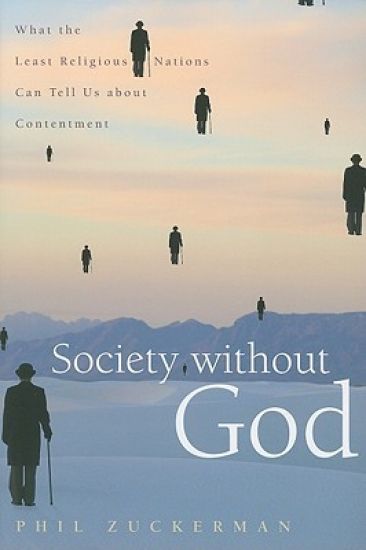
Society Without God

Society Without God

Phil Zuckerman

New York University Press
2008
sidottu
"Silver" Winner of the 2008 Foreword Magazine Book of the Year Award, Religion Category Before he began his recent travels, it seemed to Phil Zuckerman as if humans all over the globe were "getting religion"—praising deities, performing holy rites, and soberly defending the world from sin. But most residents of Denmark and Sweden, he found, don't worship any god at all, don't pray, and don't give much credence to religious dogma of any kind. Instead of being bastions of sin and corruption, however, as the Christian Right has suggested a godless society would be, these countries are filled with residents who score at the very top of the "happiness index" and enjoy their healthy societies, which boast some of the lowest rates of violent crime in the world (along with some of the lowest levels of corruption), excellent educational systems, strong economies, well-supported arts, free health care, egalitarian social policies, outstanding bike paths, and great beer. Zuckerman formally interviewed nearly 150 Danes and Swedes of all ages and educational backgrounds over the course of fourteen months. He was particularly interested in the worldviews of people who live their lives without religious orientation. How do they think about and cope with death? Are they worried about an afterlife? What he found is that nearly all of his interviewees live their lives without much fear of the Grim Reaper or worries about the hereafter. This led him to wonder how and why it is that certain societies are non-religious in a world that seems to be marked by increasing religiosity. Drawing on prominent sociological theories and his own extensive research, Zuckerman ventures some interesting answers. This fascinating approach directly counters the claims of outspoken, conservative American Christians who argue that a society without God would be hell on earth. It is crucial, Zuckerman believes, for Americans to know that "society without God is not only possible, but it can be quite civil and pleasant."
Society Without God

Society Without God

Phil Zuckerman

New York University Press
2010
pokkari
"Silver" Winner of the 2008 Foreword Magazine Book of the Year Award, Religion Category Before he began his recent travels, it seemed to Phil Zuckerman as if humans all over the globe were "getting religion"—praising deities, performing holy rites, and soberly defending the world from sin. But most residents of Denmark and Sweden, he found, don't worship any god at all, don't pray, and don't give much credence to religious dogma of any kind. Instead of being bastions of sin and corruption, however, as the Christian Right has suggested a godless society would be, these countries are filled with residents who score at the very top of the "happiness index" and enjoy their healthy societies, which boast some of the lowest rates of violent crime in the world (along with some of the lowest levels of corruption), excellent educational systems, strong economies, well-supported arts, free health care, egalitarian social policies, outstanding bike paths, and great beer. Zuckerman formally interviewed nearly 150 Danes and Swedes of all ages and educational backgrounds over the course of fourteen months. He was particularly interested in the worldviews of people who live their lives without religious orientation. How do they think about and cope with death? Are they worried about an afterlife? What he found is that nearly all of his interviewees live their lives without much fear of the Grim Reaper or worries about the hereafter. This led him to wonder how and why it is that certain societies are non-religious in a world that seems to be marked by increasing religiosity. Drawing on prominent sociological theories and his own extensive research, Zuckerman ventures some interesting answers. This fascinating approach directly counters the claims of outspoken, conservative American Christians who argue that a society without God would be hell on earth. It is crucial, Zuckerman believes, for Americans to know that "society without God is not only possible, but it can be quite civil and pleasant."
Society, Culture and Opera in Florence, 1814-1830

Society, Culture and Opera in Florence, 1814-1830

Aubrey S. Garlington

CRC Press Inc
2017
sidottu
Following the defeat of Napoleon in 1814, an event that signalled an end to nearly fourteen years of French domination, Florence seemed to enter a new cultural 'golden age' and by 1824 was described as 'an Earthly Paradise' by the political and liberal writer, Pietro Giordano. Politically, economically and culturally, the city prospered in this new era. After 1814 it seemed as if the Enlightenment had found a new beginning in Florence. Aubrey Garlington, a scholar of long standing in the music of early nineteenth-century Florence, considers the roles played by John Fane, Lord Burghersh, an English aristocrat, diplomat and dilettante composer together with his wife, Priscilla, in the development of the richly homogeneous culture that blossomed in Florence at this time. Burghersh, known today for being instrumental in the founding of the English Royal Academy of Music, composed six operas that were performed privately on numerous occasions at the English Embassy, his best known work being "La Fedra". Lady Burghersh became known for her painting and dilettante theatrical performances. Garlington provides a thorough re-examination of the categories 'professional' and 'dilettante' which were so important in the concept of music at this time. The notions of boundaries between public and private activity are discussed, and the operas themselves are examined specifically. Through the contemplation of the Burghershs's sixteen year stay in Florence, the significance of dilettante orientations are demonstrated to have been essential components for the city's musical and social life. Garlington draws together an impressive compilation of documentation regarding the part music played in shaping society and culture. In this way, the book will appeal not only to opera historians, musicologists and critics working on the nineteenth century, but also to historians and scholars of cultural theory.
Society, Environment and Human Security in the Arctic Barents Region
The Arctic-Barents Region is facing numerous pressures from a variety of sources, including the effect of environmental changes and extractive industrial developments. The threats arising out of these pressures result in human security challenges.This book analyses the formation, and promotion, of societal security within the context of the Arctic-Barents Region. It applies the human security framework, which has increasingly gained currency at the UN level since 1994 (UNDP), as a tool to provide answers to many questions that face the Barents population today. The study explores human security dimensions such as environmental security, economic security, health, food, water, energy, communities, political security and digital security in order to assess the current challenges that the Barents population experiences today or may encounter in the future. In doing so, the book develops a comprehensive analysis of vulnerabilities, challenges and needs in the Barents Region and provides recommendations for new strategies to tackle insecurity and improve the wellbeing of both indigenous and local communities. This book will be a valuable tool for academics, policy-makers and students interested in environmental and human security, sustainable development, environmental studies and the Arctic and Barents Region in particular.
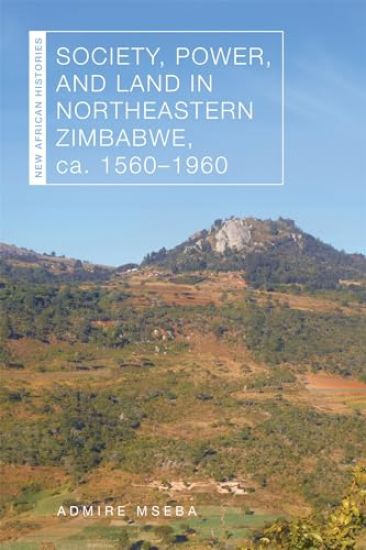
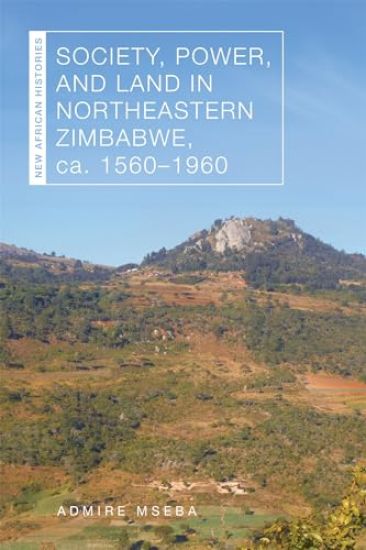
Society, Power, and Land in Northeastern Zimbabwe, ca. 1560–1960
A little over two decades ago, Zimbabwe undertook its Fast Track Land Reform Programme. Critics saw it as nothing more than an assault on human and property rights for political expedience by a ruling elite that was fast losing its power. In contrast, those sympathetic to the land reform program saw it as fundamental to the righting of colonialism’s historical wrongs. Yet, rural displacements at the hands of state actors, or of those closely connected to them, continue. As in the past, the continuing land conflicts are mostly understood as the result of the actions of an authoritarian state that exploits its control of land for the political and economic benefit of those who inhabit it. These explanations share one thing in common: each understands the country’s perpetual land questions in terms of the actions or inactions of the colonial or the postcolonial state. This book refocuses attention on how regimes of power rooted in kinship, gender, generation, and status have, individually and in combination, informed access to land in precolonial northeastern Zimbabwe. It then examines how these regimes of power interacted with colonial policies to inform the African experience in colonial Zimbabwe. Further, the book places land and the ability to ensure its fecundity at the center of the making and moderation of precolonial political power and how this power was impacted by the imposition of colonial rule. Tracing the dynamics of land and power from precolonial times, together with their entanglement with colonial policies, is important, for this relationship is almost always neglected by both scholars and policymakers drawn to the high drama of colonial and postcolonial politics of land. This oversight has real consequences on our understandings of landed inequalities and how they are addressed. When Zimbabwe’s postcolonial state focused on colonially induced racialized land inequalities, its land reform efforts left older forms of landed inequalities based on gender, generation, and ideas of belonging intact. The book, which details these inequalities, reminds Zimbabweans and others that if the quest for equity espoused in postcolonial land reforms is to be meaningful, it must be attentive to both colonially induced inequalities and those enduring disparities that predated, were deepened by, and outlived colonial rule. At the same time, Zimbabweans who now live with a postcolonial state that is increasingly centralizing power over land may well learn from past societies’ creative efforts to limit the authority of their leaders.
Society, Power, and Land in Northeastern Zimbabwe, ca. 1560–1960
A little over two decades ago, Zimbabwe undertook its Fast Track Land Reform Programme. Critics saw it as nothing more than an assault on human and property rights for political expedience by a ruling elite that was fast losing its power. In contrast, those sympathetic to the land reform program saw it as fundamental to the righting of colonialism’s historical wrongs. Yet, rural displacements at the hands of state actors, or of those closely connected to them, continue. As in the past, the continuing land conflicts are mostly understood as the result of the actions of an authoritarian state that exploits its control of land for the political and economic benefit of those who inhabit it. These explanations share one thing in common: each understands the country’s perpetual land questions in terms of the actions or inactions of the colonial or the postcolonial state. This book refocuses attention on how regimes of power rooted in kinship, gender, generation, and status have, individually and in combination, informed access to land in precolonial northeastern Zimbabwe. It then examines how these regimes of power interacted with colonial policies to inform the African experience in colonial Zimbabwe. Further, the book places land and the ability to ensure its fecundity at the center of the making and moderation of precolonial political power and how this power was impacted by the imposition of colonial rule. Tracing the dynamics of land and power from precolonial times, together with their entanglement with colonial policies, is important, for this relationship is almost always neglected by both scholars and policymakers drawn to the high drama of colonial and postcolonial politics of land. This oversight has real consequences on our understandings of landed inequalities and how they are addressed. When Zimbabwe’s postcolonial state focused on colonially induced racialized land inequalities, its land reform efforts left older forms of landed inequalities based on gender, generation, and ideas of belonging intact. The book, which details these inequalities, reminds Zimbabweans and others that if the quest for equity espoused in postcolonial land reforms is to be meaningful, it must be attentive to both colonially induced inequalities and those enduring disparities that predated, were deepened by, and outlived colonial rule. At the same time, Zimbabweans who now live with a postcolonial state that is increasingly centralizing power over land may well learn from past societies’ creative efforts to limit the authority of their leaders.
Society of Individuals

Society of Individuals

Norbert Elias

Continuum International Publishing Group Ltd.
2001
nidottu
Originally published in 1991 and now reissued by Continuum International, this book consists of three sections. The first, written in 1939, was either left out of Elias's most famous book, The Civilizing Process, or was written along with it. Part 2 was written between 1940 and 1960. Part 3 is from 1987. The entire book is a study of the unique relationship between the individual and society--Elias's best-known theme and the basis for the discipline of sociology.
Society and Its Metaphors

Society and Its Metaphors

Jose Lopez

Continuum International Publishing Group Ltd.
2003
nidottu
Both classical and contemporary social theorists have created a range of frameworks to formulate and develop concepts of social structure. Focusing on the work of the key theorists, Emile Durkheim, Karl Marx, Max Weber, Talcott Parsons and Louis Althusser, Society and its Metaphors maps the linguistic basis of different theories of social structure.
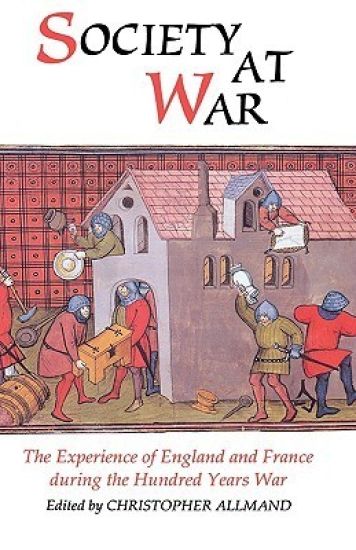
Society at War

Society at War

The Boydell Press
1973
sidottu
Primary sources for the Hundred Years War present the realities of the medieval experience of warfare in England and in France. War's impact on two societies, England and France, in the late middle ages is fully explored through the evidence and commentary presented here, showing how they reacted to the conflict between them. The Hundred Years War forms the framework for the chosen documents, all from the fourteenth and fifteenth century; extracts show how men thought about war and how they faced up to these ideas in practice; the problems of manpower; and the effects of the military needs of the day on society. The importance of economic motives for going to war is considered, together with the changing methods used in fighting the war. Finally, the attempts at peace-making are illustrated, showing how wardid not necessarily end suddenly since its effects -social, economic and political - were felt for many years after it was officially over. New introduction, updated bibliography; originally published 1973. CHRISTOPHER ALLMANDis Professor of Medieval History at the University of Liverpool.
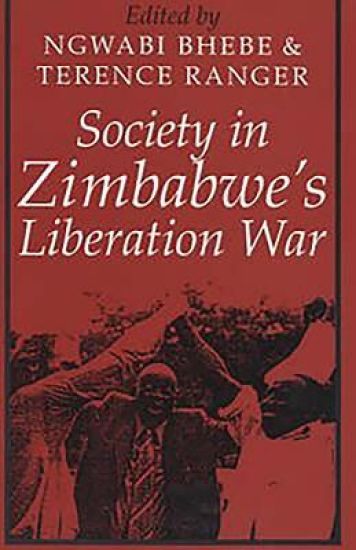
Society in Zimbabwe's Liberation War
These two companion volumes on Soldiers and Society give new perspectives on Zimbabwe's liberation struggle. This work examines people's beliefs, ideas and experiences both during Zimbabwe's liberation war and afterwards. The contributors look at African religion and Christianity and explore the efforts to educate people for a new society. They also look at the ideas used by whites to justify brutality and at the civilian experiences at the hands of the guerillas and the Fifth Brigade. Finally, they ask whether the new ideas were carried on after the war had ended. Zimbabwe: University of Zimbabwe Publications
Society and Religion from Jahiliyya to Islam
In this second collection of his articles, Professor Kister has continued his investigation into the social and religious history of Arabia. The papers are based essentially on a study of the traditions preserved in the early Arabic sources, many unpublished. As the author demonstrates, these sources represent an invaluable mine of information on the history and religious life of pre-Islamic Arabia and on the transformations that affected customs, law and beliefs after the coming of Islam. Particular articles also deal with such questions as the relations and confrontation between nascent Islam and Judaism and Christianity, the contacts between tribal society and sedentary population, and the emergence of new popular customs and beliefs. Dans ce second receuil d’articles, le professeur Kister, poursuit ses recherches sur l’histoire sociale et religieuse de l’Arabie. Les essais sont essentiellement basés sur une etude des traditions conservées par les premieres sources arabes, dont beaucoup n’ont jamais été publiées. Ainsi que l’auteur le démontre, ces sources représentent une mine d’information inestimable sur la vie religieuse et l’histoire de l’Arabie pré-islamique et sur les changements qui affectèrent coutumes,lois et croyances après l’avenement de l’Islam. Certains articles , traitent plus particulierement, de sujets, tels les rapports et les affrontements entre la force naissante de l’Islam et le Judaïsme et Christianisme pré-existants; ou encore des contacts entre société tribale et population sédentaire, ainsi que de l’emergence de nouvelles coutumes et croyances poulaires.
Society and Government in Colonial Brazil, 1500–1822
Professor Russell-Wood’s detailed studies of Brazilian social history in the colonial era have long been recognised as model contributions to the history of class, race, gender and religion. This collection combines work on particular persons and groupings with survey articles on the role of the port and the frontier in colonial Brazil and on its historiography. The author describes the administration and structure of government, and the realities of royal power, with examples drawn from the port cities and the mining townships of the interior, then moves on to examine the interplay of class, religion and race with reference to brotherhoods of persons of African descent and the racially exclusive Third Orders. One group who overcame legal, physical and social constraints were women who, whether of European or African descent, contributed decisively to the economy and society of Brazil. To conclude, there are accounts of three individuals, each of whose experiences illustrate facets of the judicial system, governance and education in Portugal’s richest colony. Les études détaillées du professeur Russell-Wood sur l’histoire sociale brésilienne durant la période coloniale ont longtemps été reconnues comme un modèle de contribution à histoire des classes, des races, des genres et des religions. Cette collection allie des travaux au sujet d’individus spécifiques et de groupements à des résumés d’enquête sur la rôle du port et de la frontière dans le Brésil colonial et dans son historiographie. L’auteur décrit l’administration et la structure gouvernementale, ainsi que les réalités du pouvoir royal, s’appuyant d’exemples tirés des cités portuaires et des communes minières de l’intérieur. Il passe ensuite à l’examen de l’interaction des classes, des religions et des races en faisant référence aux liens de fraternité qui unissaient les personnes de descendance africaine, ainsi qu’aux Troisièmes Ordres qui pratiq
Society and Trade in South Arabia

Society and Trade in South Arabia

R.B. Serjeant; G. Rex Smith

Variorum
1996
sidottu
This book is the fourth and final collection of Professor R.B. Serjeant's articles on the trade, commerce and society of South Arabia and the Yemen. The early articles concern trade; customary law is the next subject represented with social history and one or two incidental articles completing the volume.
Society, the City and Industry in the Balkans, 15th–19th Centuries
This volume deals first with the social and economic development of the Balkans under Ottoman rule. Particular attention is given to the demography of the region, and to questions of urban growth and ethnic and religious compostition. Professor Todorov is also concerned to examine the impact of the strongly centralized Ottoman system, and the introduction of new types of industrial and commercial organisation. The final studies cover aspects of Greek-Bulgarian relations and the political context, as the region moved to independence.
Society and Culture in Early Modern England

Society and Culture in Early Modern England

David Cressy

Ashgate Publishing Limited
2003
sidottu
The common theme of this selection of articles by David Cressy, published over the last twenty-five years, is the linkage of elite and popular culture and the participation of ordinary people in the central events of their age. The collection also traces a development in historical style and method, from quantitative applications using statistics to qualitative telling of tales. Seven essays under the heading 'Opportunities' explore problems of education, literacy and cultural attainment within the gendered and hierarchically ordered society of Elizabeth and Stuart England. Eight more under the heading 'Passages' examine social and cultural interactions, kinship, migration, community celebrations, and rituals in the life-cycle. The collection brings together a coherent body of research that is much cited in current scholarship and continues to shape the agenda for the social and cultural history of early modern England.
Society, Culture and Politics in Byzantium

Society, Culture and Politics in Byzantium

Nicolas Oikonomides; Elizabeth Zachariadou

Variorum
2005
sidottu
Society, Culture and Politics in Byzantium is the fourth selection of papers by the late Nicolas Oikonomides to be published in the Variorum Collected Studies Series. Its focus is upon the Byzantine world after the Fourth Crusade and during the Palaeologan period, though several studies deal with a longer time span. The twenty-eight articles included look first at questions of language and literacy, and then at the relationships between art and politics. The final sections examine aspects of the history of the later empire, in the age of its decline, caught between the economic penetration of the Western European states and the expansion of the Ottoman Turks, and consider the development of Byzantine institutions, monasteries and the Church in this period.