Kirjojen hintavertailu. Mukana 12 083 983 kirjaa ja 12 kauppaa.

Kirjahaku

Etsi kirjoja tekijän nimen, kirjan nimen tai ISBN:n perusteella.

1000 tulosta hakusanalla Sutter-Laumann

Cultivating Nature

Cultivating Nature

Sarah R. Hamilton; Paul S. Sutter

University of Washington Press
2018
sidottu
Winner of the 2019 Turku Book Award from the European Society for Environmental HistoryThe Albufera Natural Park, an area ten kilometers south of Valencia that is widely regarded as the birthplace of paella, has long been prized by residents and visitors alike. Since the twentieth century, the disparate visions of city dwellers, farmers, fishermen, scientists, politicians, and tourists have made this working landscape a site of ongoing conflict over environmental conservation in Europe, the future of Spain, and Valencian identity.In Cultivating Nature, Sarah Hamilton explores the Albufera's contested lands and waters, which have supported and been transformed by human activity for a millennium, in order to understand regional, national, and global social histories. She argues that efforts to preserve biological and cultural diversity must incorporate the interests of those who live within heavily modified and long-exploited ecosystems such as the Albufera de Valencia. Shifting between local struggles and global debates, this fascinating environmental history reveals how Franco's dictatorship, Spain's integration with Europe, and the crisis in European agriculture have shaped the Albufera, its users, and its inhabitants.
The Organic Profit

The Organic Profit

Andrew N. Case; Paul S. Sutter

University of Washington Press
2020
pokkari
Where did the curious idea of buying one's way to sustainability come from? In no small part, the answer lies in the story of entrepreneurial health reformer J. I. Rodale, his son Robert Rodale, and their company, the Rodale Press. These early advocates of organic gardening cultivated a niche for natural health products in the 1950s, organized the emerging marketplace for organic foods in the 1960s, and in the process published an endless supply of advice books on diet and health.Rodale's marketplace environmentalism brought environmentally minded consumers together and taught Americans how to grow food, eat, and live in arguably more earth-friendly ways. Yet the market has proved more effective at addressing individual health concerns than improving public health at large, as liable to champion untested, ineffectual health supplements as to challenge the indiscriminate use of dangerous pesticides. For anyone trying to make sense of the complex tensions between business profits and the desire for environmental reform, The Organic Profit is essential reading.
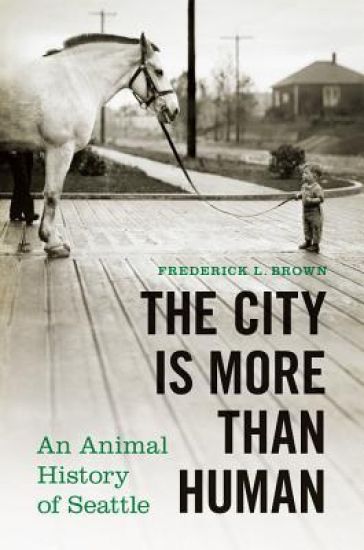
The City Is More Than Human

The City Is More Than Human

Frederick L. Brown; Paul S. Sutter

University of Washington Press
2019
pokkari
Winner of the 2017 Virginia Marie Folkins Award, Association of King County Historical Organizations (AKCHO)Winner of the 2017 Hal K. Rothman Book Prize, Western History AssociationSeattle would not exist without animals. Animals have played a vital role in shaping the city from its founding amid existing indigenous towns in the mid-nineteenth century to the livestock-friendly town of the late nineteenth century to the pet-friendly, livestock-averse modern city. When newcomers first arrived in the 1850s, they hastened to assemble the familiar cohort of cattle, horses, pigs, chickens, and other animals that defined European agriculture. This, in turn, contributed to the dispossession of the Native residents of the area. However, just as various animals were used to create a Euro-American city, the elimination of these same animals from Seattle was key to the creation of the new middle-class neighborhoods of the twentieth century. As dogs and cats came to symbolize home and family, Seattleites' relationship with livestock became distant and exploitative, demonstrating the deep social contradictions that characterize the modern American metropolis. Throughout Seattle's history, people have sorted animals into categories and into places as a way of asserting power over animals, other people, and property. In The City Is More Than Human, Frederick Brown explores the dynamic, troubled relationship humans have with animals. In so doing he challenges us to acknowledge the role of animals of all sorts in the making and remaking of cities.
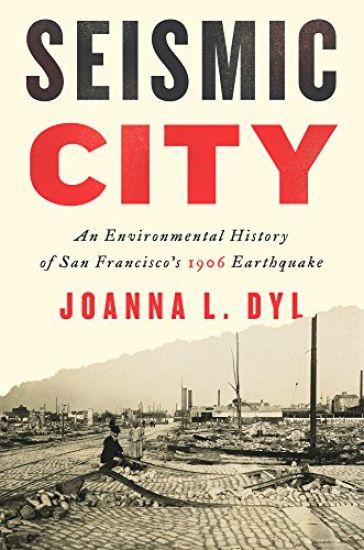
Seismic City

Seismic City

Joanna L. Dyl; Paul S. Sutter

University of Washington Press
2019
pokkari
On April 18, 1906, a 7.8-magnitude earthquake shook the San Francisco region, igniting fires that burned half the city. The disaster in all its elements — earthquake, fires, and recovery — profoundly disrupted the urban order and challenged San Francisco's perceived permanence.The crisis temporarily broke down spatial divisions of class and race and highlighted the contested terrain of urban nature in an era of widespread class conflict, simmering ethnic tensions, and controversial reform efforts. From a proposal to expel Chinatown from the city center to a vision of San Francisco paved with concrete in the name of sanitation, the process of reconstruction involved reenvisioning the places of both people and nature. In their zeal to restore their city, San Franciscans downplayed the role of the earthquake and persisted in choosing patterns of development that exacerbated risk.In this close study of the 1906 San Francisco earthquake, Joanna L. Dyl examines the decades leading up to the catastrophic event and the city's recovery from it. Combining urban environmental history and disaster studies, Seismic City demonstrates how the crisis and subsequent rebuilding reflect the dynamic interplay of natural and human influences that have shaped San Francisco.
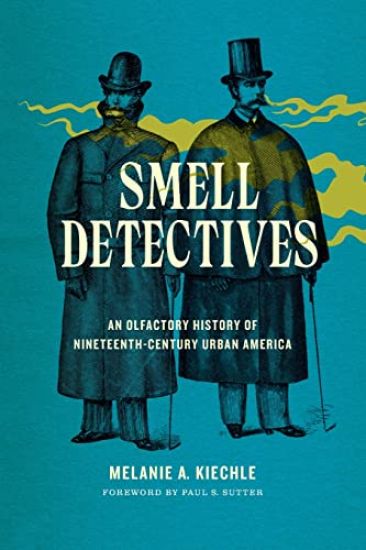
Smell Detectives

Smell Detectives

Melanie A. Kiechle; Paul S. Sutter

University of Washington Press
2019
pokkari
What did nineteenth-century cities smell like? And how did odors matter in the formation of a modern environmental consciousness? Smell Detectives follows the nineteenth-century Americans who used their noses to make sense of the sanitary challenges caused by rapid urban and industrial growth. Melanie Kiechle examines nuisance complaints, medical writings, domestic advice, and myriad discussions of what constituted fresh air, and argues that nineteenth-century city dwellers, anxious about the air they breathed, attempted to create healthier cities by detecting and then mitigating the most menacing odors.Medical theories in the nineteenth century assumed that foul odors caused disease and that overcrowded cities—filled with new and stronger stinks—were synonymous with disease and danger. But the sources of offending odors proved difficult to pinpoint. The creation of city health boards introduced new conflicts between complaining citizens and the officials in charge of the air. Smell Detectives looks at the relationship between the construction of scientific expertise, on the one hand, and "common sense"—the olfactory experiences of common people—on the other. Although the rise of germ theory revolutionized medical knowledge and ultimately undid this form of sensory knowing, Smell Detectives recovers how city residents used their sense of smell and their health concerns about foul odors to understand, adjust to, and fight against urban environmental changes.
Fir and Empire

Fir and Empire

Ian M. Miller; Paul S. Sutter

University of Washington Press
2020
sidottu
A CHOICE OUTSTANDING ACADEMIC TITLERestores China's place in forest historyThe disappearance of China's naturally occurring forests is one of the most significant environmental shifts in the country's history, one often blamed on imperial demand for lumber. China's early modern forest history is typically viewed as a centuries-long process of environmental decline, culminating in a nineteenth-century social and ecological crisis. Pushing back against this narrative of deforestation, Ian Miller charts the rise of timber plantations between about 1000 and 1700, when natural forests were replaced with anthropogenic ones. Miller demonstrates that this form of forest management generally rested on private ownership under relatively distant state oversight and taxation. He further draws on in-depth case studies of shipbuilding and imperial logging to argue that this novel landscape was not created through simple extractive pressures, but by attempts to incorporate institutional and ecological complexity into a unified imperial state.Miller uses the emergence of anthropogenic forests in south China to rethink both temporal and spatial frameworks for Chinese history and the nature of Chinese empire. Because dominant European forestry models do not neatly overlap with the non-Western world, China's history is often left out of global conversations about them; Miller's work rectifies this omission and suggests that in some ways, China's forest system may have worked better than the more familiar European institutions.The open access publication of this book was made possible by a grant from the James P. Geiss and Margaret Y. Hsu Foundation.
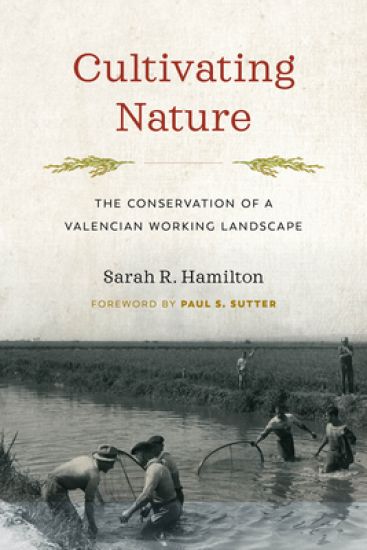
Cultivating Nature

Cultivating Nature

Sarah R. Hamilton; Paul S. Sutter

University of Washington Press
2020
pokkari
Winner of the 2019 Turku Book Award from the European Society for Environmental HistoryThe Albufera Natural Park, an area ten kilometers south of Valencia that is widely regarded as the birthplace of paella, has long been prized by residents and visitors alike. Since the twentieth century, the disparate visions of city dwellers, farmers, fishermen, scientists, politicians, and tourists have made this working landscape a site of ongoing conflict over environmental conservation in Europe, the future of Spain, and Valencian identity.In Cultivating Nature, Sarah Hamilton explores the Albufera's contested lands and waters, which have supported and been transformed by human activity for a millennium, in order to understand regional, national, and global social histories. She argues that efforts to preserve biological and cultural diversity must incorporate the interests of those who live within heavily modified and long-exploited ecosystems such as the Albufera de Valencia. Shifting between local struggles and global debates, this fascinating environmental history reveals how Franco's dictatorship, Spain's integration with Europe, and the crisis in European agriculture have shaped the Albufera, its users, and its inhabitants.
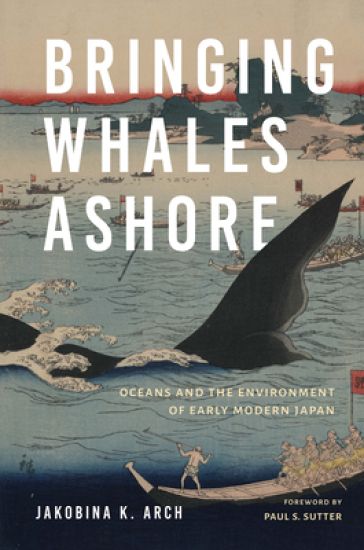
Bringing Whales Ashore

Bringing Whales Ashore

Jakobina K. Arch; Paul S. Sutter

University of Washington Press
2020
pokkari
Japan today defends its controversial whaling expeditions by invoking tradition—but what was the historical reality? In examining the techniques and impacts of whaling during the Tokugawa period (1603–1868), Jakobina Arch shows that the organized, shore-based whaling that first developed during these years bore little resemblance to modern Japanese whaling. Drawing on a wide range of sources, from whaling ledgers to recipe books and gravestones for fetal whales, she traces how the images of whales and by-products of commercial whaling were woven into the lives of people throughout Japan. Economically, Pacific Ocean resources were central in supporting the expanding Tokugawa state.In this vivid and nuanced study of how the Japanese people brought whales ashore during the Tokugawa period, Arch makes important contributions to both environmental and Japanese history by connecting Japanese whaling to marine environmental history in the Pacific, including the devastating impact of American whaling in the nineteenth century.
The Toxic Ship

The Toxic Ship

Simone M. Müller; Paul S. Sutter

UNIVERSITY OF WASHINGTON PRESS
2023
sidottu
Winner of the 2025 Hagley Prize for the Best Book in Business History from the Business History Conference and the Hagley LibraryWinner of the 2025 Harold and Margaret Sprout Award from the International Studies AssociationAn infamous voyage explores the hazardous waste trade and environmental justiceIn 1986 the Khian Sea, carrying thousands of tons of incinerator ash from Philadelphia, began a two-year journey, roaming the world's oceans in search of a dumping ground. Its initial destination and then country after country refused to accept the waste. The ship ended up dumping part of its load in Haiti under false pretenses, and the remaining waste was illegally dumped in the ocean. Two shipping company officials eventually received criminal convictions.Simone M. Müller uses the Khian Sea's voyage as a lens to elucidate the global trade in hazardous waste—the movement of material ranging from outdated consumer products and pesticides to barges filled with all sorts of toxic discards—from the 1970s to the present day, exploring the story's international nodes and detailing the downside of environmental conscientiousness among industrial nations as waste is pushed outward. Müller also highlights the significance of the trip's start in Philadelphia, a city with a significant African American population. The geographical origins shed light on environmental racism within the United States in the context of the global story of environmental justice. Activism in response to the ship's journey set an important precedent, and this book brings together the many voices that shaped the international trade in hazardous waste.
The Toxic Ship

The Toxic Ship

Simone M. Müller; Paul S. Sutter

UNIVERSITY OF WASHINGTON PRESS
2023
pokkari
Winner of the 2025 Hagley Prize for the Best Book in Business History from the Business History Conference and the Hagley LibraryWinner of the 2025 Harold and Margaret Sprout Award from the International Studies AssociationAn infamous voyage explores the hazardous waste trade and environmental justiceIn 1986 the Khian Sea, carrying thousands of tons of incinerator ash from Philadelphia, began a two-year journey, roaming the world's oceans in search of a dumping ground. Its initial destination and then country after country refused to accept the waste. The ship ended up dumping part of its load in Haiti under false pretenses, and the remaining waste was illegally dumped in the ocean. Two shipping company officials eventually received criminal convictions.Simone M. Müller uses the Khian Sea's voyage as a lens to elucidate the global trade in hazardous waste—the movement of material ranging from outdated consumer products and pesticides to barges filled with all sorts of toxic discards—from the 1970s to the present day, exploring the story's international nodes and detailing the downside of environmental conscientiousness among industrial nations as waste is pushed outward. Müller also highlights the significance of the trip's start in Philadelphia, a city with a significant African American population. The geographical origins shed light on environmental racism within the United States in the context of the global story of environmental justice. Activism in response to the ship's journey set an important precedent, and this book brings together the many voices that shaped the international trade in hazardous waste.
Cleaning Up the Bomb Factory

Cleaning Up the Bomb Factory

Casey A. Huegel; Paul S. Sutter

UNIVERSITY OF WASHINGTON PRESS
2024
sidottu
Housewives, hard hats, and an Ohio town's restoration of the radioactive wasteland in its backyardIn 1984, a uranium leak at Ohio's outdated Fernald Feed Materials Production Center highlighted the decades of harm inflicted on Cold War communities by negligent radioactive waste disposal. Casey A. Huegel tells the story of the unlikely partnership of grassroots activists, regulators, union workers, and politicians that responded to the event with a new kind of environmental movement.The community group Fernald Residents for Environmental Safety and Health (FRESH) drew on the expertise of national organizations while maintaining its autonomy and focus on Fernald. Leveraging local patriotism and employment concerns, FRESH recruited blue-collar allies into an innovative program that fought for both local jobs and a healthier environment. Fernald's transformation into a nature reserve with an on-site radioactive storage facility reflected the political compromises that left waste sites improved yet imperfect. At the same time, FRESH's outsized influence transformed how the government scaled down the Cold War weapons complex, enforced health and safety standards, and reckoned with the immense environmental legacy of the nuclear arms race.A compelling history of environmental mobilization, Cleaning Up the Bomb Factory details the diverse goals and mixed successes of a groundbreaking activist movement.
Cleaning Up the Bomb Factory

Cleaning Up the Bomb Factory

Casey A. Huegel; Paul S. Sutter

UNIVERSITY OF WASHINGTON PRESS
2024
pokkari
Housewives, hard hats, and an Ohio town's restoration of the radioactive wasteland in its backyardIn 1984, a uranium leak at Ohio's outdated Fernald Feed Materials Production Center highlighted the decades of harm inflicted on Cold War communities by negligent radioactive waste disposal. Casey A. Huegel tells the story of the unlikely partnership of grassroots activists, regulators, union workers, and politicians that responded to the event with a new kind of environmental movement.The community group Fernald Residents for Environmental Safety and Health (FRESH) drew on the expertise of national organizations while maintaining its autonomy and focus on Fernald. Leveraging local patriotism and employment concerns, FRESH recruited blue-collar allies into an innovative program that fought for both local jobs and a healthier environment. Fernald's transformation into a nature reserve with an on-site radioactive storage facility reflected the political compromises that left waste sites improved yet imperfect. At the same time, FRESH's outsized influence transformed how the government scaled down the Cold War weapons complex, enforced health and safety standards, and reckoned with the immense environmental legacy of the nuclear arms race.A compelling history of environmental mobilization, Cleaning Up the Bomb Factory details the diverse goals and mixed successes of a groundbreaking activist movement.
Fir and Empire

Fir and Empire

Ian M. Miller; Paul S. Sutter

UNIVERSITY OF WASHINGTON PRESS
2024
pokkari
A CHOICE OUTSTANDING ACADEMIC TITLERestores China's place in forest historyThe disappearance of China's naturally occurring forests is one of the most significant environmental shifts in the country's history, one often blamed on imperial demand for lumber. China's early modern forest history is typically viewed as a centuries-long process of environmental decline, culminating in a nineteenth-century social and ecological crisis. Pushing back against this narrative of deforestation, Ian Miller charts the rise of timber plantations between about 1000 and 1700, when natural forests were replaced with anthropogenic ones. Miller demonstrates that this form of forest management generally rested on private ownership under relatively distant state oversight and taxation. He further draws on in-depth case studies of shipbuilding and imperial logging to argue that this novel landscape was not created through simple extractive pressures, but by attempts to incorporate institutional and ecological complexity into a unified imperial state.Miller uses the emergence of anthropogenic forests in south China to rethink both temporal and spatial frameworks for Chinese history and the nature of Chinese empire. Because dominant European forestry models do not neatly overlap with the non-Western world, China's history is often left out of global conversations about them; Miller's work rectifies this omission and suggests that in some ways, China's forest system may have worked better than the more familiar European institutions.The open access publication of this book was made possible by a grant from the James P. Geiss and Margaret Y. Hsu Foundation.
The City Is More Than Human

The City Is More Than Human

Frederick L. Brown; Paul S. Sutter

University of Washington Press
2016
sidottu
Winner of the 2017 Virginia Marie Folkins Award, Association of King County Historical Organizations (AKCHO)Winner of the 2017 Hal K. Rothman Book Prize, Western History AssociationSeattle would not exist without animals. Animals have played a vital role in shaping the city from its founding amid existing indigenous towns in the mid-nineteenth century to the livestock-friendly town of the late nineteenth century to the pet-friendly, livestock-averse modern city. When newcomers first arrived in the 1850s, they hastened to assemble the familiar cohort of cattle, horses, pigs, chickens, and other animals that defined European agriculture. This, in turn, contributed to the dispossession of the Native residents of the area. However, just as various animals were used to create a Euro-American city, the elimination of these same animals from Seattle was key to the creation of the new middle-class neighborhoods of the twentieth century. As dogs and cats came to symbolize home and family, Seattleites' relationship with livestock became distant and exploitative, demonstrating the deep social contradictions that characterize the modern American metropolis. Throughout Seattle's history, people have sorted animals into categories and into places as a way of asserting power over animals, other people, and property. In The City Is More Than Human, Frederick Brown explores the dynamic, troubled relationship humans have with animals. In so doing he challenges us to acknowledge the role of animals of all sorts in the making and remaking of cities.
Synthesis of Arithmetic Circuits

Synthesis of Arithmetic Circuits

Jean-Pierre Deschamps; Gery J.A. Bioul; Gustavo D. Sutter

John Wiley Sons Inc
2006
sidottu
A new approach to the study of arithmetic circuits In Synthesis of Arithmetic Circuits: FPGA, ASIC and Embedded Systems, the authors take a novel approach of presenting methods and examples for the synthesis of arithmetic circuits that better reflects the needs of today's computer system designers and engineers. Unlike other publications that limit discussion to arithmetic units for general-purpose computers, this text features a practical focus on embedded systems. Following an introductory chapter, the publication is divided into two parts. The first part, Mathematical Aspects and Algorithms, includes mathematical background, number representation, addition and subtraction, multiplication, division, other arithmetic operations, and operations in finite fields. The second part, Synthesis of Arithmetic Circuits, includes hardware platforms, general principles of synthesis, adders and subtractors, multipliers, dividers, and other arithmetic primitives. In addition, the publication distinguishes itself with: * A separate treatment of algorithms and circuits-a more useful presentation for both software and hardware implementations * Complete executable and synthesizable VHDL models available on the book's companion Web site, allowing readers to generate synthesizable descriptions * Proposed FPGA implementation examples, namely synthesizable low-level VHDL models for the Spartan II and Virtex families * Two chapters dedicated to finite field operations This publication is a must-have resource for students in computer science and embedded system designers, engineers, and researchers in the field of hardware and software computer system design and development. An Instructor Support FTP site is available from the Wiley editorial department.
Pharsalia

Pharsalia

Lynn A. Nelson; Paul S. Sutter

University of Georgia Press
2009
pokkari
Pharsalia, a plantation located in piedmont Virginia at the foot of the Blue Ridge Mountains, is one of the best-documented sites of its kind. Drawing on the exceptionally rich trove of papers left behind by the Massie family, Pharsalia's owners, this case study demonstrates how white southern planters paradoxically relied on capitalistic methods even as they pursued an ideal of agrarian independence. Lynn A. Nelson also shows how the contradictions between these ends and means would later manifest themselves in the southern conservation movement.Nelson follows the fortunes of Pharsalia's owners, telling how Virginia's traditional extensive agriculture contributed to the soil's erosion and exhaustion. Subsequent attempts to balance independence and sustainability through a complex system of crop rotation and resource recycling ultimately gave way to an intensive, slave-based form of agricultural capitalism.Pharsalia could not support the Massies' aristocratic ambitions, and it was eventually parceled up and sold off by family members. The farm's story embodies several fundamentals of modern U.S. environmental thought. Southerners' nineteenth-century quest for financial and ecological independence provided the background for conservationists' attempts to save family farming. At the same time, farmers' failure to achieve independence while maximizing profits and crop yields drove them to seek government aid and regulation. These became some of the hallmarks of conservation efforts in the New Deal and beyond.
The Takeover

The Takeover

Monica R. Gisolfi; Paul S. Sutter

University of Georgia Press
2017
sidottu
Economists have described the upcountry Georgia poultry industry as the quintessential agribusiness. Following a trajectory from Reconstruction through the Great Depression to the present day, Monica R. Gisolfi shows how the poultry farming model of semivertical integration perfected a number of practices that had first underpinned the cotton-growing crop-lien system, ultimately transforming the poultry industry in ways that drove tens of thousands of farmers off the land and rendered those who remained dependent on large agribusiness firms.Gisolfi argues that the inequalities inherent in the structure of modern poultry farming have led to steep human and environmental costs. Agribusiness firms—many of them descended from the cotton-era South’s furnishing merchants—brought farmers into a system of feed-conversion contracts that placed all production decisions in the hands of the poultry corporations but at least half of the capital risks on the farmers. Along the way, the federal government aided and abetted—sometimes unwittingly—the consolidation of power by poultry firms through direct and indirect subsidies and favorable policies. Drawing on USDA files, oral history, congressional records, and poultry publications, Gisolfi puts a local face on one of the twentieth century’s silent agribusiness revolutions.
The Art of Managing Longleaf

The Art of Managing Longleaf

Albert G. Way; Leon Neel; Paul S. Sutter

University of Georgia Press
2012
pokkari
Greenwood Plantation in the Red Hills region of southwest Georgia includes a rare one-thousand-acre stand of old-growth longleaf pine woodlands, a remnant of an ecosystem that once covered close to ninety million acres across the Southeast. The Art of Managing Longleaf documents the sometimes controversial management system that not only has protected Greenwood’s “Big Woods” but also has been practiced on a substantial acreage of the remnant longleaf pine woodlands in the Red Hills and other parts of the Coastal Plain. Often described as an art informed by science, the Stoddard-Neel Approach combines frequent prescribed burning, highly selective logging, a commitment to a particular woodland aesthetic, intimate knowledge of the ecosystem and its processes, and other strategies to manage the longleaf pine ecosystem in a sustainable way.The namesakes of this method are Herbert Stoddard (who developed it) and his colleague and successor, Leon Neel (who has refined it). In addition to presenting a detailed, illustrated outline of the Stoddard-Neel Approach, the book—based on an extensive oral history project undertaken by Paul S. Sutter and Albert G. Way, with Neel as its major subject—discusses Neel’s deep familial and cultural roots in the Red Hills; his years of work with Stoddard; and the formation and early years of the Tall Timbers Research Station, which Stoddard and Neel helped found in the pinelands near Tallahassee, Florida, in 1958. In their introduction, environmental historians Sutter and Way provide an overview of the longleaf ecosystem’s natural and human history, and in his afterword, forest ecologist Jerry F. Franklin affirms the value of the Stoddard-Neel Approach.