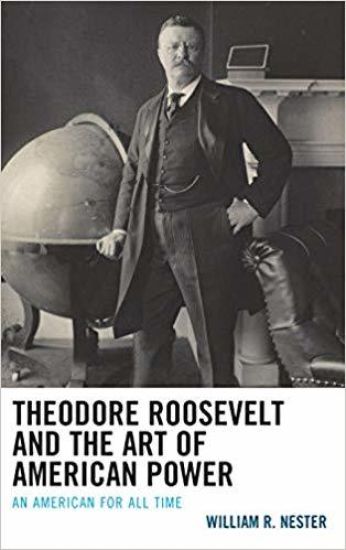
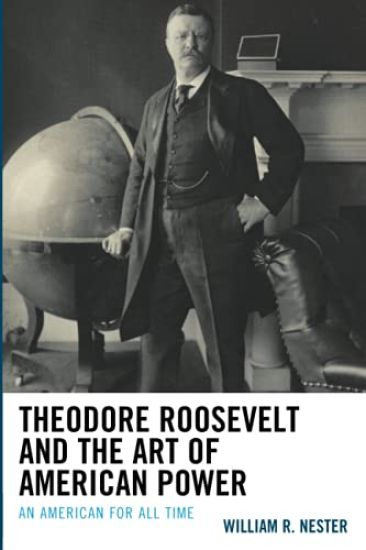
Theodore Roosevelt is an American icon, his face carved in granite alongside those of Washington, Jefferson, and Lincoln on Mt. Rushmore. He is the only American awarded both the Medal of Honor and Nobel Peace Prize. As president, he pushed through a stubborn Congress to breakup corporate monopolies strangling the economy, impose health standards on the food and drug industries, and conserve America’s natural heritage, including the Grand Canyon and Redwood forest. He was a brilliant diplomat who ended a war between Japan and Russia, and prevented a war between Germany and France. He engineered independence for the province of Panama from Columbia, then signed a treaty with the new country that entitled the United States to build, run, and defend a Panama canal. He crusaded for progressive reforms as a New York assemblyman, U.S. civil service commissioner, New York City police commissioner, and New York governor. He led scientific expeditions across East Africa’s savanna and Brazil’s rainforest. During the war with Spain, he raised a cavalry regiment and led his Rough Riders to a decisive victory at San Juan Heights. As a Dakota rancher during the frontier’s twilight, he squared off with outlaws and renegade Indians. He was a prolific writer, authoring 38 books and hundreds of essays. Roosevelt was among the most charismatic presidents. Yet, although most Americans adored him, most Wall Street moguls and political bosses hated him for his reforms. He was complex, simultaneously peacemaker and warmonger, progressive and conservative, Machiavellian and Kantian, avid hunter and nature lover. Roosevelt accomplished all that he did because he mastered the art of American power. His motto “speak softly and carry a big stick” exemplified how he asserted power to defend or enhance American interests. Time after time he bested such titans as J.P. Morgan or Kaiser Wilhelm at the game of power. Although he is the subject of dozens of books, this is the first to comprehensively explore just how Roosevelt understood, massed, and wielded power to pursue his vision for an America as the world’s most prosperous, just, and influential nation.
This study comprehensively and systematically explores how Theodore Roosevelt understood, massed, and wielded power to pursue his vision for an America that was the world’s most prosperous, just, and influential nation.
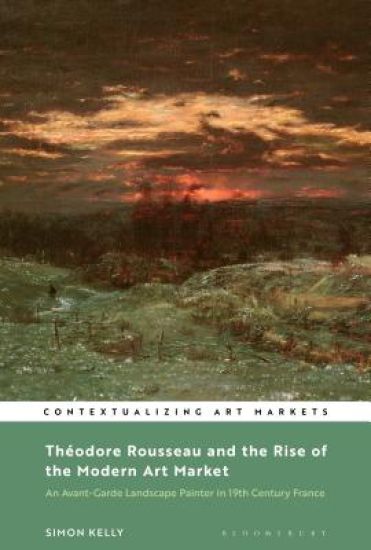
The nineteenth century in France witnessed the emergence of the structures of the modern art market that remain until this day. This book examines the relationship between the avant-garde Barbizon landscape painter, ThéodoreRousseau (1812-1867), and this market, exploring the constellation of patrons, art dealers, and critics who surrounded the artist.Simon Kelly argues for the pioneering role of Rousseau, his patrons, and his public in the origins of the modern art market, and, in so doing, shifts attention away from the more traditional focus on the novel careers of the Impressionists and their supporters. Drawing on extensive archival research, the book offers fresh insight into the role of the modern artist as professional. It provides a new understanding of the complex iconographical and formalchoices within Rousseau’s oeuvre, rediscovering the original radical charge that once surrounded the artist’s work and led to extensive and peculiarly modern tensions with the market place.
DISCOVER:: FUN on the lake. This body of water is a true gem. Now you can work your way through the majestic shores that make this lake so special. Fun for all ages. Share the gift of Lake Fun with someone you love today. ***Limited Time Discount Offer *** ***Regular Price $12.99*** - -***Plus, As a Special Thank-you for buying this Book Today, You Will Receive FREE puzzles and games inside the book*** - -Do you want to see a side of the lake a child rarely gets to see? Do you or a child you love need to express their creative side while enjoying a fun cultural experience? Read on to find out more about how this book can solve your problem... Buy:: The one and only Lake Fun Coloring Book Here's a preview of what you'll find inside this book: - -Fisherman First Aid Kit Tent Sleeping Bag Beach Towell Fish Net Flippers Boat Paddle Hat Visor Swim Trunks Bikini Radio Playing Music Life jacket Rafts Knee Board Tubes Friends Fire Wood Camp Fire Grill Sun Screen Lotion Money Drinks Goggles Wake board Ski Rope Anchor Bug repellent Beach Chairs Binoculars Book Playing Cards Cooler Coozie Camera Snacks Tackle Box Fishing Rod Worms Cricket Water Shoes Skipping Rocks Water bottle Floaties Swim Noodle Dry Clothes Phone Trash Bag Toilet Paper Paper Towels Watermelon Lantern Flash light Boat light Ski rope Bobber Fishing Hook Catfish Bluegill Turtle Minnow Crickett Water Snake Duck Pelican Seagull Frog Large Mouth Bass Small Mouth Bass Trout Laptop Computer Tablet Swim Cap Nose plug Fish food Bag of ice Dog Pop sickle Marshmallows Chocolate Graham crackers Smores Canoe Kayak Paddlebaord Flip flops Lake Map Swim Noodle And much, much more Want to Know More? Scroll to the top of the page and select the "BUY" button for instant purchase. Buy Your Copy Right Now
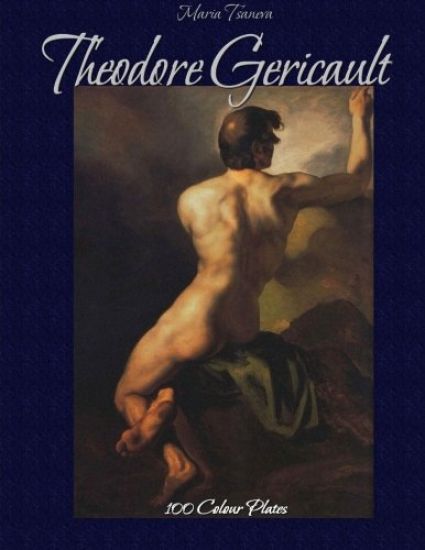
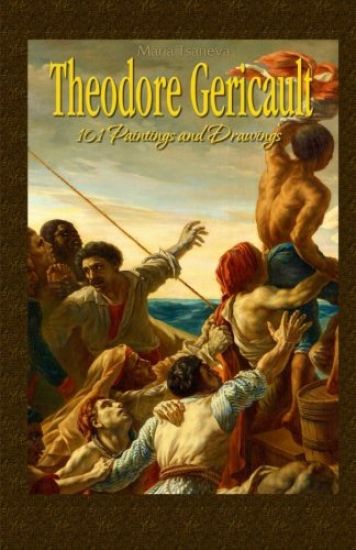
Jean-Louis Andr Th odore G ricault was an influential French painter and lithographer, known for "The Raft of the Medusa" and other paintings. Although he died young, he was one of the pioneers of the Romantic Movement. His stormy career lasted little more than a decade and in that time he displayed a meteoric and many-sided genius. His love of thrilling action, his sense of swirling movement, his energetic conduct of paint, and his taste for the horrid were all to become features of Romanticism. G ricault was, at the same time avant-garde in his realism: he made studies from corpses and severed limbs for The Raft of the Medusa and painted an extraordinary series of portraits of mental patients in the clinic of his friend Dr Georget. His work had enormous influence, most notably on Delacroix.
Jean-Louis Andr Th odore G ricault was an influential French painter and lithographer, known for "The Raft of the Medusa" and other paintings. Although he died young, he was one of the pioneers of the Romantic Movement. His stormy career lasted little more than a decade and in that time he displayed a meteoric and many-sided genius. His love of thrilling action, his sense of swirling movement, his energetic conduct of paint, and his taste for the horrid were all to become features of Romanticism. G ricault was, at the same time avant-garde in his realism: he made studies from corpses and severed limbs for The Raft of the Medusa and painted an extraordinary series of portraits of mental patients in the clinic of his friend Dr Georget. His work had enormous influence, most notably on Delacroix.
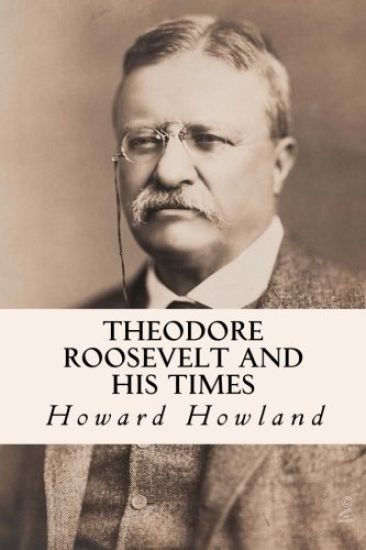
Theodore Roosevelt and His Times is a classic and definitive biography of the late American president by Howard Howland. There is a line of Browning's that should stand as epitaph for Theodore Roosevelt: "I WAS EVER A FIGHTER." That was the essence of the man, that the keynote of his career. He met everything in life with a challenge. If it was righteous, he fought for it; if it was evil, he hurled the full weight of his finality against it. He never capitulated, never sidestepped, never fought foul. He carried the fight to the enemy. Theodore Roosevelt Jr. (October 27, 1858 - January 6, 1919) was an American statesman and writer who served as the 26th President of the United States from 1901 to 1909. He also served as the 25th Vice President of the United States from March to September 1901 and as the 33rd Governor of New York from 1899 to 1900. As a leader of the Republican Party during this time, he became a driving force for the Progressive Era in the United States in the early 20th century. His face is depicted on Mount Rushmore, alongside those of George Washington, Thomas Jefferson, and Abraham Lincoln. Roosevelt was born a sickly child with debilitating asthma, but he overcame his physical health problems by embracing a strenuous lifestyle. He integrated his exuberant personality, vast range of interests, and world-famous achievements into a "cowboy" persona defined by robust masculinity. Home-schooled, he began a lifelong naturalist avocation before attending Harvard College. His book, The Naval War of 1812 (1882), established his reputation as both a learned historian and as a popular writer. Upon entering politics, he became the leader of the reform faction of Republicans in New York's state legislature. Following the near-simultaneous deaths of his wife and mother, he escaped to a cattle ranch in the Dakotas. Roosevelt served as Assistant Secretary of the Navy under President William McKinley, but resigned from that post to lead the Rough Riders during the Spanish-American War. Returning a war hero, he was elected Governor of New York in 1898. After the death of Vice President Garret Hobart, the New York state party leadership convinced McKinley to accept Roosevelt as his running mate in the 1900 election. Roosevelt campaigned vigorously, and the McKinley-Roosevelt ticket won a landslide victory based on a platform of peace, prosperity, and conservatism. After taking office as Vice President in March 1901, he became President at age 42 following McKinley's assassination that September, and remains the youngest person to become president. As a leader of the Progressive movement, he championed his "Square Deal" domestic policies, promising the average citizen fairness, breaking of trusts, regulation of railroads, and pure food and drugs. Making conservation a top priority, he established many new national parks, forests, and monuments intended to preserve the nation's natural resources. In foreign policy, he focused on Central America, where he began construction of the Panama Canal. He expanded the Navy and sent the Great White Fleet on a world tour to project the United States' naval power around the globe. His successful efforts to broker the end of the Russo-Japanese War won him the 1906 Nobel Peace Prize. He avoided the controversial tariff and money issues. Elected in 1904 to a full term, Roosevelt continued to promote progressive policies, many of which were passed in Congress. Roosevelt successfully groomed his close friend, William Howard Taft, and Taft won the 1908 presidential election to succeed him. In polls of historians and political scientists, Roosevelt is generally ranked as one of the five best presidents. 2] Frustrated with Taft's conservatism, Roosevelt belatedly tried to win the 1912 Republican nomination. He failed, walked out, and founded a third party, the Progressive, so-called "Bull Moose" Party, which called for wide-ranging progressive reforms.