Elizabeth I is often portrayed as a ruthless 'man's woman', who derided her own sex - and loved to flirt with the young men at her court. Yet she was born into a world of women and it is her relationships with these women that provide the most fascinating insight into the character of this remarkable monarch.
Read the thrilling, tempestuous story of the 'first' Queen of England. Matilda: Wife of the Conqueror, First Queen of England takes us from the courts of Flanders to the opulence of royal life in England.
September 1613. In Belvoir Castle, the heir of one of England's great noble families falls suddenly and dangerously ill. The case is among those which constitute the European witch craze of the 15th-18th centuries, when suspected witches were burned, hanged, or tortured by the thousand.
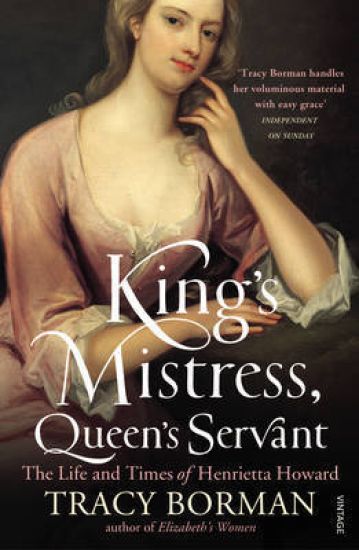
Henrietta Howard, later Countess of Suffolk, was the long-term mistress and confidante of King George II. The mark that this enigmatic and largely neglected royal mistress left on the society and culture of early Georgian England was to resonate well beyond the confines of the court, and can still be felt today.
There comes a time in every woman's life when the only answer is to marry George Clooney. For Michelle, that time is now. Slogging her guts out in a chicken factory, whilst single-handedly bringing up a teenager who hates her, is far from the life that 36-year-old Michelle had planned.
Love and life are messy, but Katy and Matthew take things to a whole new level as deep emotions begin to resurface and hormones run riot. Never has a one-night-stand led to such chaos!
From the bestselling author of No-One Ever Has Sex on a Tuesday ... Single Woman Seeks Revenge is a romantic comedy with a kick: a kick up the backside to any man who believes he got away with treating a woman badly and to any woman who doesn't fight back.
Renowned Excel experts Bill Jelen (MrExcel) and Tracy Syrstad explain how to build more powerful, reliable, and efficient Excel spreadsheets. Use this guide to automate virtually any routine Excel task: save yourself hours, days, maybe even weeks. Make Excel do things you thought were impossible, discover macro techniques you won’t find anywhere else, and create automated reports that are amazingly powerful. Bill Jelen and Tracy Syrstad help you instantly visualize information to make it actionable; capture data from anywhere and use it anywhere; and automate the best new features in Excel in Microsoft 365. You’ll find simple, step-by-step instructions, real-world case studies, and 50 workbooks packed with examples and complete, easy-to-adapt solutions. By reading this book, you will gain the following skills: Confident VBA programmer: Readers will learn to write and understand VBA code, automating complex Excel tasks.Data manipulation mastery: They'll gain the ability to import/export data, interact with cells programmatically, and manipulate data efficiently.Advanced reporting automation: Readers will learn to generate and update charts and pivot tables through code, creating powerful automated reports.One-click data analysis: They'll develop the skills to build custom buttons that transform raw data into comprehensive reports with a single click, streamlining their workflow. The structure of the book is to provide an explanation of a concept followed by an example of how the concept would be used. Sample code in a chapter often builds up from previous samples in the same chapter. Larger code samples include comments so the user understands the progression of the program.
SHORTLISTED FOR THE FORWARD PRIZE FOR BEST COLLECTION 2018A New York Times Notable Book of 2018Even the men in black armor, the onesJangling handcuffs and keys, what elseAre they so buffered against, if not love's bladeSizing up the heart's familiar meat?In Wade in the Water, Pulitzer Prize-winning poet Tracy K. Smith's signature voice - inquisitive, lyrical and wry - turns over what it means to be a citizen, a mother and an artist in a culture arbitrated by wealth, men and violence. The various connotations of the title, taken from a spiritual once sung on the Underground Railroad which smuggled slaves to safety in 19th-century America, resurface throughout the book, binding past and present together. Collaged voices and documents recreate both the correspondence between slave owners and the letters sent home by African Americans enlisted in the US Civil War. Survivors' reports attest to the experiences of recent immigrants and refugees. Accounts of near-death experiences intertwine with the modern-day fallout of a corporation's illegal pollution of a major river and the surrounding land; and, in a series of beautiful lyrical pieces, the poet's everyday world and the growth and flourishing of her daughter are observed with a tender and witty eye. Marrying the contemporary and the historical to a sense of the transcendent, haunted and holy, this is a luminous book by one of America's essential poets.
'A poet of extraordinary range and ambition . . . convincing in both the grand gesture and the reverent contemplation of a humble plate of eggs' The New York TimesUS Poet Laureate Tracy K. Smith has gathered this selection spanning her entire remarkable career. From the private experience of desire to the devastations of political strife, these poems enlarge our vocabulary for what it means to live, struggle, grieve and love.'Smith's poetry is an awakening itself' Vogue'Deftly, Tracy K. Smith, the reigning poet laureate of the United States, illuminates America's generational wounds' New York Magazine'Smith is a storyteller who loves to explore how the body can respond to a lover, to family, and to history' Hilton Als, New Yorker
New York Times bestselling author of Girl With a Pearl Earring and At the Edge of the Orchard Tracy Chevalier makes her first fictional foray into the American past in The Last Runaway, bringing to life the Underground Railroad and illuminating the principles, passions and realities that fueled this extraordinary freedom movement. Honor Bright, a modest English Quaker, moves to Ohio in 1850--only to find herself alienated and alone in a strange land. Sick from the moment she leaves England, and fleeing personal disappointment, she is forced by family tragedy to rely on strangers in a harsh, unfamiliar landscape. Nineteenth-century America is practical, precarious, and unsentimental, and scarred by the continuing injustice of slavery. In her new home Honor discovers that principles count for little, even within a religious community meant to be committed to human equality. However, Honor is drawn into the clandestine activities of the Underground Railroad, a network helping runaway slaves escape to freedom, where she befriends two surprising women who embody the remarkable power of defiance. Eventually she must decide if she too can act on what she believes in, whatever the personal costs.
"With impeccable research and flawless prose, Chevalier perfectly conjures the grandeur of the pristine Wild West . . . and the everyday adventurers--male and female--who were bold enough or foolish enough to be drawn to the unknown. She crafts for us an excellent experience." --USA Today From internationally bestselling author Tracy Chevalier, author of A Single Thread, comes a riveting drama of a pioneer family on the American frontier 1838: James and Sadie Goodenough have settled where their wagon got stuck - in the muddy, stagnant swamps of northwest Ohio. They and their five children work relentlessly to tame their patch of land, buying saplings from a local tree man known as John Appleseed so they can cultivate the fifty apple trees required to stake their claim on the property. But the orchard they plant sows the seeds of a long battle. James loves the apples, reminders of an easier life back in Connecticut; while Sadie prefers the applejack they make, an alcoholic refuge from brutal frontier life. 1853: Their youngest child Robert is wandering through Gold Rush California. Restless and haunted by the broken family he left behind, he has made his way alone across the country. In the redwood and giant sequoia groves he finds some solace, collecting seeds for a naturalist who sells plants from the new world to the gardeners of England. But you can run only so far, even in America, and when Robert's past makes an unexpected appearance he must decide whether to strike out again or stake his own claim to a home at last. Chevalier tells a fierce, beautifully crafted story in At the Edge of the Orchard, her most graceful and richly imagined work yet.
The Parashakthi Temple in Pontiac, Michigan serves as a site of worship for the Hindu goddess Karumariamman, whose origins are in South India. In her American home Karumariamman has assumed the status of Great Goddess, a tantric deity and wonder worker who communicates directly with devotees through dreams, visions, and miracles. Drawing on fifteen years of field work, Tracy Pintchman reveals how the Parashakthi Temple has become a site of theological and ritual innovation. A unique spiritual community, the temple does not simply reproduce Indian goddess traditions, but instead reimagines Hinduism and the Hindu Goddess in the American religious, cultural, and natural landscape. The congregation's faith is grounded in a vision of the Goddess as a breaker of boundaries, including those of race, ethnicity, religion, geography, history, and nationality. Like her congregants, Pintchman suggests, the goddess is emblematic of the qualities of a new immigrant; she embraces the opportunities her new home affords her and refashions herself, but she does not forget her roots, keeping one foot planted in her Indian homeland and another planted firmly in her new land, the United States. Pintchman considers larger issues concerning the creativity of immigrant Hindu communities and the ways in which diaspora contexts facilitate the production of new forms of Hinduism that are made possible by globalization and modern technology.
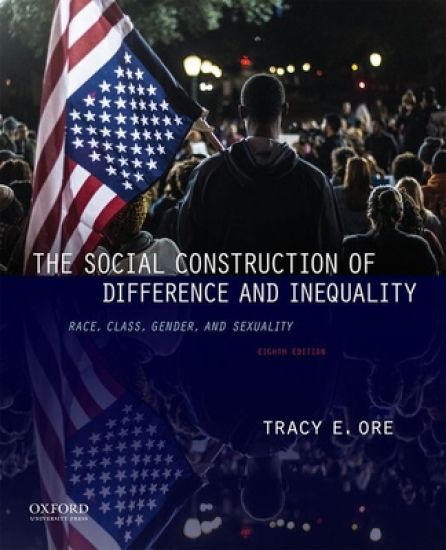
The Social Construction of Difference and Inequality: Race, Class, Gender, and Sexuality, Eighth Edition, surveys how and why the categories of race, class, gender, and sexuality are constructed, maintained, experienced, and transformed. This popular anthology moves beyond simply discussing various forms of stratification and the impact on members of marginalized groups by providing a thorough discussion of how such systems of stratification are formed, perpetuated, and interconnected. Each reading ends with critical-thinking questions to help students relate content to their own lives and understand how their attitudes, actions, and perspectives may serve to perpetuate a stratified system.
Full of evidence-based, easy to understand information about CHD, Healing Hearts and Minds offers strategies for learning to thrive despite living with this condition, but most importantly it will offer hope and connection. Congenital Heart Disease (CHD) is the most commonly diagnosed birth abnormality in the US. With great advances in surgery and medicine, however, survival rates have improved by 75% since the 1940s. Welcome news, of course, as only a few decades ago these birth defects were considered a death sentence, but as with any chronic condition, survival does not mean the issue is cured. With better medical care, babies born today with CHD have a good chance of surviving, but throughout their entire lives they can face surgeries, invasive treatments, lifelong monitoring, frequent medical check-ups, and significant limitations on physical activity, in addition to poor public awareness which can have an impact on social inclusion and understanding. Much attention has rightly been focused on the medical needs of these children and on providing their parents and caretakers with resources and information to navigate the complexities of this chronic condition. Little attention, however, has been paid to the psychosocial impacts on these individuals, especially as they grow, mature, and become adults living with a serious, chronic medical condition. Prevalence rates for anxiety, depression, and PTSD are significantly higher (2-3x in some cases) for people living with CHD than the general adult population. From feeling self-conscious about scars and limitations on physical activity and sense of loss around so many of life's little normalcies, to frequent hospital visits and living in constant fear of an emergency, this condition is ever-present. Liza Morton and Tracy Livecchi are both mental health professionals who have developed a specialty in working with clients who have chronic medical conditions, and they are both themselves living with CHD. In this book they set out to provide the resources and support they have been looking for their entire adult lives. While their powerful personal stories are woven into the narrative, the book is focused on providing evidence-based coping and self-care skills for adults living with CHD.
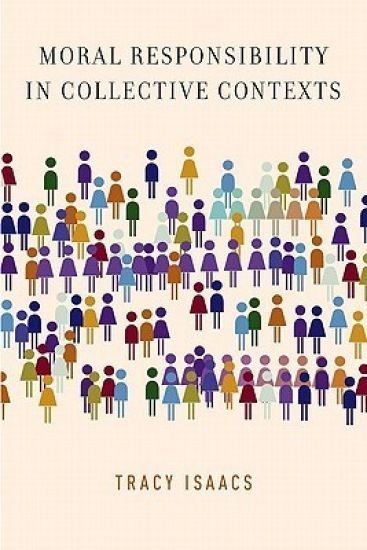
Genocide, global warming, organizational negligence, and oppressive social practices are four examples of moral contexts in which the interplay between individuals and collectives complicate how we are to understand moral responsibility. Moral Responsibility in Collective Contexts is a philosophical investigation of the complex moral landscape we find in collective situations such as these. Tracy Isaacs argues that an accurate understanding of moral responsibility in collective contexts requires attention to responsibility at the individual and collective levels. Part One establishes the normative significance of collective responsibility. Isaacs argues that collective responsibility is indispensible to providing a morally adequate account of collective actions such as genocide, and that without it even individual responsibility in genocide would not make sense. Isaacs explains the concepts of collective intention and collective intentional action, provides accounts of collective moral responsibility and collective guilt, and defends collective responsibility against objections, including the objection that collective responsibility holds some responsible for the actions of others. Part Two focuses on individual responsibility in collective contexts. Isaacs claims that individuals are not morally responsible for collective actions as such, but they can be responsible in collective actions for the parts they play. She argues that the concept of collective obligation can help to address large scale global challenges such as global warming, environmental degradation, and widespread poverty and malnutrition. Finally, Isaacs discusses cases of widespread ignorance and participation in wrongful social practice, whether it constitutes an excuse, and how to effect social change in those conditions.
Though the number of women elected to the U.S. state legislatures has grown substantially in the last forty years, researchers still struggle to connect women's presence in the legislature to public policy outcomes that affect women. One reason for this struggle is that we lack a complete understanding of how political parties modify the relationship between women legislators' interests in representing women and the creation of public policies affecting women. In How Women Represent Women: Political Parties, Gender and Representation in the State Legislatures, Tracy L. Osborn examines the two avenues through which political parties fundamentally affect the ways in which partisan women legislators pursue women's issues policies. She argues that political parties structure representation in two ways. First, women's party identities shape the types of policy alternatives they offer to solve women's policy problems. Second, parties organize the legislative process by holding majority control, to varying degrees, over agenda setting and policy creation, promoting some women legislators' policy proposals over others. Osborn tests these two avenues of influence by comparing partisan women's legislative behavior toward the creation of women's issues policies across different party environments in the U.S. state legislatures. She uses original election, sponsorship, and roll call data in nearly all ninety-nine state legislative chambers in 1999-2000. She concludes that Republican and Democratic women offer different solutions to women's policy problems based on their party identities. Depending on which party controls the legislative process and how strongly they do so, this party control promotes one set of partisan policy alternatives over the other. Thus, political parties determine which women's issues policies become law. Ultimately, this book demonstrates how essential parties are to understanding how women elected to public office translate their interest in women's issues into substantive public policy.
From Plato through the nineteenth century, the West could draw on comprehensive political visions to guide government and society. Now, for the first time in more than two thousand years, Tracy B. Strong contends, we have lost our foundational supports. In the words of Hannah Arendt, the state of political thought in the twentieth and twenty-first centuries has left us effectively "thinking without a banister." Politics without Vision takes up the thought of seven influential thinkers, each of whom attempted to construct a political solution to this problem. Nietzsche, Weber, Freud, Lenin, Schmitt, Heidegger, and Arendt. None of these theorists were liberals nor, excepting possibly Arendt, were they democrats - and some might even be said to have served as handmaidens to totalitarianism. And all to a greater or lesser extent shared the common conviction that the practices of liberalism are inadequate to the demands and stresses of the present time. In examining their thought, Strong acknowledges the political evil that some of their ideas served to foster but argues that these were not the only paths their explorations could have taken. By uncovering the turning points in their thought - and the paths not taken - Strong strives to develop a political theory that can avoid, and perhaps help explain, the mistakes of the past while furthering the democratic impulse.
"Democracy has to be born anew every generation, and education is its midwife," wrote John Dewey in his classic work The School and Society. In School, Society, and State, Tracy Steffes places that idea at the center of her exploration of the connections between public school reform in the early twentieth century and American political development from 1890 to 1940. American public schooling, Steffes shows, was not merely another reform project of the Progressive Era, but a central one. She addresses why Americans invested in public education and explains how an array of reformers subtly transformed schooling into a tool of social governance to address the consequences of industrialization and urbanization. By extending the reach of schools, broadening their mandate, and expanding their authority over the well-being of children, the state assumed a defining role in the education and in the lives of American families. In School, Society, and State, Steffes returns the state to the study of the history of education and brings the schools back into our discussion of state power during a pivotal moment in American political development.