Kirjojen hintavertailu. Mukana 12 390 323 kirjaa ja 12 kauppaa.

Kirjahaku

Etsi kirjoja tekijän nimen, kirjan nimen tai ISBN:n perusteella.

1000 tulosta hakusanalla William R Cook

A Behaviorist Looks at Form Recognition

A Behaviorist Looks at Form Recognition

William R. Uttal

Psychology Press
2002
sidottu
For many years behaviorism was criticized because it rejected the study of perception. This rejection was based on the extreme view that percepts were internal subjective experiences and thus not subject to examination. This book argues that this logic is incorrect and shows how visual perception, particularized in the study of form recognition, can be carried out from the behavioral point of view if certain constraints and limitations are understood and accepted. The book discusses the idea of representation of forms, considers the major historical neural, psychological, and computational theories of form recognition, and then concludes by presenting a modern approach to the problem. In this book, William Uttal continues his critical analysis of the foundations of modern psychology. He is particularly concerned with the logical and conceptual foundations of visual perception and uses form recognition as a vehicle to rationalize the discrepancies between classic behaviorism and what we now appreciate are legitimate research areas.

Psychomythics

Psychomythics

William R. Uttal

Psychology Press
2003
sidottu
Psychology deals with the most complex subject matter of any science. As such, it is subject to misunderstandings, artifacts, and just simple errors of data, logic, and interpretation. This book teases out the details of some of the sources of these errors. It considers errors in psychological data and theories that arise from confusing endogenous and exogenous causal forces in perceptual research, misinterpreting the effects of inevitable natural laws as psychological phenomena, improper application of statistics and measurement, and flawed assumptions. Examples of each of these sources of error are presented and discussed. Finally, the book concludes that a return to a revitalized kind of behaviorism is preferred, rather than continuing on the current cognitive path.
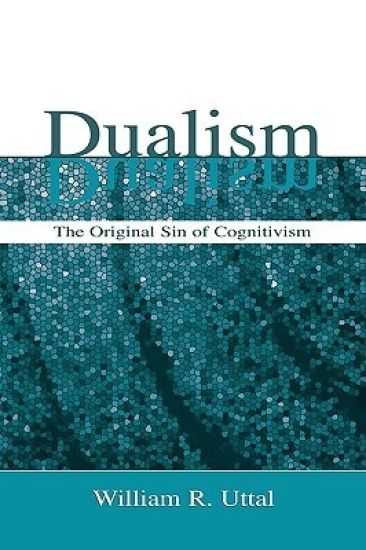
Dualism

Dualism

William R. Uttal

Routledge Member of the Taylor and Francis Group
2004
sidottu
Directed to scholars and senior-level graduate students, this book is an iconoclastic survey of the history of dualism and its impact on contemporary cognitive psychology. It argues that much of modern cognitive or mentalist psychology is built upon a cryptodualism--the idea that the mind and brain can be thought of as independent entities. This dualism pervades so much of society that it covertly influences many aspects of modern science, particularly psychology. To support the argument, the history of dualism is extended over 100,000 years--from the Paleolithic times until modern philosophical and psychological thinking. The questions regarding this topic that are answered in the book are: 1) Does dualism influence the scientific theories of psychology? 2) If so, should dualism be put aside in the search for a more objective analysis of human mentation?
Neural Theories of Mind

Neural Theories of Mind

William R. Uttal

Psychology Press
2005
sidottu
In this fascinating book, William R. Uttal raises the possibility that, however much we learn about the anatomy and physiology of the brain and psychology, we may never be able to cross the final bridge explaining how the mind is produced by the brain. Three main classes of mind-brain theory are considered and rejected: field theories, because they are based on a superficial analogy; single cell theories, because they emerge from a massive uncontrolled experimental program; and neural net theories, because they are constrained by combinatorial complexity.To support his argument, Uttal explores the empirical and conceptual foundations of these theoretical approaches and identifies flaws in their fundamental logic. The author concludes that the problems preventing solution of the mind-brain problem are intractable, yet well within the confines of natural science.
The French and Indian War and the Conquest of New France

The French and Indian War and the Conquest of New France

William R. Nester

University of Oklahoma Press
2015
nidottu
The French and Indian War was the world's first truly global conflict. When the French lost to the British in 1763, they lost their North American empire along with most of their colonies in the Caribbean, India, and West Africa. In The French and Indian War and the Conquest of New France, the only comprehensive account from the French perspective, William R. Nester explains how and why the French were defeated. He explores the fascinating personalities and epic events that shaped French diplomacy, strategy, and tactics and determined North America's destiny. What began in 1754 with a French victory - the defeat at Fort Necessity of a young Lieutenant Colonel George Washington - quickly became a disaster for France. The cost in soldiers, ships, munitions, provisions, and treasure was staggering. France was deeply in debt when the war began, and that debt grew with each year. Further, the country's inept system of government made defeat all but inevitable. Nester describes missed diplomatic and military opportunities as well as military defeats late in the conflict. Nester masterfully weaves his narrative of this complicated war with thorough accounts of the military, economic, technological, social, and cultural forces that affected its outcome. Readers learn not only how and why the French lost, but how the problems leading up to that loss in 1763 foreshadowed the French Revolution almost twenty-five years later. One of the problems at Versailles was the king's mistress, the powerful Madame de Pompadour, who encouraged Louis XV to become his own prime minister. The bewildering labyrinth of French bureaucracy combined with court intrigue and financial challenges only made it even more difficult for the French to succeed. Ultimately, Nester shows, France lost the war because Versailles failed to provide enough troops and supplies to fend off the English enemy.
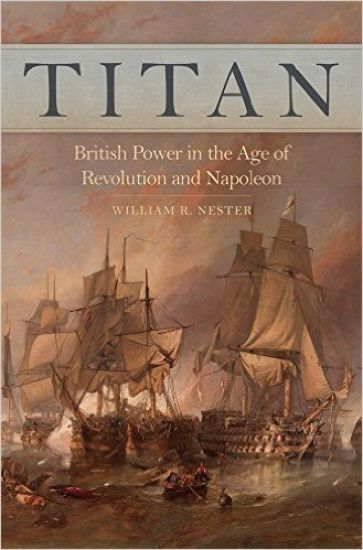
Titan

Titan

William R. Nester

University of Oklahoma Press
2016
sidottu
When the leaders of the French Revolution executed Louis XVI and Marie Antoinette in 1793, they sent a chilling message to the hereditary ruling orders in Europe. Believing that monarchy anywhere presented a threat to democratic rule in France, the leaders of the revolution declared war on European aristocracies, including those of Great Britain. For more than twenty years thereafter, France and England waged a protracted war that ended in British victory. In Titan, William R. Nester offers a deeply informed and thoroughly fascinating narrative of how England accomplished this remarkable feat. Between 1789 and 1815, British leaders devised, funded, and led seven coalitions against the revolutionary and Napoleonic governments of France. In each enterprise, statesmen and generals searched for order amid a complex welter of bureaucratic, political, economic, psychological, technological, and international forces. Nester combines biographies of great men - the likes of William Pitt, Horatio Nelson, and Arthur Wellesley - with an explanation of the critical decisions they made in Britain's struggle for power and his own keen analysis of the forces that operated beyond their control. Their efforts would eventually crush France and Napoleon and establish a system of European power relations that prevented a world war for nearly a century. The interplay of individuals and events, the importance of conjunctures and contingency, the significance of Britain's island character and resources: all come into play in Nester's exploration of the art of British military diplomacy. The result is a comprehensive and insightful account of the endeavors of statesmen and generals to master the art of power in a complex battle for empire.
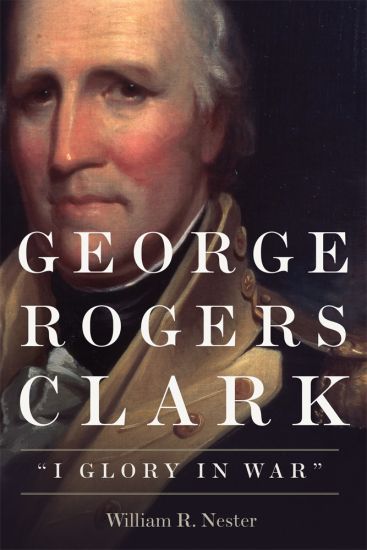
George Rogers Clark

George Rogers Clark

William R. Nester

University of Oklahoma Press
2018
nidottu
George Rogers Clark (1752-1818) led four victorious campaigns against the Indians and British in the Ohio Valley during the American Revolution, but his most astonishing coup was recapturing Fort Sackville in 1779, when he was only twenty-six. For eighteen days, in the dead of winter, Clark and his troops marched through bone-chilling nights to reach the fort. With a deft mix of guile and violence, Clark led his men to triumph, without losing a single soldier. Although historians have ranked him among the greatest rebel commanders, Clark's name is all but forgotten today. William R. Nester resurrects the story of Clark's triumphs and his downfall in this, the first full biography of the man in more than fifty years.Nester attributes Clark's successes to his drive and daring, good luck, charisma, and intellect. Born of a distinguished Virginia family, Clark wielded an acute understanding of human nature, both as a commander and as a diplomat. His interest in the natural world was an inspiration to lifelong friend Thomas Jefferson, who asked him in 1784 to lead a cross-country expedition to the Pacific and back. Clark turned Jefferson down. Two decades later, his youngest brother, William, would become the Clark celebrated as a member of the Corps of Discovery.By the beginning of the nineteenth century, though, George Rogers Clark may not have been fit to command any expedition. After the revolution, he raged against the government and pledged fealty to other nations, leading to his arrest under the Sedition Act.The inner demons that fueled Clark's anger also drove him to excessive drinking. He died at the age of sixty-five, bitter, crippled, and alcoholic. He was, Nester shows, a self-destructive hero: a volatile, multidimensional man whose glorying in war ultimately engaged him in conflicts far removed from the battlefield and against himself.
Stories for Telling

Stories for Telling

William R. White

Augsburg Fortress
1986
pokkari
"Where can I find good, enjoyable stories that deal with Christian values?" "What can I use to communicate the gospel in story language?" Well-known storyteller William White here retells sixty fascinating stories and folktales, ideal for use in Christian preaching and teaching, at home, and at camps and retreats. The stories help communicate the gospel message by presenting issues of love and compassion, sin and grace, wisdom and foolishness, friendship and fidelity.
Stories for the Gathering

Stories for the Gathering

William R. White

Augsburg Fortress
1997
pokkari
For gatherings large or small, this new collection of Christian related stories assembled by a well-known storyteller will capture the interest and imagination of any listener. More than 50 traditional and contemporary stories are arranged by theme in a treasury to add depth and wonder to gatherings in the home and in church.
In Over Our Heads

In Over Our Heads

William R. White

Augsburg Fortress
2007
pokkari
Crafted as an engaging resource for readers on their own journey of faith, "In Over Our Heads", focuses on themes of grace and discipleship. This book includes compelling faith stories, strong retelling of many biblical stories, and provocative questions for reflection and discussion. The stories and topics for reflection include: Seventy Times Seven, The God of Second Chances, In Over Our Heads, The Arrow Always Comes Down, and more.
Is God a White Racist?: A Preamble to Black Theology
Published originally as part of C. Eric Lincoln's series on the black religious experience, Is God a White Racist? is a landmark critique of the black church's treatment of evil and the nature of suffering. In this powerful examination of the early liberation methodology of James Cone, J. Deotis Roberts, and Joseph Washington, among others, Jones questions whether their foundation for black Christian theism--the belief in an omnibenevolent God who has dominion over human history--can provide an adequate theological foundation to effectively dismantle the economic, social, and political framework of oppression. Seeing divine benevolence as part of oppression's mechanism of disguise, Jones argues that black liberation theologians must adopt a new theism that is informed by humanism and its principle of the functional ultimacy of wo/man, where human choice and action determine whether our condition is slavery or freedom.
A Historical Archaeology of Early Spanish Colonial Urbanism in Central America
In this milestone work, William Fowler uses archaeology, history, and social theory to show that the establishment of cities was essential to Spanish colonialism. Fowler draws upon decades of archaeological research on the landscape, built environment, and architecture of Ciudad Vieja, a sixteenth-century site located in present-day El Salvador and the best-preserved Spanish colonial city in Latin America.Fowler compares Ciudad Vieja to other urban sites in the region and to the tradition of urbanism in early modern Spain to determine how the Spanish grid-plan layout was modified and implemented in the Americas. Using extensive archival material, Fowler describes how this layout reflected and perpetuated power structures that benefitted the Spanish although the city's Indigenous population was greater in number. Fowler analyzes recorded interactions between colonists, Indigenous peoples, and enslaved Africans to demonstrate the ways the cityscape affected the relationships among individuals and cultural groups.Offering an unparalleled view into a critical moment in Latin American history, this book offers new ways of looking at urbanism and colonialism as intertwined forces in the emergence of the early modern world.
The English Cult of Literature

The English Cult of Literature

William R. McKelvy

University of Virginia Press
2006
sidottu
What constitutes reading? This is the question William McKelvy asks in ""The English Cult of Literature"". Is it a theory of interpretation or a physical activity, a process determined by hermeneutic destiny or by paper, ink, hands, and eyes? McKelvy seeks to transform the nineteenth-century field of ""Religion and Literature"" into ""Reading and Religion,"" emphasizing both the material and the institutional contexts for each. In doing so, he hopes to recover the ways in which modern literary authority developed in dialogue with a politically reconfigured religious authority. The received wisdom has been that England is literary tradition was modernity's most promising religion because the established forms of Christianity, wounded in the Enlightenment, inevitably gave up their hold on the imagination and on the political sphere. Through a series of case studies and analysis of a diverse range of writing, this work gives life to a very different story, one that shows literature assuming a religious vocation in concert with an increasingly unencumbered freedom of religious confession and the making of a reading nation. In the process, the author shifts attention away from the idea of the literary critic in favor of considering the historic role of religious professionals in shaping and contesting the authority of print. Indebted to recent findings of book history and newer historiographies at odds with conventional secularization theory, this work makes an interdisciplinary contribution to revising the existing models for understanding change in Britain during the eighteenth and nineteenth centuries.
Eucharist

Eucharist

William R. Crockett

Liturgical Press
1989
pokkari
Doctor Crockett traces the evolution of Eucharistic traditions - traditions which reflect the cultural diversity characteristic of the regions in which they were produced - and compares them to our Eucharistic celebrations today, exploring as well the relationship between Eucharist and justice.
European Power and the Japanese Challenge

European Power and the Japanese Challenge

William R. Nester

New York University Press
1993
sidottu
America's relationship with Japan recently passed its 140th anniversary. Over that period, hundreds of books and thousands of articles have explored different issues or periods of the relationship. Yet within that vast library, no book has analyzed the entire relationship from the beginning to the present. In Power Across the Pacific, William R. Nester fills this void, analyzing both the geopolitical phase of America's relationship with Japan (1853-1945) and its geoeconomic phase, from 1945 to the present day. William R. Nester systematically untangles the interrelated perceptions, convergent and divergent national interests, and shifting power relations that have shaped relations between the two countries. Along the way he identifies the key foreign policy figures for both countries, revealing the ways in which domestic and international interests on both sides affected their interactions. Power Across the Pacific can serve both as a definitive study of the history of U.S.-Japanese relations, as well as a reference for particular periods within that history.
Code Compliance for Advanced Technology Facilities

Code Compliance for Advanced Technology Facilities

William R. Acorn

William Andrew Publishing
1994
sidottu
Facilities which utilize hazardous liquids and gases represent a significant potential liability to the owner, operator, and general public in terms of personnel safety and preservation of assets. It is obvious that a catastrophic incident or loss of property or personnel is to be avoided at all costs. This book was conceived to give the reader a guide to understanding the requirements of the various codes and regulations that apply to the design, construction, and operation of facilities utilizing hazardous materials in their processes.