Kirjojen hintavertailu. Mukana 11 342 296 kirjaa ja 12 kauppaa.

Kirjahaku

Etsi kirjoja tekijän nimen, kirjan nimen tai ISBN:n perusteella.

1000 tulosta hakusanalla Alexandra Mattisson

Claiming a Promised Inheritance

Claiming a Promised Inheritance

Alexandra Braun

Oxford University Press
2022
sidottu
Claiming a Promised Inheritance examines those cases where a person is promised a future inheritance and, having acted on it, later discovers that the promise is unfulfilled. The book structures its analysis and argument around the stories of disappointed promisees and their unfulfilled expectations of a future inheritance, and how they might seek redress. It maps and compares the various, and often very diverse range of legal responses that a promisee can avail herself of across different legal areas of the law (ranging from contract law to property law, employment law, unjust and unjustified enrichment law, and succession law) and in both common and civil law traditions. Braun asks how these responses protect the interests of promisees and whether they are sensitive to the context in which such promises are expressed. In doing so, the focus rests on the level of protection the various forms of redress grant, their scope, and the challenges promisees face when brining a claim, but also on the values and interests that are at stake when granting relief. This book argues that due to the social and legal context within which promises of a future inheritance are normally made, promisees are usually in a vulnerable position that can easily by exploited. It further argues that the law is usually more acutely attuned to the risks that the promisor incurs and that greater attention should be paid to the challenges promisees face. Claiming a Promised Inheritance thus complements the traditional viewpoint by bringing into focus the (too often ignored) perspective of promisees.

Serial Verbs

Serial Verbs

Alexandra Y. Aikhenvald

Oxford University Press
2018
sidottu
This book provides an in-depth typological account of the forms, functions, and histories of serial verb constructions. Serial verbs, in which several verbs combine to form a single predicate, describe what is conceptualized as a single event. The verbs in the construction have the same tense, aspect, mood, modality, and evidentiality values, cannot be negated or questioned separately, and usually share the same subject and object. They are a powerful means of portraying various facets of one event, and can express grammatical meanings such as aspect, direction, and causation, particularly in languages where few other means are available. In this volume, Alexandra Aikhenvald seeks to answer unresolved questions such as: What are the parameters of variation in serial verbs? How do serial verbs differ from other, superficially similar multi-verb constructions? How do serial verbs emerge, and what happens to them over time? What role do they play in the representation of event structure? The book uses an inductively-based framework for the analysis and draws on data from languages with different typological profiles and genetic affiliations. It will be of interest to researchers and students from a wide range of fields of linguistics, especially typology, anthropological linguistics, and language contact.
Security Entrepreneurs

Security Entrepreneurs

Alexandra Gheciu

Oxford University Press
2018
sidottu
Focusing on four East European polities-Bosnia, Serbia, Bulgaria, and Romania--this book examines the dynamics and implications of processes of commercialization of security that have occurred following the collapse of communist regimes. These processes have been central to post-communist liberalization, and have profoundly shaped those states and their integration into European institutional structures and global economic and political circuits. They have also affected -- and been shaped by-- the behaviour and power of regional and global actors (e.g. European institutions, regional, and global corporations) in Eastern Europe. By virtue of the fact that they combine in complex ways local, national, regional, and global dynamics and actors, processes of security commercialization in the former Eastern bloc can be seen as instances of 'glocalization'. Several aspects of security commercialization are particularly important. To begin with, private actors --specifically private security companies (PSCs)-- have been reconstituted as partial agents of public power. As such, they have come to be systematically involved in performing security practices traditionally associated with the state. In addition, a potent commercial logic has come to permeate public security institutions. This has led to redefinition of the relationship between the state and its population in ways that defy conventional wisdom about the role of the state, and pose difficult normative challenges. More broadly, processes of security commercialization in Eastern Europe, which involve important performative dimensions, have led to the emergence of complex, hybrid networks of security providers that transcend domestic/international, public/private boundaries and behave, in many ways, as entrepreneurs.
Accounting for Oneself

Accounting for Oneself

Alexandra Shepard

Oxford University Press
2018
nidottu
Accounting for Oneself is a major new study of the social order in early modern England, as viewed and articulated from the bottom up. Engaging with how people from across the social spectrum placed themselves within the social order, it pieces together the language of self-description deployed by over 13,500 witnesses in English courts when answering questions designed to assess their creditworthiness. Spanning the period between 1550 and 1728, and with a broad geographical coverage, this study explores how men and women accounted for their 'worth' and described what they did for a living at differing points in the life-cycle. A corrective to top-down, male-centric accounts of the social order penned by elite observers, the perspective from below testifies to an intricate hierarchy based on sophisticated forms of social reckoning that were articulated throughout the social scale. A culture of appraisal was central to the competitive processes whereby people judged their own and others' social positions. For the majority it was not land that was the yardstick of status but moveable property-the goods and chattels in people's possession ranging from livestock to linens, tools to trading goods, tables to tubs, clothes to cushions. Such items were repositories of wealth and the security for the credit on which the bulk of early modern exchange depended. Accounting for Oneself also sheds new light on women's relationship to property, on gendered divisions of labour, and on early modern understandings of work which were linked as much to having as to getting a living. The view from below was not unchanging, but bears witness to the profound impact of widening social inequality that opened up a chasm between the middle ranks and the labouring poor between the mid-sixteenth and mid-seventeenth centuries. As a result, not only was the social hierarchy distorted beyond recognition, from the later-seventeenth century there was also a gradual yet fundamental reworking of the criteria informing the calculus of esteem.
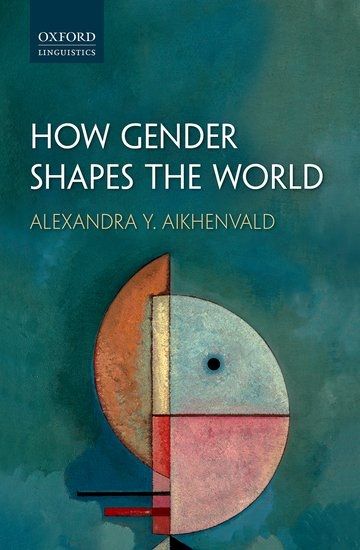
How Gender Shapes the World

How Gender Shapes the World

Alexandra Y. Aikhenvald

Oxford University Press
2018
nidottu
This is a book about the multi-faceted notion of gender. Gender differences form the basis for family life, patterns of socialization, distribution of tasks, and spheres of responsibilities. The way gender is articulated shapes the world of individuals, and of the societies they live in. Gender has three faces: Linguistic Gender-the original sense of 'gender'-is a feature of many languages and reflects the division of nouns into grammatical classes or genders (feminine, masculine,This is a book about the multi-faceted notion of gender. Gender differences form the basis for family life, patterns of socialization, distribution of tasks, and spheres of responsibilities. The way gender is articulated shapes the world of individuals, and of the societies they live in. Gender has three faces: Linguistic Gender-the original sense of 'gender'-is a feature of many languages and reflects the division of nouns into grammatical classes or genders (feminine, masculine, neuter, and so on); Natural Gender, or sex, refers to the division of animates into males and females; and Social Gender reflects the social implications and norms of being a man or a woman (or perhaps something else). Women and men may talk and behave differently, depending on conventions within the societies they live in, and their role in language maintenance can also vary. The book focuses on how gender in its many guises is reflected in human languages, how it features in myths and metaphors, and the role it plays in human cognition. Examples are drawn from all over the world, with a special focus on Aikhenvald's extensive fieldwork in Amazonia and New Guinea.
Marketing English Books, 1476-1550

Marketing English Books, 1476-1550

Alexandra da Costa

Oxford University Press
2020
sidottu
The monograph series Oxford Studies in Medieval Literature and Culture showcases the plurilingual and multicultural quality of medieval literature and actively seeks to promote research that not only focuses on the array of subjects medievalists now pursue - in literature, theology, and philosophy, in social, political, jurisprudential, and intellectual history, the history of art, and the history of science - but also that combines these subjects productively. It offers innovative studies on topics that may include, but are not limited to, manuscript and book history; languages and literatures of the global Middle Ages; race and the post-colonial; the digital humanities, media and performance; music; medicine; the history of affect and the emotions; the literature and practices of devotion; the theory and history of gender and sexuality, ecocriticism and the environment; theories of aesthetics; medievalism. Marketing English Books is about how the earliest printers moulded demand and created new markets. Until the advent of print, the sale of books had been primarily a bespoke trade, but printers faced a new sales challenge: how to sell hundreds of identical books to individuals, who had many other demands on their purses. This book contends that this forced printers to think carefully about marketing and potential demand, for even if they sold through a middleman--as most did--that wholesaler, bookseller, or chapman needed to be convinced the books would attract customers. Marketing English Books sets out, therefore, to show how markets for a wide range of texts were cultivated by English printers between 1476 and 1550 within a wider, European context: devotional tracts; forbidden evangelical books; romances, gests, and bawdy tales; news; pilgrimage guides, souvenirs and advertisements; and household advice. Through close analysis of paratexts--including title-pages, prefaces, tables of contents, envoys, colophons, and images--the book reveals the cultural impact of printers in this often overlooked period. It argues that while print and manuscript continued alongside each other, developments in the marketing of printed texts began to change what readers read and the place of reading in their lives on a larger scale and at a faster pace than had occurred before, shaping their expectations, tastes, and even their practices and beliefs.
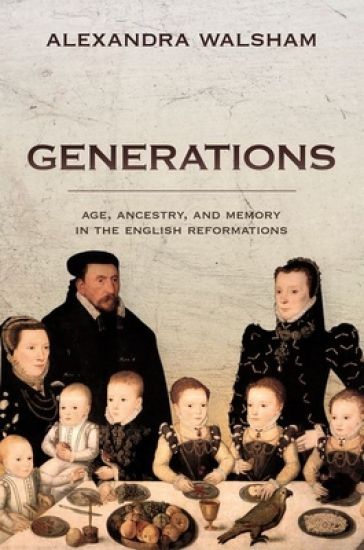
Generations

Generations

Alexandra Walsham

Oxford University Press
2023
sidottu
This book examines England's plural and protracted Reformations through the novel prism of the generations. Approaching generation as a biological unit and a social cohort, it demonstrates that the tumultuous religious developments that stretched across the sixteenth and seventeenth centuries not merely transformed the generations but were also forged by them. It provides compelling new insights into how people experienced and navigated the profound challenges that the Reformations posed in everyday life. Alexandra Walsham investigates how age and ancestry were implicated in the theological and cultural upheavals of the era and how these in turn reconfigured the nexus between memory, history, and time. Generations explores the manifold ways in which the Reformations shaped the horizontal relationships that men, women, and children formed with their siblings, kin, and peers, as well as the vertical ones that tied them to their dead ancestors and their future heirs. It highlights the vital part that families bound by blood and by faith played in the making of current events and in recording the past for posterity. Drawing on previously untapped archival evidence, in tandem with a rich array of printed texts, visual images, and material objects, this study offers poignant glimpses of individual lives and casts fascinating light on how families were both torn apart and brought closer together by the English Reformations.
In Plain Sight

In Plain Sight

Alexandra Socarides

Oxford University Press
2020
sidottu
In Plain Sight explores how the poetry of nineteenth-century American women that was once so visible within American culture could have, with the exception of that by Emily Dickinson, so thoroughly disappeared from literary history. By investigating erasure not merely as something that was done to these women but as the result of the conventions that once made the circulation of their poetry possible in the first place, this volume offers the first book-length analysis of the conventions of nineteenth-century American women's poetry. While each of the chapters focuses on a specific convention, taken together they tell the complicated story of nineteenth-century American women's poetry, tracing the spaces within literary culture where it lived and thrived, the spaces from which it was always in the process of vanishing. By reclaiming these conventions as a constitutive part of nineteenth-century American women's poetry, this book asks readers to take seriously the work these women produced and the role their work might play in remapping American literary history.
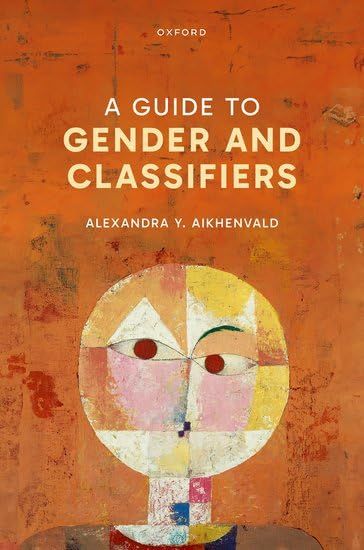
A Guide to Gender and Classifiers

A Guide to Gender and Classifiers

Alexandra Y. Aikhenvald

Oxford University Press
2025
sidottu
This book explores the range of noun categorization devices found in the languages of the world, from the extensive systems of numeral classifiers in Southeast Asia to the highly grammaticalized gender agreement classes in Indo-European languages. Almost all languages use some type of noun categorization device in their grammar, with the most widespread being linguistic gender, whereby nouns are classified based on core semantic properties such as sex, animacy, humanness, or shape and size. Numeral classifiers are also common, and classify a noun in terms of its inherent nature, animacy, shape, and form, accompanied by a numeral or a quantifier. Other types of noun categorization devices include noun classifiers, possessive classifiers, verbal classifiers, and a number of rarer types such as locative and deictic classifiers. In this volume, Alexandra Aikhenvald investigates all facets of these nominal categorization systems, from their form and distribution to their origins, development, and loss. Noun categorization devices provide unique insights into how people categorize the world through the language: in one language, a human might be classified in terms of orientation, hence as 'vertical', in another as male or female, and in another as simply 'animate' or even 'rational'. They also change as society changes, reflecting the ways in which language and social environment are integrated into a single whole.
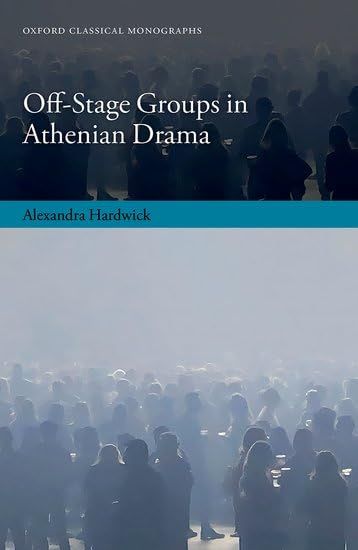
Off-Stage Groups in Athenian Drama

Off-Stage Groups in Athenian Drama

Alexandra Hardwick

Oxford University Press
2024
sidottu
Despite the crucial roles they often play, no study yet compares the off-stage assemblies, armies, and populations found in surviving Athenian dramatic works. Covering fifth- and early fourth-century tragedy and comedy, Off-Stage Groups in Athenian Drama analyses how off-stage groups influence and respond to events on stage, and how characters interact with these groups. Drama exploits these groups' off-stage nature by depicting them through different characters' viewpoints: characters often struggle to define, predict, or control off-stage groups, which obscures and challenges the audience's ability to interpret them. The interaction between multivalent and sometimes contradictory narratives of off-stage groups demands a new interpretive framework. Off-Stage Groups in Athenian Drama provides this framework, offering new readings of several prominent comedies and tragedies. However, the importance of this framework extends beyond drama. The first chapter surveys depictions of group decision-making in fifth-century prose, in order to demonstrate how Athenian drama responds to prose depictions of group psychology. Athenian drama engages with the early ideas of group psychology circulating in fifth- and early fourth-century Athens; it creates fictive worlds where stereotypical depictions of collective emotion can be probed, explored and taken to their logical extremes. Studying off-stage groups therefore allows us to rethink our understanding of narrative, politics, and social psychology in drama, and the ways in which these fields intersect.
Anticolonial Form

Anticolonial Form

Alexandra Reza

Oxford University Press
2024
sidottu
Anticolonial Form: Literary Journals at the End of Empire addresses the relationship between culture and politics in two journals published in Europe by African writers: Présence Africaine, launched in Paris in 1947, and Mensagem, published between 1948 and 1964 in Lisbon. Grounded in extensive archival work, the book argues for a comparative and transnational approach to postcolonial literary studies, for the significance of the literary journal as a key form in the development of African writing in French, Portuguese, and English, and for a historically and geographically contingent understanding of the relationships between literature, culture, and politics. This book takes up the idea of articulation to bring forward the contingent and fugitive connections that networks of literary journals fostered between francophone, anglophone, and lusophone writers in the conjuncture of decolonization in the 1950s and 1960s. It argues that comparison as a praxis and a method was central to the anticolonial charge of those journals, on whose pages we see an iterative back and forth between writing from and about different parts of the colonial world, a recursive effort to establish how ideas and analyses developed in one part of the colonial world could travel, and be adopted and adapted in others Many scholars have argued convincingly that the institutionalized practice of comparison in the academic field of comparative literature is itself imbricated with histories of colonialism. Reza's argument takes on a particular significance in the context of that critique as the anticolonial comparison on which she focuses offers a different tradition of relational praxis from which to think about connection and comparison itself.
Evidentiality

Evidentiality

Alexandra Y. Aikhenvald

Oxford University Press
2006
nidottu
"Highly recommended.... extremely useful." Linguist List In some languages, every statement must contain a specification of the type of evidence on which it is based: for example, whether the speaker saw it, heard it, inferred it from indirect evidence, or learnt it from someone else. This grammatical reference to information source is called 'evidentiality', and is one of the least described grammatical categories. Evidentiality systems differ in how complex they are: some distinguish just two terms (eyewitness and non-eyewitness, or reported and everything else), while others have six or even more terms. Evidentiality is a category in its own right, and not a subcategory of epistemic or some other modality, nor of tense-aspect. Every language has some way of referring to the source of information, but not every language has grammatical evidentiality. In English expressions such as 'I guess', 'they say', 'I hear that', and 'the alleged' are not obligatory and do not constitute a grammatical system. Similar expressions in other languages may provide historical sources for evidentials. True evidentials, by contrast, form a grammatical system. In the North Arawak language Tariana, an expression such as 'the dog bit the man' must be augmented by a grammatical suffix indicating whether the event was seen, heard, assumed, or reported. This book provides the first exhaustive cross-linguistic typological study of how languages deal with the marking of information source. Examples are drawn from more than 500 languages from all over the world, several of them based on the author's original fieldwork. Professor Aikhenvald also considers the role evidentiality plays in human cognition, and the ways in which evidentiality influences human perception of the world. This is an important book on an intriguing subject. It will interest anthropologists, cognitive psychologists and philosophers, as well as linguists.
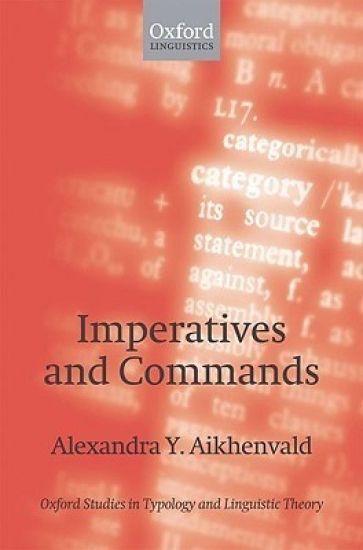
Imperatives and Commands

Imperatives and Commands

Alexandra Y. Aikhenvald

Oxford University Press
2010
sidottu
This is the first cross-linguistic study of imperatives, and commands of other kinds, across the world's languages. It makes a significant and original contribution to the understanding of their morphological, syntactic, semantic, and pragmatic characteristics. The author discusses the role imperatives and commands play in human cognition and how they are deployed in different cultures, and in doing so offers fresh insights on patterns of human interaction and communcation. Alexandra Aikhenvald examines the ways of framing commands, or command strategies, in languages that do not have special imperative forms. She analyses the grammatical and semantic properties of positive and negative imperatives and shows how these correlate with categories such as tense, information source, and politeness. She looks at the relation of command pragmatics to cultural practices, assessing, for example, the basis for Margaret Mead's assumption that the harsher the people the more frequently they use imperatives. Professor Aikhenvald covers a wide range of language families, including many relatively neglected examples from North America, Amazonia, and New Guinea. The book is accompanied by illustrations of some conventional command signs. Written and presented with the author's characteristic clarity, this book will be welcomed by linguists of all theoretical persuasions. It will appeal to social and cultural anthropologists and cognitive and behavioural scientists.
Securing Civilization?

Securing Civilization?

Alexandra Gheciu

Oxford University Press
2008
sidottu
This book examines the practices enacted by three key institutions of the transatlantic security community-the EU, NATO and the OSCE--in the name of combating international terrorism, and analyzes the ways in which those practices have both been affected by and contributed to changes in the field of security. It argues that contemporary attempts to respond to the perceived threat of international terrorism reflect a particular ethos of risk-management and involve a combination of two different-an inclusive and an exclusionary--logics of security. The book examines the interplay between the two logics and analyzes their implications, including the ways in which practices that instantiate those logics have contributed to processes of redefinition of norms of governance and reconstitution of boundaries in the security community. In developing this analysis, the book also explores the normative and political dilemmas generated by patterns of inclusion/exclusion created in the name of fighting terrorism. On this basis, the book seeks to make a significant contribution to the study of security practices and international governance in the post-9/11 world. This book is a project of the Oxford Leverhulme Programme on the Changing Character of War.
The Reformation of the Landscape

The Reformation of the Landscape

Alexandra Walsham

Oxford University Press
2011
sidottu
The Reformation of the Landscape is a richly detailed and original study of the relationship between the landscape of Britain and Ireland and the tumultuous religious changes of the sixteenth and seventeenth centuries. It explores how the profound theological and liturgical transformations that marked the era between 1500 and 1750 both shaped, and were in turn shaped by, the places and spaces within the physical environment in which they occurred. Moving beyond churches, cathedrals, and monasteries, it investigates how the Protestant and Catholic Reformations affected perceptions and practices associated with trees, woods, springs, rocks, mountain peaks, prehistoric monuments, and other distinctive topographical features of the British Isles. Drawing on extensive research and embracing insights from a range of disciplines, Alexandra Walsham examines the origins, immediate consequences, and later repercussions of these movements of religious renewal, together with the complex but decisive modifications of belief and behaviour to which they gave rise. It demonstrates how ecclesiastical developments intersected with other intellectual and cultural trends, including the growth of antiquarianism and the spread of the artistic and architectural Renaissance, the emergence of empirical science and shifting fashions within the spheres of medicine and healing. Set within a chronological framework that stretches backwards towards the early Middle Ages and forwards into the nineteenth century, the book assesses the critical part played by the landscape in forging confessional identities and in reconfiguring collective and social memory. It illuminates the ways in which the visible world was understood and employed by the diverse religious communities that occupied the British Isles, and shows how it became a battleground in which bitter struggles about the significance of the Christian and pagan past were waged.
Language Contact in Amazonia

Language Contact in Amazonia

Alexandra Aikhenvald

Oxford University Press
2003
sidottu
This book considers how forms and meanings of different languages at different times may resemble one another and what the explanation is for this. The author aims (a) to explain and identify the relationship between areal diffusion and the genetic development of languages, and (b) to discover the means of distinguishing what may cause one language to share the characteristics of another. This is done using the example of Arawak and Tucanoan languages spoken in the large area of the Vaupés river basin in northwest Amazonia, which spans Colombia and Brazil. In this region language is seen as a badge of identity: language mixing, interaction, and influence are resisted for ideological reasons. Professor Aikhenvald considers which grammatical categories are most and which are least likely to be borrowed in a situation of prolonged language contact where lexical borrowing is reduced to a minimum. She provides a genetic analysis of the languages of the region and considers their historical relationships with languages of the same family outside it. She also examines changes brought about by recent contact with European languages and culture, and the linguistic and cultural effects of being part of a group that is aware its language and identity are threatened. The book is presented in relatively nontechnical language and will interest linguists and anthropologists.
Print Culture and the Medieval Author

Print Culture and the Medieval Author

Alexandra Gillespie

Oxford University Press
2006
sidottu
Print Culture and the Medieval Author is a book about books. Examining hundreds of early printed books and their late medieval analogues, Alexandra Gillespie writes a bibliographical history of the poet Geoffrey Chaucer and his follower John Lydgate in the century after the arrival of printing in England. Her study is an important new contribution to the emerging 'sociology of the text' in English literary and historical studies. At the centre of this study is a familiar question: what is an author? The idea of the vernacular writer was already contested and unstable in medieval England; Gillespie demonstrates that in the late Middle Ages it was also a way for book producers and readers to mediate the risks - commercial, political, religious, and imaginative - involved in the publication of literary texts. Gillespie's discussion focuses on the changes associated with the shift to print, scribal precedents for these changes, and contemporary understanding of them. The treatment of texts associated with Chaucer and Lydgate is an index to the sometimes flexible, sometimes resistant responses of book printers, copyists, decorators, distributors, patrons, censors, owners, and readers to a gradual but profoundly influential bibliographical transition. The research is conducted across somewhat intractable boundaries. Gillespie writes about medieval and modern history; about manuscript and print; about canonical and marginal authors; about literary works and books as objects. In the process, she finds new meanings for some medieval vernacular texts and a new place for some old books in a history of English culture.
Evidentiality

Evidentiality

Alexandra Y. Aikhenvald

Oxford University Press
2004
sidottu
In some languages every statement must contain a specification of the type of evidence on which it is based: for example, whether the speaker saw it, or heard it, or inferred it from indirect evidence, or learnt it from someone else. This grammatical reference to information source is called 'evidentiality', and is one of the least described grammatical categories. Evidentiality systems differ in how complex they are: some distinguish just two terms (eyewitness and noneyewitness, or reported and everything else), while others have six or even more terms. Evidentiality is a category in its own right, and not a subcategory of epistemic or some other modality, nor of tense-aspect. Every language has some way of referring to the source of information, but not every language has grammatical evidentiality. In English expressions such as I guess, they say, I hear that, the alleged are not obligatory and do not constitute a grammatical system. Similar expressions in other languages may provide historical sources for evidentials. True evidentials, by contrast, form a grammatical system. In the North Arawak language Tariana an expression such as "the dog bit the man" must be augmented by a grammatical suffix indicating whether the event was seen, or heard, or assumed, or reported. This book provides the first exhaustive cross-linguistic typological study of how languages deal with the marking of information source. Examples are drawn from over 500 languages from all over the world, several of them based on the author's original fieldwork. Professor Aikhenvald also considers the role evidentiality plays in human cognition, and the ways in which evidentiality influences human perception of the world.. This is an important book on an intriguing subject. It will interest anthropologists, cognitive psychologists and philosophers, as well as linguists.
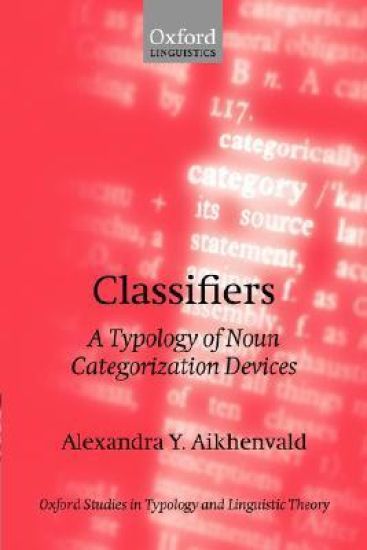
Classifiers

Classifiers

Alexandra Y. Aikhenvald

Oxford University Press
2003
nidottu
Almost all languages have some ways of categorizing nouns. Languages of South-East Asia have classifiers used with numerals, while most Indo-European languages have two or three genders. They can have a similar meaning and one can develop from the other. This book provides a comprehensive and original analysis of noun categorization devices all over the world. It will interest typologists, those working in the fields of morphosyntactic variation and lexical semantics, as well as anthropologists and all other scholars interested in the mechanisms of human cognition.
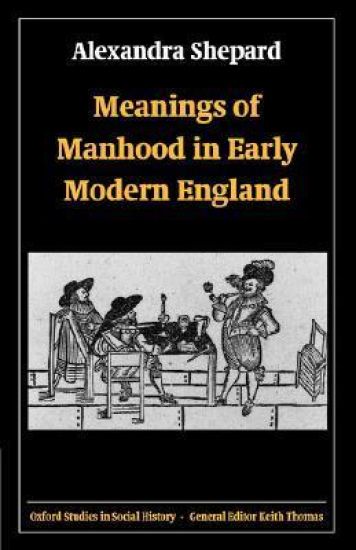
Meanings of Manhood in Early Modern England

Meanings of Manhood in Early Modern England

Alexandra Shepard

Clarendon Press
2006
nidottu
This path-breaking study explores the diverse and varied meanings of manhood in early modern England and their complex, and often contested, relationship with patriarchal principles. Using social, political and medical commentary, alongside evidence of social practice derived from court records, Dr Shepard argues that patriarchal ideology contained numerous contradictions, and that, while males were its primary beneficiaries, it was undermined and opposed by men as well as women. Patriarchal concepts of manhood existed in tension both with anti-patriarchal forms of resistance and with alternative codes of manhood which were sometimes primarily defined independently of patriarchal imperatives. As a result the differences within each sex, as well as between them, were intrinsic to the practice of patriarchy and the social distribution of its dividends in early modern England.