Title: The Spanish Poniard, being the story of the remorse of Ambrose Drybridge.Publisher: British Library, Historical Print EditionsThe British Library is the national library of the United Kingdom. It is one of the world's largest research libraries holding over 150 million items in all known languages and formats: books, journals, newspapers, sound recordings, patents, maps, stamps, prints and much more. Its collections include around 14 million books, along with substantial additional collections of manuscripts and historical items dating back as far as 300 BC.The FICTION & PROSE LITERATURE collection includes books from the British Library digitised by Microsoft. The collection provides readers with a perspective of the world from some of the 18th and 19th century's most talented writers. Written for a range of audiences, these works are a treasure for any curious reader looking to see the world through the eyes of ages past. Beyond the main body of works the collection also includes song-books, comedy, and works of satire. ++++The below data was compiled from various identification fields in the bibliographic record of this title. This data is provided as an additional tool in helping to insure edition identification: ++++ British Library Pinkerton, Thomas A.; 1890. 255 p.; 8 . 012632.f.36.
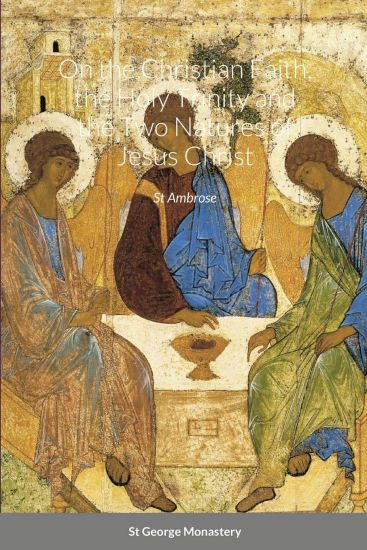
Aurelius Ambrosius (c. 340-397), better known in English as Ambrose, an Archbishop of Milan, became one of the most influential ecclesiastical figures of the 4th century. He served as the Roman governor of Liguria and Emilia, headquartered in Milan, before popular acclamation propelled him into becoming Bishop of Milan in 374. Ambrose staunchly opposed Arianism. Western Christianity identified Ambrose as one of its four traditional Doctors of the Church, and as the patron saint of Milan. He had notable influence on Augustine of Hippo (354-430).
The 18th century was a wealth of knowledge, exploration and rapidly growing technology and expanding record-keeping made possible by advances in the printing press. In its determination to preserve the century of revolution, Gale initiated a revolution of its own: digitization of epic proportions to preserve these invaluable works in the largest archive of its kind. Now for the first time these high-quality digital copies of original 18th century manuscripts are available in print, making them highly accessible to libraries, undergraduate students, and independent scholars.The eighteenth-century fascination with Greek and Roman antiquity followed the systematic excavation of the ruins at Pompeii and Herculaneum in southern Italy; and after 1750 a neoclassical style dominated all artistic fields. The titles here trace developments in mostly English-language works on painting, sculpture, architecture, music, theater, and other disciplines. Instructional works on musical instruments, catalogs of art objects, comic operas, and more are also included. ++++The below data was compiled from various identification fields in the bibliographic record of this title. This data is provided as an additional tool in helping to insure edition identification: ++++British LibraryT183569Engraved throughout, apart from the letterpress preface. No more published?. London?, 1785?]. 4],2,29, 1]p.: engr.music; obl.2
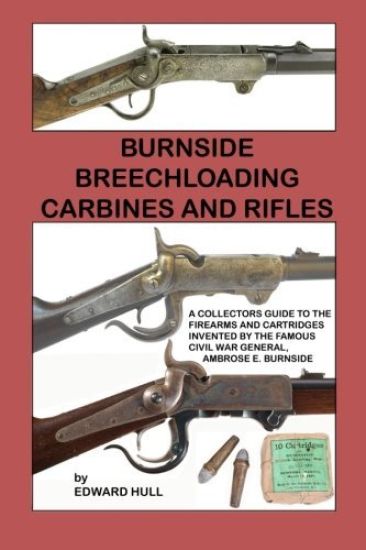
Ambrose Everett Burnside made his mark in history as a famous battlefield commander during the American Civil War. Today, collectors of antique firearms better remember him for the handy cavalry carbine that he invented and had manufactured, a carbine that played a large part in arming Federal cavalrymen during that war. Getting the first 300 of those carbines fabricated drove Burnside into bankruptcy in 1857, and he then changed careers. The demand for good arms with the coming of the war quickly changed penury to profit: nearly 59,000 of the carbines of his design were ultimately produced, garnering over $2 million dollars for the two companies which made them. This book is the story of the design and production of the five different variations of the Burnside carbine, and the cartridges, tools and accouterments furnished with them."Noted arms historian Ed Hull has produced his latest 'Collector's Guide to Firearms, ' and it is a most compelling and complete study of Civil War era Burnside Carbines and Rifles. This author has studied these unique breechloading firearms for many decades now, and this 173-page book covers all prototypes and production models, related Burnside ammunition and associated accoutrements. Students and collectors of Civil War weaponry will appreciate how complete and reliable this work is."Roy Marcot, author of "Spencer repeating Firearms""Once again, longtime firearms student and writer Edward Hull has written a fine book that expands upon the one he originally wrote in 1986 on the same subject...It would make for a wonderful addition to the library of the arms collector...." Frank Graves, ARMS HERITAGE MAGAZINE
Tom Brown at Oxford is a novel by Thomas Hughes, first published in serial form in Macmillan Magazine in 1859. It was published in two volumes in book form in 1861.It is a sequel to the better-known Tom Brown's School Days. The story follows the character of Tom Brown to St Ambrose's College, Oxford. The novel offers a vivid impression of university life in the mid nineteenth centuryThe book was out of print for many years but is available in Britain from Wordsworth Classics with 'Tom Brown's Schooldays' and as the copyright on the text has expired is now available on the Project Gutenberg ebook site. Editions of the serialized form are available at from the Hathi Trust. The illustrator Sydney Prior Hall (1842-1922), portrait painter and illustrator, was one of the leading reportage artists of the later Victorian period........ Thomas Hughes QC (20 October 1822 - 22 March 1896) was an English lawyer, judge, politician and author. He is most famous for his novel Tom Brown's School Days (1857), a semi-autobiographical work set at Rugby School, which Hughes had attended. It had a lesser-known sequel, Tom Brown at Oxford (1861). Hughes had numerous other interests, in particular as a Member of Parliament, in the British co-operative movement, and in a settlement in Tennessee reflecting his values. Early life Hughes was the second son of John Hughes, editor of the Boscobel Tracts (1830) and was born in Uffington, Berkshire (now Oxfordshire). He had six brothers, and one sister, Jane Senior who later became Britain's first female civil servant. At the age of eight he was sent to Twyford School, a preparatory public school near Winchester, where he remained until the age of eleven. In February 1834 he went to Rugby School, which was then under the celebrated Thomas Arnold, a contemporary of his father at Oriel College, Oxford. Hughes excelled at sports rather than in scholarship, and his school career culminated in a cricket match at Lord's Cricket Ground. In 1842 he went on to Oriel College, and graduated B.A. in 1845. At Oxford, he played cricket for the university team in the annual University Match against Cambridge University, also at Lord's, and a match that is still now regarded as first-class cricket. Legal career Hughes was called to the bar in 1848, became Queen's Counsel in 1869 and a bencher in 1870. He was appointed to a county court judgeship in the Chester district in July 1882. Works While living at Wimbledon, Hughes wrote his famous story Tom Brown's School Days, which was published in April 1857. He is associated with the novelists of the "muscular school", a loose classification but centred on the fiction of the Crimean War period.Although Hughes had never been a member of the sixth form at Rugby, his impressions of the headmaster Thomas Arnold were reverent. Hughes also wrote The Scouring of the White Horse (1859), Tom Brown at Oxford (1861), Religio Laici (1868), Life of Alfred the Great (1869) and the Memoir of a Brother. His brother, George Hughes, was the model for the Tom Brown character...........