Kirjojen hintavertailu. Mukana 11 342 296 kirjaa ja 12 kauppaa.

Kirjahaku

Etsi kirjoja tekijän nimen, kirjan nimen tai ISBN:n perusteella.

1000 tulosta hakusanalla Blake Butler

William Blake

William Blake

John Lucas

Routledge
1998
nidottu
The collection of essays presented in this volume represents some of the best recent critical work on William Blake as poet, prophet, visual artist, and social and political critic of his time.The critical range that is represented includes examples of Marxist, New Historicist, Feminist and Psychoanalytical approaches to Blake. Taken together, the essays consider all areas and moments of Blake's career as poet, from the early lyrics to his later epic poems, and they have been chosen to reveal not only the range of Blake's concerns but also to alert the reader to the rich variety of contemporary criticism that is devoted to him. Although the majority of essays are devoted to Blake as poet, others consider his work as printmaker, illustrator, and visionary artist. However severely individual essays choose to judge him, ultimately all the contributions to this book affirm Blake as one of the great geniuses of English art and letters.William Blake provides a valuable introduction by one of Britain's foremost critics and will be welcomed by students wanting to familiarise themselves with the work of Blake.

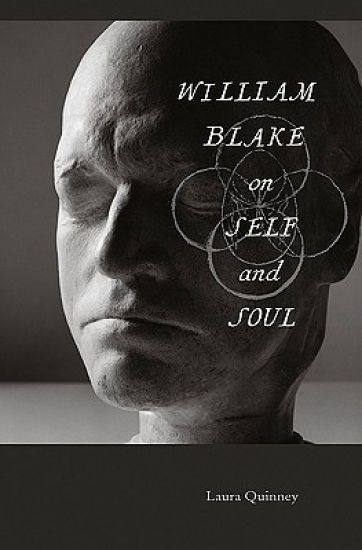
William Blake on Self and Soul

William Blake on Self and Soul

Laura Quinney

Harvard University Press
2010
sidottu
It has been clear from the beginning that William Blake was both a political radical and a radical psychologist. In William Blake on Self and Soul, Laura Quinney uses her sensitive, surprising readings of the poet to reveal his innovative ideas about the experience of subjectivity. Blake’s central topic, Quinney shows us, is a contemporary one: the discomfiture of being a self or subject. The greater the insecurity of the “I” Blake believed, the more it tries to swell into a false but mighty “Selfhood.” And the larger the Selfhood bulks, the lonelier it grows. But why is that so? How is the illusion of “Selfhood” created? What damage does it do? How can one break its hold? These questions lead Blake to some of his most original thinking. Quinney contends that Blake’s hostility toward empiricism and Enlightenment philosophy is based on a penetrating psychological critique: Blake demonstrates that the demystifying science of empiricism deepens the self’s incoherence to itself. Though Blake formulates a therapy for the bewilderment of the self, as he goes on he perceives greater and greater obstacles to the remaking of subjectivity. By showing us this progression, Quinney shows us a Blake for our time.
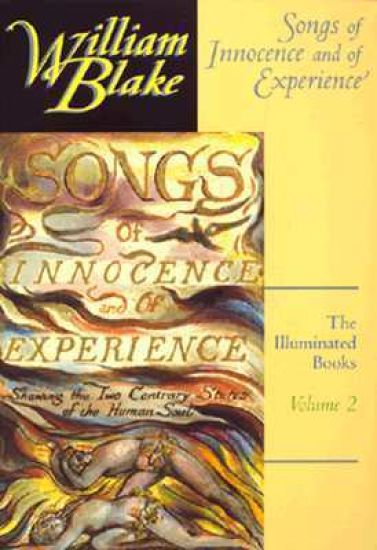
The Illuminated Books of William Blake, Volume 2

The Illuminated Books of William Blake, Volume 2

William Blake

Princeton University Press
1994
pokkari
The core of William Blake's vision, his greatness as one of the British Romantics, is most fully expressed in his Illuminated Books, masterworks of art and text intertwined and mutually enriching. In 1949 the William Blake Trust was founded to bring these rare, in some cases unique, works to a wider general audience through the publication of superbly produced facsimiles of each book. By the late 1980's these facsimiles had themselves become rare books. The Trust accordingly resolved to initiate a collected edition that would publish accurate reproductions of all the Illuminated Books to be accompanied by notes and commentaries by leading Blake scholars. Songs of Innocence and of Experience, one of the best known of the books, is now reproduced in paperback for the first time from the King's College, Cambridge copy--sometimes known as "Blake's own copy." The poems have been edited with introduction, notes, commentaries, and bibliography.
William Blake and the Age of Aquarius

William Blake and the Age of Aquarius

Stephen F. Eisenman

Princeton University Press
2017
sidottu
A stunningly illustrated look at how Blake's radical vision influenced artists of the Beat generation and 1960s counterculture In his own lifetime, William Blake (1757-1827) was a relatively unknown nonconventional artist with a strong political bent. William Blake and the Age of Aquarius is a beautifully illustrated look at how, some two hundred years after his birth, the antiestablishment values embodied in Blake's art and poetry became a model for artists of the American counterculture. This book provides new insights into the politics and protests of Blake's own lifetime, and the generation of artists who revived and reimagined his work in the mid-1940s through 1970, or what might be called the "long sixties." Contributors explore Blake's outsider status in Georgian England and how his individualistic vision spoke to members of the Beat Generation, hippies, radical poets and writers, and other voices of the counterculture. Among the artists, musicians, and writers who looked to Blake were such diverse figures as Diane Arbus, Jay DeFeo, the Doors, Sam Francis, Allen Ginsberg, Jess, Agnes Martin, Ad Reinhardt, Charles Seliger, Maurice Sendak, Robert Smithson, Clyfford Still, and many others. This book also explores visual cultures around such galvanizing moments of the 1960s as Woodstock and the Summer of Love. William Blake and the Age of Aquarius shows how Blake's myths, visions, and radicalism found new life among American artists who valued individualism and creativity, explored expanded consciousness, and celebrated youth, peace, and the power of love in a turbulent age. Exhibition schedule: Mary and Leigh Block Museum of Art, Northwestern University September 23, 2017-March 11, 2018
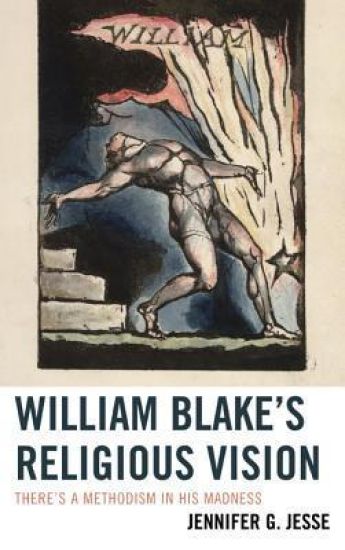
William Blake's Religious Vision

William Blake's Religious Vision

Jennifer Jesse

Lexington Books
2013
sidottu
In this innovative study, Jesse challenges the prevailing view of Blake as an antinomian and describes him as a theological moderate who defended an evangelical faith akin to the Methodism of John Wesley. She arrives at this conclusion by contextualizing Blake’s works not only within Methodism, but in relation to other religious groups he addressed in his art, including the Established Church, deism, and radical religions. Further, she analyzes his works by sorting out the theological “road signs” he directed to each audience. This approach reveals Blake engaging each faction through its most prized beliefs, manipulating its own doctrines through visual and verbal guide-posts designed to communicate specifically with that group. She argues that, once we collate Blake’s messages to his intended audiences—sounding radical to the conservatives and conservative to the radicals—we find him advocating a system that would have been recognized by his contemporaries as Wesleyan in orientation. This thesis also relies on an accurate understanding of eighteenth-century Methodism: Jesse underscores the empirical rationalism pervading Wesley’s theology, highlighting differences between Methodism as practiced and as publicly caricatured. Undergirding this project is Jesse’s call for more rigorous attention to the dramatic character of Blake’s works. She notes that scholars still typically use phrases like “Blake says” or “Blake believes,” followed by some claim made by a Blakean character, without negotiating the complex narrative dynamics that might enable us to understand the rhetorical purposes of that statement, as heard by Blake’s respective audiences. Jesse maintains we must expect to find reflections in Blake’s works of all the theologies he engaged. The question is: what was he doing with them, and why? In order to divine what Blake meant to communicate, we must explore how those he targeted would have perceived his arguments. Jesse concludes that by analyzing the dramatic character of Blake’s works theologically through this wide-angled, audience-oriented approach, we see him orchestrating a grand rapprochement of the extreme theologies of his day into a unified vision that integrates faith and reason.
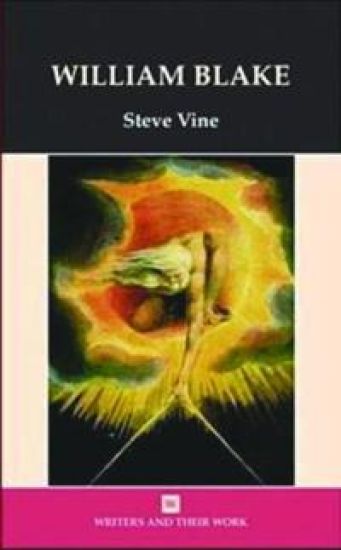
William Blake

William Blake

Steve Vine

Northcote House Publishers Ltd
2006
nidottu
William Blake was a revolutionary poet and artist: “I know myself both Poet & Painter”, he wrote. In his paintings he created visionary images that challenge conventional perceptions; in his poetry he joined words and images in the stunning form of the ‘illuminated book’, where verbal and visual depictions interact. As a Romantic poet and religious visionary, he questioned Romantic assumptions and rewrote Biblical tradition in a radical mythology for his own historical moment. He welcomed the eruption of the French Revolution and attacked Britain’s wars against Revolutionary France, assaulting the social injustices of his day and critiquing the politics and psychology of power. Steve Vine’s study introduces the full range of Blake’s poetry and illuminated books from the early Songs to the late epics, and focuses on the socially radical and challenging nature of his art: on Blake’s attempts to open the ‘doors of perception’ beyond limiting visions and ideologies – to what he called ‘the infinite’.
William Blake

William Blake

Steve Vine

Northcote House Publishers Ltd
2008
sidottu
William Blake was a revolutionary poet and artist: “I know myself both Poet & Painter”, he wrote. In his paintings he created visionary images that challenge conventional perceptions; in his poetry he joined words and images in the stunning form of the ‘illuminated book’, where verbal and visual depictions interact. As a Romantic poet and religious visionary, he questioned Romantic assumptions and rewrote Biblical tradition in a radical mythology for his own historical moment. He welcomed the eruption of the French Revolution and attacked Britain’s wars against Revolutionary France, assaulting the social injustices of his day and critiquing the politics and psychology of power. Steve Vine’s study introduces the full range of Blake’s poetry and illuminated books from the early Songs to the late epics, and focuses on the socially radical and challenging nature of his art: on Blake’s attempts to open the ‘doors of perception’ beyond limiting visions and ideologies – to what he called ‘the infinite’.
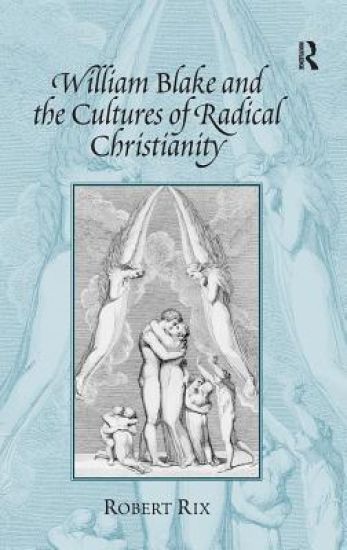
William Blake and the Cultures of Radical Christianity

William Blake and the Cultures of Radical Christianity

Robert Rix

Ashgate Publishing Limited
2007
sidottu
This study traces the links between William Blake's ideas and radical Christian cultures in late eighteenth-century England. Drawing on a significant number of historical sources, Robert W. Rix examines how Blake and his contemporaries re-appropriated the sources they read within new cultural and political frameworks. By unravelling their strategies, the book opens up a new perspective on what has often been seen as Blake's individual and idiosyncratic ideas. We are also presented with the first comprehensive study of Blake's reception of Swedenborgianism. At the time Blake took an interest in Emanuel Swedenborg, the mystical and spiritual writings of the theosophist had become a platform for radical and revolutionary politics, as well as numerous heterodox practices, among his followers in England. Rix focuses on Swedenborgianism as a concrete and identifiable sub-culture from which a number of essential themes in Blake's works are reassessed. This book will appeal not only to Blake scholars, but to anyone studying the radical and sub- culture, religious, intellectual and cultural history of this period.
William Blake in the Desolate Market

William Blake in the Desolate Market

G.E. Bentley Jr

McGill-Queen's University Press
2014
sidottu
Experience taught William Blake that "Wisdom is sold in the desolate market where none come to buy." His brilliant achievements as a poet, painter, and engraver brought him public notice, but little income. William Blake in the Desolate Market records how Blake, the most original of all the major English poets, earned his living. G.E. Bentley Jr, the dean of Blake scholars, details the poet's occupations as a commercial engraver, print-seller, teacher, copperplate printer, painter, publisher, and vendor of his own books. In his early career as a commercial engraver, Blake was modestly prosperous, but thereafter his fortunes declined. For his most ambitious commercial designs, he made hundreds of folio designs and scores of engravings, but was paid scarcely more than twenty pounds for two or three years' work. His invention of illuminated printing lost money, and many of his greatest works, such as Jerusalem, were left unsold at his death. He came to believe that his "business is not to gather gold, but to make glorious shapes." William Blake in the Desolate Market is an investigation of Blake's labours to support himself by his arts. The changing prices of his works, his costs and receipts, as well as his patrons and employers are expertly gathered and displayed to show the material side of the artistic career in Britain's Romantic period.
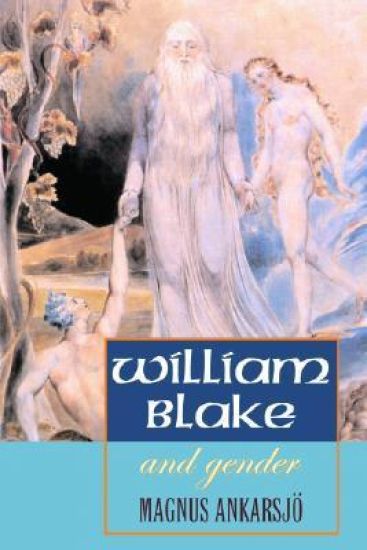
William Blake and Gender

William Blake and Gender

Magnus Ankarsjö

McFarland Co Inc
2005
pokkari
The closing years of the eighteenth century were the particular domain of literary radicals whose work challenged ideas on gender and sexuality. During this transitional period, the poetry of William Blake reflected the changing mores of society as well as his own developing notions of gender. This work presents an in-depth exploration of gender issues in Blake's three epic poems, The Four Zoas, Milton and Jerusalem. The opening chapter discusses basic concepts such as notions of apocalypse, utopia and gender, all essential to the author's reading of Blake. Background regarding the literary atmosphere of the time, which included influence from the tradition of dissent, English Jacobinism and early feminism, is also included, effectively setting the context for Blake's work. The book then examines the poems in chronological order. It concentrates particularly on male and female activity within each work (refuting the common assumption that Blake was anti-feminist) while exploring the symbolism of the poetry. Blake's repeated theme of the struggle between the sexes receives special emphasis, as does the progress of his gender vision through the three poems.
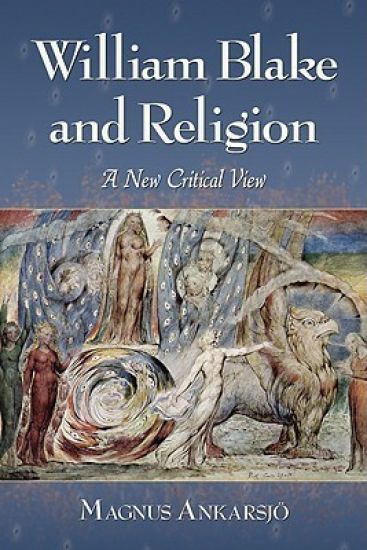
William Blake and Religion

William Blake and Religion

Magnus Ankarsjö

McFarland Co Inc
2009
pokkari
Over the last ten years the field of Blake studies has profited from new discoveries about Blake's life and work. This book examines the effect that Blake's mother's recently discovered Moravianism has had on our understanding of his poetry, and gives special attention to Moravianism and Swedenborgianism and their relation to his sexual politics. This is accomplished by a close reading of Blake's poetry, which examines in detail the subjects of religion, sex, and the attempted colonization of Africa by a Swedenborgian utopian group.
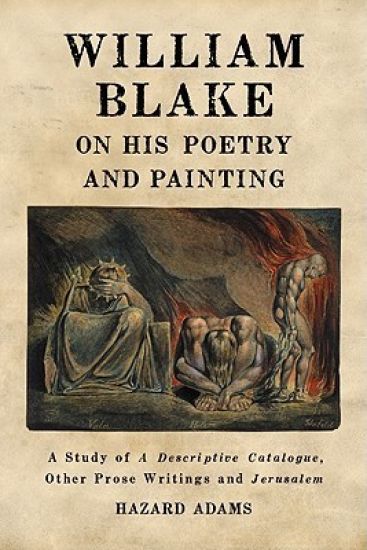
William Blake on His Poetry and Painting

William Blake on His Poetry and Painting

Hazard Adams

McFarland Co Inc
2010
pokkari
Blake was not only a poet, but also a prolific commentator on both his own art and art in general. This is the first text to discuss all of the writings except the annotations to Reynolds' Discourses, covered in a previous volume, Blake's Margins (McFarland, 2009). Topics include his opinions on his predecessors and his contemporaries, his reaction to critics, and his artistic intentions. This valuable addition to Blake scholarship includes reproductions of some of the drawings and paintings in Blake's one exhibition of 1809, plus reproductions of other prose texts by Blake.
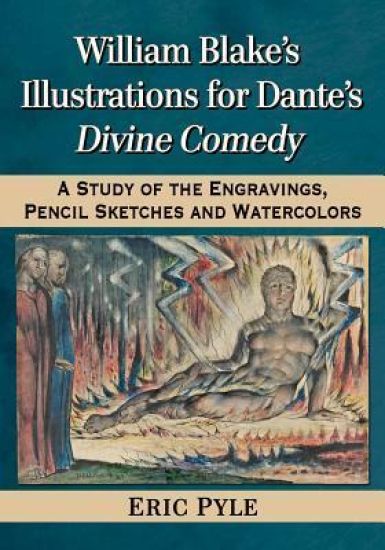
William Blake's Illustrations for Dante's Divine Comedy
William Blake's series of illustrations for Dante's Divine Comedy was his last major project and a summation of his religious and artistic beliefs. Blake intended to engrave this series, but it was unfinished at his death. The series includes seven partially complete engravings and 102 works in various stages of completion--some of the most beautiful pictures of his career. These pictures are not simple illustrations, but constitute a thorough reinterpretation and--in Blake's view--correction of Dante's poem. This book compares the two men's theological and artistic views and analyzes in detail the meaning of Blake's illustrations, for the first time introducing their theological and aesthetic exuberance to a modern audience.
A Blake Bibliography

A Blake Bibliography

G.E. Bentley Jr.; Martin K. Nurmi

University of Minnesota Press
1964
nidottu
A Blake Bibliography was first published in 1964. Minnesota Archive Editions uses digital technology to make long-unavailable books once again accessible, and are published unaltered from the original University of Minnesota Press editions.The aim of this book is to list every reference to William Blake published between 1757 and 1863 and every criticism and edition of his works from the beginning to the present. Partly because of the deluge of scholarship in the last forty years, it includes perhaps twice as many titles as Sir Geoffrey Keynes's great bibliography of 1921.An introductory essay on the history of Blake scholarship puts the most significant works into perspective, indicates the best work that has been done, and points to some neglected areas. In addition, all the most important references and many of the less significant ones are briefly annotated as to subject and value. Because many of the works are difficult to locate, specimen copies of all works published before 1831 have been traced to specific libraries. Each of Blake's manuscripts is also traced to its present owner.Two areas which have received relatively novel attention are early references to Blake (before 1863) and important sale and exhibition catalogues of his works. In both areas there are significant number of important entries which have not been noticed before by Blake scholars. The section on Blake's engravings for commercial works receives especially detailed treatment. A few of the titles listed here have not been described previously in connection with Blake.
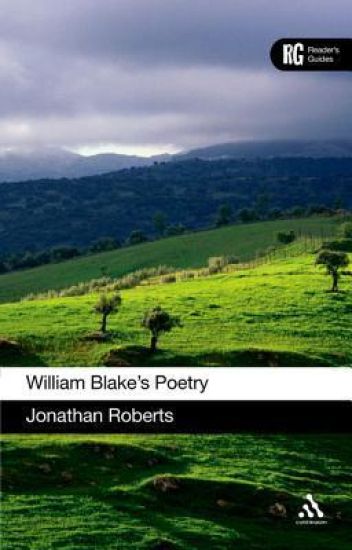
William Blake's Poetry

William Blake's Poetry

Jonathan Roberts

Continuum International Publishing Group Ltd.
2007
sidottu
"Reader's Guides" provide a comprehensive starting point for any advanced student, giving an overview of the context, criticism and influence of key works. Each guide also offers students fresh critical insights and provides a practical introduction to close reading and to analysing literary language and form. They provide up-to-date, authoritative but accessible guides to the most commonly studied classic texts. William Blake is a romantic poet who remains popular today, in part because his exceptional insight into psychological, political and social issues remains powerfully relevant. The "Reader's Guide" begins by introducing Blake's major themes including religious, political and social issues and then moves on to reading key works, including "Songs of Innocence and Experience" and "The Marriage of Heaven and Hell". It offers an invaluable introduction to reading Blake's poetry and includes sections on its contexts, language and style, critical reception and adaptation and influence and finally, an annotated guide to further reading.