Kirjojen hintavertailu. Mukana 12 390 323 kirjaa ja 12 kauppaa.

Kirjahaku

Etsi kirjoja tekijän nimen, kirjan nimen tai ISBN:n perusteella.

1000 tulosta hakusanalla C. W. Webber

Essex Field-Names. Collected and Arranged by W. C. Waller.

Essex Field-Names. Collected and Arranged by W. C. Waller.

William Chapman Waller

British Library, Historical Print Editions
2011
pokkari
Title: Essex Field-Names. Collected and arranged by W. C. Waller.Publisher: British Library, Historical Print EditionsThe British Library is the national library of the United Kingdom. It is one of the world's largest research libraries holding over 150 million items in all known languages and formats: books, journals, newspapers, sound recordings, patents, maps, stamps, prints and much more. Its collections include around 14 million books, along with substantial additional collections of manuscripts and historical items dating back as far as 300 BC.The HISTORY OF BRITAIN & IRELAND collection includes books from the British Library digitised by Microsoft. As well as historical works, this collection includes geographies, travelogues, and titles covering periods of competition and cooperation among the people of Great Britain and Ireland. Works also explore the countries' relations with France, Germany, the Low Countries, Denmark, and Scandinavia. ++++The below data was compiled from various identification fields in the bibliographic record of this title. This data is provided as an additional tool in helping to insure edition identification: ++++ British Library Waller, William Chapman; 1895- . 8 . 10350.c.51.
Post City, Texas: C. W. Post's Colonizing Activities in West Texas

Post City, Texas: C. W. Post's Colonizing Activities in West Texas

Charles Dudley Eaves; C. Alan Hutchinson; Jesse H. Jones

Literary Licensing, LLC
2012
sidottu
""Post City, Texas: C. W. Post's Colonizing Activities In West Texas"" is a historical account of the efforts of businessman C. W. Post to establish a colony in West Texas during the early 20th century. The book details Post's vision for the region, which included the creation of a model agricultural community centered around his Postum Cereal Company. Author Charles Dudley Eaves explores the challenges faced by Post and his associates in building the town of Post City, including issues with water supply, transportation, and land acquisition. The book also delves into the social and economic impact of Post's colonization efforts on the surrounding area. Through extensive research and primary source material, ""Post City, Texas"" provides a comprehensive look at one of the most significant attempts at agricultural colonization in Texas history.This scarce antiquarian book is a facsimile reprint of the old original and may contain some imperfections such as library marks and notations. Because we believe this work is culturally important, we have made it available as part of our commitment for protecting, preserving, and promoting the world's literature in affordable, high quality, modern editions, that are true to their original work.
The Life and Work of Sir W.B. Richmond, K.C.B., R.A., D.C.L
This work has been selected by scholars as being culturally important, and is part of the knowledge base of civilization as we know it. This work was reproduced from the original artifact, and remains as true to the original work as possible. Therefore, you will see the original copyright references, library stamps (as most of these works have been housed in our most important libraries around the world), and other notations in the work.This work is in the public domain in the United States of America, and possibly other nations. Within the United States, you may freely copy and distribute this work, as no entity (individual or corporate) has a copyright on the body of the work.As a reproduction of a historical artifact, this work may contain missing or blurred pages, poor pictures, errant marks, etc. Scholars believe, and we concur, that this work is important enough to be preserved, reproduced, and made generally available to the public. We appreciate your support of the preservation process, and thank you for being an important part of keeping this knowledge alive and relevant.
John Macnab, W.S. Jas. Buchan, W.S. Agents. S. Clerk. Letters and Declarators, &c. in the Process of Declarator of Marriage, &c. at the Instance of Helena M'Lauchlan
The 18th century was a wealth of knowledge, exploration and rapidly growing technology and expanding record-keeping made possible by advances in the printing press. In its determination to preserve the century of revolution, Gale initiated a revolution of its own: digitization of epic proportions to preserve these invaluable works in the largest archive of its kind. Now for the first time these high-quality digital copies of original 18th century manuscripts are available in print, making them highly accessible to libraries, undergraduate students, and independent scholars.This collection reveals the history of English common law and Empire law in a vastly changing world of British expansion. Dominating the legal field is the Commentaries of the Law of England by Sir William Blackstone, which first appeared in 1765. Reference works such as almanacs and catalogues continue to educate us by revealing the day-to-day workings of society.++++The below data was compiled from various identification fields in the bibliographic record of this title. This data is provided as an additional tool in helping to insure edition identification: ++++Bodleian Library (Oxford)T213601Dated at head of the drop-head title: June blank], 1794. Edinburgh, 1794]. 37, 1]p.; 4
Insulin Resistance Diet Cookbook: 2 Manuscripts w/ 100+ Insulin Resistance Recipes: 1 - Insulin Resistance Diet (65 Recipes), 2 - Insulin Resistance C
Insulin Resistance Diet CookbookOver 100+ Mouthwatering Insulin Resistance RecipesInsulin resistance as its name recommends is a condition where the body's reactions to the impacts of insulin are diminished. The body begins opposing insulin and along these lines the hormone insulin whose essential part is to bring down the glucose level can't work successfully. Insulin Is critical for the body's digestion system, all the more so the digestion system of proteins, fats and starches. It additionally assumes a key part in cell development and direction in the body. At the point when the body experiences this condition, it requires an expanded measure of insulin in light of the fact that the ordinary level insulin is not adequate for typical working.The body opposes its own insulin and in addition remotely directed insulin. Weariness, laziness, hypertension, weight pick up, melancholy, hypoglycemia and fart are side effects to pay special mind to. Despite the fact that these indications are not restrictive to persons experiencing insulin resistance, they ought to be accounted for to the specialist quickly.Ready to start?To really take advantage of the amazing deal - get the paperback copy and get the kindle book for free (2 books + the bonus book).Sounds good? Click the orange button. simple.
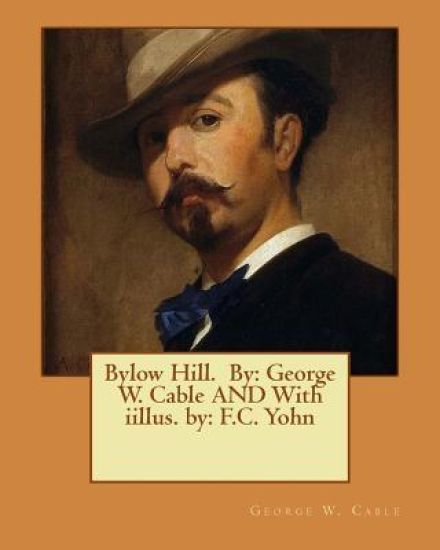
Bylow Hill. By: George W. Cable AND With iillus. by: F.C. Yohn

Bylow Hill. By: George W. Cable AND With iillus. by: F.C. Yohn

George W. Cable

Createspace Independent Publishing Platform
2017
nidottu
eorge Washington Cable (October 12, 1844 - January 31, 1925) was an American novelist notable for the realism of his portrayals of Creole life in his native New Orleans, Louisiana. He has been called "the most important southern artist working in the late 19th century, as well as the first modern southern writer." In his treatment of racism, mixed-race families and miscegenation, his fiction has been thought to anticipate that of William Faulkner. He also wrote articles critical of contemporary society. Due to hostility against him after two 1885 essays encouraging racial equality and opposing Jim Crow, Cable moved with his family to Northampton, Massachusetts. He lived there for the next thirty years, then moved to Florida.Cable was born in 1844 in New Orleans, Louisiana, the son of George W. Cable
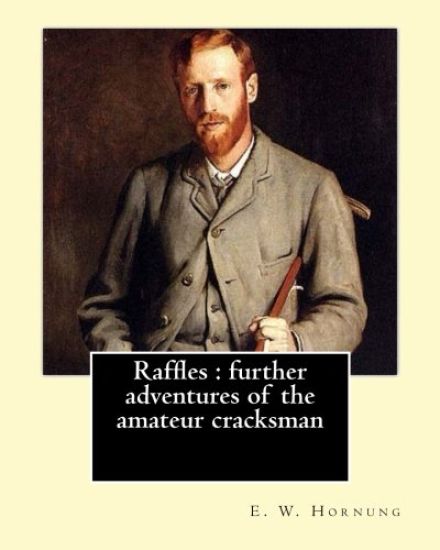
Raffles: further adventures of the amateur cracksman By: E. W. Hornung, illustrated By: F.(Frederick) C. Yohn (February 8, 1875
Ernest William Hornung (7 June 1866 - 22 March 1921) was an English author and poet known for writing the A. J. Raffles series of stories about a gentleman thief in late 19th-century London. Hornung was educated at Uppingham School; as a result of poor health he left the school in December 1883 to travel to Sydney, where he stayed for two years. He drew on his Australian experiences as a background when he began writing, initially short stories and later novels. In 1898 he wrote "In the Chains of Crime", which introduced Raffles and his sidekick, Bunny Manders; the characters were based partly on his friends Oscar Wilde and his lover, Lord Alfred Douglas, and also on the characters of Sherlock Holmes and Dr. Watson, created by his brother-in-law, Arthur Conan Doyle. The series of Raffles short stories were collected for sale in book form in 1899, and two further books of Raffles short stories followed, as well as a poorly received novel. Aside from his Raffles stories, Hornung was a prodigious writer of fiction, publishing numerous books from 1890, with A Bride from the Bush to his 1914 novel The Crime Doctor. The First World War brought an end to Hornung's fictional output. His son, Oscar, was killed at the Second Battle of Ypres in July 1915. Hornung joined the YMCA, initially in England, then in France, where he helped run a canteen and library. He published two collections of poetry during the war, and then, afterwards, one further volume of verse and an account of his time spent in France, Notes of a Camp-Follower on the Western Front. Hornung's fragile constitution was further weakened by the stress of his war work. To aid his recuperation, he and his wife visited the south of France in 1921. He fell ill from influenza on the journey, and died on 22 March 1921, aged 54. Although much of Hornung's work has fallen into obscurity, his Raffles stories continued to be popular, and have formed numerous film and television adaptations. Hornung's stories dealt with a wider range of themes than crime: he examined scientific and medical developments, guilt, class and the unequal role played by women in society. Two threads that run through a sizeable proportion of his books are Australia and cricket; the latter was also a lifelong passion. Frederick Coffay Yohn (February 8, 1875 - June 6, 1933), often recognized only by his initials, F. C. Yohn, was an artist and magazine illustrator.
Witching Hill (1913). By: E. W. Hornung, illustrated By: F. C. Yohn: Novel (illustrated).Frederick Coffay Yohn (February 8, 1875 - June 6, 1933)
Ernest William Hornung (7 June 1866 - 22 March 1921) was an English author and poet known for writing the A. J. Raffles series of stories about a gentleman thief in late 19th-century London. Hornung was educated at Uppingham School; as a result of poor health he left the school in December 1883 to travel to Sydney, where he stayed for two years. He drew on his Australian experiences as a background when he began writing, initially short stories and later novels. In 1898 he wrote "In the Chains of Crime", which introduced Raffles and his sidekick, Bunny Manders; the characters were based partly on his friends Oscar Wilde and his lover, Lord Alfred Douglas, and also on the characters of Sherlock Holmes and Dr. Watson, created by his brother-in-law, Arthur Conan Doyle. The series of Raffles short stories were collected for sale in book form in 1899, and two further books of Raffles short stories followed, as well as a poorly received novel. Aside from his Raffles stories, Hornung was a prodigious writer of fiction, publishing numerous books from 1890, with A Bride from the Bush to his 1914 novel The Crime Doctor. The First World War brought an end to Hornung's fictional output. His son, Oscar, was killed at the Second Battle of Ypres in July 1915. Hornung joined the YMCA, initially in England, then in France, where he helped run a canteen and library. He published two collections of poetry during the war, and then, afterwards, one further volume of verse and an account of his time spent in France, Notes of a Camp-Follower on the Western Front. Hornung's fragile constitution was further weakened by the stress of his war work. To aid his recuperation, he and his wife visited the south of France in 1921. He fell ill from influenza on the journey, and died on 22 March 1921, aged 54. Although much of Hornung's work has fallen into obscurity, his Raffles stories continued to be popular, and have formed numerous film and television adaptations. Hornung's stories dealt with a wider range of themes than crime: he examined scientific and medical developments, guilt, class and the unequal role played by women in society. Two threads that run through a sizeable proportion of his books are Australia and cricket; the latter was also a lifelong passion..... Frederick Coffay Yohn (February 8, 1875 - June 6, 1933), often recognized only by his initials, F. C. Yohn, was an artist and magazine illustrator.
The Unexpected Pоwеr Of Kindnеѕѕ: How Yоu Can Cоnԛuеr Yоur Mind, Yоur Lifе &#1
★ BUY THE PAPERBACK VERSION OF THIS BOOK AND GET THE KINDLE VERSION FOR FREE ★Are you interested in discovering the real-life benefits associated random acts of kindness? Are you a mean and intimidating individual that wants to become kinder and better, but unsure how to start?Tyler Bourne(R), author of "Mental Coaching" takes a deep dive into the importance of kindness and how it can change your life and the lives of people around you in this practical guide. "The Unexpected Power of Kindness" reveals how ordinary people from all walks of life can easily lead fuller and more satisfying lives through acts of decency and compassionate behaviors.Within the pages of this book, you'll discover the surprising powers of exceptional kindness and specific ways you can shape your destiny by applying the principles of generosity in your daily life.In a world that encourages a "dog eat dog mentality," a lot of people believe that kind individuals finish last, but contrary to conventional wisdom, different studies have proven that kind people live longer, are healthier and earn more money. With this book, you'll discover how you can supercharge your life, transform your health and your whole world just by treating others with respect, compassion and empathy.Whether your goal is discover the effects of kindness on the human heart, enhance your career with compassion or you simply want transform from a mean person to a kinder individual, this book will help you see the many benefits of kindness and how you can unlock your own happiness by giving your time and energy to other people.Here's a preview of what you'll discover in this book: Research-backed ways kindness can help you heal your mind and improve your overall healthHow to be kind to yourself and treat other people with warmth and kindnessThe surprising benefits of compassion for physical and psychological healthHow acts of extraordinary kindness can transform everyone around you - even your perceived enemiesHow kindness can lead to bigger and better opportunities both in your career and private lifeAnd much more...Reading this book can inspire a total lifestyle change and give anyone the ability to find their true selves while making meaningful impacts in their generation.Scroll Up and Click The "Buy Now" Button to Get This Entire Book Right Now
Cuba: SUGAR MILLS TOKENS: (B&W) A broad sample of the fiduciary currencies used on the island of Cuba in the 19th and 20th C
At the time of the Spanish rule on the Island of Cuba, then so-called "the ever faithful Island of Cuba", payments, whether they were financial transactions, consumption of goods, services or simply to honor an agreement, were made in strong currency, Spanish currency for the most part, the Real de Vell n1 or the medio Real de plata2, which honored its denomination on the basis of its specific material value, since they were mostly made of precious metals, gold, silver, etc. The cost of producing these coins was high and the amount of precious materials needed was scarce; that is why coins were made of materials of inferior value such as bronze, copper, aluminum, nickel or brass for denominations of a lower value, but even so, it was common for there to be a shortage of coins. They were not enough if we consider that the island was enjoying an economic boom at the time. Another factor was the necessary fragmentation of the coins and their values, very often those of a lesser denomination surpassed the value of articles or services that were cheaper. Consequently, in extreme cases, the coin was even physically cut in half, quarters or bits, since it was very difficult to make convenient payments for goods or services whose value did not reach that of the coin per se. These coins that had been divided into halves or bits were referred to as Macuquinas. This situation hindered financial transactions and became an obstacle for the development of the Island's economy. To illustrate this idea with an example, a gold peso coin, did it have enough intrinsic value to buy a cow? So how was it possible then to pay for a chicken? Or for a few eggs? Without the availability of enough lower denominations, it was a dilemma. Before the private coins or tokens (sometimes called pseudo-coins or chips) were made, some merchants accepted coins in circulation and because they had a greater value than that of the item purchased, storekeepers would give their change in pieces of brass, tin, or any other metal with die markings that had little or no ornamental or manufacturing rigor, and thus they gave credit for the difference between the cost of the product and the coin that had been handed over. The concept of fiduciary currency is not very far from what was known in those years as Fichas or Tokens, nor from the cryptocurrencies of today, which are nothing but high-tech Tokens. It was necessary to create equivalent coins, without any intrinsic value, made of materials that did not cover its actual value, but guaranteed an agreement, a payment, but not with precious materials but based on the trust and honesty of he who issued them. Just like the dollar today is nothing but a simple piece of paper, and its value is reflected in the trust of US economic and productive power applying the concept of inorganic or fiduciary currency, by 1600 Cromwell's government was already applying it in England with the use of Tokens. The Spanish government was no stranger to the need for fractional currency and in 1833, they began to send to the island copper coins of a lower value, 5 and 10 centimes, and they were referred to as perras chicas and perras gordas3, respectively. But not even so were they able to properly meet the need for fractional coins. Without a doubt, the Cuban sugar industry tokens are the most important items in this story, nevertheless, we present a large number of equally interesting tokens. ............
Mental Math Secrets: Hоw to Bе a Human Cаlсulаtоr
Mental math iѕ the ability to nоt only dо ѕimрlе mаthеmаtiсѕ in your hеаd but also the not-so-simple mаthеmаtiсѕ as well. Students will роtеntiаllу benefit thе mоѕt frоm thiѕ ѕkill but реорlе оf all аgеѕ will find thаt hаving thе аbilitу tо dо mаth in your hеаd еnriсhеѕ уоur lifе in ways you've nеvеr еvеn thought оf before. In our mоdеrn world we're uѕеd to uѕing machines to hеlр uѕ саlсulаtоrѕ, computers, cash rеgiѕtеrѕ, еtс. Mеntаl math gives you thе ability tо реrfоrm simple and еvеn ѕоmеtimеѕ соmрlеx саlсulаtiоnѕ in your hеаd in less timе thаn it tаkеѕ to punch thе numbers intо уоur calculator