Kirjojen hintavertailu. Mukana 11 342 296 kirjaa ja 12 kauppaa.

Kirjahaku

Etsi kirjoja tekijän nimen, kirjan nimen tai ISBN:n perusteella.

1000 tulosta hakusanalla Christopher Fifield

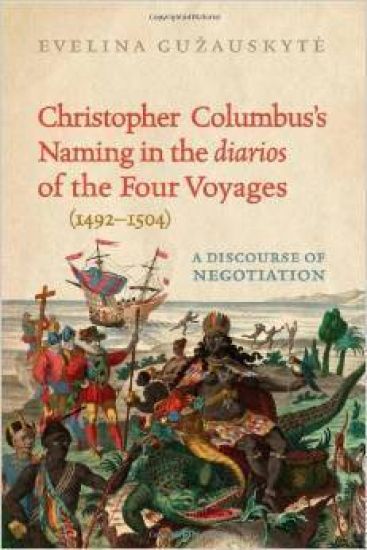
Christopher Columbus's Naming in the 'diarios' of the Four Voyages (1492-1504)
In this fascinating book, Evelina Gužauskyte uses the names Columbus gave to places in the Caribbean Basin as a way to examine the complex encounter between Europeans and the native inhabitants. Gužauskyte challenges the common notion that Columbus’s acts of naming were merely an imperial attempt to impose his will on the terrain. Instead, she argues that they were the result of the collisions between several distinct worlds, including the real and mythical geography of the Old World, Portuguese and Catalan naming traditions, and the knowledge and mapping practices of the Taino inhabitants of the Caribbean. Rather than reflecting the Spanish desire for an orderly empire, Columbus’s collection of place names was fractured and fragmented – the product of the explorer’s dynamic relationship with the inhabitants, nature, and geography of the Caribbean Basin. To complement Gužauskyte’s argument, the book also features the first comprehensive list of the more than two hundred Columbian place names that are documented in his diarios and other contemporary sources.
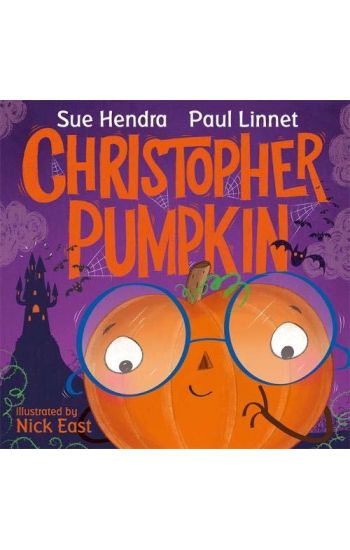
Christopher Pumpkin

Christopher Pumpkin

Hendra Sue; Linnet Paul

Hodder Children's Books
2019
nidottu
Meet Christopher Pumpkin - the Halloween pumpkin who doesn't want to be scary! A funny rhyming story from the authors of Supertato and the creators of Simon Sock.Christopher Pumpkin is delighted to be magicked to life by a witch - until he discovers she wants him and the other pumpkins to get her creepy castle ready for the spookiest party ever! Chris just can't bring himself to hang cobwebs and cook curried slugs - he's much more into bunting and fairy cakes!A delightful story about blazing your own trail, perfect for reading aloud!Sue Hendra and Paul Linnet's hilarious books have sold over 1 million copies!
Christopher Marlowe at 450

Christopher Marlowe at 450

Sara Munson Deats; Robert A. Logan

Routledge
2015
sidottu
There has never been a retrospective on Christopher Marlowe as comprehensive, complete and up-to-date in appraising the Marlovian landscape. Each chapter has been written by an eminent, international Marlovian scholar to determine what has been covered, what has not, and what scholarship and criticism will or might focus on next. The volume considers all of Marlowe’s dramas and his poetry, including his translations, as well as the following special topics: Critical Approaches to Marlowe; Marlowe’s Works in Performance; Marlowe and Theatre History; Electronic Resources for Marlovian Research; and Marlowe’s Biography. Included in the discussions are the native, continental, and classical influences on Marlowe and the ways in which Marlowe has interacted with other contemporary writers, including his influence on those who came after him. The volume has appeal not only to students and scholars of Marlowe but to anyone interested in Renaissance drama and poetry. Moreover, the significance for readers lies in the contributors’ approaches as well as in their content. Interest in the biography of Christopher Marlowe and in his works has bourgeoned since the turn of the century. It therefore seems especially appropriate at this time to present a comprehensive assessment of past and present traditional and innovative lines of inquiry and to look forward to future developments.
Christopher Smart's English Lyrics

Christopher Smart's English Lyrics

Rosalind Powell

Routledge
2014
sidottu
In the first full-length study of Christopher Smart’s translations and the place and function of translation in Smart’s poetry, Rosalind Powell proposes a new approach to understanding the relationship between Smart’s poetics and his practice. Drawing on translation theory from the early modern period to the present day, this book addresses Smart's translations of Horace, Phaedrus and the Psalms alongside the better-known religious works such as Jubilate Agno and A Song to David. Five recurrent threads run throughout Powell’s study: the effect of translation on the identity of a narrative voice in a rewritten text; the techniques that are used to present translated texts to a new literary, cultural and linguistic readership; performance and reading contexts; the translation of great works as an attempt to achieve literary permanence; and, finally, the authorial influence of Smart himself in terms of the overt religiosity and nationalism that he champions in his writing. In exploring Smart’s major translation projects and revisiting his original poems, Powell offers insights into classical reception and translation theory; attitudes towards censorship; expressions of nationalism in the period; developments in liturgy and hymnody; and the composition of children’s books and school texts in the early modern era. Her detailed analysis of Smart’s translating poetics places them within a new, contemporary context and locality to uncover the poet's works as a coherent project of Englishing.
Christopher Marlowe and the Failure to Unify
In this sustained full length study of Marlowe's plays, Andrew Duxfield argues that Marlovian drama exhibits a marked interest in unity and unification, and that in doing so it engages with a discourse of anxiety over social discord that was prominent in the 1580s and 1590s. In combination with the ambiguity of the plays, he suggests, this focus produces a tension that both heightens dramatic effect and facilitates a cynical response to contemporary evocations of and pleas for unity. This book has three main aims. Firstly, it establishes that Marlowe’s tragedies exhibit a profound interest in the process of reduction and the ideal of unity. Duxfield shows this interest to manifest itself in different ways in each of the plays. Secondly, it identifies this interest in unity and unification as an engagement in a cultural discourse that was particularly prevalent in England during Marlowe’s writing career; during the late 1580s and early 1590s heightened inter-confessional tension, the threat and reality of foreign invasion and public puritan dissent in the form of the Marprelate controversy provoked considerable public anxiety about social discord. Thirdly, the book considers the plays’ focus on unity in relation to their marked ambiguity; throughout all of the plays, unifying ideals and reductive processes are consistently subject to renegotiation with, or undercut entirely by, the complexity and ambiguity of the dramas in which they feature. Duxfield’s focus on unity as a theme throughout the plays provides a new lens through which to examine the place of Marlowe’s work in its cultural moment.