Kirjahaku
Etsi kirjoja tekijän nimen, kirjan nimen tai ISBN:n perusteella.
1000 tulosta hakusanalla David Edgar

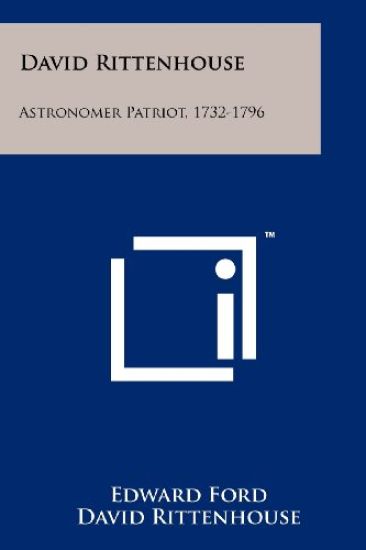
David Rittenhouse: Astronomer Patriot, 1732-1796
Edward Ford; David Rittenhouse; Thomas D. Cope
Literary Licensing, LLC
2011
sidottu
David Rittenhouse: Astronomer Patriot, 1732-1796 is a biography written by Edward Ford that details the life of David Rittenhouse, a prominent figure in American history. Rittenhouse was born in 1732 in Pennsylvania and went on to become a renowned astronomer, clockmaker, and inventor. He played a significant role in the American Revolution, serving as a member of the Continental Congress and helping to design and build the first American observatory. Throughout the book, Ford explores Rittenhouse's life and accomplishments, including his contributions to the fields of astronomy and mathematics, his work on the Pennsylvania-Maryland boundary dispute, and his involvement in the founding of the American Philosophical Society. The author also delves into Rittenhouse's personal life, including his marriage and family, as well as his relationships with other prominent figures of the time, such as Benjamin Franklin and Thomas Jefferson. Overall, David Rittenhouse: Astronomer Patriot, 1732-1796 provides a comprehensive look at the life and legacy of a fascinating historical figure, shedding light on his many achievements and contributions to American science and politics.This scarce antiquarian book is a facsimile reprint of the old original and may contain some imperfections such as library marks and notations. Because we believe this work is culturally important, we have made it available as part of our commitment for protecting, preserving, and promoting the world's literature in affordable, high quality, modern editions, that are true to their original work.
David Rittenhouse: Astronomer Patriot, 1732-1796
Edward Ford; David Rittenhouse; Thomas D. Cope
Literary Licensing, LLC
2011
nidottu
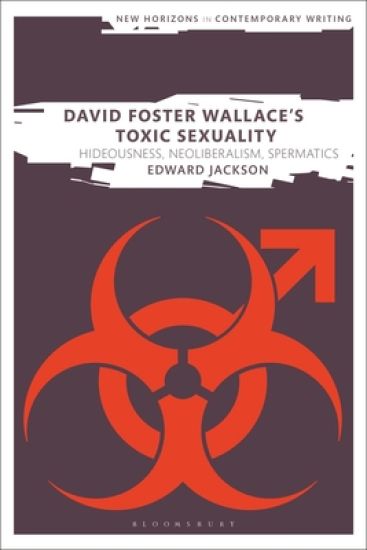
David Foster Wallace’s Toxic Sexuality: Hideousness, Neoliberalism, Spermatics is the first full-length study of perhaps the most controversial aspect of Wallace’s work – male sexuality. Departing from biographical accounts of Wallace’s troubled relationship to sex, the book offers new and engaging close readings of this vexed topic in both his fiction and non-fiction. Wallace consistently returns to images of sexual toxicity across his career to argue that, when it comes to sex, men are immutably hideous. He makes this argument by drawing on a variety of neoliberal logics and spermatic metaphors, which in their appeal to apparently neutral economic processes and natural bodily facts, forestall the possibility that men can change. The book therefore provides a revisionist account of Wallace’s attitudes towards capitalism, as well as a critical dissection of his approach to masculinity and sexuality. In doing so, David Foster Wallace’s Toxic Sexuality shows how Wallace can be considered a neoliberal writer, whose commitment to furthering male sexual toxicity is a disturbing but undeniable part of his literary project.
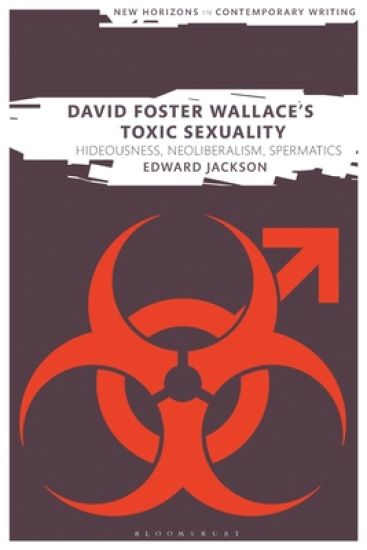
David Foster Wallace’s Toxic Sexuality: Hideousness, Neoliberalism, Spermatics is the first full-length study of perhaps the most controversial aspect of Wallace’s work – male sexuality. Departing from biographical accounts of Wallace’s troubled relationship to sex, the book offers new and engaging close readings of this vexed topic in both his fiction and non-fiction. Wallace consistently returns to images of sexual toxicity across his career to argue that, when it comes to sex, men are immutably hideous. He makes this argument by drawing on a variety of neoliberal logics and spermatic metaphors, which in their appeal to apparently neutral economic processes and natural bodily facts, forestall the possibility that men can change. The book therefore provides a revisionist account of Wallace’s attitudes towards capitalism, as well as a critical dissection of his approach to masculinity and sexuality. In doing so, David Foster Wallace’s Toxic Sexuality shows how Wallace can be considered a neoliberal writer, whose commitment to furthering male sexual toxicity is a disturbing but undeniable part of his literary project.
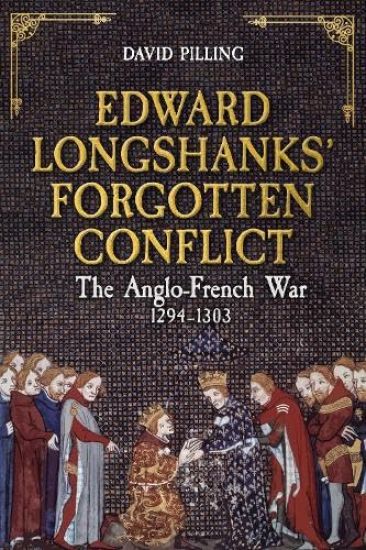
The Anglo-French war of 1294-1303 has not been the subject of a major study since the early 1900s. Recent histories tend to treat it as a sideshow compared to Edward I’s wars in Wales and Scotland, which gives a false impression. In reality the Welsh and Scottish campaigns were distractions, and Edward regarded the war against France as his main focus. The main issue at stake was the defence and recovery of Aquitaine, the last substantial piece of the so-called ‘Angevin empire’. To that end Edward spent enormous sums of money on recruiting allies in the Low Countries and the Holy Roman Empire. Edward’s rival, Philip IV, also recruited allies to counter Edward, until the conflict engulfed much of Western Europe. The result was a series of military stalemates, demonstrating that neither England nor France could achieve outright victory in a head-to-head conflict. There were plenty of bloody incidents and much hard fighting: the hanging of Gascon prisoners from the walls of Rions in 1295, for instance, or the epic thirteen-week siege of Saint Sever. David Pilling places the war in its proper context and argues it was a vital step on the road to the more famous conflict we remember as the Hundred Years War.

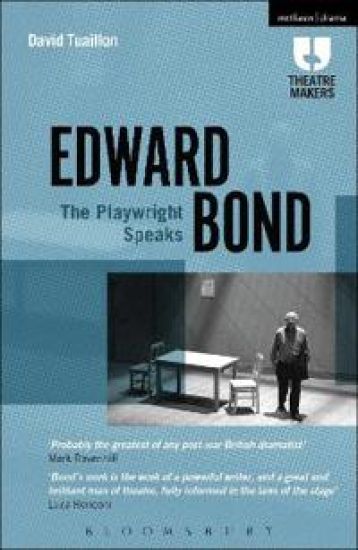
Over 50 years after his first appearance on the theatre scene, Edward Bond remains a hugely significant figure in the history of modern British playwriting. His plays are the subject of much debate and frequent misinterpretation, with his extensive use of allegory and metaphor to comment on the state of society and humanity in general leading to many academics, theatre practitioners and students trying - and often failing - to make sense of his plays over the years. In this unique collection, David Tuaillon puts these pressing questions and mysteries to Edward Bond himself, provoking answers to some of his most elusive dramatic material, and covering an extraordinary range of plays and subjects with real clarity. With a particular focus on Bond's later plays, about which much less has been written, this book draws together very many questions and issues within a thematic structure, while observing chronology within that.Edward Bond: The Playwright Speaks is potentially the most comprehensive, precise and clear account of the playwright's work and time in the theatre to date, distilling years and schools of thought into one single volume.Published to mark the 50th anniversary of the first performance of Edward Bond's Saved at the Royal Court Theatre in 1965.
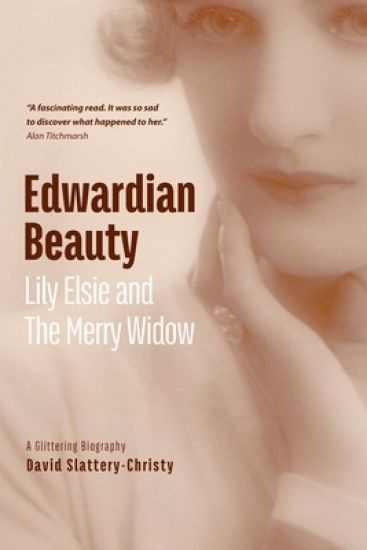
Edwardian Beauty: Lily Elsie & The Merry Widow
David Slattery-Christy
Createspace Independent Publishing Platform
2014
nidottu
This 3rd edition compilation includes a new foreword by the author, the book 'Anything But Merry ' and the Screenplay version adapted from the book titled The Last Edwardian Star. With a foreword by Sonia Berry.Discover the extraordinary life of one of Edwardian England's most celebrated and revered musical comedy stars, Lily Elsie. From her childhood days in the music halls of Salford and her rise to fame as the child singing star "Little Elsie" (hailed by press and public as "the infant Patti", after the world famous opera star Adelina Patti) to her arrival in London as a young woman.Her association with the most powerful theatre impresario of the time, George Edwardes, the father of the musical comedy genre, with his innovative and lavish productions at The Gaiety and Daly's Theatre. Her friends included Gertie Millar, the most powerful and luminous of the "Gaiety Girls".Elsie's rise to fame as Sonia in Lehar's The Merry Widow in 1907, produced by Edwardes at Daly's Theatre, was achieved in spite of her lack of confidence and overwhelming stage fright that would leave her sick with nervous exhaustion and cause the press to accuse her of being "a part time actress" when she missed performances.Her image would endorse everything from toothpaste to face creams; the costumes and hats she wore for The Merry Widow were emulated everywhere. Retiring from the stage in 1911 to marry a handsome and wealthy husband, she enjoyed a brief period of domestic harmony as Mrs Bullough. But it wasn't to last.The early signs of the paranoid neurosis and mental health problems which would overwhelm her in later years were already in evidence. She mastered the art of being reclusive long before Garbo took up the mantle. Her final years were spent in isolation, her personality eroded by her mental health problems. Elsie died alone in 1962, a tragic end to a life which had promised so much. In fact her life had been Anything But Merry from the very beginning.