Kirjojen hintavertailu. Mukana 11 717 486 kirjaa ja 12 kauppaa.

Kirjahaku

Etsi kirjoja tekijän nimen, kirjan nimen tai ISBN:n perusteella.

1000 tulosta hakusanalla David a McIntee

Child of God: A Lutheran Introduction to the Christian Faith

Child of God: A Lutheran Introduction to the Christian Faith

David a. Atrops

Createspace Independent Publishing Platform
2017
nidottu
What occupation we should pursue, whom we should marry, and how we might best secure our retirement may all be important questions, but the bigger questions are these: Who really am I? What is the purpose of my life? What is the end and goal of my life? The Christian faith draws on the Biblical Word of God to answer these bigger questions. Sin has left us orphaned in the world, but God is the heavenly Father who is seeking to bring us home again. To accomplish this, God sends his eternal Son into the flesh, and Jesus, this Son of God, contends against sin and the curse of death. The holy Son of God bears our sins into his own dying and is raised from the dead as our living Lord. As the Holy Spirit works through the Word of God, he leads us to believe that through Jesus Christ, our Brother, we are restored to the family of God. Now we are able to know that we are God's own dear children. We also have a holy purpose, which is to love and to serve even as Christ has served us. As children of God we also have the blessed inheritance of eternal life in heaven. This is the meaning of our baptism, through which God himself declares us to be his own beloved sons and daughters. With this Gospel truth as his underlying theme, Pastor Atrops provides a basic and introductory understanding of the Christian faith. He integrates these teachings into ten sections. After each discussion, Scripture portions are provided to represent the source for these teachings. He presents the Christian faith from a Lutheran perspective, since he has been trained as a pastor of The Lutheran Church-Missouri Synod. After serving congregations in Idaho, Washington, and California, he is retired and living in Pismo Beach CA. His desire is that those who study these teachings may better know and value their Christian faith or even become the children of God through faith in Christ.
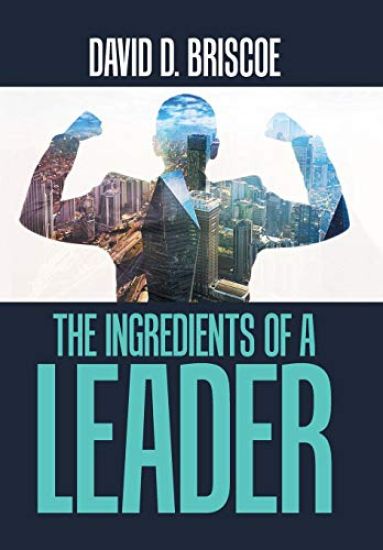
The Ingredients of a Leader

The Ingredients of a Leader

David A Briscoe

Xlibris Us
2018
pokkari
Any chef, taste-tester, culinary student or even a fan of delicious food knows that you only need a few ingredients to prepare a well-cooked meal; in turn, there are only a few ingredients required to create an impactful leader who can be seasoned for everyone to enjoy. The ingredients of a leader give insight of how to shape and mold the leaders that will be needed for tomorrow. For years, it has been David's desire to write a book, and when his dad sent him his first published book in the mail, he knew it was time to begin his journey. During a 21-day fast, he spent countless nights writing on a particular set of leadership skills that were inspired by personal life experiences. Whether you work for a corporation, non-profit organization or even in a church setting, you will be able to learn tangible skills to begin your mark as a leader or contribute to your leadership senses.
The Ingredients of a Leader

The Ingredients of a Leader

David A Briscoe

Xlibris Us
2018
sidottu
Any chef, taste tester, culinary student, or even a fan of delicious food knows that you only need a few ingredients to prepare a well-cooked meal. In turn, there are only a few ingredients required to create an impactful leader who can be seasoned for everyone to enjoy. The ingredients of a leader give insight of how to shape and mold the leaders that will be needed for tomorrow. For years, it has been David's desire to write a book, and when his dad sent him his first published book in the mail, he knew it was time to begin his journey. During a twenty-one day fast, he spent countless nights writing on a particular set of leadership skills that were inspired by personal life experiences. Whether you work for a corporation, nonprofit organization, or even in a church setting, you will be able to learn tangible skills to begin your mark as a leader or contribute to your leadership senses.
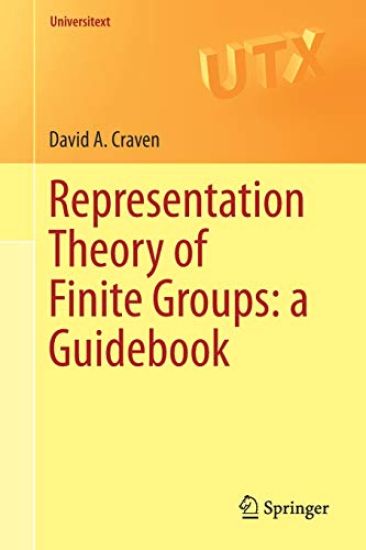
Representation Theory of Finite Groups: a Guidebook

Representation Theory of Finite Groups: a Guidebook

David A. Craven

Springer Nature Switzerland AG
2019
nidottu
This book provides an accessible introduction to the state of the art of representation theory of finite groups. Starting from a basic level that is summarized at the start, the book proceeds to cover topics of current research interest, including open problems and conjectures. The central themes of the book are block theory and module theory of group representations, which are comprehensively surveyed with a full bibliography. The individual chapters cover a range of topics within the subject, from blocks with cyclic defect groups to representations of symmetric groups. Assuming only modest background knowledge at the level of a first graduate course in algebra, this guidebook, intended for students taking first steps in the field, will also provide a reference for more experienced researchers. Although no proofs are included, end-of-chapter exercises make it suitable for student seminars.
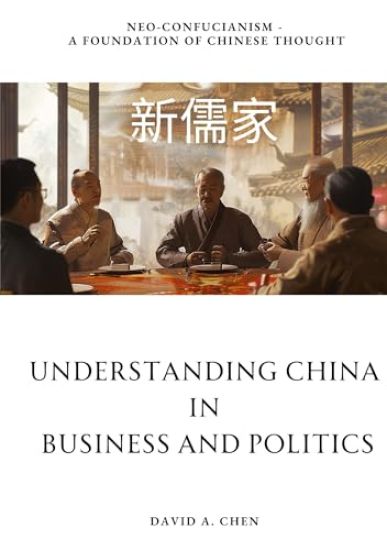
Understanding China in Business and Politics: Neo-Confucianism - A Foundation of Chinese Thought
"Understanding China: Neo-Confucianism and Its Influence on Chinese Culture and Identity" by David A. Chen In "Understanding China," David A. Chen offers a profound exploration of Neo-Confucianism-a pivotal force shaping Chinese thought, culture, and governance for centuries. This enlightening work delves into the evolution of Confucianism into its Neo form during the transformative Song Dynasty, integrating elements of Daoism and Buddhism to address the era's complex societal challenges. Chen elucidates how Neo-Confucianism has infused Chinese society with its philosophical, ethical, and metaphysical ideals, influencing aspects from individual morality to state governance. Through insightful analysis, Chen explores the core Neo-Confucian values-Ren (humanity), Yi (justice), Li (rites), and Zhi (wisdom)-that have underpinned the moral and social fabric of Chinese civilization. The book also examines the critical role of Neo-Confucianism in contemporary Chinese education, business practices, and international relations, highlighting its enduring relevance in a rapidly modernizing world. "Understanding China" is an essential read for scholars, business professionals, and anyone interested in the philosophical underpinnings that continue to guide one of the world's oldest and most influential cultures. It provides a comprehensive understanding that goes beyond the surface, capturing the essence of the Chinese spiritual and intellectual landscape.
Understanding China in Business and Politics: Neo-Confucianism - A Foundation of Chinese Thought
"Understanding China: Neo-Confucianism and Its Influence on Chinese Culture and Identity" by David A. Chen In "Understanding China," David A. Chen offers a profound exploration of Neo-Confucianism-a pivotal force shaping Chinese thought, culture, and governance for centuries. This enlightening work delves into the evolution of Confucianism into its Neo form during the transformative Song Dynasty, integrating elements of Daoism and Buddhism to address the era's complex societal challenges. Chen elucidates how Neo-Confucianism has infused Chinese society with its philosophical, ethical, and metaphysical ideals, influencing aspects from individual morality to state governance. Through insightful analysis, Chen explores the core Neo-Confucian values-Ren (humanity), Yi (justice), Li (rites), and Zhi (wisdom)-that have underpinned the moral and social fabric of Chinese civilization. The book also examines the critical role of Neo-Confucianism in contemporary Chinese education, business practices, and international relations, highlighting its enduring relevance in a rapidly modernizing world. "Understanding China" is an essential read for scholars, business professionals, and anyone interested in the philosophical underpinnings that continue to guide one of the world's oldest and most influential cultures. It provides a comprehensive understanding that goes beyond the surface, capturing the essence of the Chinese spiritual and intellectual landscape.
A God Like No Other

A God Like No Other

David a Brondos

Comunidad Teologica de Mexico
2024
sidottu
For centuries, scholars and interpreters of the Hebrew Scriptures or Old Testament have read those Scriptures as if they spoke of a God whose desires, concerns, and interests were essentially no different than those of the other gods of antiquity known to us. Like those gods, what the God of Israel supposedly sought above all else was the honor, worship, and obedience of human beings and their submission to his will as his faithful and devoted servants. While he undoubtedly demanded the practice of what was good, right, and merciful among his people in a way that set him apart from other gods, ultimately he did so for his own sake in order to bring about in them the type of behavior that pleased him and compel them to live in conformity with his justice, holiness, and righteousness. Those who sought to enjoy his blessings and avoid his fierce wrath and punishments had no choice but to strive to keep him content by observing all that he had commanded and making atonement for the sins and offenses they committed by offering him the sacrifices that appeased him. Although he loved his people deeply, his righteous and holy nature placed limits on that love and prevented him from showing them his favor unless the demands of his nature were satisfied.When we abandon such an understanding of the God of Israel and instead read the Hebrew Bible on its own terms in order to grasp the logic underlying its narratives, however, a very different portrait of God emerges. The God of whom the biblical texts speak is a God who desires nothing but the good for all those whom he has created and refuses to back down from his efforts to bring them to live in ways that will allow them to enjoy the wholeness and well-being he desires for all when they insist on filling their lives with injustice, suffering, and violence. When he demands that they obey all that he has commanded by practicing justice and compassion and avoiding behaviors that do them harm, he does so not for his sake but for theirs. If he jealously refuses to let his people serve and worship other gods, it is only because those gods bring death and destruction rather than the life that is found in him alone. While at times he must himself resort to violence and even bring down evil on human beings in order to put a stop to oppression and injustice, he does so only because his passionate and unbending commitment to the well-being of all of the families of the earth together with his beloved people Israel will not allow him to hold back or relent in his efforts to save them, not from him, but from themselves. Christian and Jewish readers alike will find in the present volume a God who is very different from the God they have been taught to encounter previously in the biblical texts, a God whose ultimate concern is not for his own glory, honor, or worship or for the demands of a righteous and holy nature that holds him captive, but for the healing, wholeness, and well-being of all of his creatures. Such an understanding of God not only calls into question traditional interpretations of the Hebrew Bible but also lays the basis for a fresh reading of the many difficult passages that have long challenged biblical interpreters due to the violent and troubling image of God that they convey.
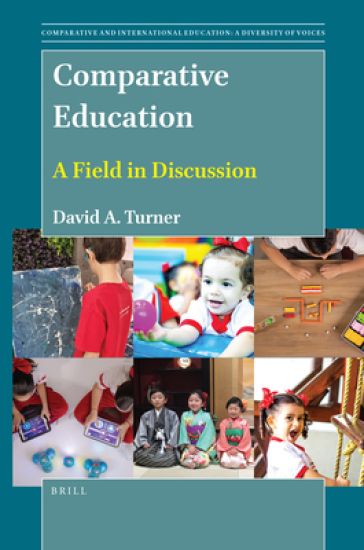
Comparative Education: A Field in Discussion
Comparative Education: A Field in Discussion is a personal reflection on the field of comparative education from the perspective of one scholar who has been active in the field since the 1980s. In the 1960s and 1970s many scholars attempted to develop a science of comparative education, and those diverse efforts formed the backdrop to the study of comparative education in the 1980s. In this volume, the author, who was originally educated as a physical scientist, draws upon those earlier attempts, at the same time introducing new insights from the complexity of science and systems theory. David Turner argues that these new insights should lead us away from a positivist vision of science, largely based on nineteenth century ideas of scientific method, and challenge us to accept that concepts are fluid, change over time, and are frequently contested. Nonetheless, those same concepts are essential to the way that we think of ourselves, our environment and the institutions that we inhabit. Caught between the generalisations that our concepts force on us, and our wish to capture the specificity of each personal history, the activity that we engage in is comparative education.
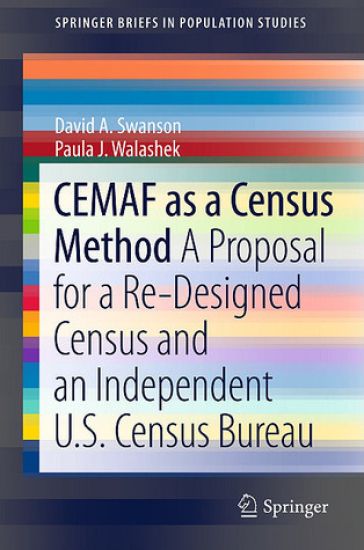
CEMAF as a Census Method

CEMAF as a Census Method

David A. Swanson; Paula J. Walashek

Springer
2011
nidottu
In provocative terms that push the envelope of technical, administrative, and legal capabilities, Swanson and Walashek propose a re-vamped US census based neither on the current system, self-enumeration, nor its predecessor, door-to-door canvassing. Instead, they propose that it be built on a combination of four elements: (1) administrative records; (2) the continuously updated Master Address File; (3) survey data; and (4) modeling and imputation techniques. They use “Census-Enhanced Master Address File (CEMAF) as a descriptive term for their proposal, which is based on four principles and includes a proposal for an independent Census Bureau. They argue that evidence suggests that the methods used to conduct traditional census counts may be at the end of their useful working lives, as evidenced by increasing costs and declining response rates. Some of their ideas will seem farfetched. However, Swanson and Walashek believe this is the time to discuss radical proposals as governments re-examine the utility of traditional census counts and consider reductions, as is the case in Canada and England. This SpringerBriefs should be on the reading list of staff in statistical agencies grappling with rising costs and declining response rates, as well as census stakeholders concerned about costs, accuracy, and census utility.
Discovery Of Anti-matter, The: The Autobiography Of Carl David Anderson, The Second Youngest Man To Win The Nobel Prize
In 1936, at age 31, Carl David Anderson became the second youngest Nobel laureate for his discovery of antimatter when he observed positrons in a cloud chamber.He is responsible for developing rocket power weapons that were used in World War II.He was born in New York City in 1905 and was educated in Los Angeles. He served for many years as a physics professor at California Institute of Technology. Prior to Oppenheimer, Anderson was offered the job of heading the Los Alamos atomic bomb program but could not assume the role because of family obligations.He was a pioneer in studying cosmic rays at high altitudes, first atop Pike's Peak, then after the war in a specially equipped B-29.
The 12 Bugs of Christmas: A Pop-Up Christmas Counting Book
David A. Carter's zany characters are here to help count down to Christmas in this festive pop-up extravaganza. What could be better than one Bug of Christmas? Twelve of them, of course Available for the first time in the bestselling BUGS mini trim size, David A. Carter's bestselling BUGS are here to help count down to Christmas in this festive pop-up title. What could be better than one Bug of Christmas? Why, twelve of them, of course BUGS fans of all ages are sure to get into the Christmas spirit and join in the holiday fun with this pop-up extravaganza
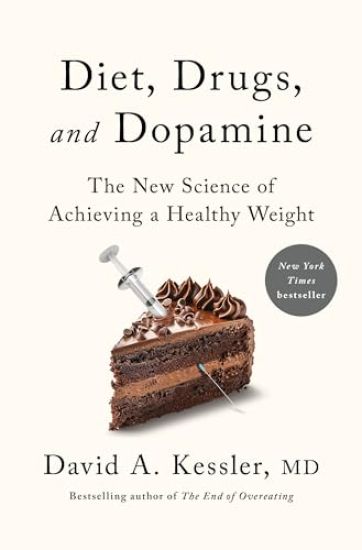
Diet, Drugs, and Dopamine: The New Science of Achieving a Healthy Weight
INSTANT NEW YORK TIMES BESTSELLER From the New York Times bestselling author of The End of Overeating comes an illuminating understanding of body weight, including the promise--and peril --of the latest weight loss drugs. The struggle is universal: we work hard to lose weight, only to find that it slowly creeps back. In America, body weight has become a pain point shrouded in self-recrimination and shame, not to mention bias from the medical community. For many, this battle not only takes a mental toll but also becomes a physical threat: three-quarters of American adults struggle with weight-related health conditions, including high blood pressure, heart disease, and diabetes. We know that diets don't work, and yet we also know that excess weight starves us of years and quality of life. Where do we go from here? In Diet, Drugs, and Dopamine, former FDA Commissioner Dr. David A. Kessler unpacks the mystery of weight in the most comprehensive work to date on this topic, giving readers the power to dramatically improve their health. Kessler, who has himself struggled with weight, suggests the new class of GLP-1 weight loss drugs have provided a breakthrough: they have radically altered our understanding of weight loss. They make lasting change possible, but they also have real disadvantages and must be considered as part of a comprehensive approach together with nutrition, behavior, and physical activity. Critical to this new perspective is the insight that weight-loss drugs act on the part of the brain that is responsible for cravings. In essence, the drugs tamp down the addictive circuits that overwhelm rational decision-making and quiet the "food noise" that distracts us. Identifying these mechanisms allows us to develop a strategy for effective long-term weight loss, and that begins with naming the elephant in the room: ultraformulated foods are addictive. Losing weight is a process of treating addiction. In this landmark book, one of the nation's leading public health officials breaks taboos around this fraught conversation, giving readers the tools to unplug the brain's addictive wiring and change their relationship with food. Dr. Kessler cautions that drugs, on their own, pose serious risks and are not a universal solution. But with this new understanding of the brain-body feedback loop comes new possibilities for our health and freedom from a lifelong struggle. Eye-opening, provocative, and rigorous, this book is a must-read for anyone who has ever struggled to maintain their weight--which is to say, everyone.
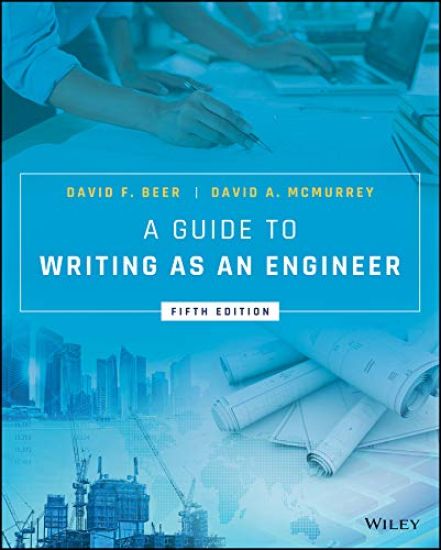
A Guide to Writing as an Engineer

A Guide to Writing as an Engineer

David F. Beer; David A. McMurrey

John Wiley Sons Inc
2021
nidottu
Everyone knows that engineers must be good at math, but many students fail to realize just how much writing engineering involves: reports, memos, presentations, specifications—all fall within the purview of a practicing engineer, and all require a polished clarity that does not happen by accident. A Guide to Writing as an Engineer provides essential guidance toward this critical skill, with practical examples, expert discussion, and real-world models that illustrate the techniques engineers use every day. Now in its Fifth Edition, this invaluable guide has been updated to reflect the most current standards of the field, and leverage the eText format to provide interactive examples, Engineering Communication Challenges, self-quizzes, and other learning tools. Students build a more versatile skill set by applying core communication techniques to a variety of situations professional engineers encounter, equipping them with the knowledge and perspective they need to succeed in any workplace. Although suitable for first-year undergraduate students, this book offers insight and reference for every stage of a young engineer’s career.
A Critical Introduction to Coaching and Mentoring

A Critical Introduction to Coaching and Mentoring

David E Gray; Robert Garvey; David A Lane

SAGE Publications Ltd
2016
sidottu
This is the definitive introduction to coaching and mentoring, written by an experienced and multidisciplinary team. Taking you all the way through from the emerging theory to informed practice, the book covers: · Skills, purposes and outcomes of coaching and mentoring processes · The many settings in which they take place – public, private and voluntary · Coaching and mentoring’s evidence base and how it is assessed · The professionalization of coaching and mentoring and a move towards integration. Supported by a wide range of case studies, activities, further questions and topics for discussion, this book is a comprehensive but accessible introduction. The authors take a critical approach and go beyond the basics, to support your development as a critically reflective practitioner. It is essential reading for those studying coaching and mentoring, and professionals looking to integrate coaching and mentoring into their organizations.