Mercedes (Tita) es una escritora amateur, que dej la universidad cuando murieron sus padres, igual, tiene un inmenso talento para contar historias. Se encontr entre las cosas de sus padres con un diario que llevaba su madre cuando conoci a su padre y decide que esa ser su primera publicaci n. Ella vive con su mejor amigo Iv n (Banchi) que estudia Literatura en la misma universidad donde ella es due a del restaurante del campus, que le dejaron sus padres. Un nuevo chico llega transferido de otra universidad y se hace amigo de Banchi, y Tita se enamora perdidamente de l, l sin embargo la ve como una de sus mejores amigas en todo el mundo. La relaci n se va haciendo cada vez m s fuerte entre los tres y viven muchas aventuras que, dependiendo de donde las veas, son muy amistosas o muy rom nticas, t seras el juez. Pero en alg n momento tendr n que graduarse y cada quien tomar su camino. Sobrevivir este amor?...
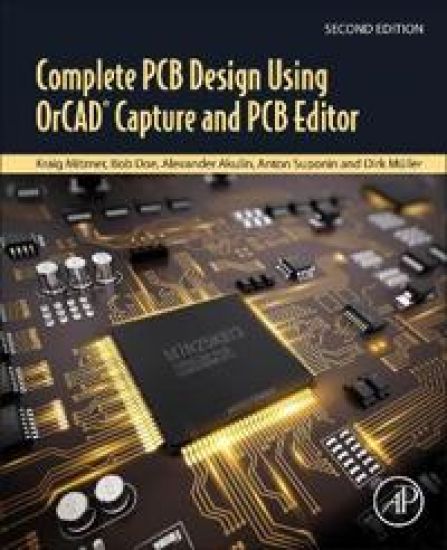
Complete PCB Design Using OrCAD Capture and PCB Editor, Second Edition, provides practical instruction on how to use the OrCAD design suite to design and manufacture printed circuit boards. Chapters cover how to Design a PCB using OrCAD Capture and OrCAD PCB Editor, adding PSpice simulation capabilities to a design, how to develop custom schematic parts, how to create footprints and PSpice models, and how to perform documentation, simulation and board fabrication from the same schematic design. This book is suitable for both beginners and experienced designers, providing basic principles and the program's full capabilities for optimizing designs. Companion sitehttps://www.elsevier.com/books-and-journals/book-companion/9780128176849
The Community's 'Conscience'It's a daunting mission: To stand as the conscience of the community. But that's exactly what management of the Bradenton Herald expected David Klement to do - for 30 years. As editor of the Editorial Page, he was expected to write the editorials that represented the voice of the newspaper - and the conscience of the community it served. Perhaps that is why there are several references in this book to Don Quixote, for the author often felt like the haunted Spanish nobleman on impossible quests as he raised his editorial lance to tilt at the metaphorical windmills of his community: its politicians and demagogues, its opportunists and hypocrites, its slumlords and robber barons. But there were plenty of flower petals strewn in the paths of its saints and heroes, civic servants and volunteers, pastors, teachers and parents. He addresses many of his coastal Florida community's characters and foibles in this memoir of his life and anthology of his best personal journalism over a distinguished, three-decade-long career at the Bradenton Herald.
This book provides instruction on how to use the OrCAD design suite to design and manufacture printed circuit boards. The primary goal is to show the reader how to design a PCB using OrCAD Capture and OrCAD Editor. Capture is used to build the schematic diagram of the circuit, and Editor is used to design the circuit board so that it can be manufactured. The book is written for both students and practicing engineers who need in-depth instruction on how to use the software, and who need background knowledge of the PCB design process.
Leading figures pay tribute to an expert in the field Honoring the work of Ruth C. Carter upon her retirement as editor of Cataloging & Classification Quarterly, Cataloger, Editor, and Scholar is a unique collection that features 21 articles from experts in the field. Celebrating Dr. Carter’s dedication to technical services, cataloging, history, and management, these essays recall all the important aspects of her life and career. The important compendium also includes an interview with Dr. Carter and a review of Cataloging & Classification Quarterly (CCQ) during her 20 years at its helm. In four parts, this wide-ranging collection includes articles that not only span the length and breadth of Dr. Carter’s professional career, but also present new contributions to the field. The first section of Cataloger, Editor, and Scholar considers Dr. Carter’s personal history and direct influence on CCQ as well as what she sees as key issues in cataloging at the beginning of the 21st century. The studies in part two take an international look at cataloging and bibliographic history while new research in the field is presented in part three. Finally, part four offers papers that consider current trends as well as possible directions for the emerging digital future. Chapters in Cataloger, Editor, and Scholar include: a commemorative biographical sketch of Ruth Carter an interview where she discusses her career as a librarian, archivist, historian, and long-time editor a comprehensive review of the contents of Cataloging & Classification Quarterly from 1990-2006 an analysis of the availability of books and reading materials in Monroe County, Indiana, through 1850 annotation as a lost art in cataloging early twentieth-century British libraries twenty-five years of bibliographic control research at the University of Bradford the Italian cataloging tradition and its relationships with the international tradition technical services and tenure impediments and strategies the works phenomenon and best selling books measuring typographical errors’ impact on retrieval in bibliographic databases meeting the needs of special format catalogers copy cataloging for print and video monographs in academic libraries balancing principles, practice, and pragmatics in a changing digital environment the development of knowledge structures on the Internet and may more! A unique compilation of the many issues that appeared in CCQ during Dr. Carter’s 20-year tenure, Cataloger, Editor, and Scholar is an informative resource for librarians, LTS professionals, catalogers, students, educators, and researchers.
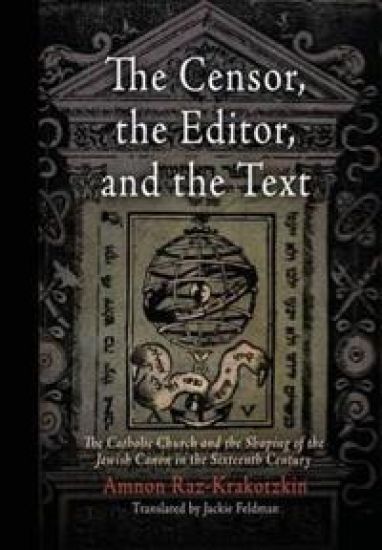
In The Censor, the Editor, and the Text, Amnon Raz-Krakotzkin examines the impact of Catholic censorship on the publication and dissemination of Hebrew literature in the early modern period. Hebrew literature made the transition to print in Italian print houses, most of which were owned by Christians. These became lively meeting places for Christian scholars, rabbis, and the many converts from Judaism who were employed as editors and censors. Raz-Krakotzkin examines the principles and practices of ecclesiastical censorship that were established in the second half of the sixteenth century as a part of this process. The book examines the development of censorship as part of the institutionalization of new measures of control over literature in this period, suggesting that we view surveillance of Hebrew literature not only as a measure directed against the Jews but also as a part of the rise of Hebraist discourse and therefore as a means of integrating Jewish literature into the Christian canon. On another level, The Censor, the Editor, and the Text explores the implications of censorship in relation to other agents that participated in the preparation of texts for publishing-authors, publishers, editors, and readers. The censorship imposed upon the Jews had a definite impact on Hebrew literature, but it hardly denied its reading, in fact confirming the right of the Jews to possess and use most of their literature. By bringing together two apparently unrelated issues-the role of censorship in the creation of print culture and the place of Jewish culture in the context of Christian society-Raz-Krakotzkin advances a new outlook on both, allowing each to be examined through the conceptual framework usually reserved for the other.
This work has been selected by scholars as being culturally important and is part of the knowledge base of civilization as we know it.This work is in the public domain in the United States of America, and possibly other nations. Within the United States, you may freely copy and distribute this work, as no entity (individual or corporate) has a copyright on the body of the work.Scholars believe, and we concur, that this work is important enough to be preserved, reproduced, and made generally available to the public. To ensure a quality reading experience, this work has been proofread and republished using a format that seamlessly blends the original graphical elements with text in an easy-to-read typeface.We appreciate your support of the preservation process, and thank you for being an important part of keeping this knowledge alive and relevant.
This work has been selected by scholars as being culturally important and is part of the knowledge base of civilization as we know it.This work is in the public domain in the United States of America, and possibly other nations. Within the United States, you may freely copy and distribute this work, as no entity (individual or corporate) has a copyright on the body of the work.Scholars believe, and we concur, that this work is important enough to be preserved, reproduced, and made generally available to the public. To ensure a quality reading experience, this work has been proofread and republished using a format that seamlessly blends the original graphical elements with text in an easy-to-read typeface.We appreciate your support of the preservation process, and thank you for being an important part of keeping this knowledge alive and relevant.
This work has been selected by scholars as being culturally important and is part of the knowledge base of civilization as we know it.This work is in the public domain in the United States of America, and possibly other nations. Within the United States, you may freely copy and distribute this work, as no entity (individual or corporate) has a copyright on the body of the work.Scholars believe, and we concur, that this work is important enough to be preserved, reproduced, and made generally available to the public. To ensure a quality reading experience, this work has been proofread and republished using a format that seamlessly blends the original graphical elements with text in an easy-to-read typeface.We appreciate your support of the preservation process, and thank you for being an important part of keeping this knowledge alive and relevant.
This work has been selected by scholars as being culturally important and is part of the knowledge base of civilization as we know it.This work is in the public domain in the United States of America, and possibly other nations. Within the United States, you may freely copy and distribute this work, as no entity (individual or corporate) has a copyright on the body of the work.Scholars believe, and we concur, that this work is important enough to be preserved, reproduced, and made generally available to the public. To ensure a quality reading experience, this work has been proofread and republished using a format that seamlessly blends the original graphical elements with text in an easy-to-read typeface.We appreciate your support of the preservation process, and thank you for being an important part of keeping this knowledge alive and relevant.
This work has been selected by scholars as being culturally important and is part of the knowledge base of civilization as we know it.This work is in the public domain in the United States of America, and possibly other nations. Within the United States, you may freely copy and distribute this work, as no entity (individual or corporate) has a copyright on the body of the work.Scholars believe, and we concur, that this work is important enough to be preserved, reproduced, and made generally available to the public. To ensure a quality reading experience, this work has been proofread and republished using a format that seamlessly blends the original graphical elements with text in an easy-to-read typeface.We appreciate your support of the preservation process, and thank you for being an important part of keeping this knowledge alive and relevant.