Kirjojen hintavertailu. Mukana 12 016 292 kirjaa ja 12 kauppaa.

Kirjahaku

Etsi kirjoja tekijän nimen, kirjan nimen tai ISBN:n perusteella.

1000 tulosta hakusanalla FREEDOM DIVIDEND

Freedom of Expression

Freedom of Expression

Vincenzo Zeno-Zencovich

Routledge Cavendish
2008
nidottu
This book takes a multidisciplinary approach to the issues surrounding freedom of expression, looking at the current legal position in a number of European countries as well as engaging with the wider debates on the topic amongst sociologists, political scientists and economists. In the book Vincenzo Zeno-Zencovich addresses recent developments which have had a bearing on the debate including the changes in communication brought about by the internet, and recent European Union looking at the role of the ECHR and the Council of Europe.
Freedom and Organization

Freedom and Organization

Bertrand Russell

Routledge
2009
nidottu
Written by one of the twentieth century’s most significant thinkers, Freedom and Organization, is considered to be Bertrand Russell’s major work on political history. It traces the main causes of political change during a period of one hundred years, which he argues were predominantly influenced by three major elements – economic technique, political theory and certain significant individuals. In the witty, approachable style that has made Bertrand Russell’s works so revered, he explores in detail the major forces and events that shaped the nineteenth century.
Freedom and Equality (Routledge Revivals)
Unashamedly polemical, this reissue of Freedom & Equality, first published in 1986, presents a strong and persuasively argued case for democratic socialism. In contrast to many recent books justifying conservatism and varieties of Marxism, Keith Dixon defends the two great principles underpinning democratic socialism – freedom and equality. He aims both to restore the idea of freedom to its proper place in the political vocabulary of the left and to defend a stark version of freedom as absence of constraint. Only this version of freedom, he argues, is consistent with the proper defence of civil liberties. Dixon also defends radical egalitarianism from its critics, who either repudiate its full force or reject it out of hand. He believes that freedom and equality are potentially realizable socialist goals, that democratic socialism is not necessarily linked with fraternalism, and – above all – that it should be based upon a firm and consistent conception of individuality.
Freedom and Equality (Routledge Revivals)
Unashamedly polemical, this reissue of Freedom & Equality, first published in 1986, presents a strong and persuasively argued case for democratic socialism. In contrast to many recent books justifying conservatism and varieties of Marxism, Keith Dixon defends the two great principles underpinning democratic socialism – freedom and equality. He aims both to restore the idea of freedom to its proper place in the political vocabulary of the left and to defend a stark version of freedom as absence of constraint. Only this version of freedom, he argues, is consistent with the proper defence of civil liberties. Dixon also defends radical egalitarianism from its critics, who either repudiate its full force or reject it out of hand. He believes that freedom and equality are potentially realizable socialist goals, that democratic socialism is not necessarily linked with fraternalism, and – above all – that it should be based upon a firm and consistent conception of individuality.
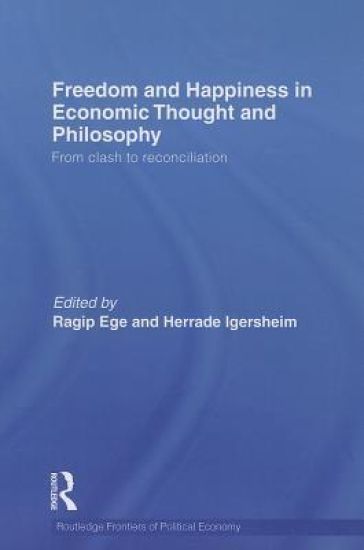
Freedom and Happiness in Economic Thought and Philosophy
Starting from a distinction made by the American philosopher, John Rawls, in 2000 between two kinds of liberalism, "liberalism of freedom" and "liberalism of happiness", this book presents a range of articles by economists and philosophers debating the most fundamental aspects of the subject. These include the exact significance of Rawls’ distinction and how it can be related to European political philosophy on the one hand and to utilitarianism on the other hand; the various definitions of happiness and freedom and their implications and the informational basis of individual preferences. The objectives of the book are twofold: first, it is devoted to a thorough analysis of the founding texts of both liberalisms. It aims to determine the logic of selection of the concepts which these traditions consider as relevant. The Kantian pair "Reasonable"/"Rational" can be seen as the basis on which these concepts are defined, our final concern being to reveal the profound relations of complementarity between them: we call it reconciliation. Secondly, we consider a fundamental issue of welfare economics – how to appraise individual preferences – in light of the Rawlsian distinction. It is emphasized that neither a criterion based on liberalism of freedom by itself, nor an evaluation in terms of liberalism of happiness by itself exhausts the question of utility. One must combine both aspects in order to cope with that issue. To do so, it is claimed that one can resort to the concept of metaranking of preferences.All the contributions included in this book are the outcomes of a collective research project of three years. The contributors come from a variety of backgrounds and yet are unified in developing a specific position about freedom and happiness. This book should be of interest to those focusing on the history of economic thought as well as moral, political and economic philosophy.
Freedom, Responsibility and Economics of the Person

Freedom, Responsibility and Economics of the Person

Jérôme Ballet; Damien Bazin; Jean-Luc Dubois; François-Régis Mahieu

Routledge
2013
sidottu
The capability approach has developed significantly since Amartya Sen was awarded the Nobel Prize in Economics in 1998. It is now recognised as being highly beneficial in the analysis of poverty and inequality, but also in the redefinition of policies aimed at improving the well-being of individuals.The approach has been applied within numerous sectors, from health and education to sustainable development, but beyond the obvious interest that it represents for the classical economics tradition, it has also encountered certain limitations. While acknowledging the undeniable progress that the approach has made in renewing the thinking on the development and well-being of a population, this book takes a critical stance. It focuses particularly on the approach’s inadequacy vis-à-vis the continental phenomenological tradition and draws conclusions about the economic analysis of development. In a more specific sense, it highlights the fact that the approach is too bound by standard economic logic, which has prevented it from taking account of a key ‘person’ dimension — namely, the ability of an individual to assume responsibility. As a result, this book advocates the notion that if the approach is used carelessly in relation to development policies, it can cause a number of pernicious effects, some of which may lead to disastrous consequences.Due to its multidisciplinary nature, this book will be of interest to those working in the fields of economics, philosophy, development studies and sociology.
Freedom and Terror

Freedom and Terror

Gabriel Weimann; Abraham Kaplan

Routledge
2011
sidottu
This book examines reason and unreason in the legal and political responses to terrorism.Terrorism is often perceived as sheer madness, unreasonable use of extreme violence and senseless, futile political action. These assertions are challenged by this book. Combining ‘traditional’ thought (by Kaplan) on reason and unreason in terrorism with empirical explorations of post-modern terrorism and its use of communication platforms (by Weimann) the work uses interdisciplinary and cross disciplinary dimensions to provide a multidimensional picture of critical issues in current politics and a deeper examination of their implications than previously available.The book looks at various aspects of modern politics, from terrorism to protest, from decision-making to political discourse, applying the perspective of philosophical thought. To do so, political issues and actions are examined by using concepts such as reason, emotions, madness, magic, morality, absolutism, extremism, psychopathology, rationality and others. The analysis is rooted in theories and concepts derived from history, philosophy, religion, art, sociology, psychology, and political science.This book, which was mostly written by the late Abraham Kaplan, an American philosopher, and edited and updated by Gabriel Weimann, will be of much interest to students of political violence/terrorism, philosophy, war and conflict studies and political science in general.
Freedom of Information Reform in China
Freedom of Information (FOI) in China is often perceived as a recent and intriguing phenomenon. This book presents a more complex and detailed understanding of the evolution of FOI in China, using information flow analysis to explore the gradual development of government receptivity to FOI in an information environment through time. The book argues that it is necessary to reassess the widely divergent origins of FOI reform in China, and asserts that social, political and legal factors should have central roles in understanding the development of FOI in China. The book uses information flow analysis to find that FOI reform in China formed part of a much longer process of increased transparency in the Chinese information environment, which gradually shifted from the acceptance of proactive disclosure to that of reactive disclosure. FOI thus has become a beneficiary of this gradual transformation of the Chinese information environment.
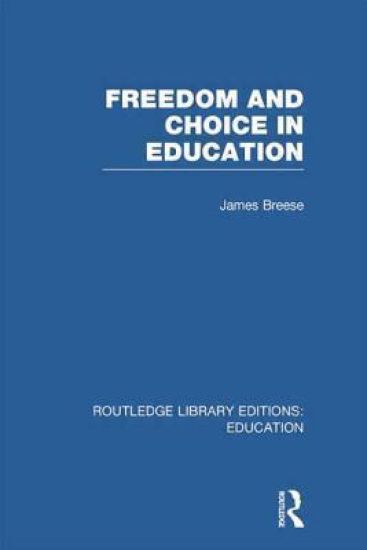
Freedom and Choice in Education (RLE Edu K)
Much of the material included here owes it inspiration to discussions held with groups of student teachers in the early 1970s. The book is written for such students and discusses issues such as the acquisition of knowledge, the value of examinations, dependency and religion in education. The book is intended as a thought provoker – to stimulate further discussion.
Freedom and Discipline (RLE Edu K)

Freedom and Discipline (RLE Edu K)

Richard Smith

Routledge
2011
sidottu
Questions of discipline and order arise wherever formal education is practised, and are particularly acute for those training to teach or in their first school posts. For many years now writing on these topics has tended to depict teaching as the deployment of ‘skills’ and ‘techniques’ and competent teachers as those who successfully ‘manage’ their classes. This approach is criticised by Richard Smith as manipulative and destructive of the kind of pupil-teacher relationship conducive to any but the most trivial sorts of learning.Thus the philosophical issues which the book explores are shown throughout to have their roots in problems associated with established thinking and practice, and the author’s ideas have considerable practical relevance. He argues for a thorough reappraisal of the nature and basis of the teacher’s authority and demonstrates the importance of a proper understanding of the function of punishment. He suggests that many of the problems of discipline that teachers meet may actually stem from inappropriate ways of treating pupils, and shows that solutions to these problems must be compatible with the degree of initiative and personal responsibility that it is the business of education to foster. Schools have changed in many ways, largely for the better, since the first edition of this book appeared: the young people in them are generally treated with far more respect than was the case a quarter of a century ago. The voices of a more repressive tradition however still make themselves heard from time to time. It is therefore important continually to re-state the principles on which civilised relationships between pupils and teachers need to be based.
Freedom to Learn

Freedom to Learn

Bruce Macfarlane

Routledge
2016
sidottu
The freedom of students to learn at university is being eroded by a performative culture that fails to respect their rights to engage and develop as autonomous adults. Instead, students are being restricted in how they learn, when they learn and what they learn by the so-called student engagement movement. Compulsory attendance registers, class contribution grading, group project work and reflective learning exercises based on expectations of self-disclosure and confession take little account of the rights of students or individual differences between them. This new hidden university curriculum is intolerant of students who may prefer to learn informally, are reticent, shy, or simply value their privacy. Three forms of student performativity have arisen - bodily, participative and emotional – which threaten the freedom to learn. Key themes include: A re-imagining of student academic freedom The democratic student experience Challenging assumptions of the student engagement movement An examination of university policies and practicesFreedom to Learn offers a radically new perspective on academic freedom from a student rights standpoint. It analyzes the effects of performative expectations on students drawing on the distinction between negative and positive rights to re-frame student academic freedom. It argues that students need to be thought of as scholars with rights and that the phrase ‘student-centred’ learning needs to be reclaimed to reflect its original intention to allow students to develop as persons. Student rights – to non-indoctrination, reticence, in choosing how to learn, and in being treated like an adult – ought to be central to this process in fostering a democratic rather authoritarian culture of learning and teaching at university. Written for an international readership, this book will be of great interest to anyone involved in higher education, policy and practice drawing on a wide range of historical and contemporary literature related to sociology, philosophy and higher education studies.
Freedom to Learn

Freedom to Learn

Bruce Macfarlane

Routledge
2016
nidottu
The freedom of students to learn at university is being eroded by a performative culture that fails to respect their rights to engage and develop as autonomous adults. Instead, students are being restricted in how they learn, when they learn and what they learn by the so-called student engagement movement. Compulsory attendance registers, class contribution grading, group project work and reflective learning exercises based on expectations of self-disclosure and confession take little account of the rights of students or individual differences between them. This new hidden university curriculum is intolerant of students who may prefer to learn informally, are reticent, shy, or simply value their privacy. Three forms of student performativity have arisen - bodily, participative and emotional – which threaten the freedom to learn. Key themes include: A re-imagining of student academic freedom The democratic student experience Challenging assumptions of the student engagement movement An examination of university policies and practicesFreedom to Learn offers a radically new perspective on academic freedom from a student rights standpoint. It analyzes the effects of performative expectations on students drawing on the distinction between negative and positive rights to re-frame student academic freedom. It argues that students need to be thought of as scholars with rights and that the phrase ‘student-centred’ learning needs to be reclaimed to reflect its original intention to allow students to develop as persons. Student rights – to non-indoctrination, reticence, in choosing how to learn, and in being treated like an adult – ought to be central to this process in fostering a democratic rather authoritarian culture of learning and teaching at university. Written for an international readership, this book will be of great interest to anyone involved in higher education, policy and practice drawing on a wide range of historical and contemporary literature related to sociology, philosophy and higher education studies.
Freedom and Information

Freedom and Information

Sara de Freitas; Robert McFarlane

Routledge
2026
sidottu
The powerful political call for ‘open access’ to information has become a formative aspect of our societies and culture. As an expression of cultural freedom, digital technology creates a tension between access to information on the one hand and control and power strategies that seek to restrict access and centralize datasets on the other. This book considers the evolution of information systems as centering upon control, open access, and knowledge, tracing the development of these notions from the Nineteenth Century. Author Sara de Freitas provides a kind of cultural history that reworks not only how we think about information per se but also how we reconsider the human in relation to it – demonstrating the ways in which information and its pervasive influence upon cultural forms is writ large upon our social and physical spaces, our human processing, our data systems, and our everyday life. The cross-disciplinary approach used in this book will appeal to researchers and PhD students in a wide variety of disciplines, interested in information as a guiding force in the changes in our spaces, both digital and cultural.
Freedom and Happiness in Economic Thought and Philosophy
Starting from a distinction made by the American philosopher, John Rawls, in 2000 between two kinds of liberalism, "liberalism of freedom" and "liberalism of happiness", this book presents a range of articles by economists and philosophers debating the most fundamental aspects of the subject. These include the exact significance of Rawls’ distinction and how it can be related to European political philosophy on the one hand and to utilitarianism on the other hand; the various definitions of happiness and freedom and their implications and the informational basis of individual preferences. The objectives of the book are twofold: first, it is devoted to a thorough analysis of the founding texts of both liberalisms. It aims to determine the logic of selection of the concepts which these traditions consider as relevant. The Kantian pair "Reasonable"/"Rational" can be seen as the basis on which these concepts are defined, our final concern being to reveal the profound relations of complementarity between them: we call it reconciliation. Secondly, we consider a fundamental issue of welfare economics – how to appraise individual preferences – in light of the Rawlsian distinction. It is emphasized that neither a criterion based on liberalism of freedom by itself, nor an evaluation in terms of liberalism of happiness by itself exhausts the question of utility. One must combine both aspects in order to cope with that issue. To do so, it is claimed that one can resort to the concept of metaranking of preferences.All the contributions included in this book are the outcomes of a collective research project of three years. The contributors come from a variety of backgrounds and yet are unified in developing a specific position about freedom and happiness. This book should be of interest to those focusing on the history of economic thought as well as moral, political and economic philosophy.
Freedom and Choice in Education (RLE Edu K)
Much of the material included here owes it inspiration to discussions held with groups of student teachers in the early 1970s. The book is written for such students and discusses issues such as the acquisition of knowledge, the value of examinations, dependency and religion in education. The book is intended as a thought provoker – to stimulate further discussion.
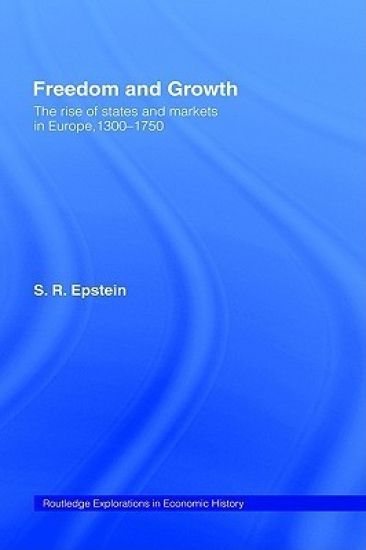
Freedom and Growth

Freedom and Growth

Stephan R Epstein

Routledge
2007
nidottu
In discussions on European pre-modern economic growth, the role of individual freedom and of the state has loomed large. This book examines whether different kinds of 'freedoms' (absolutist, parliamentary and republican) caused different economic outcomes, and shows the effect of different political regimes on long term development. It thus offers new answers to debates on the transition from feudalism to capitalism and on the causes of pre-industrial growth and divergence.
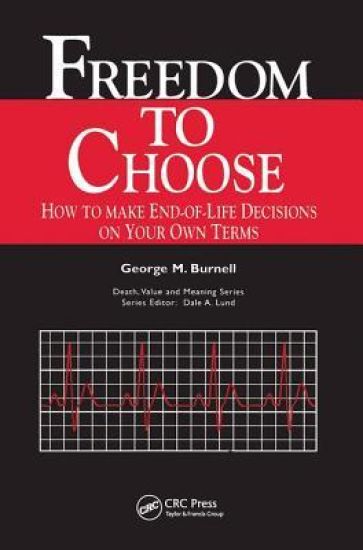
Freedom to Choose

Freedom to Choose

Burnell Burnell; Dale Lund

Routledge
2018
nidottu
"Freedom of Information in a Post 9-11 World" is, to date, the first international scholarly examination of the impact of the terrorist attack on the United States in terms of how it may alter academic and corporate research, as well as the sharing of information generated by that research, by international colleagues in technological fields. The collection of essays brings together a widely varied panel of communications experts from different backgrounds and cultures to focus their expertise on the ramifications of this world-changing event. Drawing upon the related but separate disciplines of law, interpersonal communication, semiotics, rhetoric, management, information sciences, and education, the collection adds new insight to the potential future challenges high-tech professionals and academics will face in a global community that now seems much less communal than it did prior to September 11, 2001.In "Freedom to Choose: How to Make End-of-Life Decisions on Your Own Terms", young persons, baby boomers, and "senior citizens" alike will find the information they need to make intelligent, informed, and well-planned decisions about end-of-life care, and to clearly state their wishes based on personal, cultural, religious, and family values. In direct and simple language, Dr. Burnell describes how to prepare for a smooth transition to end-of-life care and what to do to prevent family conflicts, overcome death fears and anxiety, and achieve peace of mind for our loved ones and ourselves.The book gives practical advice on how to make decisions about end-of-life care and how to prepare a living will and durable power of attorney for health care. Dr. Burnell provides guidelines at the end of each chapter on what to consider before preparing these important documents: how to preserve one's rights as a patient; how to choose the right doctor; the best place to be when critically ill; the laws governing advance directives; and the best alternatives for end-of-life care, such as good pain control and assisted dying (where this is legal). "Freedom to Choose" provides a user-friendly approach to facing these difficult decisions. It includes extensive lists of resources and organizations, and a glossary necessary for understanding the issues at hand. As this book makes clear, preparing an advance directive and knowing all the available options at the end of life are the most important steps for achieving peace of mind.The primary audience is anyone, young or old, who needs to prepare a set of advance directives: healthy people, for themselves or their loved ones who are seriously ill or on life support, and people with a terminal illness. The secondary audience is health professionals who deal with people in end-of-life care or with decision-makers on end-of-life issues: primary care physicians; nurses; geriatricians; psychiatrists; hospice doctors, nurses, and volunteer staff; caregivers for the seriously ill; oncologists; interns and residents; counselors; family therapists; psychologists; social workers who work with the dying and bereaved; attorneys; thanatologists; estate planning advisors; senior citizen center staff; college teachers in death and dying courses; professionals taking courses in psychology, gerontology, thanatology, nursing, and social work.
Freedom and Democracy in an Imperial Context
Freedom and Democracy in an Imperial Context: Dialogues with James Tully gathers leading thinkers from across the humanities and social sciences in a celebration of, and critical engagement with, the recent work of Canadian political philosopher James Tully. Over the past thirty years, James Tully has made key contributions to some of the most pressing questions of our time, including: interventions in the history of moral and political thought, contemporary political philosophy, democracy, citizenship, imperialism, recognition and cultural diversity. In 2008, he published Public Philosophy in a New Key, a two-volume work that promises to be one of the most influential and important statements of legal and political thought in recent history. This work, along with numerous other books and articles, is foundational to a distinctive school of political thought, influencing thinkers in fields as diverse as Anthropology, History, Indigenous Studies, Law, Philosophy and Political Science. Critically engaging with James Tully’s thought, the essays in this volume take up what is his central, and ever more pressing, question: how to enact democratic practices of freedom within and against historically sedimented and actually existing relationships of imperialism?
Freedom of Speech

Freedom of Speech

Uladzislau Belavusau

Routledge
2013
sidottu
This book considers the issue of free speech in transitional democracies focusing on the socio-legal developments in the Czech Republic, Hungary, and Poland. In showing how these Central and Eastern European countries have engaged with free speech models imported from the Council of Europe / EU and the USA, the book offers valuable insights into the ways States have responded to challenges associated with transformation from communism to Western democracy.The book first explores freedom of expression in European and American law looking particularly at hate speech, historical revisionism, and pornography. It subsequently enquires into the role and perspectives of those European (mandatory) and US-American (persuasive) models for the constitutional debate in Central and Eastern Europe. The study offers an original interpretation of the "European" model of freedom of expression, beyond the mechanisms of the Council of Europe. It encompasses the relevant aspects of EU law (judgments of the Court of Justice and the harmonised EU instruments) as mandatory standards for courts and legislators, including those in transitional countries of Central and Eastern Europe. The book argues for de-criminalisation of historical revisionism and pornography, and illuminates topics such as genocide denial, the rise of Prague and Budapest as Europe’s porno-capitals, anti-Semitism and anti-Gypsyism, religious obscurantism and homophobia, virulent Islamophobia, and the glorification of terrorism.The research methodology in this study combines a descriptive case law assessment (comparative constitutional, public international, and EU law) with a normative critique stemming from post-structuralist scrutiny, rhetoric, postmodern legal movements, legal history, history of ideas, and art criticism. This book will be of interest to students and scholars of, comparative constitutional law, law and society, human rights and European law as well as political philosophers.
Freedom and Co-ordination (RLE: Organizations)
A pioneer in the fields of organizational theory and behaviour Mary Parker Follett authored a number of books and numerous essays, articles and speeches on human relations, political philosophy, psychology and management. The first woman invited to address the London School of Economics, this book includes five lectures delivered to the newly-formed Department of Business Administration at the LSE in 1933, as well as six given by Parker Follett a the Taylor Society in New York in 1926.