Kirjahaku
Etsi kirjoja tekijän nimen, kirjan nimen tai ISBN:n perusteella.
1000 tulosta hakusanalla Frederick Beiser

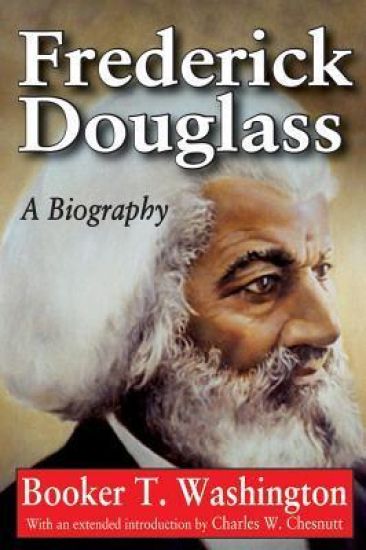
This biography, written by Booker T. Washington, one of most important post-Civil War African-American thinkers, is an account of the life and career of Frederick Douglass. The biographical account is set within a nation struggling to solve one of the most excruciating social problems that any modern people faced—slavery. This volume encompasses the experiences of Frederick Douglass as a slave and then as a public man, through the anti-slavery movement, the Civil War, and the period of reconstruction.Douglass's fame as a speaker was secure. His position as the champion of an oppressed race was, in his own generation, as picturesque as it was unique. From the blight of slavery, Douglass emerged, passed through, and triumphed over the lingering prejudice that he encountered as a freeman. Like the author of his biography, Douglass seized his place in history. His life is an epic, one that finds few to equal it in the realms of either romance or reality. Douglass was a role model to the author, and his early narrative was a guide to black and white people alike.Among the subjects covered are the Genesis of the Anti-Slavery Agitation, the Fugitive Slave Law, the Underground Railway, the American Colonization Society, the Conflict in Kansas for Free Soil, the John Brown Raid, the Civil War, the Enlistment of Colored Troops, and Reconstruction.
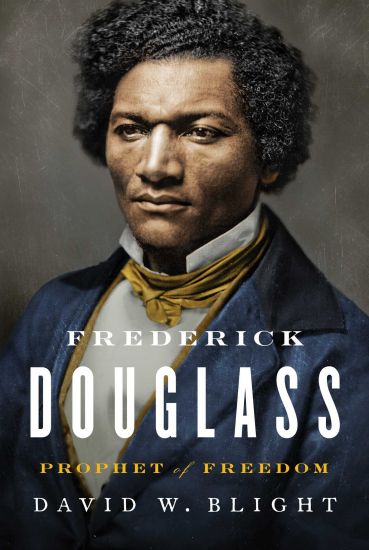
**Winner of the Pulitzer Prize in History** “Extraordinary…a great American biography” (The New Yorker) of the most important African-American of the nineteenth century: Frederick Douglass, the escaped slave who became the greatest orator of his day and one of the leading abolitionists and writers of the era.As a young man Frederick Douglass (1818–1895) escaped from slavery in Baltimore, Maryland. He was fortunate to have been taught to read by his slave owner mistress, and he would go on to become one of the major literary figures of his time. His very existence gave the lie to slave owners: with dignity and great intelligence he bore witness to the brutality of slavery. Initially mentored by William Lloyd Garrison, Douglass spoke widely, using his own story to condemn slavery. By the Civil War, Douglass had become the most famed and widely travelled orator in the nation. In his unique and eloquent voice, written and spoken, Douglass was a fierce critic of the United States as well as a radical patriot. After the war he sometimes argued politically with younger African Americans, but he never forsook either the Republican party or the cause of black civil and political rights. In this “cinematic and deeply engaging” (The New York Times Book Review) biography, David Blight has drawn on new information held in a private collection that few other historian have consulted, as well as recently discovered issues of Douglass’s newspapers. “Absorbing and even moving…a brilliant book that speaks to our own time as well as Douglass’s” (The Wall Street Journal), Blight’s biography tells the fascinating story of Douglass’s two marriages and his complex extended family. “David Blight has written the definitive biography of Frederick Douglass…a powerful portrait of one of the most important American voices of the nineteenth century” (The Boston Globe). In addition to the Pulitzer Prize, Frederick Douglass won the Bancroft, Parkman, Los Angeles Times (biography), Lincoln, Plutarch, and Christopher awards and was named one of the Best Books of 2018 by The New York Times Book Review, The Wall Street Journal, The Boston Globe, The Chicago Tribune, The San Francisco Chronicle, and Time.
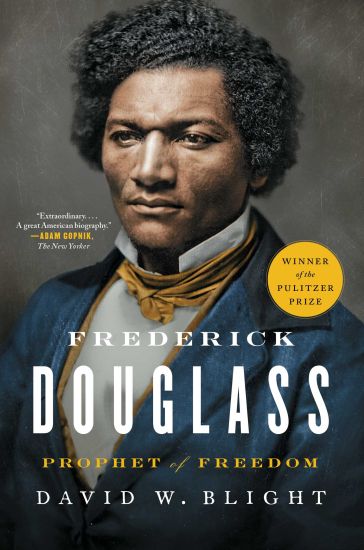
* Selected as One of the Best Books of the 21st Century by The New York Times * Winner of the Pulitzer Prize in History * “Extraordinary…a great American biography” (The New Yorker) of the most important African American of the 19th century: Frederick Douglass, the escaped slave who became the greatest orator of his day and one of the leading abolitionists and writers of the era.As a young man Frederick Douglass (1818–1895) escaped from slavery in Baltimore, Maryland. He was fortunate to have been taught to read by his slave owner mistress, and he would go on to become one of the major literary figures of his time. His very existence gave the lie to slave owners: with dignity and great intelligence he bore witness to the brutality of slavery. Initially mentored by William Lloyd Garrison, Douglass spoke widely, using his own story to condemn slavery. By the Civil War, Douglass had become the most famed and widely travelled orator in the nation. In his unique and eloquent voice, written and spoken, Douglass was a fierce critic of the United States as well as a radical patriot. After the war he sometimes argued politically with younger African Americans, but he never forsook either the Republican party or the cause of black civil and political rights. In this “cinematic and deeply engaging” (The New York Times Book Review) biography, David Blight has drawn on new information held in a private collection that few other historian have consulted, as well as recently discovered issues of Douglass’s newspapers. “Absorbing and even moving…a brilliant book that speaks to our own time as well as Douglass’s” (The Wall Street Journal), Blight’s biography tells the fascinating story of Douglass’s two marriages and his complex extended family. “David Blight has written the definitive biography of Frederick Douglass…a powerful portrait of one of the most important American voices of the nineteenth century” (The Boston Globe). In addition to the Pulitzer Prize, Frederick Douglass won the Bancroft, Parkman, Los Angeles Times (biography), Lincoln, Plutarch, and Christopher awards and was named one of the Best Books of 2018 by The New York Times Book Review, The Wall Street Journal, The Boston Globe, The Chicago Tribune, The San Francisco Chronicle, and Time.
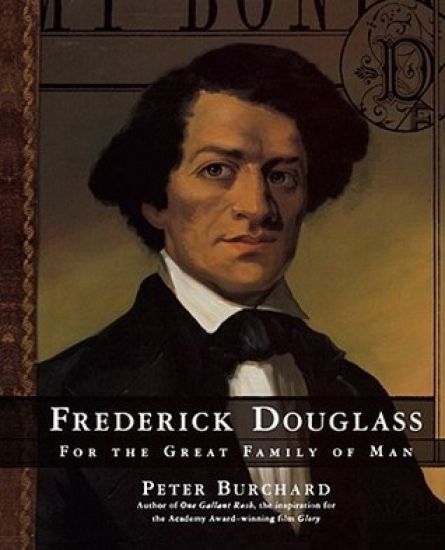
In a swift and compelling narrative, acclaimed historian Peter Burchard tells the story of the greatest black American of the nineteenth century, a pioneer who laid down a firm foundation for all men and women who came after him.As a child and as a youth, Frederick Douglass was enslaved, but his intelligence, his resilient character, and his innate charm, together with a measure of good fortune, helped him survive. He became a forceful speaker and persuasive writer and conducted a campaign to abolish slavery and secure civil rights for his people and for all Americans. He saw himself as a soldier in a battle for the dignity of the “great family of man.” This new biography presents Douglass as he lived through the misery, tragedy, and heartbreak of his early years, as he escaped from slavery only to endure anxiety and outrage in the free states of the North. He eventually made his way to Great Britain, where he lectured forcefully against slavery. In the United States, as the Civil War began, Douglass recruited young black men to fight and die for their freedom and the freedom of their brothers held in bondage in the South. He became a friend and counselor to presidents, senators, and governors.

My bondage and my freedom ... By Frederick Douglass. With an introduction. By Dr. James M'Cune Smith.
Frederick Douglass
University of Michigan Library
2001
sidottu

The Frontier in American History, by Frederick Jackson Turner.
Frederick Jackson Turner
University of Michigan Library
1920
sidottu

Landscape into cityscape; Frederick Law Olmsted's plans for a greater New York City. Edited with an introductory essay and notes by Albert Fein.
Frederick Law 1822-1903 Olmsted
University of Michigan Library
1968
sidottu
The Story of a Street; A Narrative History of Wall Street from 1644 to 1908, by Frederick Trevor Hill.
Frederick Trevor Hill
University of Michigan Library
2006
pokkari
The Frontier in American History, by Frederick Jackson Turner.
Frederick Jackson Turner
University of Michigan Library
2006
pokkari